Monoblock vs Split Air Source Heat Pump: Which Is Better?
Monoblock heat pumps account for 80% of UK residential installations — they are simpler, cheaper to install, and do not require F-gas certification. Here is why, and when a split system might still be the better choice.
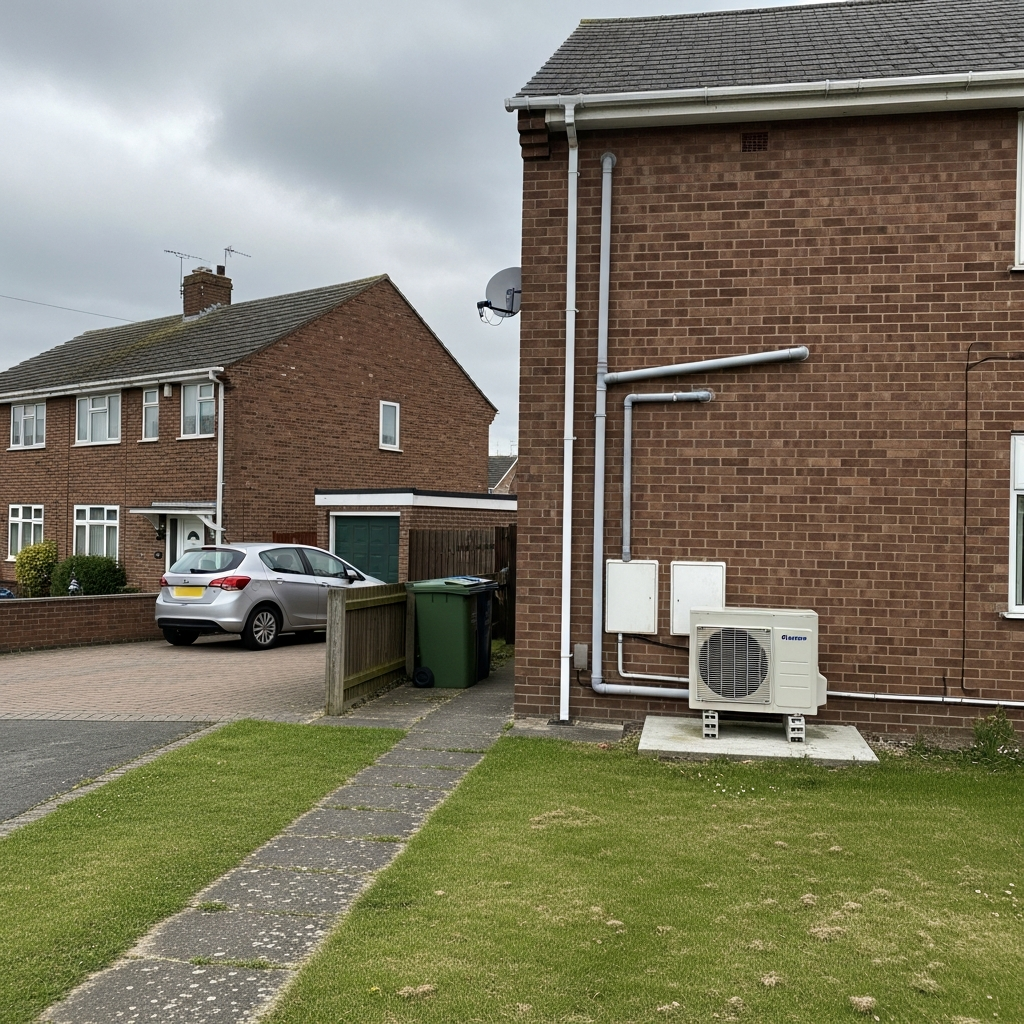
When you start researching air source heat pumps, you will quickly encounter two terms: monoblock and split. These describe the physical configuration of the heat pump — where the components sit and how they connect. The distinction matters because it affects installation complexity, cost, maintenance, and in some cases, performance.
In the UK, monoblock heat pumps dominate the residential market. But split systems have their place too. This guide explains the differences, compares the pros and cons, and helps you understand which type is likely to end up on your shortlist.
See how much a heat pump would cost for your home
Get a personalised estimate in 60 seconds — including which type suits your property.
Calculate my costs →In this guide:
What Is a Monoblock Heat Pump?
A monoblock air source heat pump contains all the refrigeration components — compressor, evaporator, condenser, and expansion valve — in a single outdoor unit. The only connection between the outdoor unit and your home is water pipes (flow and return), an electrical cable, and a control cable.
The outdoor unit takes in outside air, extracts heat from it, and transfers that heat to water. The heated water then flows through insulated pipes into your home, where it circulates through radiators or underfloor heating and fills your hot water cylinder.
Think of it this way: the outdoor unit does all the clever refrigeration work. What enters your house is simply heated water — the same as what comes from a gas boiler, just at a lower temperature.
What Is a Split System Heat Pump?
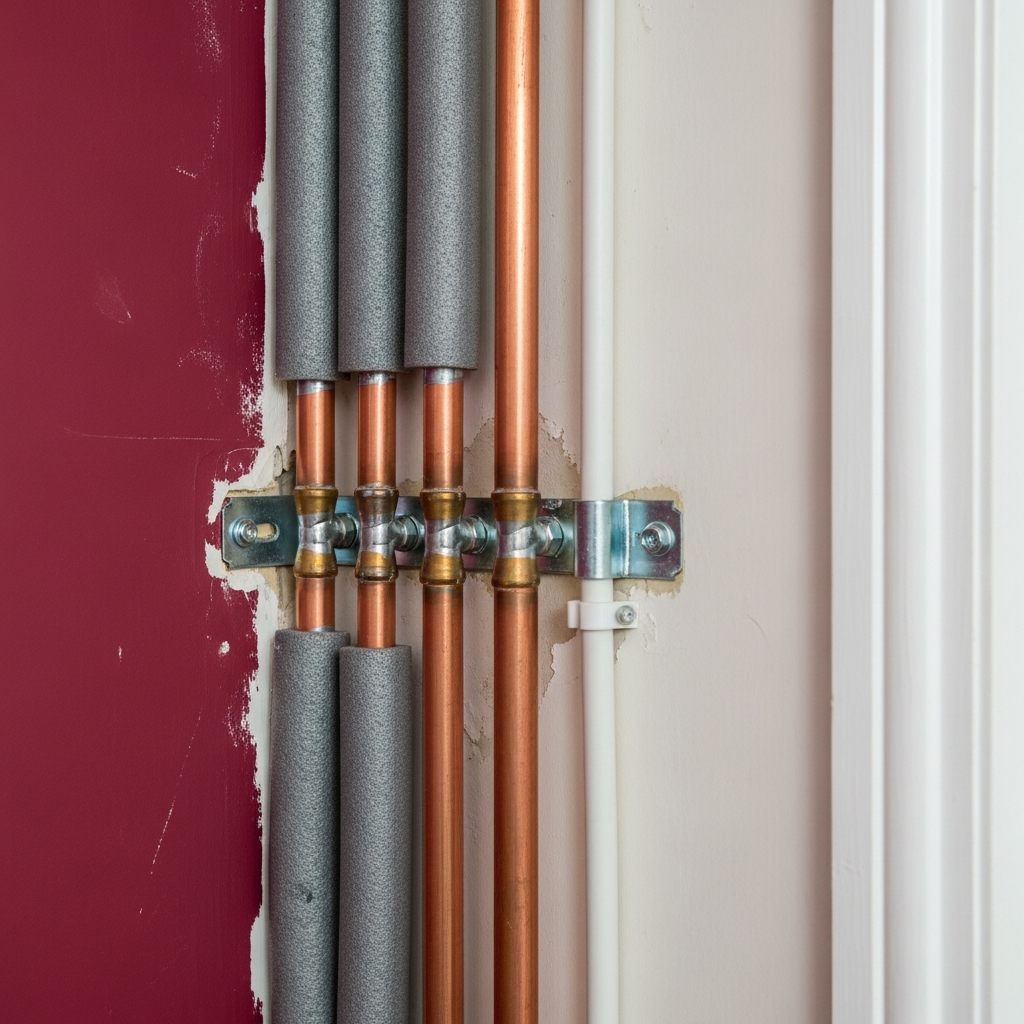
A split system air source heat pump divides the refrigeration components between an outdoor unit and an indoor unit. The outdoor unit contains the evaporator and compressor. The indoor unit contains the condenser and often the controls. Refrigerant lines connect the two units through the wall.
In this configuration, the refrigerant — a chemical fluid that carries the absorbed heat — travels between the outdoor and indoor units. The heat exchange from refrigerant to water happens inside the house, in the indoor unit.
Key Differences at a Glance
| Feature | Monoblock | Split System |
|---|---|---|
| Refrigerant location | Outdoor unit only | Flows between indoor and outdoor |
| Connection to house | Water pipes | Refrigerant lines |
| Indoor unit required | No | Yes |
| F-gas qualification needed | No (sealed circuit) | Yes |
| Frost protection needed | Yes (water pipes) | Less critical |
| UK market share | ~80% | ~20% |
| Typical cost | £8,000–£14,000 | £9,000–£16,000 |
Both types qualify for the £7,500 BUS grant when MCS-certified.
Monoblock Heat Pump: Pros and Cons
Advantages
Simpler installation. Because the refrigerant circuit is entirely contained within the outdoor unit, installation is primarily a plumbing and electrical job. The installer connects water pipes from the outdoor unit to your heating system — no different in principle from connecting a new boiler. This means more installers can fit them, and installation is faster.
No F-gas qualification needed. Handling refrigerant requires F-gas certification. Since monoblock units have a factory-sealed refrigerant circuit that is never opened during installation, the installer does not need F-gas qualifications. This widens the pool of qualified installers and can reduce labour costs.
Lower installation cost. The combination of simpler installation and more available installers typically makes monoblock systems £500–£2,000 cheaper to install than equivalent split systems.
No indoor unit needed. There is no bulky indoor unit to find space for. You need a hot water cylinder and a controller, but these are compact and familiar components.
Easier maintenance. All refrigeration components are in one place, making servicing straightforward.
Disadvantages
Frost risk on water pipes. The water pipes connecting the outdoor unit to your house can freeze in very cold weather if not properly insulated and protected. Good installations include trace heating (a low-power electric heating cable wrapped around the pipes) and substantial insulation.
Heat loss in pipe runs. The heated water loses a small amount of heat as it travels through the pipes from the outdoor unit to the house. The longer the pipe run, the greater the loss.
Slightly lower peak efficiency. Because the heat exchange from refrigerant to water happens outdoors in a monoblock (where it is cold), there is a small theoretical efficiency penalty compared to a split system. In practice, the difference is typically less than 5%.
Split System Heat Pump: Pros and Cons
Advantages
No frozen pipe risk. The connection between indoor and outdoor units uses refrigerant lines, and refrigerant does not freeze at normal operating temperatures.
Better for long pipe runs. If the outdoor unit needs to be positioned far from the house — say, at the bottom of a garden — a split system handles the distance better because refrigerant transfers heat more efficiently over longer runs than water does.
Slightly higher theoretical efficiency. With the condenser (heat exchange to water) happening indoors in a warm environment, split systems can achieve marginally better efficiency.
Disadvantages
Requires F-gas certified installer. Because the refrigerant circuit is split between two units and connected on site, the installer must hold F-gas certification. This narrows the pool of available installers.
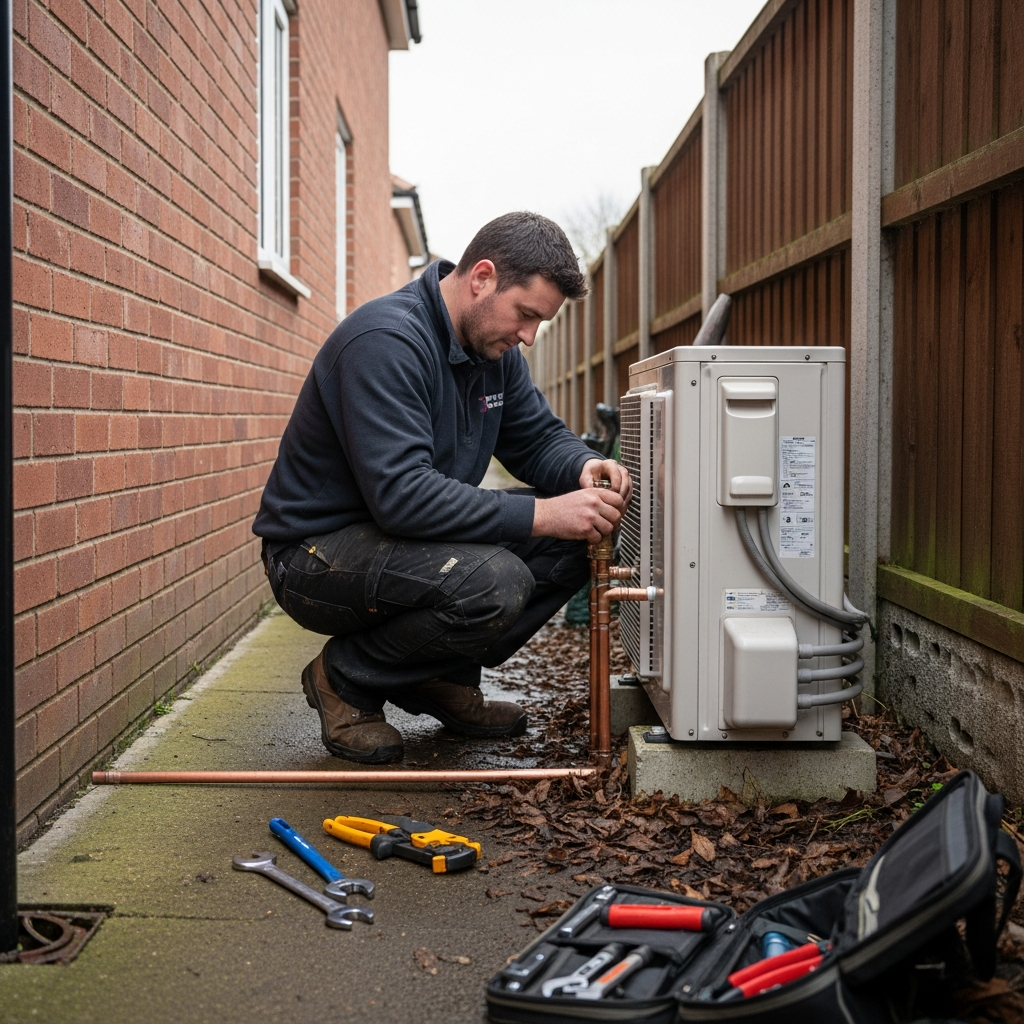
More complex installation. Running refrigerant lines through the wall, brazing connections, pressure-testing, and charging the system requires specialist skills and equipment. Installation takes longer and costs more.
Indoor unit takes space. The indoor unit is typically a wall-mounted box roughly the size of a small cupboard.
Higher installation cost. The additional complexity typically adds £500–£2,000 to the installed price.
Environmental regulations tightening. F-gas regulations are progressively restricting high-GWP refrigerants. Split systems face more regulatory scrutiny than sealed monoblock systems.
Get quotes from installers who can recommend the right type for your property
Get 3 free quotes →No obligation. No sales calls. We are not installers.
Which Is More Common in the UK?
Monoblock heat pumps account for roughly 80% of residential air source heat pump installations in the UK, and that share is growing. The main reasons are:
- Simpler installation process, meaning shorter installation times and lower labour costs
- No F-gas qualification needed, so more heating engineers can install them
- F-gas regulation phase-downs making split systems less attractive
- Major brands offering strong monoblock ranges
- Government training programmes primarily focused on monoblock installation
The shift towards monoblock is part of a broader industry effort to make heat pump installation as similar to boiler installation as possible — reducing the skills barrier and enabling faster rollout. Pairing with solar panels to generate your own electricity makes both types even more cost-effective.
Which Should You Choose?
For the vast majority of UK homes, a monoblock heat pump is the right choice. It is simpler, cheaper to install, easier to maintain, and the market is moving firmly in this direction.
Consider a split system if:
- The outdoor unit needs to be positioned a long distance from the house (10+ metres)
- You are in an extremely cold location where frost protection of water pipes is a significant concern
- Your installer specifically recommends it based on your property's layout
In practice, a good installer will recommend the right type for your specific situation. When getting quotes, ask why they are recommending monoblock or split — the answer should relate to your property, not just what they have in stock.
For more on the installation process, read our heat pump installation guide. To understand the full picture on costs, see our heat pump cost breakdown.

Ready to find the right heat pump for your home?
MCS-certified installers will assess your property and recommend the best system — monoblock or split.
Get my free quotes →Free. No obligation. No sales calls from us.
Frequently Asked Questions
Is a monoblock heat pump less efficient than a split system?
In theory, split systems have a very small efficiency advantage because the heat exchange to water happens indoors. In practice, the difference is typically less than 5% and is often outweighed by other factors like installation quality, pipe insulation, and system design. Both types achieve similar real-world performance.
Can monoblock heat pumps freeze in winter?
The heat pump itself does not freeze — it has a built-in defrost cycle. The risk is with the water pipes connecting the outdoor unit to the house. A properly installed system includes insulated and trace-heated pipes that prevent freezing. Always ensure your installer addresses frost protection.
Do I need F-gas certification to install a monoblock?
No. Monoblock heat pumps have a factory-sealed refrigerant circuit that is not opened during installation. However, you still need an MCS-certified installer if you want to claim the BUS grant.
Which type qualifies for the BUS grant?
Both monoblock and split air-to-water heat pumps are eligible for the Boiler Upgrade Scheme grant of £7,500, provided they are MCS-certified products installed by an MCS-certified installer.
How long do monoblock heat pumps last?
A well-maintained monoblock heat pump typically lasts 15-20 years. The sealed refrigerant circuit means there are fewer potential failure points compared to a split system where refrigerant connections are made on site.
Can I replace a split system with a monoblock?
Yes. If you have an existing split system heat pump that needs replacing, switching to a monoblock is straightforward. The installer removes the old indoor and outdoor units, installs the new monoblock outdoors, and connects water pipes to your existing heating circuit.
About Air Source Heat Pump Configurations
Air source heat pumps are available in monoblock and split system configurations, each with trade-offs around installation complexity, cost, and performance. The UK market strongly favours monoblock systems due to simpler installation and evolving F-gas regulations. The Boiler Upgrade Scheme provides £7,500 towards either type, and combining your heat pump with solar panels can offset much of the running cost. This guide is part of our resource hub covering costs, running costs, and installation for UK homeowners.