Air Source Heat Pump Refrigerant Types Explained
R290 has a Global Warming Potential of just 3 — compared to 2,088 for the old R410A. Here is why the refrigerant inside your heat pump matters more than most people realise, and what to ask your installer.
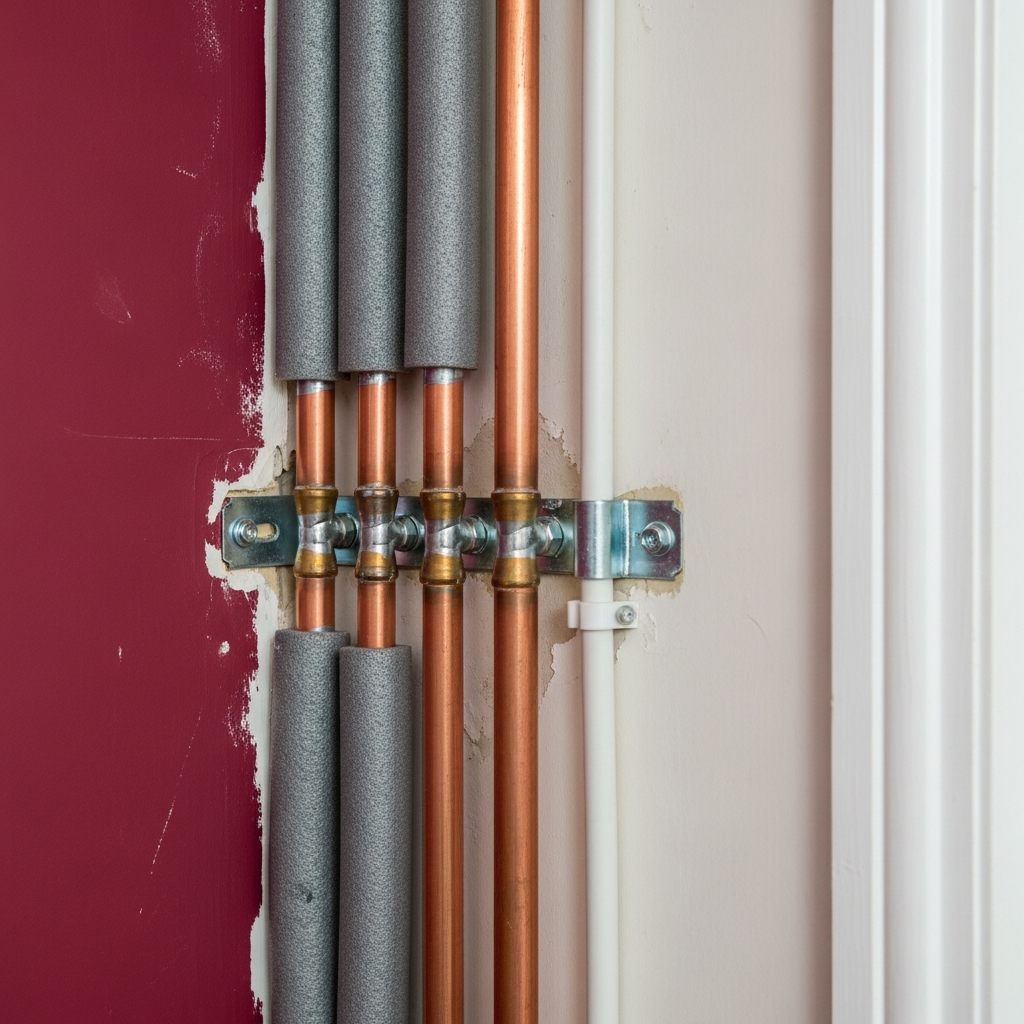
When you are choosing an air source heat pump, you will compare brands, efficiency ratings, noise levels, and prices. One thing most people overlook is the refrigerant — the chemical fluid that circulates inside the heat pump and actually carries the heat. It is arguably the most important component, and the type of refrigerant your heat pump uses has real implications for efficiency, environmental impact, future regulations, and long-term costs.
This guide explains the three main refrigerant types used in UK heat pumps — R410A, R32, and R290 — in plain terms, so you know what to look for and why it matters.
See which heat pumps suit your home and budget
Enter your property details and get a personalised cost and savings estimate in 60 seconds.
Calculate my costs →In this guide:
What Does Refrigerant Do in a Heat Pump?
Refrigerant is the working fluid that makes a heat pump function. It circulates in a closed loop, constantly changing between liquid and gas states to absorb and release heat. For the full science behind this process, read our guide on how air source heat pumps work.
- Evaporation — cold liquid refrigerant absorbs heat from the outside air and evaporates into a gas
- Compression — the compressor squeezes the gas, raising its temperature significantly
- Condensation — the hot gas releases its heat to the water in your heating system and condenses back into a liquid
- Expansion — the liquid passes through an expansion valve, dropping in pressure and temperature, ready to absorb heat again
Different refrigerants have different physical properties — boiling points, heat capacities, pressures — that affect how efficiently this cycle runs.
The Three Main Refrigerants in UK Heat Pumps
R410A: The Outgoing Standard
R410A was the dominant refrigerant for two decades. It has a GWP of 2,088 — one kilogram released into the atmosphere has the same warming effect as 2,088 kilograms of CO². A typical domestic heat pump contains 2-4kg of refrigerant, so a leak represents a significant greenhouse gas emission.
Status in 2026: R410A is being phased out under UK F-gas regulations. Most manufacturers have stopped using it in new residential models. It should not be on your shortlist for a new installation.
R32: The Current Mainstream Choice
R32 has a GWP of 675 — roughly one-third of R410A's impact. It also requires less charge and has better thermodynamic properties, meaning heat pumps using R32 tend to be slightly more efficient.
Most current models from major brands use R32. If you are getting a heat pump installed in 2026, there is a strong chance it will use R32.

R290: The Future
R290 is propane — a natural refrigerant with a GWP of just 3. It has 0.14% of R410A's global warming impact and 0.4% of R32's. R290 also has excellent thermodynamic properties, achieving very high efficiency ratings, particularly in cold weather.
R290 is already used in the best-selling heat pump in the UK. The industry is clearly moving in this direction.
Is R290 Safe?
This is the question everyone asks, and rightly so. Propane is flammable — that is a fact, not something to dismiss.
However, the quantities involved are very small. A typical R290 heat pump contains 500g to 1.5kg of propane. For comparison, a standard barbecue gas bottle contains 13kg. R290 heat pumps are designed with multiple safety features:
- The refrigerant circuit is entirely contained in the outdoor unit (monoblock design) — no flammable refrigerant enters your home
- Leak detection sensors shut the system down if any refrigerant escape is detected
- The outdoor unit must be positioned with adequate ventilation
- All R290 units meet strict safety standards (EN 378, IEC 60335-2-40)
Millions of R290 heat pumps are installed across Europe with an excellent safety record.
F-Gas Regulations: What Is Changing?
The UK has F-gas regulations that progressively phase down the use of high-GWP refrigerants:
| Refrigerant | Status | Future Outlook |
|---|---|---|
| R410A | Being phased out | Avoid for new installations |
| R32 | Permitted | Safe for lifetime of any unit installed today |
| R290 | No restrictions | Completely future-proof |
Practical advice: choose R32 or R290. Both are excellent choices today.
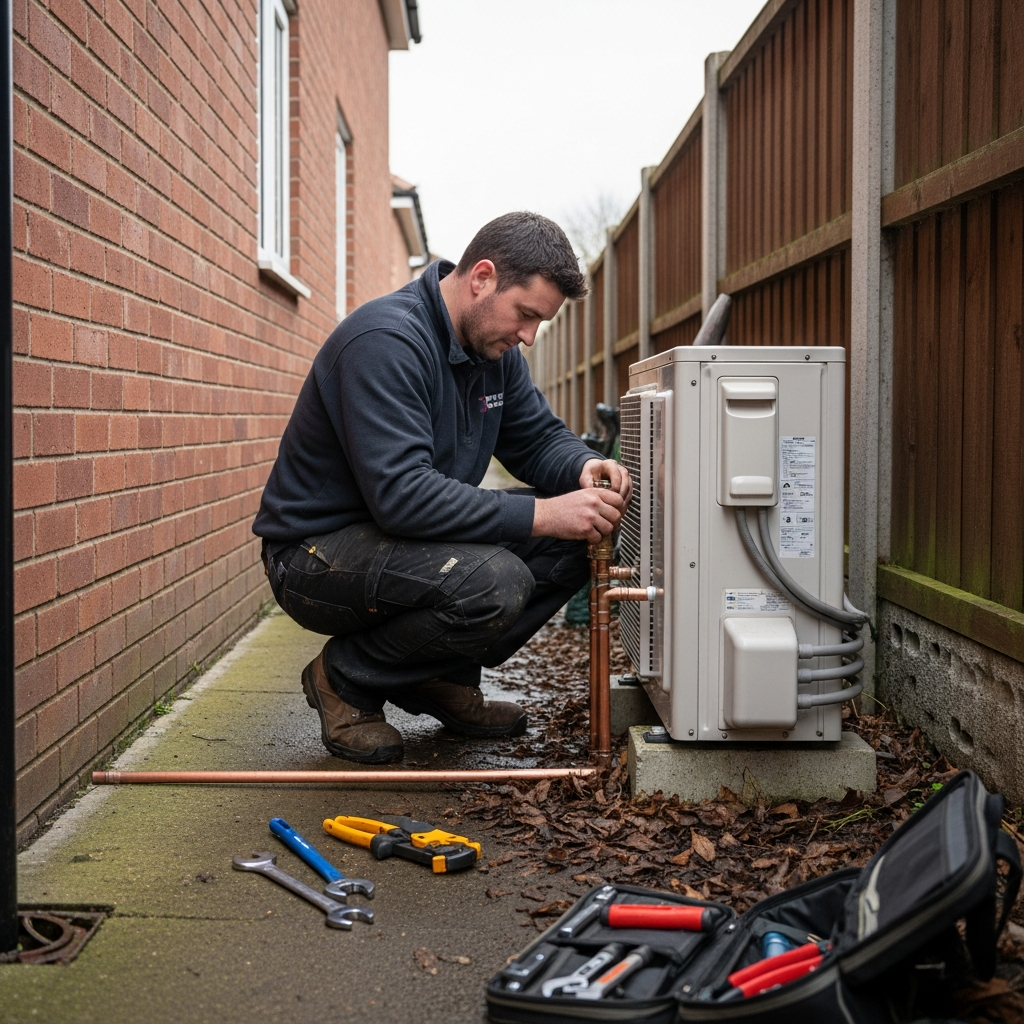
How Refrigerant Choice Affects Your Heat Pump Decision
Efficiency
R290 heat pumps tend to achieve the highest efficiency ratings, particularly in cold weather — SCOP ratings above 4.0 in most UK conditions. R32 models are close behind, with SCOP ratings typically between 3.5 and 4.0. See our running costs guide for what this means for your bills.
Cost
R32 models are currently the most competitive on price. R290 models tend to sit at a modest premium — typically £500–£1,500 more. For a full cost breakdown, see our heat pump cost guide.
Maintenance
The refrigerant type does not significantly change the maintenance schedule, but it can affect costs if a leak occurs. R410A is becoming expensive to source. R32 is reasonably priced. R290 (propane) is very cheap as a raw material.
Environmental Impact
If minimising your environmental footprint is a priority, R290 is the clear winner. Its GWP of 3 is negligible. Combining any heat pump with solar panels further reduces your home's carbon emissions.
Compare heat pump quotes from MCS-certified installers in your area
Get 3 free quotes →No obligation. No sales calls. We are not installers.
What to Ask Your Installer
When getting heat pump quotes, ask these refrigerant-related questions:
- What refrigerant does this model use? — Avoid R410A. Accept R32 or R290.
- What is the refrigerant charge? — Less is generally better from an environmental standpoint.
- What happens if there is a refrigerant leak? — Understand the process and cost for a top-up or repair.
- Is the system a monoblock or split? — Monoblock R290 systems keep all refrigerant outdoors, which is the safest configuration.
To get quotes from qualified installers in your area, use our free quote service. You can also check whether your home is suitable with our suitability checker.

Find the right heat pump for your home and budget
Get free, no-obligation quotes from MCS-certified installers who can advise on the best system and refrigerant type.
Get my free quotes →We connect you with vetted professionals. No sales calls from us.
Frequently Asked Questions
What refrigerant do most UK heat pumps use?
In 2026, the majority of new residential heat pumps installed in the UK use R32. R290 (propane) is the fastest-growing segment. R410A is being phased out and should be avoided in new installations.
Is R290 propane dangerous in a heat pump?
R290 is flammable, but the quantities in a heat pump are very small (typically under 1.5kg), the system is sealed, and modern R290 heat pumps include leak detection and automatic shutdown. Millions are installed safely across Europe. The refrigerant stays in the outdoor unit and never enters your home.
Will R32 be banned?
There is no current ban on R32, and it is expected to remain available and legal for the foreseeable future. However, F-gas regulations will continue to tighten. Any R32 heat pump installed today will be fully supported throughout its lifetime.
Does the refrigerant type affect running costs?
Indirectly, yes. R290 heat pumps tend to be slightly more efficient, which means slightly lower electricity consumption. The difference is typically 5-10% compared to R32 — enough to save £30-£60 per year on a typical household's heating bill.
Can I change the refrigerant in my existing heat pump?
No. Heat pumps are designed for a specific refrigerant. You cannot swap R410A for R32, or R32 for R290. The compressor, expansion valve, and heat exchangers are all optimised for the specific refrigerant's properties. If you want a different refrigerant, you need a different heat pump.
What happens if my heat pump leaks refrigerant?
A refrigerant leak will cause your heat pump to lose efficiency and eventually stop heating effectively. Your installer or a qualified engineer can detect, locate, and repair the leak, then recharge the system. For R410A systems, the cost of replacement refrigerant is increasing. R32 and R290 are much more affordable.
About Heat Pump Refrigerants and Environmental Impact
Heat pump refrigerants are evolving rapidly as UK and global regulations phase down high-GWP substances. R290 (propane) represents the lowest-impact option with a GWP of just 3, while R32 remains the mainstream choice at GWP 675. Both are significant improvements over the outgoing R410A (GWP 2,088). The Boiler Upgrade Scheme provides £7,500 towards heat pump installations regardless of refrigerant type. Pairing a heat pump with solar panels creates one of the lowest-carbon heating systems available. This guide is part of our resource hub covering costs, running costs, and installation for UK homeowners.