How to Complain About a Heat Pump Installation
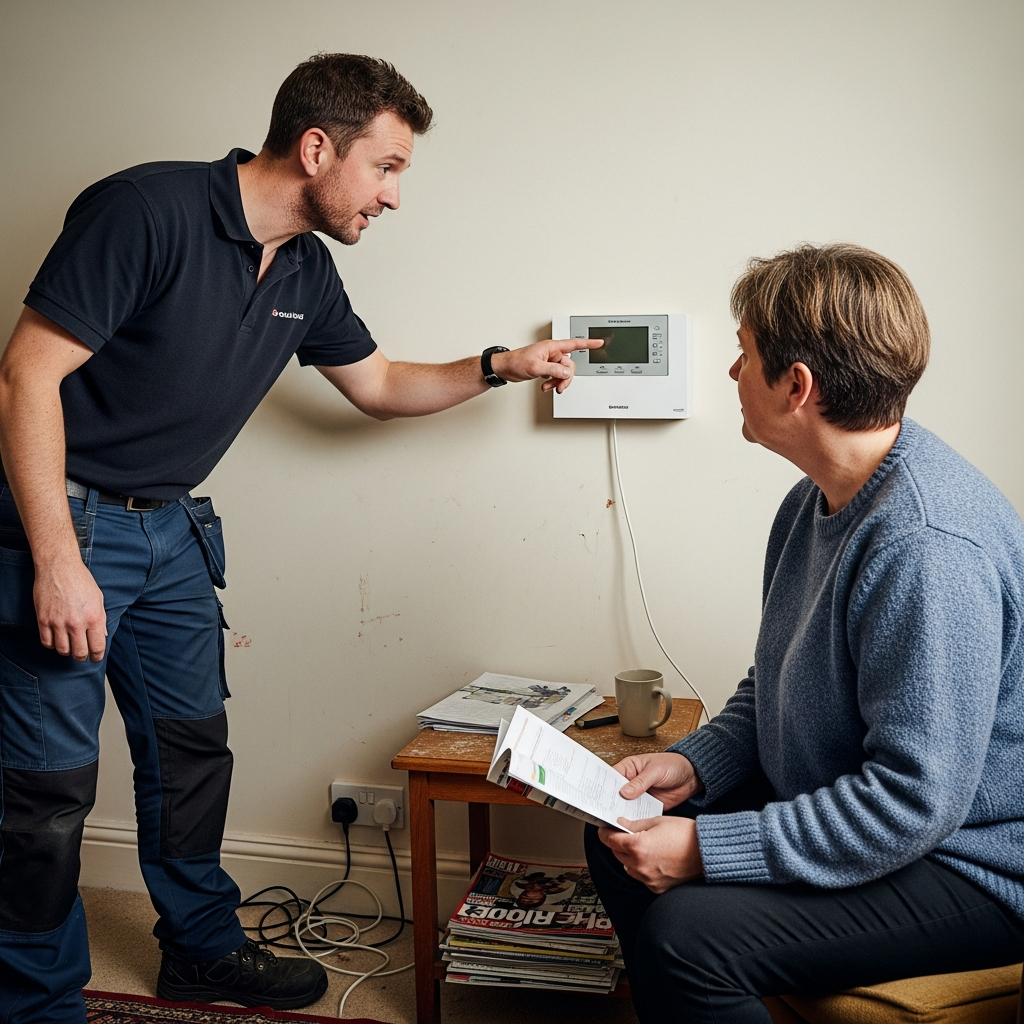
Most heat pump installations go smoothly. But when they do not, knowing how to complain effectively can mean the difference between a quick resolution and months of frustration. Whether your system is underperforming, was installed incorrectly, or the installer has disappeared, this step-by-step guide covers every option available to you — from a simple phone call to legal action. If you are already aware of red flags with your installer, this guide helps you take action.
Avoid complaints — start with trusted installers
Get Vetted Installer QuotesPrevention is better than cure. Our MCS-certified installers have verified track records.
Common Problems Worth Complaining About
Not every niggle warrants a formal complaint. But the following issues are genuine problems that deserve resolution:
| Problem | Severity | Action Required |
|---|---|---|
| System not heating home adequately | High | Immediate complaint to installer |
| Running costs much higher than quoted | Medium-High | Request commissioning check |
| Excessive noise from outdoor unit | Medium | Request noise assessment |
| Missing documentation (MCS cert, warranty) | Medium | Written request with deadline |
| Water leaks from pipework or connections | High | Emergency call to installer |
| Installer not responding to contact | High | Escalate to RECC immediately |
| BUS grant not applied as promised | High | Contact Ofgem and RECC |
| Different model installed than quoted | High | Formal complaint — breach of contract |
| Poor cosmetic finish (untidy pipework) | Low-Medium | Request rectification |
| System not properly commissioned | Medium-High | Request full commissioning visit |
Step 1: Contact Your Installer (Day 1)
Always start with a direct approach. Call your installer, explain the problem clearly, and ask them to resolve it. Most reputable installers want to fix problems — it is cheaper than a dispute and better for their reputation.
During the call:
- Describe the problem specifically (not "it is not working properly" but "the house only reaches 18°C when the thermostat is set to 21°C")
- Mention any relevant evidence — high electricity bills, noise readings, missing documents
- Ask for a specific timeline for resolution
- Make a note of who you spoke to, when, and what was agreed
If the installer responds promptly and arranges a visit, that is a good sign. Give them a fair opportunity to investigate and fix the issue.
Step 2: Put It in Writing (Day 7-14)
If the phone call does not produce results, or if you want to create a paper trail from the start, send a written complaint. Email is acceptable and has the advantage of automatic timestamps.
Your written complaint should include:
- Your name, address, and installation date
- The installer's MCS certificate number
- A clear description of the problem(s)
- What you have already tried (e.g., phone call on X date)
- What you want them to do (repair, inspection, refund, etc.)
- A reasonable deadline (14-28 days)
- A statement that you will escalate to RECC if not resolved
- Photos, screenshots of energy bills, or other evidence as attachments
Step 3: Escalate to RECC (Day 28+)
If your installer has not resolved the issue within a reasonable time (typically 28 days from your written complaint), escalate to the Renewable Energy Consumer Code (RECC) at recc.org.uk.
RECC is the dispute resolution body for MCS-certified installations. Their process is:
- Complaint submission — fill in their online form with your complaint details
- Mediation — RECC contacts the installer and attempts to mediate a resolution
- Investigation — if mediation fails, RECC investigates the complaint
- Binding decision — RECC can require the installer to fix the problem, provide compensation, or both
- Enforcement — if the installer refuses to comply, RECC can revoke their MCS certification
RECC's service is free to consumers. The process typically takes 4-8 weeks from submission to resolution. According to RECC's published data, approximately 85% of complaints are resolved at the mediation stage without needing a formal investigation.
Step 4: Get an Independent Assessment (Any Time)
At any stage, you can hire another MCS-certified installer to independently assess your installation. This provides expert evidence that strengthens your complaint significantly.
An independent assessment typically costs £150-300 and includes:
- Visual inspection of the installation
- Review of the MCS design documentation
- Performance measurement (COP, flow temperatures)
- Identification of any defects or non-compliance with MCS standards
- Written report suitable for use in a dispute
This report is valuable evidence if you escalate to RECC, Trading Standards, or court. It transforms your complaint from subjective dissatisfaction into objective, professional assessment.
Need a second opinion on your installation?
Find Independent MCS AssessorsRequest a "second opinion assessment" rather than a new installation quote.
Step 5: Citizens Advice and Trading Standards
For more serious cases — particularly those involving misrepresentation, fraud, or safety concerns — contact:
Citizens Advice
Free advice service available online, by phone, or in person. They can advise on your consumer rights, help you draft complaint letters, and refer cases to Trading Standards. Contact via citizensadvice.org.uk or phone 0800 144 8848.
Trading Standards
The enforcement body for consumer protection law. They investigate cases involving misleading claims, unfair trading practices, and unsafe installations. Referrals are usually made through Citizens Advice rather than directly.
Trading Standards have the power to prosecute installers who breach consumer protection law, which can result in fines and criminal records. This is the route for serious misconduct rather than routine disputes.
Step 6: Legal Action
If all other avenues have been exhausted, you can pursue legal action through the courts.
Small Claims Court (up to £10,000)
Claims up to £10,000 in England and Wales (£5,000 in Scotland) can be pursued through the Small Claims Track. This is designed for individuals without legal representation — court fees are modest (£35-455 depending on claim value) and the process is relatively straightforward.
You will need to demonstrate that the installation was defective, that you gave the installer a reasonable opportunity to fix it, and that you have suffered quantifiable loss. Your independent assessment report and written correspondence form the core of your evidence.
Section 75 Credit Card Claim
If you paid any part of the cost by credit card (between £100 and £30,000), you can make a Section 75 claim against your credit card provider. They are jointly liable with the installer and must investigate your claim. This route is particularly useful if the installer has gone bust or is refusing to engage.
Withholding Payment
If defects are identified before you have paid the final balance, you have the right to withhold a proportionate amount until the defects are resolved. This is a legitimate consumer right — but it must be handled carefully.
- Do: Withhold an amount proportionate to the defects (e.g., if radiators need replacing, withhold the cost of that work)
- Do: Put your reasons in writing with a clear list of defects
- Do: Offer to pay the balance immediately once defects are fixed
- Do not: Withhold the entire payment if the majority of work is satisfactory
- Do not: Use withholding as leverage for unrelated issues
Complaint Letter Template
Use this structure for your written complaint:
| Section | What to Include |
|---|---|
| Header | Your name, address, date, installer's name and address |
| Reference | Installation date, MCS certificate number, contract reference |
| Problem description | Clear, specific, factual description of each issue |
| Evidence | Photos, bills, noise readings, dates of previous contact |
| Impact | How the problem affects you (cold home, high bills, stress) |
| Remedy requested | Specifically what you want — repair, replacement, compensation |
| Deadline | Reasonable timeframe (14-28 days) |
| Escalation warning | "If not resolved by [date], I will escalate to RECC/Trading Standards" |
Preventing Problems in the First Place
The best complaint is the one you never need to make. Prevention strategies include:
- Only use MCS-certified installers
- Get at least 3 quotes and compare them carefully
- Watch for installation red flags
- Read reviews and request references from previous customers
- Understand your consumer rights before signing
- Check warranty terms before agreeing
- Pay by credit card for Section 75 protection
- Inspect the installation thoroughly before signing the handover checklist
Frequently Asked Questions
What is the first step?
Contact your installer in writing, describing the problem clearly with evidence. Give them 14-28 days to respond and arrange a fix.
What if they ignore me?
Escalate to RECC at recc.org.uk for free mediation. They can make binding decisions and revoke MCS certification if the installer refuses to comply.
Can RECC force the installer to act?
Yes. RECC can require remedial work, compensation, or both. Non-compliance risks MCS decertification — a severe business consequence for the installer.
Should I withhold payment?
You can withhold a proportionate amount for identified defects, but document everything in writing and continue to engage constructively.
How long do I have?
6 years from the date of the problem under the Consumer Rights Act (5 years in Scotland). But act quickly — evidence is stronger and resolution is faster when complaints are made promptly.
Can I get an independent assessment?
Yes, from another MCS-certified installer for £150-300. Their report is valuable evidence for disputes at any level.
Start with the right installer and avoid complaints entirely
Get Trusted MCS Installer QuotesVetted, experienced, MCS-certified installers — free, no obligation quotes.
When Things Go Wrong — You Have Options
The complaints process exists to protect you. MCS certification, consumer rights, and credit card protection together provide a robust safety net. The vast majority of heat pump installations are successful — the installation process is well-established and the technology is proven. But if problems arise, acting quickly, documenting everything, and following the escalation path gets results. Pairing your heat pump with solar panels from a similarly vetted installer ensures your whole energy system is protected.