When Heat Pump Installations Go Wrong: 5 Case Studies
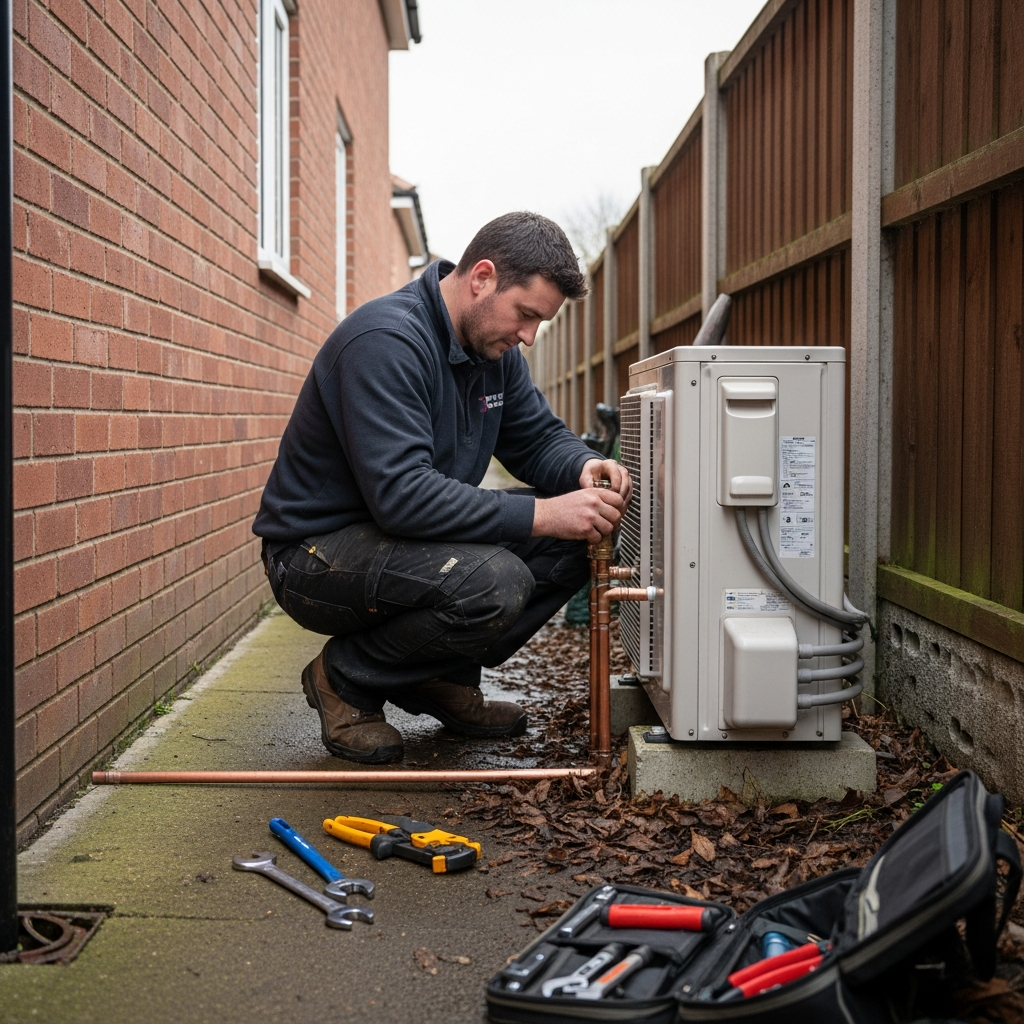
Heat pump technology works brilliantly. The equipment is reliable, efficient, and well-proven across millions of installations worldwide. But a heat pump is only as good as its installation. When things go wrong, it is almost always the installation — not the technology — that is to blame. These 5 case studies are drawn from real situations reported to MCS, consumer forums, and installer networks. Each illustrates a common mistake, explains what went wrong, and describes how it was resolved. More importantly, each teaches you how to avoid the same problem.
Start right — get quotes from trusted installers
Get Free Vetted QuotesMCS-certified, independently reviewed, experienced heat pump installers.
Case Study 1: The Oversized System
The Situation
A homeowner in Oxfordshire had a 16kW air source heat pump installed in a well-insulated 3-bedroom semi-detached house. The installer did not provide a heat loss calculation. An independent assessment later showed the house needed only 7kW — the installed system was more than double the required size.
What Went Wrong
The oversized heat pump short-cycled constantly — turning on for 5-10 minutes, then shutting off for 15-20 minutes, then restarting. This cycling pattern meant the system never reached optimal efficiency. The measured COP was 2.1 — far below the 3.0+ that the property should have achieved. Electricity bills were 40% higher than expected.
The oversizing also caused uneven heating: rooms closest to the heat pump overheated while distant rooms remained cool. The constant cycling increased wear on the compressor, raising concerns about premature failure and warranty implications.
Resolution
The homeowner complained to the installer, who initially insisted the system was correctly sized. After escalating to RECC with an independent assessment report, RECC found in the homeowner's favour. The installer was required to replace the 16kW unit with a correctly sized 8kW unit at no additional cost to the homeowner. After the replacement, COP improved to 3.2 and bills dropped by 35%.
Lesson
Always insist on a room-by-room heat loss calculation — this is mandatory under MCS standards. If the heat pump size does not closely match the calculated heat loss, ask why. Use our calculator for an independent size check.
Case Study 2: The Uninsulated Property
The Situation
A 1930s 4-bedroom detached house in Lancashire with solid walls, single-glazed windows in some rooms, and minimal loft insulation had a 14kW heat pump installed to replace an oil boiler. The installer mentioned insulation might help but did not insist it was necessary.
What Went Wrong
The heat pump worked — but the poorly insulated building envelope meant it had to work incredibly hard. Design flow temperature was set to 55°C to compensate for the heat loss through uninsulated walls, dragging COP down to 2.0. Annual electricity bills for heating came to £1,850 — barely less than the £2,100 the homeowner had been paying for oil.
The homeowner felt misled: they had expected significant savings based on the installer's verbal assurances. The installation was technically competent — the problem was that a heat pump was the wrong first step for this property without insulation improvements.
Resolution
The homeowner subsequently invested £14,000 in external wall insulation (partially funded through the Home Upgrade Grant), double glazing, and loft insulation top-up. After insulation, the flow temperature was reduced to 40°C, COP improved to 2.9, and annual heating bills dropped to £980. The system finally delivered the savings expected — but only after an additional £14,000 investment.
Lesson
Insulate first, then install the heat pump. A good installer should assess insulation levels during the site survey and either recommend insulation improvements first or clearly explain the impact on running costs. The Energy Saving Trust consistently advocates a fabric-first approach. This is especially important when considering whether heat pumps are worth it for your property.
Case Study 3: The Missing Commissioning
The Situation
A Bristol homeowner had a well-known brand 10kW heat pump installed in a 3-bedroom detached house with good insulation. The physical installation was competent — pipework was neat, the outdoor unit was well-positioned, and all connections were correct. But the installer left the system running on factory default settings without performing a proper commissioning process.
What Went Wrong
Factory defaults are designed for a "generic" installation, not a specific property. The weather compensation curve was wrong for the property's insulation level, the flow temperature was set too high (55°C instead of the optimal 38°C), and the hot water schedule was inefficient. The result: a COP of 2.3 instead of the achievable 3.3.
For 14 months, the homeowner thought heat pumps were "not as efficient as claimed." It was only when another heating engineer visited for a separate plumbing job and noticed the settings that the problem was identified.
Resolution
The visiting engineer adjusted the weather compensation curve, reduced the flow temperature to 38°C, and optimised the hot water schedule. The adjustments took less than an hour. COP immediately improved from 2.3 to 3.1. Annual savings of approximately £350 — that had been lost for 14 months due to incorrect settings.
Lesson
Commissioning is as important as physical installation. Demand an MCS commissioning certificate showing the specific settings configured for your property. If your system seems to be underperforming, ask an independent engineer to check the commissioning — a simple settings adjustment can transform performance.
Think your system is underperforming?
Find an Independent AssessorRequest a "commissioning check" from an MCS-certified engineer — often solves the problem.
Case Study 4: The Disappearing Installer
The Situation
A Kent homeowner paid £11,000 for a heat pump installation (after the BUS grant). The installation was completed, but the MCS certificate was never issued, the commissioning certificate was not provided, and the hot water was intermittently failing. When the homeowner called the installer, the phone number was disconnected. The company's website went offline a week later. The installer had gone bust.
What Went Wrong
The installer was MCS-certified at the time of installation but was already in financial difficulty. They had taken on too many jobs, failed to complete paperwork, and ultimately ceased trading — leaving several customers without documentation or aftercare.
Resolution
Because the installation was MCS-certified, the homeowner had several protections:
- The insurance-backed warranty covered the workmanship issues — a different MCS installer was appointed to fix the hot water problem and properly commission the system
- RECC helped the homeowner obtain the MCS certificate retrospectively through the certification body's records
- The manufacturer warranty on the heat pump unit was unaffected by the installer's insolvency
- The homeowner had paid by credit card and successfully claimed a partial refund for the incomplete work under Section 75
Lesson
MCS certification provides a safety net even when installers fail. Always use MCS-certified installers, always pay by credit card, and always ensure you receive all documentation before making the final payment. Know your consumer rights and understand the warranty protections available to you.
Case Study 5: The Wrong Radiators
The Situation
A homeowner in Edinburgh had a 9kW heat pump installed in a 3-bedroom Victorian terrace. The installer did not assess the existing radiators and assured the homeowner they would be "absolutely fine." The house had original single-panel radiators throughout — small by modern standards.
What Went Wrong
At the 40°C flow temperature needed for efficient heat pump operation, the undersized radiators could not emit enough heat to warm the rooms adequately. The homeowner turned the flow temperature up to 60°C to compensate, which made the rooms warm but destroyed the heat pump's efficiency — COP dropped to 1.8, making it more expensive to run than the gas boiler it replaced.
The homeowner was understandably frustrated: they had invested £5,500 (after grant) and their heating bills had gone up, not down.
Resolution
An independent assessment confirmed that 7 of the property's 9 radiators needed upgrading to double-panel convectors. The original installer initially refused, claiming the radiators were adequate. After escalation to RECC, the installer was required to replace the 7 radiators at their own cost — an expense of approximately £2,800.
After the radiator upgrades, the flow temperature was reduced to 42°C. COP improved from 1.8 to 3.0. Annual heating costs dropped from £1,400 to £780 — the savings the homeowner had expected from the start.
Lesson
Radiator assessment is non-negotiable. Every radiator must be checked against the heat loss calculation at the design flow temperature. Our radiator guide explains exactly when upgrades are needed. If an installer says "your radiators are fine" without calculating, that is a clear red flag.
Common Patterns Across All 5 Cases
| Pattern | Cases Affected | Prevention |
|---|---|---|
| Missing or inadequate heat loss calculation | 1, 2, 5 | Demand MCS-compliant room-by-room calculation |
| Poor or missing commissioning | 3, 4 | Insist on commissioning certificate with specific settings |
| Installer not assessing existing system | 2, 5 | Ask specifically about insulation and radiator adequacy |
| Homeowner not getting multiple quotes | 1, 2, 3, 5 | Always get 3+ quotes for comparison |
| Documentation gaps | 4 | Check all documents before final payment |
How to Protect Yourself
- Get at least 3 quotes from MCS-certified installers
- Insist on a room-by-room heat loss calculation
- Ask about insulation improvements first
- Demand radiator assessment at design flow temperature
- Require full MCS commissioning with certificate
- Receive all documentation before final payment
- Pay by credit card for Section 75 protection
- Understand your consumer rights
- Know how to complain effectively if needed
- Check warranty terms before signing
Frequently Asked Questions
How common are installation problems?
Around 5-8% of installations need some remedial work in the first year. Serious problems requiring system replacement are very rare — less than 1%. The technology is reliable; installation quality is the variable.
What is the most common mistake?
Incorrect system sizing, stemming from a missing or inadequate heat loss calculation. This leads to either short-cycling (oversized) or inadequate heating (undersized).
Can bad installations be fixed?
Usually yes. Most problems — commissioning errors, wrong settings, inadequate radiators — can be fixed without replacing the heat pump. The equipment is usually fine; it is the setup that needs correcting.
Who pays for fixes?
The original installer under their workmanship warranty and MCS Consumer Code. If they refuse, RECC can order remediation. If the installer goes bust, insurance-backed warranty cover applies.
Should these stories put me off heat pumps?
No. These are installation failures, not technology failures. Choose a competent installer and the technology works brilliantly. The same risks exist with any major home system — including gas boiler installations.
How do I avoid problems?
Use MCS-certified installers, get 3+ quotes, insist on heat loss calculations, check red flags, and pay by credit card.
Get it right first time
Get Quotes From Top-Rated InstallersEvery installer verified, reviewed, and MCS-certified — avoid the case studies above.
Installation Quality Is Everything
These case studies reinforce one message: the heat pump technology works — it is always the installation that determines the outcome. The installation process is well-understood, MCS standards provide a quality framework, and the BUS grant ensures you use certified installers. Combined with solar panels from equally qualified installers, a properly installed heat pump delivers decades of efficient, affordable heating.