Heat Pump Installation Red Flags: 10 Signs of a Bad Installer
A heat pump installation costing £8,000-14,000 (before the BUS grant) is one of the biggest home improvement investments you will make. Get the right installer and you will enjoy decades of efficient, affordable heating. Get the wrong one and you could face a system that underperforms, breaks down, costs more to run than it should, or even needs replacing. This guide identifies the 10 most common red flags that signal an installer is not up to the job — based on real complaints, MCS dispute data, and feedback from experienced heating engineers.
Get quotes from vetted, MCS-certified installers
Get Free Trusted QuotesWe only connect you with MCS-certified, experienced heat pump installers.
Red Flag 1: No Room-by-Room Heat Loss Calculation
Why it matters: The heat loss calculation is the foundation of the entire installation. It determines what size heat pump you need, whether your radiators are adequate, and what flow temperature the system should run at. Without it, the installer is guessing.
An oversized heat pump short-cycles (turns on and off repeatedly), wasting energy and wearing out components faster. An undersized heat pump cannot heat your home on the coldest days. Both cost you money and reduce comfort.
According to the MCS installation standard, a room-by-room heat loss calculation is mandatory. If an installer does not do one, they are not following the MCS standard — which means your installation may not qualify for the BUS grant and the warranty may be compromised.
What to ask: "Can you show me the room-by-room heat loss calculation for my property?" A good installer will talk you through it. A bad one will change the subject.
Red Flag 2: No Home Survey
Why it matters: Every property is different. Wall construction, insulation levels, window quality, existing pipework, electrical supply capacity, outdoor unit positioning, planning constraints — none of these can be assessed remotely from a desk.
An installer who provides a final quote without visiting your property is either inexperienced or cutting corners. Initial estimates based on online information are reasonable, but the final quote must be based on a physical site survey.
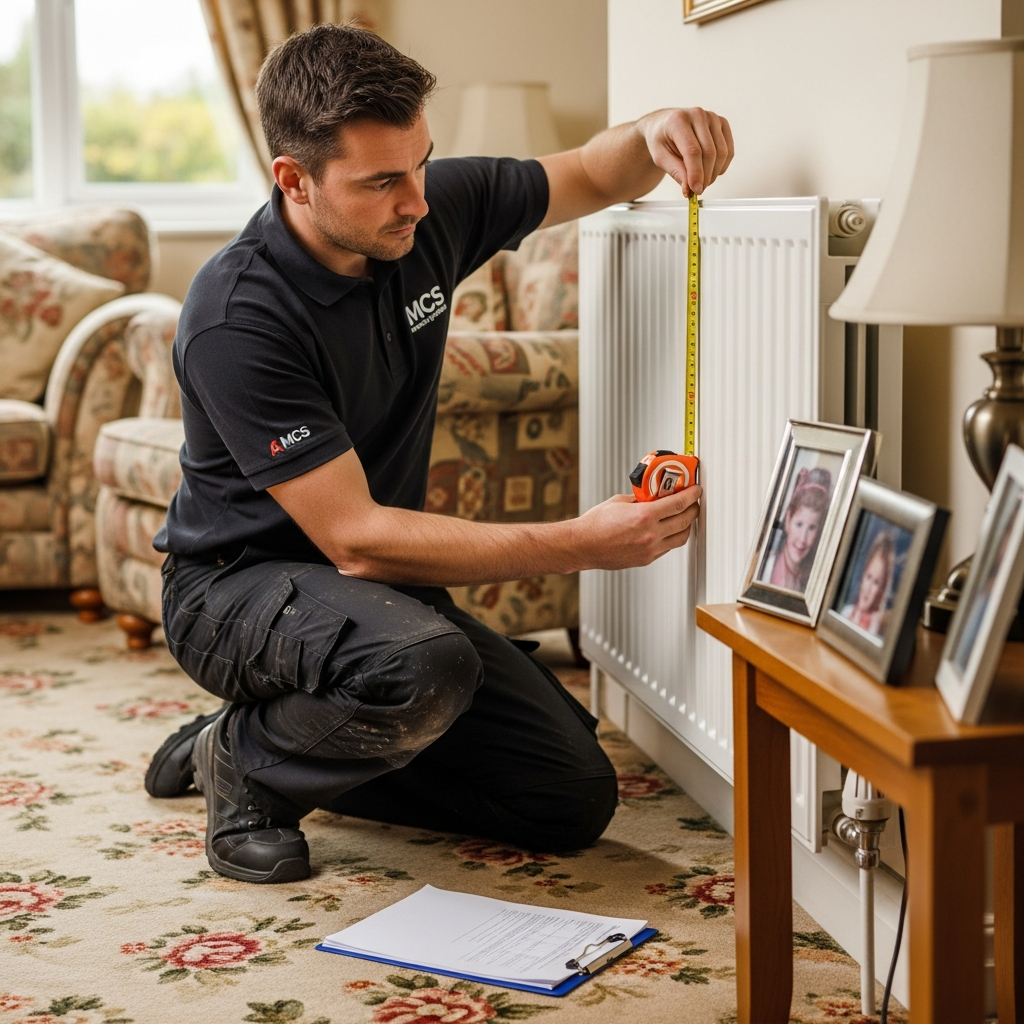
What to expect: A proper site survey takes 60-90 minutes. The installer should measure rooms, check insulation, inspect the existing heating system, assess the electrical supply, identify the best location for the outdoor unit, and discuss your heating habits and preferences.
Red Flag 3: Not MCS-Certified
Why it matters: MCS certification is not just a badge — it is a quality assurance framework that includes standards for design, installation, and commissioning. More importantly, the BUS grant of £7,500 is only available for installations by MCS-certified installers. Using a non-MCS installer means you forfeit £7,500 in free money.
You can verify any installer's MCS status at mcscertified.com/find-an-installer. If they claim to be MCS-certified but do not appear in the directory, walk away.
Additional protections: MCS-certified installations come with Consumer Code protection, including a dispute resolution process and insurance-backed warranties. Non-MCS installations have none of these safeguards.
Red Flag 4: Pressure to Sign Quickly
Why it matters: Legitimate installers are busy — they do not need high-pressure sales tactics. If an installer offers a "special price" that is only valid for 24 hours, claims the grant is "about to end" (it is not), or pressures you to sign a contract before you have compared quotes, they are using sales tactics that prioritise their commission over your interests.
Good installers will provide a quote, explain it thoroughly, encourage you to get comparison quotes, and follow up politely. They know their work speaks for itself.
What to do: Always get at least 3 quotes. Take your time to compare them. Any installer who tries to prevent this is not acting in your interest.
Red Flag 5: Vague or Missing Quote Details
Why it matters: A proper heat pump quote is a detailed document, not a one-line price. If the quote does not specify the exact heat pump brand, model, and size; the hot water cylinder specification; any radiator upgrades; pipework and electrical work; commissioning process; and warranty terms — then you cannot compare it meaningfully with other quotes, and you have no contractual protection if the installed system differs from what you expected.
| Quote Item | Good Quote Includes | Bad Quote Says |
|---|---|---|
| Heat pump | Vaillant aroTHERM plus 7kW (VWL 75/6) | "Air source heat pump" |
| Hot water | Vaillant uniSTOR 200L cylinder | "Hot water cylinder included" |
| Radiators | 3x K2 600x1200 replacements specified | "Radiators extra if needed" |
| Commissioning | Full MCS commissioning with certificate | Not mentioned |
| Grant | "We apply for £7,500 BUS on your behalf" | "Grant available separately" |
| Warranty | 7-year manufacturer + 2-year workmanship | "Standard warranty" |
Red Flag 6: Recommending an Oversized System
Why it matters: Some installers recommend larger heat pumps than necessary — either because they have not done a proper heat loss calculation, or because a bigger system means a bigger sale. An oversized heat pump costs more to buy, short-cycles (reducing efficiency by 10-20%), and wears out faster.
A well-insulated 3-bedroom semi-detached house typically needs a 5-8kW heat pump. If an installer quotes a 12-14kW system for this property without a clear explanation based on heat loss data, they are oversizing.
What to check: The heat pump size (in kW) should closely match the calculated heat loss (in kW) at the design outdoor temperature. A small margin (10-15%) is appropriate; a 50-100% margin is not.
Not sure if your quote is right?
Check With Our CalculatorGet an independent estimate of the right system size for your home.
Red Flag 7: No Discussion of Radiators or Emitters
Why it matters: Heat pumps run most efficiently at low flow temperatures (35-45°C) compared to gas boilers (60-80°C). At these lower temperatures, some existing radiators may not be large enough to heat the room adequately. A good installer will check every radiator against the heat loss calculation and recommend upgrades where needed.
An installer who says "your existing radiators will be fine" without checking is either lazy or hoping you will not notice the poor performance until after they have been paid. Our radiator guide explains when upgrades are necessary and when they are not.
Red Flag 8: Dismissing Your Questions
Why it matters: You are spending thousands of pounds and will live with this system for 20+ years. You deserve clear, patient answers to every question. If an installer is evasive, condescending, or impatient when you ask about costs, performance, noise, or maintenance, imagine how they will respond when you have a problem after installation.
Good installers welcome questions — they know that informed customers make better decisions and are more satisfied with the result. They will explain COP, flow temperatures, radiator sizing, and noise levels in plain language.
Red Flag 9: No Commissioning Plan
Why it matters: Commissioning is the process of setting up, testing, and optimising the heat pump after physical installation. It includes setting the correct flow temperature, configuring the weather compensation curve, checking refrigerant charge, verifying electrical connections, and testing all safety controls. A heat pump that is installed but not properly commissioned will underperform — sometimes dramatically.
According to industry data, poor commissioning is responsible for approximately 30% of heat pump performance problems. The Energy Saving Trust notes that a poorly commissioned heat pump can use 20-30% more electricity than one that is properly set up.
What to ask: "What does your commissioning process include? Will I receive an MCS commissioning certificate?" If the answer is vague or dismissive, the installer may be planning to install and leave without proper setup.
Red Flag 10: Cash-Only or No Written Contract
Why it matters: Any installer who insists on cash payment, asks for a large upfront deposit (more than 25%), or does not provide a written contract is a major risk. Without a written contract, you have limited legal recourse if things go wrong. Cash payments leave no paper trail for warranty claims or complaints.
A reputable installer will provide a detailed written contract, accept payment by card or bank transfer, typically ask for a deposit of 10-25% with the balance on completion, and be transparent about payment terms.
Consumer protection: Payments by credit card over £100 provide additional protection under Section 75 of the Consumer Credit Act. This gives you the right to claim against the card company if the installer fails to deliver.
What a Good Installer Looks Like
Now you know the red flags, here is what a trustworthy, competent heat pump installer should offer:
- MCS certification (verifiable online)
- Detailed site survey (60-90 minutes)
- Room-by-room heat loss calculation
- Clear, itemised written quote with exact brand/model specifications
- Radiator assessment and honest advice on upgrades
- Explanation of expected performance (COP, running costs)
- BUS grant application handling
- Full commissioning with MCS certificate
- Written warranty (manufacturer + workmanship)
- Aftercare and maintenance service
- Patient, clear answers to all your questions
- References or reviews from previous customers
Getting 3 quotes from MCS-certified installers is the best way to identify the good ones — you will quickly see the difference in professionalism, detail, and approach.
Frequently Asked Questions
What is the biggest red flag?
No room-by-room heat loss calculation. This is mandatory under MCS standards and is the foundation of a properly sized and designed system.
Should an installer always do a home survey?
Yes. Any final quote without a physical site survey is a red flag. Initial estimates based on online information are fine, but the binding quote must follow a site visit.
How do I check MCS certification?
Search mcscertified.com/find-an-installer. If they are not listed, they are not certified — and you will not qualify for the BUS grant.
What should a proper quote include?
Exact brand/model, system size, hot water cylinder spec, radiator upgrades, pipework, electrical work, commissioning, warranty details, grant application, and a full cost breakdown.
Can I get a refund from a bad installer?
MCS-certified installations have Consumer Code dispute resolution. You also have rights under the Consumer Rights Act 2015. Our complaints guide walks you through the process.
How many quotes should I get?
At least 3 from different MCS-certified installers. This lets you compare prices, approaches, and professionalism — and helps you spot red flags by comparison.
Get quotes from trusted, vetted installers
Get Free MCS-Certified QuotesAll installers in our network are MCS-certified and experienced — no cowboys.
Protecting Your Heat Pump Investment
A heat pump is a 20-year investment that should deliver reliable, affordable heating for decades. The difference between a good installation and a bad one comes down to the installer. Use our installation guide to understand the process, get 3+ quotes from MCS-certified installers, and watch for the red flags above. The BUS grant and potential solar panel savings make the economics compelling — but only if the installation is done right. Know your consumer rights and do not be afraid to walk away from any installer who raises red flags.