Heat Pump vs Gas Boiler: Full UK Comparison
A heat pump can cut your heating carbon emissions by 75% and, with the £7,500 BUS grant, cost roughly the same upfront as a premium gas boiler. This is the definitive side-by-side comparison every UK homeowner needs before choosing their next heating system.
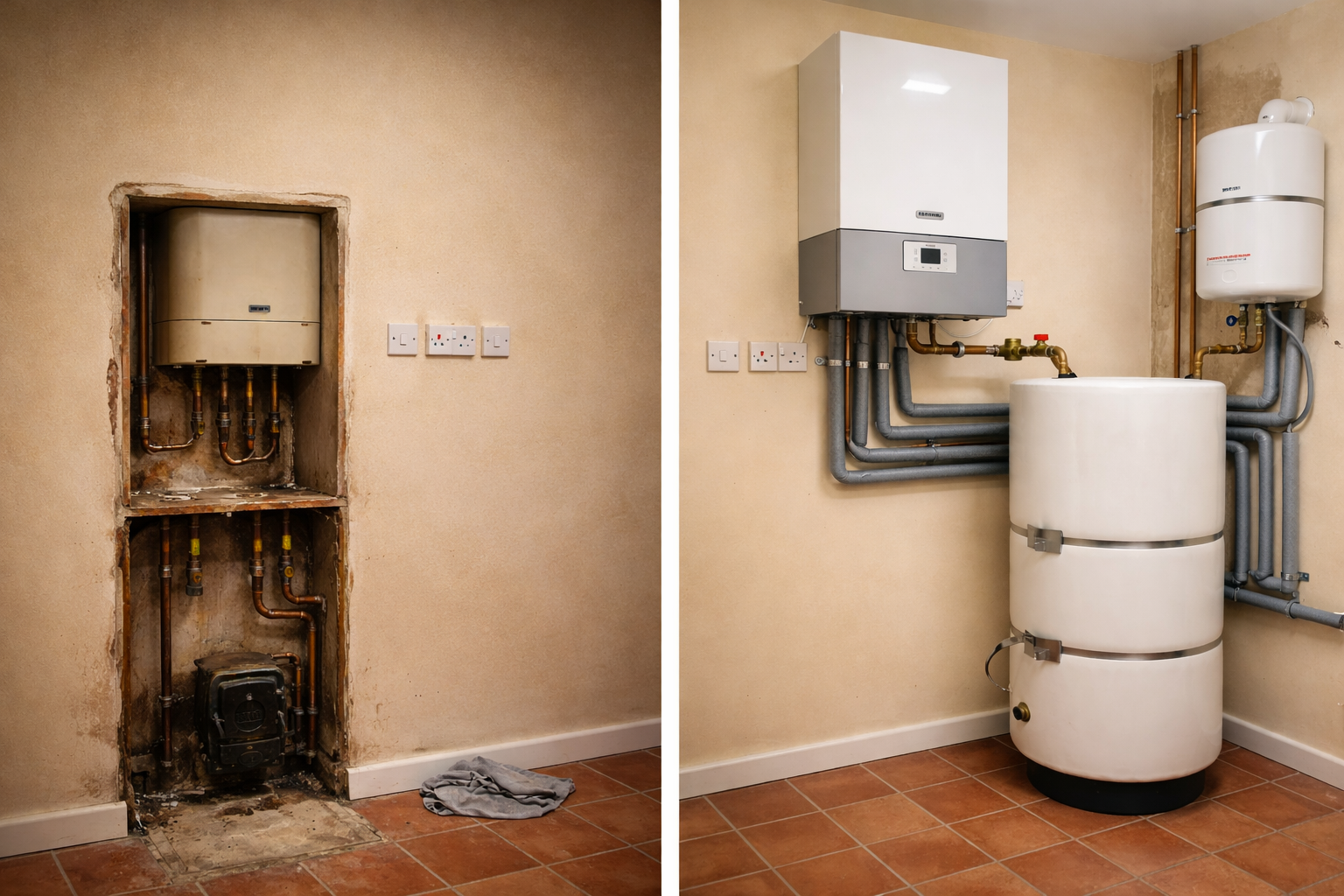
This is the comparison that matters most for UK homeowners. Over 80% of British homes are heated by gas boilers, and when those boilers need replacing, the question is increasingly: should you go with another gas boiler, or switch to a heat pump?
There is no shortage of opinions online, but many are outdated, one-sided, or based on non-UK data. This guide compares every aspect that matters — installation cost, running cost, efficiency, lifespan, maintenance, comfort, noise, environmental impact, and future-proofing — using current UK figures and real-world data.
Not sure if a heat pump suits your home?
Answer a few quick questions and get a personalised suitability assessment.
Check Your Property NowFree, instant result. No sign-up required.
Installation Cost
Gas Boiler
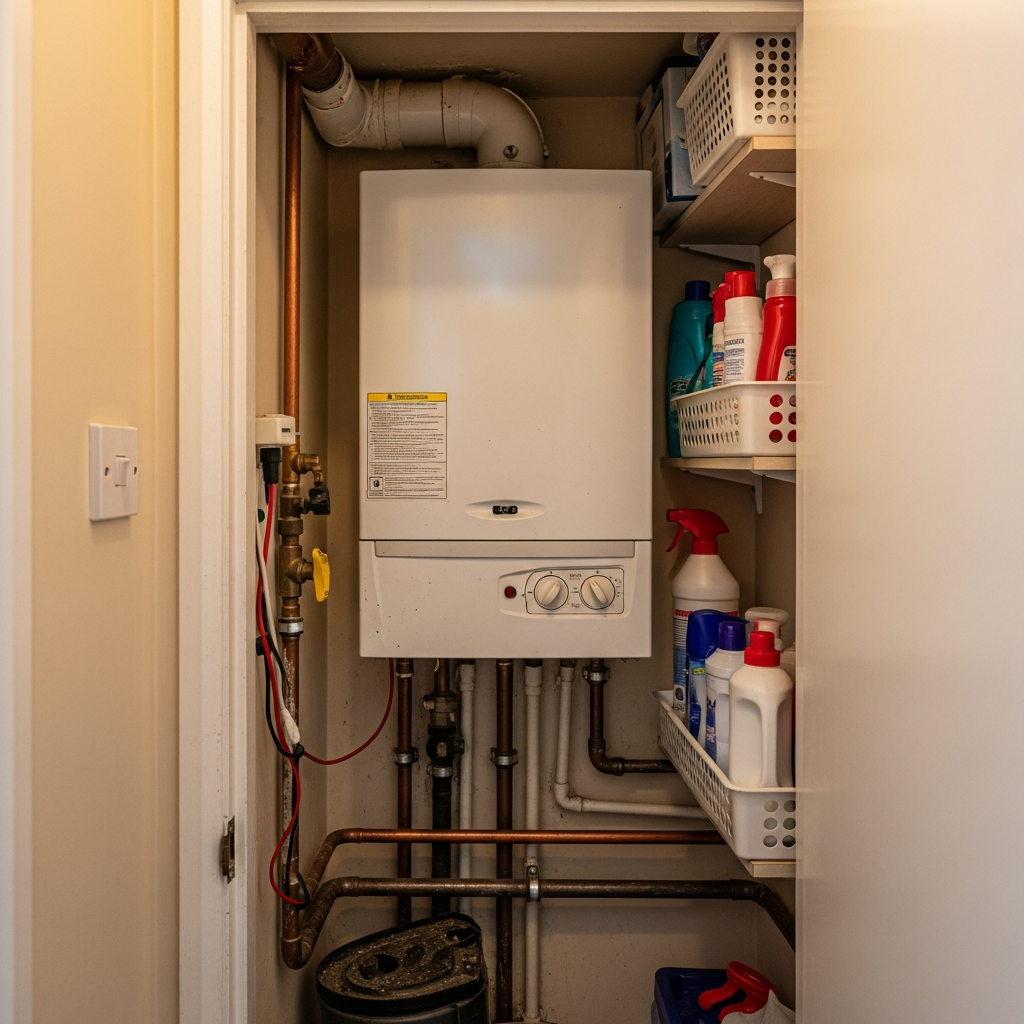
A new gas boiler installation in 2026 typically costs:
- Budget combi boiler: £2,000 to £2,800 installed
- Mid-range combi boiler (Worcester Bosch, Vaillant): £2,800 to £3,800 installed
- Premium combi boiler (Viessmann, high-output models): £3,500 to £4,500 installed
- System boiler with cylinder: £3,500 to £5,000 installed
A straightforward like-for-like gas boiler replacement in a typical three-bedroom semi costs around £3,000 to £3,500.
Heat Pump
A typical air source heat pump installation costs:
- Small property (1-2 bed): £8,000 to £10,000
- Medium property (3-bed semi): £10,000 to £12,000
- Larger property (4+ bed detached): £12,000 to £15,000
After the £7,500 BUS grant, these figures drop to:
- Small property: £500 to £2,500
- Medium property: £2,500 to £4,500
- Larger property: £4,500 to £7,500
Verdict on installation cost: Without the grant, a heat pump costs two to four times more than a gas boiler. With the £7,500 BUS grant, the gap closes dramatically — for smaller properties, a heat pump can actually be cheaper than a premium gas boiler. For the full cost breakdown, see our heat pump cost guide.
Running Costs
This is where the comparison gets nuanced. Running costs depend on energy prices, system efficiency, and your property's heat demand.
How Efficiency Affects Running Costs
A modern condensing gas boiler is 90-94% efficient — meaning for every £1 of gas burned, you get 90-94p of useful heat. A heat pump does not burn fuel. Instead, it moves heat from the outside air into your home. For every £1 of electricity consumed, a typical heat pump delivers £2.50 to £3.50 worth of heat (a COP of 2.5 to 3.5).
However, electricity costs roughly 3.5 times more than gas per unit. This is the key tension in the running cost comparison.
Running Cost Calculation
For a typical three-bedroom semi with 12,000 kWh annual heat demand, using 2026 Ofgem cap rates:
Gas boiler (92% efficiency):
- Gas required: 12,000 / 0.92 = 13,043 kWh
- Cost at 6.76p/kWh: £882 per year
- Plus standing charge: approximately £107 per year
- Total: approximately £989 per year
Heat pump (COP 3.0):
- Electricity required: 12,000 / 3.0 = 4,000 kWh
- Cost at 24.50p/kWh: £980 per year
- Electricity standing charge already paid (for lights, appliances, etc.)
- Total: approximately £980 per year

Verdict on running costs: At current energy prices, running costs are roughly equal. A well-installed heat pump achieving COP 3.2+ will be slightly cheaper than gas. A system achieving only COP 2.5 will be slightly more expensive. The difference either way is typically less than £150 per year.
Crucially, this picture is expected to improve for heat pumps. The government has committed to rebalancing electricity and gas prices, which would tip the running cost comparison firmly in heat pumps' favour. If you are also considering solar panels, combining a heat pump with solar PV from Home Solar Guide can cut electricity costs by a further 30-50%.
Efficiency
There is no contest here. A gas boiler can never exceed 100% efficiency — it burns fuel and extracts heat from the resulting gases. The best condensing boilers achieve 92-94% in real-world conditions.
A heat pump routinely achieves 250-350% efficiency (COP 2.5-3.5) because it is not creating heat — it is moving heat that already exists in the outside air. Even on the coldest UK winter days, a well-designed heat pump maintains a COP above 2.0.
Verdict on efficiency: Heat pumps are dramatically more efficient. They deliver two to three times more heat per unit of energy consumed. This is a fundamental physical advantage that cannot be matched by any combustion-based system.
Lifespan
Gas Boiler
A well-maintained gas boiler typically lasts 12 to 15 years. Some last longer, but efficiency degrades over time and repair costs increase significantly after year 10. Most manufacturers offer warranties of 5 to 10 years.
Heat Pump
Air source heat pumps are designed to last 20 to 25 years. The outdoor compressor unit is the main component with a finite life, but it contains fewer moving parts than a boiler and no combustion components to corrode. Many manufacturers offer warranties of 7 to 12 years, with some extending to 15.
Verdict on lifespan: A heat pump lasts roughly twice as long as a gas boiler. Over a 30-year period, you would need two or three gas boilers but only one or two heat pumps. This has a significant impact on total cost of ownership — see our 20-year cost comparison for the full analysis.
Maintenance
Gas Boiler
Gas boilers require annual servicing by a Gas Safe registered engineer. This typically costs £80 to £120 per year. The annual service is strongly recommended (and required by most warranty terms) because gas boilers involve combustion, and faults can lead to carbon monoxide leaks — a serious safety risk.
Repair costs increase with age. Common issues include failed pumps (£200-£400), faulty diverter valves (£200-£350), and heat exchanger failures (£400-£600). After 10 years, you should budget £150 to £300 per year for repairs on average.
Heat Pump
Heat pumps require less frequent servicing — typically every one to two years. A service costs £100 to £200 and involves checking refrigerant levels, cleaning filters, inspecting the outdoor unit, and verifying system pressures.
Repair costs are generally lower because heat pumps have fewer components that can fail. There is no combustion, no flue, no gas valve, and no carbon monoxide risk. The most common issue is fan motor replacement, which costs £200 to £400.
Verdict on maintenance: Heat pumps are cheaper and simpler to maintain, with lower repair costs and no annual gas safety requirement.
Ready to compare real quotes for your property?
Get Free Heat Pump QuotesMCS-certified installers only. Compare up to 3 quotes.
Comfort
Gas Boiler
Gas boilers heat radiators to high temperatures (60-80°C) very quickly. This gives a fast response — you feel the heat within minutes of the system firing up. However, the heat can be uneven, with radiators cycling between hot and cold as the thermostat triggers the boiler on and off.
Heat Pump
Heat pumps typically run at lower flow temperatures (35-50°C) and operate more continuously rather than cycling on and off. This produces a more even, consistent warmth throughout the home. However, the initial warm-up from cold takes longer than a gas boiler.
Some homeowners need to adjust their expectations and habits when switching from a boiler. Rather than turning the heating on and off manually, heat pumps work best when set to maintain a steady temperature using a programmable thermostat.

Verdict on comfort: Different rather than better or worse. Heat pumps provide more consistent warmth but slower response times. Most users adapt within a few weeks and report overall comfort is equal or better. For advice on whether your radiators need upgrading, see our dedicated guide.
Noise
Gas Boiler
Gas boilers are installed indoors and produce a low hum when firing. Noise levels are typically 40-50 dB — similar to a refrigerator. Most homeowners barely notice their boiler running.
Heat Pump
The outdoor unit of a heat pump produces fan noise, typically 40-55 dB at one metre distance. At the boundary of your property, noise is usually well below 42 dB — the permitted planning limit. Modern heat pumps are significantly quieter than older models, and many are barely audible from inside the home.
Verdict on noise: A gas boiler is slightly quieter, but modern heat pumps are not the noisy machines some people imagine. If you visit a neighbour who has one, you may be surprised how little you can hear.
Environmental Impact
Gas Boiler
Burning natural gas for heating produces approximately 215g of CO2 per kWh of heat (accounting for boiler efficiency). A typical UK home using a gas boiler emits around 2,500 to 3,000 kg of CO2 per year from heating alone.
Heat Pump
A heat pump's carbon footprint depends on the electricity grid's carbon intensity. In 2026, the UK grid produces roughly 150g CO2 per kWh of electricity. At COP 3.0, a heat pump produces approximately 50g CO2 per kWh of heat — less than a quarter of a gas boiler's emissions.
As the grid gets greener (the UK targets a fully decarbonised grid by 2035), heat pump emissions will fall towards zero. A gas boiler's emissions, by contrast, will never change — it will always burn fossil fuel. Pairing your heat pump with solar panels can reduce your grid electricity use further and accelerate those carbon savings.
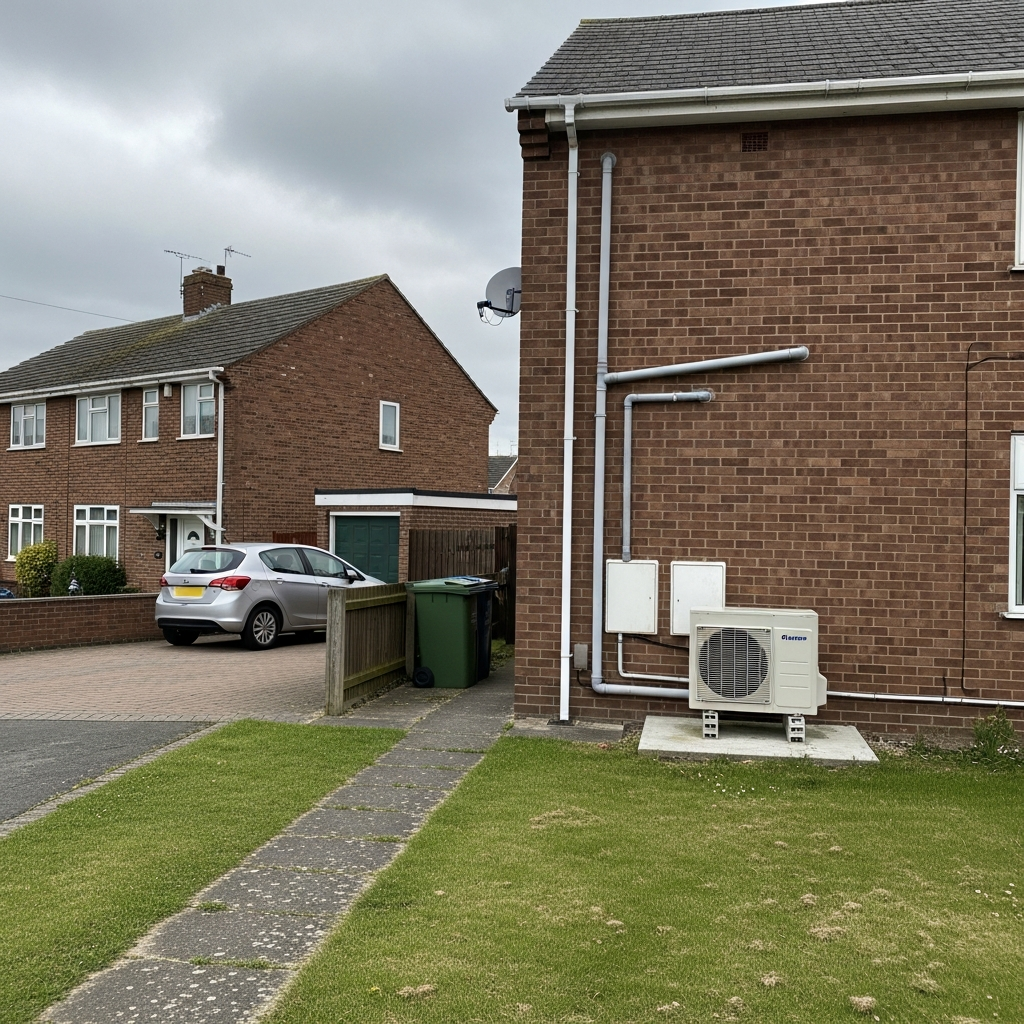
Verdict on environmental impact: Heat pumps are dramatically better for the environment and will only improve. If reducing your carbon footprint matters to you, this alone may be sufficient reason to switch.
Future-Proofing
Several trends favour heat pumps over gas boilers for the long term:
- Energy price rebalancing: The government plans to make electricity cheaper relative to gas, improving heat pump economics
- Potential gas boiler restrictions: Future regulations may restrict or ban new gas boiler installations in certain properties
- EPC requirements: Minimum EPC ratings for rental properties and mortgage lending may require higher-efficiency heating systems
- Gas network costs: As more homes leave the gas grid, the cost of maintaining the network will be spread across fewer customers, potentially increasing standing charges
- Property value: Energy-efficient homes increasingly command a premium in the housing market
Verdict on future-proofing: A heat pump is clearly the more future-proof choice. A gas boiler installed today will still be burning fossil fuel in 2040 — by which time the regulatory and economic landscape may have shifted significantly against gas heating.
Full Summary Comparison Table
| Category | Gas Boiler | Heat Pump | Winner |
|---|---|---|---|
| Upfront cost (no grant) | £2,000 - £5,000 | £8,000 - £15,000 | Gas boiler |
| Upfront cost (after BUS grant) | £2,000 - £5,000 | £500 - £7,500 | Close / Heat pump (small homes) |
| Annual running cost | ~£989 | ~£980 | Roughly equal |
| Efficiency | 90-94% | 250-350% (COP 2.5-3.5) | Heat pump |
| Lifespan | 12-15 years | 20-25 years | Heat pump |
| Annual maintenance | £80-£120/year (mandatory) | £50-£100/year | Heat pump |
| Comfort | Fast but uneven | Slower but more consistent | Draw (preference) |
| Noise | 40-50 dB (indoor) | 40-55 dB (outdoor) | Gas boiler (marginally) |
| CO2 emissions | ~215g/kWh heat | ~50g/kWh heat | Heat pump |
| Future-proofing | Declining support | Government-backed | Heat pump |
Based on 2026 UK prices, Ofgem cap rates, and a typical 3-bed semi-detached home with 12,000 kWh annual heat demand.
Key Numbers at a Glance
Our Honest Verdict
For most UK homeowners, a heat pump is the better long-term choice — and the £7,500 BUS grant makes the upfront cost comparable to a gas boiler. The financial case is roughly neutral today and is expected to improve significantly in heat pumps' favour over the next five to ten years.
A gas boiler still makes sense if you are on a very tight budget and cannot cover even the post-grant cost, if your property is very poorly insulated and you cannot address that first, or if you are planning to move within a year or two.
For everyone else — particularly those replacing ageing boilers, those who care about carbon emissions, and those thinking about the next 15-20 years rather than just the next 5 — a heat pump is the smarter investment.
Use our suitability checker to see if your property is a good fit, then get quotes from MCS-certified installers to see real prices for your home.
Make the switch with confidence
Get up to 3 free quotes from MCS-certified heat pump installers in your area.
Get Free QuotesNo obligation. Vetted installers only.
Frequently Asked Questions
Is a heat pump cheaper to run than a gas boiler?
At current UK energy prices, running costs are roughly equal for a well-installed heat pump (COP 3.0+) and a gas boiler. The heat pump becomes cheaper if you achieve a higher COP, use a time-of-use electricity tariff, or benefit from future electricity price reductions.
Can a heat pump heat my home as well as a gas boiler?
Yes. A properly sized and installed heat pump will heat your home just as effectively as a gas boiler. It heats more gradually and consistently rather than in short bursts, which most people find more comfortable once they adjust.
Do I need to replace my radiators?
Not always. Many existing radiators work perfectly well with a heat pump, especially if the property is well insulated. Some homes may need a few radiators upgraded to larger models. Your installer will assess this during the survey. See our radiator guide.
How long does a heat pump last compared to a gas boiler?
A heat pump typically lasts 20 to 25 years, compared to 12 to 15 years for a gas boiler. This means you may need two gas boilers in the same period as one heat pump.
Will gas boilers be banned?
There is no confirmed ban on gas boilers in existing homes. However, the government has explored restrictions on new gas boiler installations in certain circumstances, and the direction of policy is clearly towards phasing out fossil fuel heating over the coming decades.
Can I switch back to a gas boiler if I don't like the heat pump?
Technically yes, though it would be unusual and expensive. If you are unsure, spend time researching, visit a home with a heat pump, and check your property's suitability before committing.
About This Guide
This heat pump vs gas boiler comparison is published by Home Heat Pump Guide, a UK-based resource helping homeowners make informed decisions about heat pump installations. We cover air source heat pumps, ground source heat pumps, government grants, and installation costs. Our guides are based on current UK data, Ofgem energy prices, and real-world performance figures. For solar energy information, visit our sister site Home Solar Guide.