Heat Pump vs Infrared Heating Panels: Which Is Better?
Infrared panels look appealing on paper — low upfront cost, no maintenance, instant heat. But the running costs tell a very different story. A heat pump uses three times less electricity for the same amount of warmth, saving over £36,000 across 15 years compared to whole-house infrared heating.
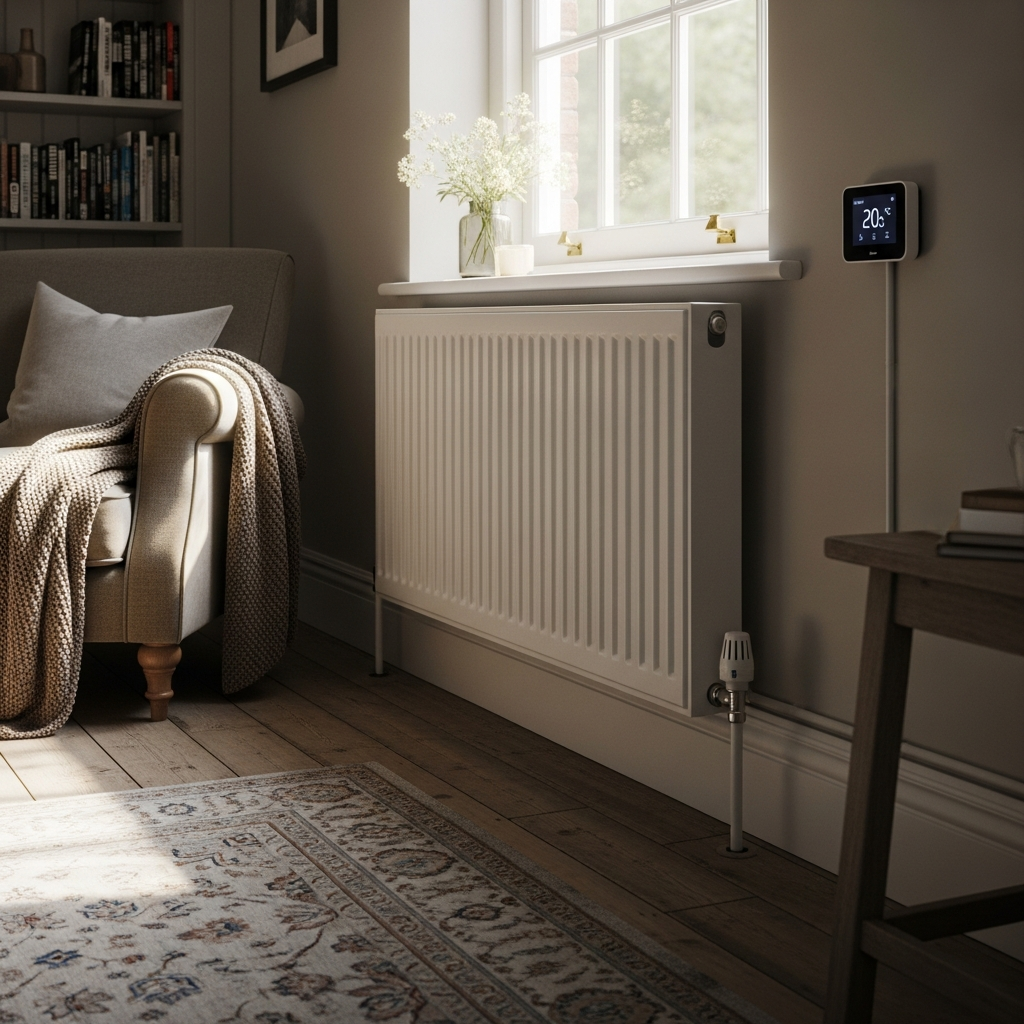
If you are searching for an alternative to your gas boiler, two very different technologies will appear on your radar: heat pumps and infrared heating panels. One is a whole-house central heating system. The other is a room-by-room electric heating solution. They solve the same problem — keeping your home warm — but they go about it in completely different ways.
This guide compares both systems honestly. For a broader look at all heating alternatives, see our complete comparison guide.
See your heat pump running costs vs electric heating
Use the free calculatorNo email required. Instant comparison based on your property.
How Each System Works
Heat Pumps
A heat pump extracts warmth from the outside air (or ground) and concentrates it to heat water that flows through your radiators or underfloor heating. For every unit of electricity it consumes, a well-installed heat pump delivers between 2.5 and 4 units of heat. Heat pumps provide central heating and hot water from a single system, replacing your boiler entirely.
Infrared Heating Panels
Infrared panels are flat, slim electric heaters mounted on walls or ceilings. Instead of heating the air in a room (as a conventional radiator does), they emit infrared radiation that heats objects and people directly. Each panel heats only the room it is in. There is no central system, no pipework, and no hot water cylinder.
| Feature | Heat Pump | Infrared Panels |
|---|---|---|
| Efficiency (COP) | 2.5 - 3.5 | 1.0 |
| Heating type | Whole-house central heating | Room-by-room |
| Hot water | Yes, included | No — separate solution needed |
| BUS grant eligible | Yes (£7,500) | No |
| Lifespan | 20-25 years | 10-20 years |
| Maintenance | Annual service £100-200 | Virtually none |
Installation Cost Comparison
Heat Pump (After Grant)
£4,000 - £8,500
Includes hot water, controls, radiator mods
Infrared Panels
£2,500 - £6,500
8-12 panels + electrician + hot water solution
Upfront Difference
£0 - £4,000
Erased within 2-3 years by running cost savings
Infrared panels are cheaper upfront, particularly before the BUS grant is applied. After the grant, the gap narrows considerably. Infrared panels do not provide hot water — if you are removing a gas boiler, you will also need an electric immersion heater, adding £500 to £2,000. See our full cost breakdown for heat pump pricing.
Running Cost Comparison
This is where the comparison becomes decisive.
Heat pump at COP 3.0, 24.50p/kWh standard rate. Infrared at 1:1 efficiency.
Even accounting for a generous 20% reduction in heat demand from infrared's direct heating effect, running costs remain more than double the heat pump figure. A heat pump on a dedicated tariff costs roughly a quarter of whole-house infrared heating. Pairing with solar panels can reduce heat pump running costs even further.
Check if your home suits a heat pump
Free suitability checkerTakes 60 seconds. Covers space, insulation, and existing heating system.
Long-Term Cost Over 15 Years
| Cost Element | Heat Pump | Infrared Panels |
|---|---|---|
| Installation | £6,000 | £5,000 |
| Running costs (15 years) | £18,600 | £55,800 |
| Maintenance / replacements | £2,250 | £2,500 |
| 15-year total | ~£26,850 | ~£63,300 |
| Difference | Heat pump saves ~£36,000 | |
Assumes 3% annual energy price inflation and COP 3.0 for heat pump
Over 15 years, the heat pump saves approximately £36,000 compared to infrared panels. The running cost difference is so large that it overwhelms any upfront saving. For a full financial assessment, see are heat pumps worth it?
Comfort and Practicality

A heat pump provides even, whole-house heating through radiators or underfloor heating. Every room benefits from consistent background warmth. Infrared panels heat individual rooms, which can create uneven temperatures — hallways, bathrooms, and transitional spaces are often left cold unless you install panels there too.
Infrared panels heat up instantly and can be controlled room by room, which is genuinely useful if you only use certain rooms at certain times. Heat pumps are slower to respond but maintain steady temperatures efficiently.
When Infrared Panels Make Sense
- Very small, well-insulated properties: A one-bedroom flat with excellent insulation has low heat demand
- Supplementary heating: Adding panels to rarely-used rooms rather than extending your central heating
- Properties where heat pump installation is impossible: Some flats or listed buildings cannot accommodate a heat pump
- Holiday homes or second properties: Low occupancy and instant heat-on-demand
When a Heat Pump Is the Better Choice
- Primary residences: The running cost advantage compounds year after year
- Houses with garden space: Easy to accommodate the outdoor unit
- Properties needing hot water: One system handles both
- Homes eligible for the BUS grant: The £7,500 grant dramatically reduces the upfront gap
- Anyone planning to stay long-term: Payback occurs within a few years
Environmental Comparison
Both systems run on electricity, so their carbon footprint depends on the UK grid's carbon intensity. However, the heat pump uses roughly one-third of the electricity for the same amount of heat. As the grid continues to decarbonise with more wind and solar generation, both systems improve — but the heat pump always maintains its 3:1 efficiency advantage.
Common Myths About Infrared Panels
"Infrared panels are more efficient than heat pumps" — Infrared panels are nearly 100% efficient at converting electricity to heat, but that is a 1:1 ratio. Heat pumps achieve 300% efficiency because they move heat rather than creating it.
"Infrared panels cost less to run because they heat you directly" — The direct heating effect does reduce perceived heat demand slightly, but not enough to overcome the threefold efficiency difference.
"Infrared panels are maintenance-free forever" — Panels last 10 to 20 years, but thermostats, wiring, and controllers may need attention. Heat pumps require annual servicing but last 20 to 25 years.

Get free quotes and see your real heat pump costs
Compare installer quotesMCS-certified installers. £7,500 BUS grant applied. No obligation.
Frequently Asked Questions
Are infrared panels cheaper than a heat pump?
To buy and install, yes — infrared panels cost less upfront. However, running costs are roughly three times higher, making them far more expensive over the lifetime of the system. After the BUS grant, a heat pump's upfront cost gap shrinks significantly.
Can I heat a whole house with infrared panels?
Technically yes, but it requires multiple panels in every room and results in high electricity bills. It also does not provide hot water. For whole-house heating, a heat pump is more practical and economical.
Do infrared panels work in poorly insulated homes?
Infrared panels are less affected by draughts because they heat objects directly. However, in a poorly insulated home, the overall heat demand is high, and electricity costs will be substantial. Improving insulation benefits both systems.
Can I use infrared panels alongside a heat pump?
Yes. Some homeowners use infrared panels as supplementary heating in rarely-used rooms — a home office or spare bedroom — while the heat pump handles the rest of the house and hot water. This can be a cost-effective hybrid approach.
Do infrared panels qualify for the Boiler Upgrade Scheme grant?
No. The BUS grant applies only to heat pumps and biomass boilers. Infrared panels receive no government subsidy.
Which is better for flats?
For flats where an air source heat pump cannot be installed externally, infrared panels may be one of the few low-carbon options available. However, some flats can accommodate air source heat pumps with landlord or freeholder permission.
About this guide: This article is part of our comparison and decision hub. Heat pumps offer three times the efficiency of any direct electric heating system, including infrared panels and storage heaters. Pairing a heat pump with solar panels maximises savings. The Boiler Upgrade Scheme provides £7,500 towards installation.