Heat Pump vs Hydrogen Boiler: The Future of Home Heating
Hydrogen boilers sound appealing — same pipes, same boiler, just greener gas. The reality? No domestic hydrogen boiler is available to buy, the UK village trial was cancelled, and even if hydrogen arrives, it will cost five to eight times more energy to produce the same heat as a heat pump. Heat pumps are proven, available, and grant-funded today.

Every time heat pumps are discussed, someone asks: "Why not just wait for hydrogen boilers?" It is a fair question. If hydrogen could flow through existing gas pipes and power familiar boilers, it would mean minimal disruption. The problem is that this scenario remains deeply uncertain.
This guide examines where hydrogen heating actually stands, how it compares to heat pumps on every practical measure, and whether waiting is a sound strategy. For the full picture on heating alternatives, see our heat pump vs gas boiler pillar guide.
Do not wait for uncertain technology — see your savings now
Use the free calculatorNo email required. Instant results based on your property details.
Where Hydrogen Heating Stands in 2026
The original vision was simple: produce green hydrogen using renewable electricity, blend it into the gas network, and use hydrogen-ready boilers in homes. Several key developments have changed the outlook:
- The hydrogen village trial was cancelled. No full-scale neighbourhood trial has taken place in the UK
- Government policy has shifted to favour electrification (heat pumps) over hydrogen for home heating
- Production costs remain high. Green hydrogen costs three to five times more per unit of heat than running a heat pump
- Infrastructure conversion would cost tens of billions and take decades
- No major manufacturer has committed to large-scale domestic hydrogen boiler production
The Efficiency Problem
This is the fundamental issue, and it comes down to physics.
Hydrogen path: electrolysis (70-80%) x transport/storage (80-90%) x boiler (85-92%)

Using renewable electricity to make hydrogen and then burning it to heat your home wastes roughly five to eight times more energy than simply using a heat pump. This is not a minor difference — it is a fundamental thermodynamic disadvantage that no amount of engineering can overcome.
Cost Comparison
| Factor | Heat Pump (Available Now) | Hydrogen Boiler (Projected) |
|---|---|---|
| Installation cost | £4,000 - £8,500 (after grant) | ~£2,500 - £4,000 (projected) |
| Annual running cost | ~£980 | £1,300 - £2,000 |
| Maintenance | £100 - £200/year | ~£100 - £150/year |
| Government grant | £7,500 BUS | None |
| Available when? | Now | Mid-2030s at earliest |
| Certainty | Proven, supported by policy | Highly uncertain |
Heat pump costs based on COP 3.0, 12,000 kWh heat demand. Hydrogen projections based on industry estimates.
Even in the most optimistic scenario for hydrogen pricing, heat pump running costs would remain substantially lower because of the efficiency difference.
Get free quotes for proven technology that works today
Compare heat pump quotesMCS-certified installers. £7,500 BUS grant applied. No obligation.
Availability and Timeline
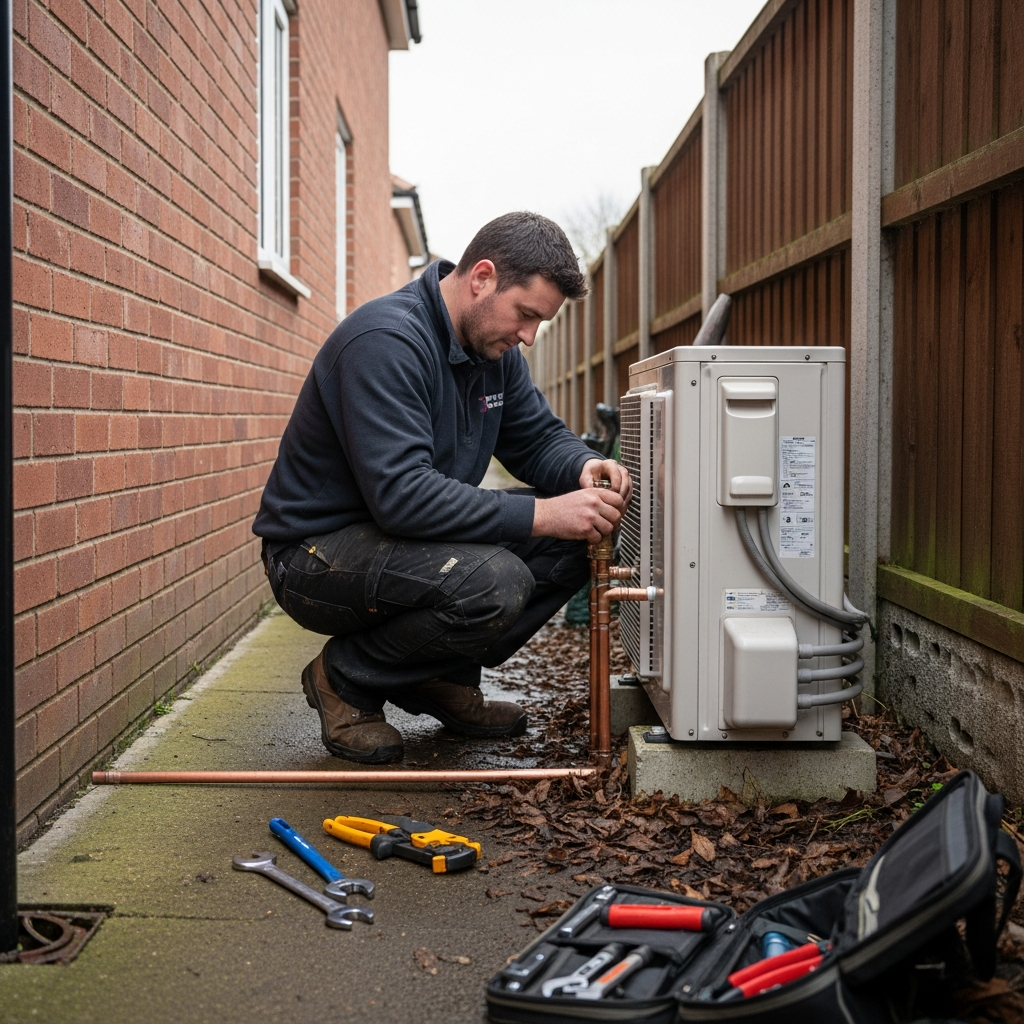
Heat pumps: Available now. Technology is mature, thousands of MCS-certified installers operate across the UK, the grant system is established, and over 250,000 installations happen annually.
Hydrogen boilers: No domestic product exists. No street-level hydrogen network for homes. The earliest realistic date for any significant deployment — if it happens — is the mid-2030s. The Climate Change Committee has stated hydrogen is unlikely to play a major role in home heating.
What About Hydrogen-Ready Boilers?
Some manufacturers sell "hydrogen-ready" boilers — gas boilers with a theoretical future conversion option. Important caveats:
- They currently burn natural gas — identical to standard boilers
- Conversion has not been tested at scale
- If hydrogen never arrives for homes, you have a standard gas boiler that needs replacing before 2035
- They cost £100 to £300 more than standard boilers for a feature that may never be used
Government Policy Direction
UK policy has moved decisively towards heat pumps for domestic heating:
- The Clean Heat Market Mechanism mandates manufacturers sell increasing percentages of heat pumps
- The Boiler Upgrade Scheme provides £7,500 for heat pumps — nothing for hydrogen
- The Future Homes Standard effectively requires heat pumps in new builds
- The gas boiler phase-out by 2035 targets gas, not a switch to hydrogen
- Government-funded hydrogen trials for heating have been scaled back

The Real-World Decision
Installing a heat pump now means: Immediate savings, £7,500 grant, 20-25 year system life, and certainty. The technology works and is supported by government policy.
Waiting for hydrogen means: Continuing to burn fossil gas with rising costs, waiting for technology that may never arrive for homes, missing the current grant window, and eventually needing to act anyway.
Check whether your home is ready using our suitability checker, or get personalised quotes. The combination of a heat pump with solar panels creates a fully renewable home energy system available right now.
Act on proven technology — get your heat pump quote
Get free heat pump quotesMCS-certified installers. £7,500 BUS grant applied automatically. No obligation.
Frequently Asked Questions
Will hydrogen boilers be available in the UK?
No hydrogen boiler is currently available for domestic purchase. Government policy has shifted away from hydrogen for home heating, making widespread deployment unlikely before the mid-2030s, if at all.
Is hydrogen heating more efficient than a heat pump?
No. A heat pump delivers 2.5 to 4 units of heat per unit of electricity. Hydrogen heating delivers roughly 0.5 units per unit of the original electricity. Heat pumps are five to eight times more energy-efficient.
Should I buy a hydrogen-ready boiler?
Only if your existing boiler has failed and you specifically need a gas boiler replacement right now. It should not be chosen over a heat pump if a heat pump is viable for your property.
What does the UK government recommend?
Current policy strongly supports heat pumps for home heating. The Boiler Upgrade Scheme, Clean Heat Market Mechanism, and Future Homes Standard all centre on heat pump adoption. Hydrogen is being directed towards industry and transport.
Will hydrogen be cheaper than a heat pump to run?
Almost certainly not. Green hydrogen is inherently more expensive per unit of heat than using the same electricity in a heat pump. Even with optimistic future cost reductions, the physics-based efficiency advantage of heat pumps makes them cheaper.
Is it worth waiting for hydrogen before switching from gas?
No. Heat pumps are available now, supported by grants, and save money from day one. Waiting means continuing to pay rising gas bills with no guarantee that hydrogen heating will materialise for homes.
About this guide: This article is part of our comparison and decision hub. Heat pumps are the UK government's primary strategy for decarbonising home heating, supported by the Boiler Upgrade Scheme. Combined with solar energy, they offer a complete renewable home energy solution available today.