Advantages of Heat Pumps Over Gas Boilers
The UK is in the middle of a heating revolution. After decades of gas boiler dominance, heat pumps are emerging as the clear successor — backed by government policy, improving economics, and technology that has matured enormously in recent years. But what specifically makes a heat pump better than the gas boiler you already know and trust?
This guide covers every meaningful advantage, with honest numbers and real-world context for UK homeowners.
1. Dramatically Higher Efficiency
This is the most fundamental advantage and the one that drives all the others.
A modern condensing gas boiler is roughly 90% to 95% efficient — meaning for every £1 of gas you burn, you get 90p to 95p of useful heat. The rest goes up the flue as waste.
A heat pump delivers 250% to 400% efficiency (a coefficient of performance, or COP, of 2.5 to 4.0). For every £1 of electricity you use, you get £2.50 to £4.00 worth of heat. This is not marketing hype — it is physics. A heat pump does not create heat by burning fuel; it moves existing heat from outside into your home, which requires far less energy.
Even accounting for the higher unit cost of electricity versus gas, this efficiency advantage makes heat pump heating cost-competitive today — and the gap will widen as electricity pricing is rebalanced.
2. Lower Running Costs (and Getting Lower)
For a typical three-bedroom semi-detached house needing 12,000 kWh of heat per year:
- Gas boiler (92% efficient, 6.76p/kWh gas): approximately £880/year
- Heat pump (COP 3.0, 24.50p/kWh electricity): approximately £980/year
At standard tariff rates, running costs are closely matched. But several factors already tip the balance towards heat pumps:
- Time-of-use tariffs: Heating a well-insulated home overnight at 10p to 15p/kWh drops the heat pump cost to £400 to £600/year
- Solar panels: Generating your own electricity makes heat pump running costs negligible during sunny months
- Electricity price rebalancing: The government is moving green levies from electricity to gas bills, which will make electricity cheaper and gas more expensive
- Rising gas prices: As North Sea gas production declines and carbon taxes increase, gas will become more expensive relative to electricity
See our full running cost analysis for detailed calculations across different scenarios.
3. Longer Lifespan
A gas boiler typically lasts 12 to 15 years before needing replacement. An air source heat pump lasts 20 to 25 years, and a ground source heat pump can last even longer — with the ground loop lasting 50+ years.
This means:
- Over a 30-year period, you would need two or three gas boilers but only one or two heat pumps
- Each avoided boiler replacement saves £2,500 to £4,000
- Less disruption, less waste, and fewer emergency breakdowns in cold weather
4. Government Grants and Financial Support
The UK government actively subsidises heat pump adoption through several mechanisms:
- Boiler Upgrade Scheme (BUS): £7,500 grant towards heat pump installation — no repayment required
- 0% VAT: Heat pump installations currently attract 0% VAT (gas boilers are charged at standard rate)
- Local authority grants: Many councils offer additional funding for energy efficiency improvements including heat pumps
- ECO4 scheme: Low-income households may qualify for fully funded or heavily subsidised installations
After the BUS grant, a typical heat pump installation costs £4,000 to £8,500 net — comparable to a premium gas boiler installation. No equivalent grants exist for gas boilers.
5. Dramatically Lower Carbon Emissions
A gas boiler produces approximately 200 to 215g CO2 per kWh of heat delivered. A heat pump on UK grid electricity produces roughly 50 to 70g CO2 per kWh of heat — a reduction of 65% to 75%.
As the UK electricity grid continues to decarbonise (it is already over 50% renewable), the heat pump's carbon footprint shrinks further. By 2035, a heat pump could produce less than 30g CO2 per kWh — a 85% to 90% reduction compared to gas.
If you add solar panels, your heat pump can run on virtually zero-carbon electricity during daylight hours.
6. Future-Proofing Against the Gas Boiler Phase-Out
The UK government has committed to ending new gas boiler installations by 2035. A gas boiler installed today, with a 12 to 15 year lifespan, will need replacing around 2038 to 2041 — after the ban takes effect. You will then have to install a heat pump (or alternative low-carbon system) anyway.
Installing a heat pump now means:
- You avoid buying a gas boiler that becomes an obsolete technology before it dies
- You benefit from current grants that may not be as generous in future
- You are ahead of the rush — as 2035 approaches, installer demand will spike and waiting times will increase
- Your property is already compliant with future regulations, which matters for EPC ratings and property value
7. Improved EPC Rating and Property Value
Switching from a gas boiler to a heat pump typically improves your Energy Performance Certificate (EPC) by one to two bands — for example, from D to C or C to B. This matters because:
- A higher EPC rating can increase your property value by 5% to 15% according to various studies
- Mortgage lenders increasingly consider energy efficiency — some offer better rates for energy-efficient homes
- Private rental properties may require minimum EPC ratings, making heat pumps important for landlords
- Energy-conscious buyers increasingly seek out low-carbon homes
8. No Combustion, No Carbon Monoxide Risk
Gas boilers burn fuel inside your home. While modern boilers are very safe, combustion always carries risks:
- Carbon monoxide: Faulty gas boilers are the leading cause of CO poisoning in UK homes. Heat pumps produce zero CO
- Gas leaks: A gas supply into your home carries a small but non-zero risk of leaks. With a heat pump, you can disconnect your gas supply entirely
- Flue blockages: Blocked flues can cause dangerous fume build-up. Heat pumps have no flue
A heat pump is inherently safer because there is no combustion taking place in or near your home.
9. Cooling in Summer
Many heat pump models can reverse their cycle to provide cooling during hot weather — functioning as an air conditioning system at no additional installation cost. As UK summers become warmer and heatwaves more frequent, this is an increasingly valuable feature.
A gas boiler cannot cool your home. To get cooling with a gas heating system, you would need to buy and install a separate air conditioning system at additional cost.
10. Lower Maintenance Requirements
Heat pumps have fewer moving parts than gas boilers and no combustion components to maintain:
- Gas boiler annual service: £80 to £150 (legally required for landlords, strongly recommended for homeowners)
- Heat pump annual service: £100 to £200 (recommended but not legally required)
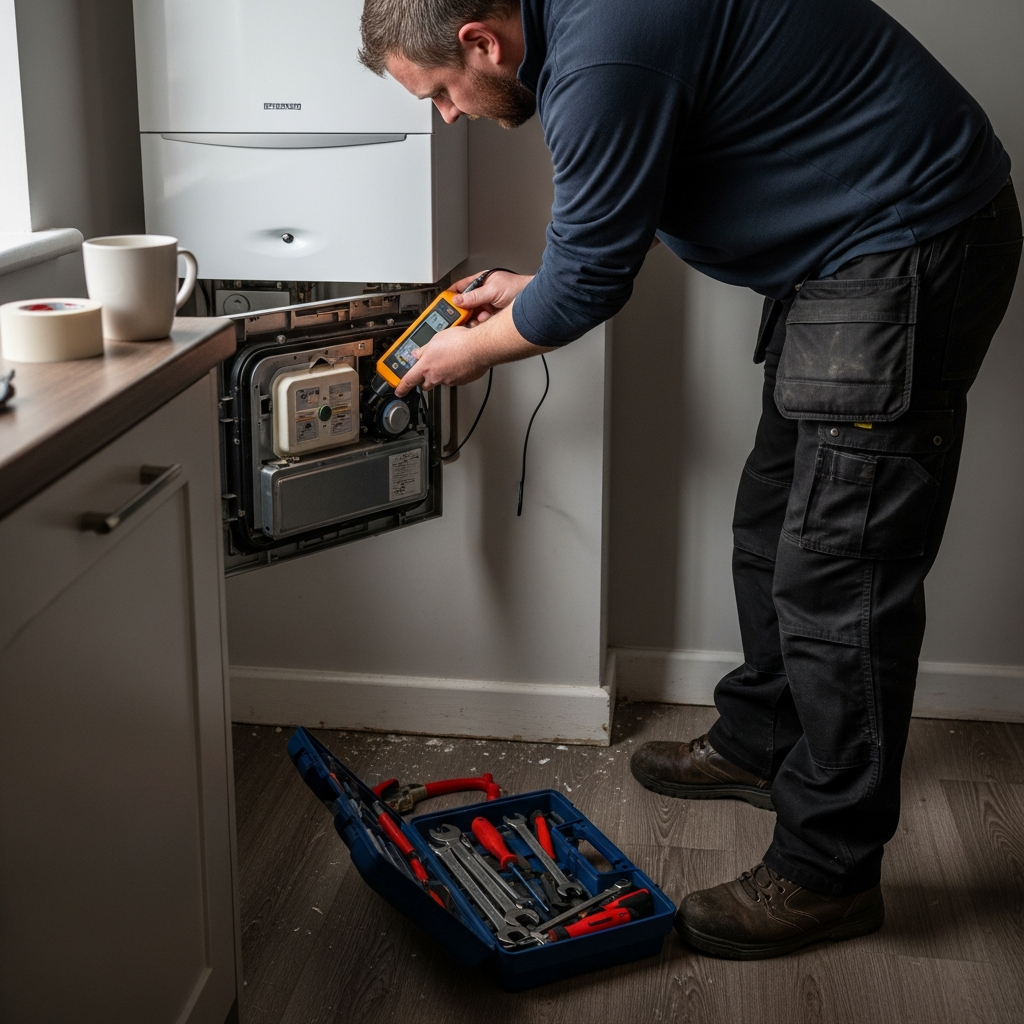
While the service costs are similar, heat pumps have no burner, no igniter, no gas valve, no flue to inspect, and no risk of limescale build-up in a heat exchanger. The main maintenance tasks are checking refrigerant levels, cleaning filters, and inspecting the outdoor unit — all straightforward.
11. Works with Renewable Energy
A heat pump paired with solar panels is one of the most cost-effective and sustainable home energy combinations available:
- Solar panels generate free electricity during the day
- The heat pump uses this electricity to heat your water and home
- A battery stores excess solar for evening use
- Smart controls optimise when the heat pump runs based on solar generation
This combination can reduce your heating costs to near zero during spring and summer months, and significantly reduce them in winter.
A gas boiler cannot use solar energy directly. You would need solar thermal panels (a separate, less versatile technology) to assist with hot water only.
12. Quieter Than You Think
A common concern is noise, but modern air source heat pumps operate at 40 to 50 dB(A) — quieter than a normal conversation. Gas boilers, while quiet when idling, produce noticeable noise during their firing cycles, particularly older or poorly maintained units.
Ground source heat pumps are virtually silent, with the unit located indoors and the ground loop making no noise at all.
13. Energy Independence
Gas is an imported commodity — the UK depends increasingly on international gas markets, with prices subject to geopolitical instability (as the 2022 energy crisis demonstrated). Electricity is generated domestically, increasingly from renewable sources that are not subject to the same market volatility.
A heat pump, especially paired with solar panels, gives you significantly more control over your energy costs and insulates you from global energy market shocks.
Are There Any Disadvantages?
In the interest of fairness, here are the genuine trade-offs:
- Higher upfront cost: Even after the grant, a heat pump costs more than a gas boiler to install (though the lifetime cost is lower)
- Need for a hot water cylinder: If you currently have a combi boiler, you will need to find space for a cylinder
- Some homes need radiator upgrades: Not all, but some radiators may need upsizing. See our radiator guide
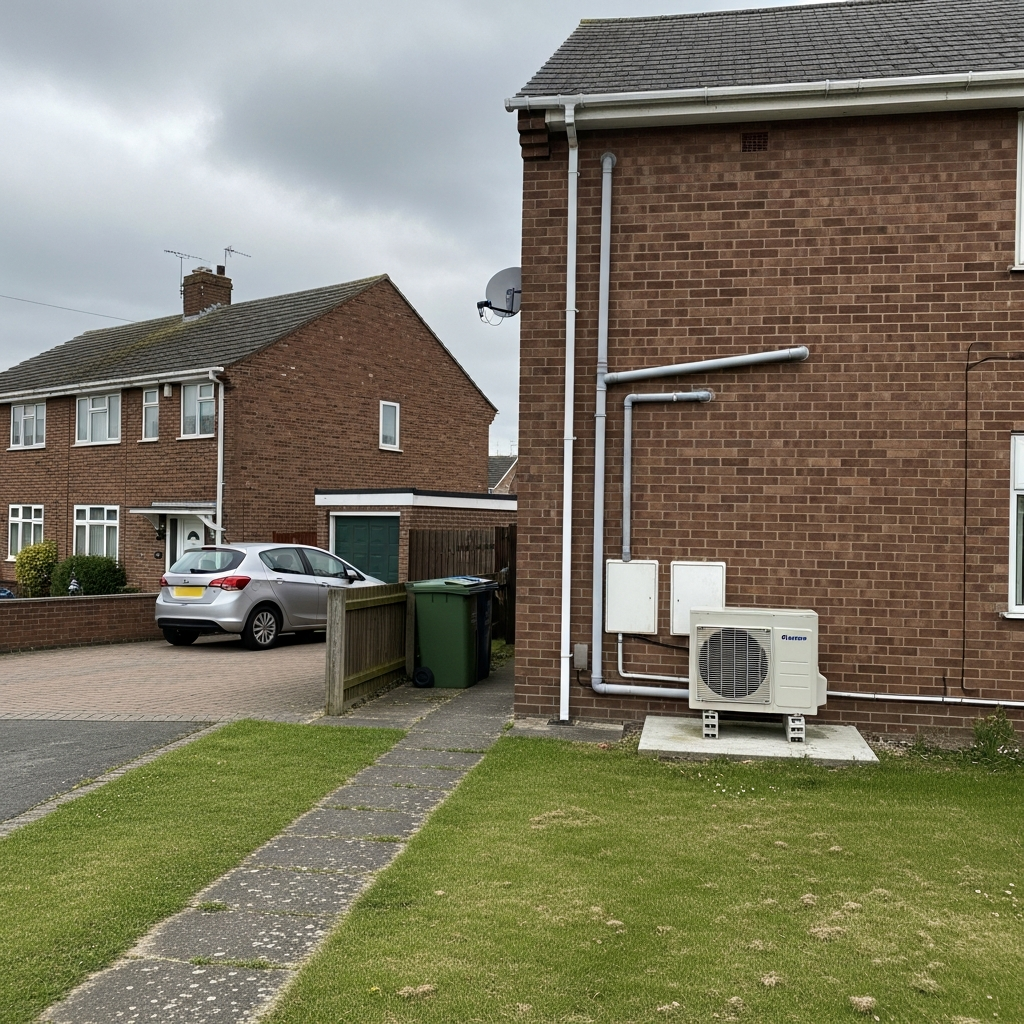
- Outdoor unit: You need space outside for the ASHP unit
- Different heating pattern: Heat pumps work best running "low and slow" rather than in short bursts — an adjustment for some homeowners
For a balanced view, read our full analysis: are heat pumps worth it?
Getting Started
If the advantages make sense for your situation, here are your next steps:
- Check suitability: Use our suitability checker for a quick assessment
- Estimate costs: Try our heat pump calculator for personalised figures
- Understand the grant: Read about the Boiler Upgrade Scheme and how to claim your £7,500
- Get quotes: Request quotes from MCS-certified installers through our free quote service
- Read the installation guide: Understand what is involved with our step-by-step guide
Frequently Asked Questions
What is the biggest advantage of a heat pump over a gas boiler?
Efficiency. A heat pump delivers 2.5 to 4 times more heat energy than the electricity it consumes, compared to a gas boiler which converts less than 95% of gas into heat. This fundamental efficiency advantage drives lower running costs, lower emissions, and better value over the system's lifetime.
Are heat pumps cheaper to run than gas boilers?
At standard electricity rates, running costs are currently similar. With time-of-use tariffs, solar panels, or as electricity pricing is rebalanced, heat pumps become significantly cheaper. Over 15 to 20 years, total lifetime costs (including installation, running, and replacement) favour heat pumps — especially with the £7,500 BUS grant.
Do heat pumps last longer than gas boilers?
Yes. Air source heat pumps last 20 to 25 years versus 12 to 15 years for gas boilers. Ground source systems last even longer. Fewer replacements mean lower lifetime costs and less disruption.
Can a heat pump heat my home as well as a gas boiler?
Yes. A properly sized and installed heat pump heats your home to exactly the same temperature. The heat delivery is gentler and more even — most homeowners find it more comfortable than the intense on/off cycling of a gas boiler.
Is now a good time to switch from a gas boiler to a heat pump?
Yes — the BUS grant is at its highest ever level (£7,500), VAT on installations is 0%, and installer capacity is growing but not yet overwhelmed by demand. As the 2035 gas boiler phase-out approaches, demand will increase and potentially lead to longer waiting times. Acting now means better value and a smoother experience.
What is the main disadvantage of a heat pump compared to a gas boiler?
The higher upfront cost is the main barrier. A heat pump costs more to install than a gas boiler, even after the grant. However, the longer lifespan, lower running costs, and avoided future replacement costs mean the total cost over the system's life is typically lower for a heat pump.