Heat Pump and Plumbing Modifications: What Changes Are Needed?
One of the most common concerns homeowners have about switching to a heat pump is how much plumbing work will be involved. Will all the pipework need replacing? Can existing radiator circuits be reused? What new components are needed that a boiler system does not have?
The good news is that in most UK homes, a heat pump can connect to the existing heating circuit with moderate modifications. Complete replumbing is rarely necessary. However, some changes are almost always required, and understanding what they are helps you plan and budget accurately.
How Heat Pump Plumbing Differs From Boiler Plumbing
The fundamental plumbing principles are the same — hot water flows through pipes to radiators or underfloor heating circuits, releases heat, and returns to be reheated. However, heat pumps operate differently from boilers in ways that affect the plumbing design:
- Lower flow temperatures: A gas boiler typically heats water to 60 to 75 degrees Celsius. A heat pump operates most efficiently at 35 to 45 degrees. This lower temperature means the system needs to circulate more water to deliver the same amount of heat, which affects pipe sizing.
- Higher flow rates: Because the temperature difference between the flow and return is smaller (typically 5 degrees for a heat pump versus 10 to 20 degrees for a boiler), the flow rate must be higher to deliver equivalent heat output.
- Continuous operation: Heat pumps run for longer periods at lower output rather than firing in short, intense bursts. The plumbing needs to support sustained circulation without excessive pump energy.
- Hot water cylinder: Heat pumps cannot produce instant hot water like a combi boiler. A stored hot water cylinder is essential — typically 200 to 300 litres for a family home.
Pipe Sizing: The Most Critical Factor
Why Pipe Size Matters
Pipe sizing is arguably the most important plumbing consideration for a heat pump installation. Pipes that are too small create excessive resistance to water flow, which means:
- The circulation pump works harder, consuming more electricity
- Flow rates may be insufficient to deliver enough heat to radiators
- The heat pump may trigger flow errors or lock out due to inadequate circulation
- System efficiency drops because the pump energy consumption erodes the heat pump's coefficient of performance (COP)
Common Pipe Sizes in UK Homes
Most UK central heating systems use the following pipe sizes:
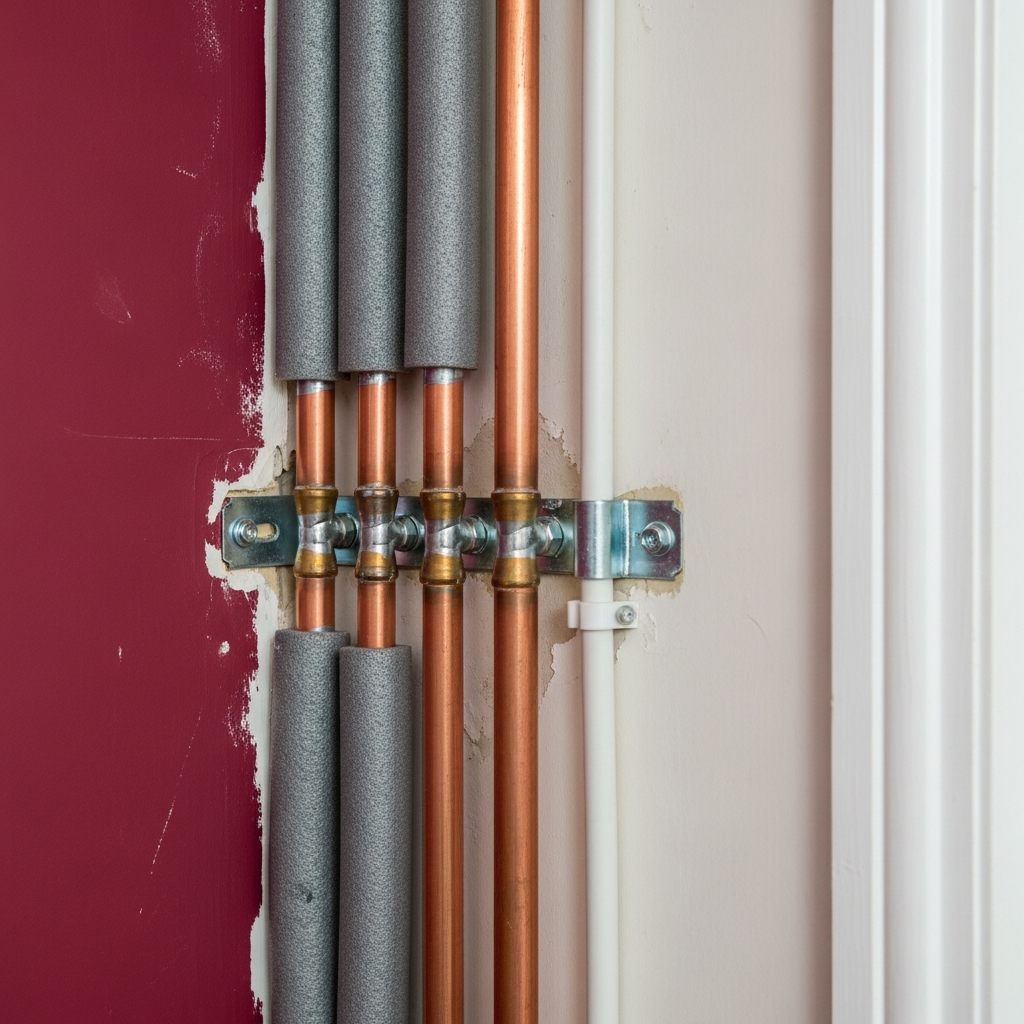
- 15mm copper: Used for individual radiator connections (radiator tails)
- 22mm copper: Used for main flow and return runs in smaller systems
- 28mm copper: Used for main flow and return in larger systems or longer runs
For a heat pump system, the general guidance is:
- 22mm pipework is adequate for heat pumps up to about 8 to 10 kW, provided pipe runs are not excessively long
- 28mm pipework is preferred for the main flow and return for systems above 8 to 10 kW, or where pipe runs are long
- 15mm radiator tails are almost always fine and rarely need changing
When Existing Pipes Need Upgrading
During the heat pump survey, your installer assesses the existing pipework and determines whether it is adequate. Upgrades may be needed if:
- The main flow and return are 22mm but the heat pump is larger than 10 kW: The primary circuit (from the heat pump to the point where it splits to serve different zones) may need upgrading to 28mm.
- Microbore pipework (8mm or 10mm) is present: Some older systems use microbore pipes, particularly in 1970s and 1980s properties. These are almost certainly too small for a heat pump and will need replacing with 15mm as a minimum.
- Very long pipe runs: If the heat pump is a significant distance from some radiators, the friction losses in the pipes may be too high with the existing size.
- Plastic pipework: Some older plastic pipe systems may have smaller internal diameters than copper equivalents. The installer checks the actual bore, not just the nominal size.
In practice, many UK homes built since the 1980s have 22mm main runs and 15mm radiator tails, which are adequate for most domestic heat pump installations. The primary circuit between the heat pump and the heating system is most likely to need upgrading.
The Primary Circuit
The primary circuit is the pipework that connects the heat pump to the indoor components. For a monobloc air source heat pump (the most common type in the UK), this is a water circuit running from the outdoor unit through the wall to the indoor distribution point.
New Pipework Required
The primary circuit is always new installation work because it connects a new piece of equipment. This typically involves:
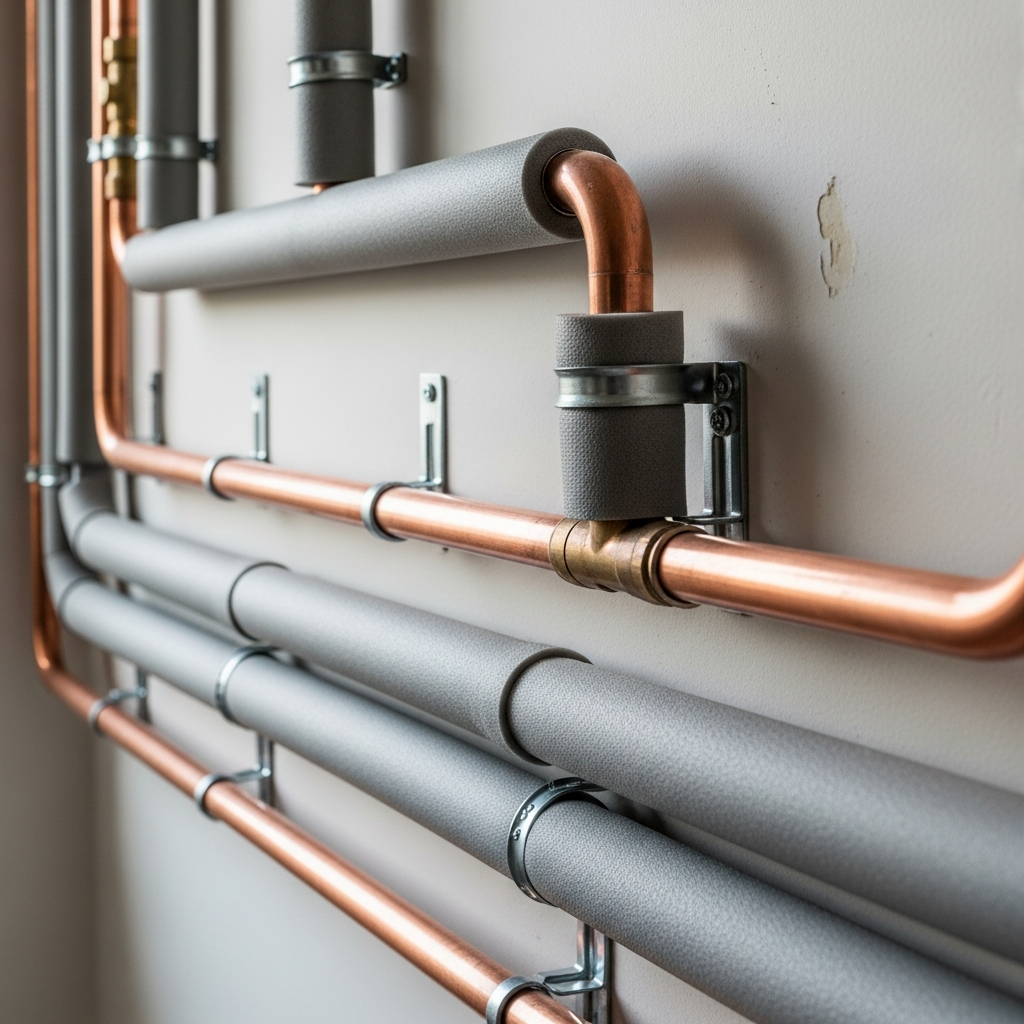
- Running insulated pipes from the outdoor unit through the external wall to the indoor plant area
- Connecting to a low-loss header, buffer tank, or directly to the heating circuit (depending on the system design)
- Fitting isolation valves, filling loops, and drain points
- Installing a pressure relief valve and expansion vessel if not already present
The primary circuit should be sized according to the heat pump manufacturer's specifications and insulated to prevent heat loss, particularly where it runs outside or through unheated spaces.
Buffer Tanks and Low-Loss Headers
Buffer Tanks
A buffer tank is a small insulated water tank (typically 30 to 100 litres) installed between the heat pump and the heating circuit. Not all installations need one, but they are used when:
- The heat pump minimum output exceeds the minimum demand: When most radiators are turned off (for example at night with only a few zones active), the heat demand may be less than the heat pump's minimum output. A buffer tank absorbs the excess heat and prevents short-cycling.
- Defrost cycles need to be managed: During defrost, the heat pump reverses briefly and draws heat from the heating circuit. A buffer tank provides thermal mass to prevent the radiators from cooling noticeably during defrost.
- The system has very few radiators: Small systems with limited thermal mass benefit from the additional buffering.
A buffer tank adds approximately £300 to £600 to the installation cost including the tank, pipework, and installation labour.
Low-Loss Headers
A low-loss header (also called a hydraulic separator) is a smaller device that separates the heat pump's primary circuit from the heating circuit. It allows the heat pump and the heating system circulation pump to operate at different flow rates without interfering with each other. Most heat pump installations benefit from a low-loss header, and many system designs require one.
Cost: approximately £100 to £250 installed.
Hot Water Cylinder
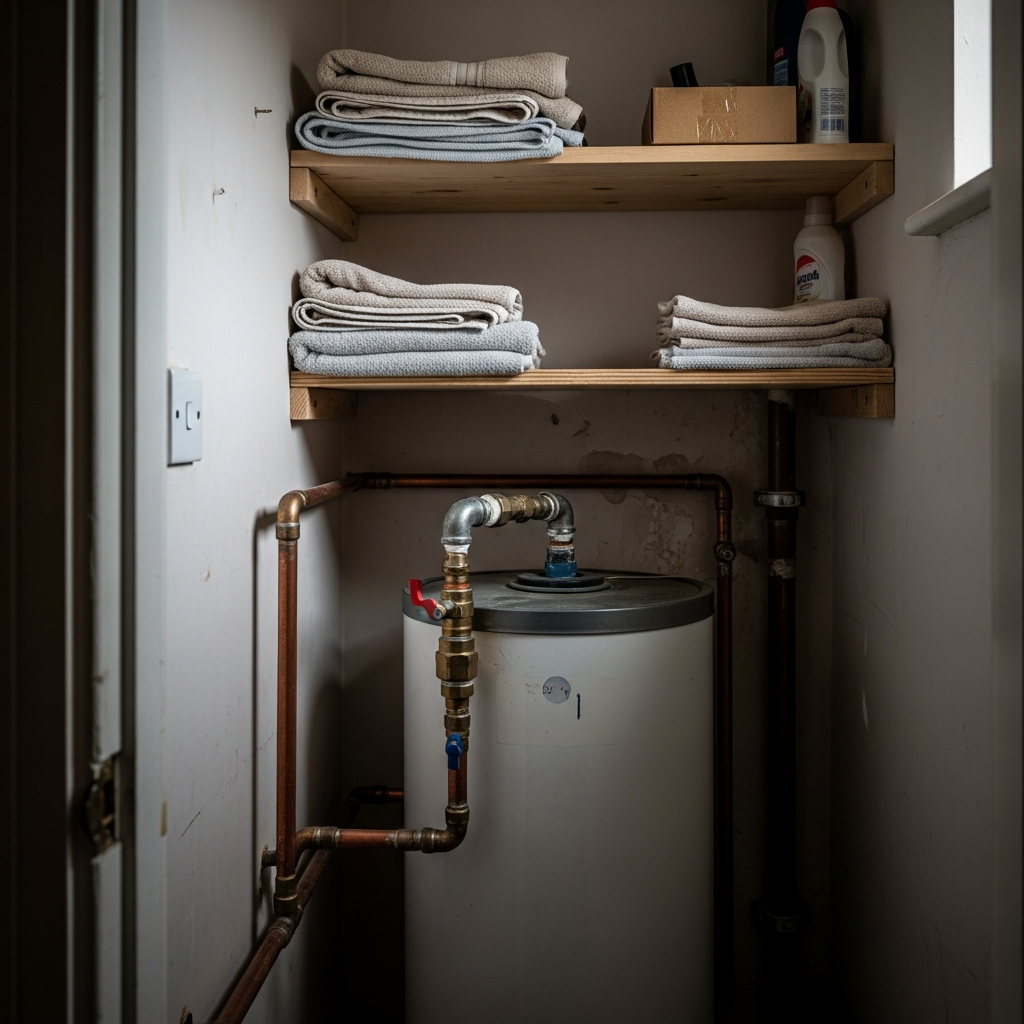
If you currently have a combi boiler (no stored hot water), you will need a new hot water cylinder. Even if you have an existing cylinder, it may need replacing.
Why Heat Pumps Need a Cylinder
Heat pumps heat water more slowly than gas boilers. A combi boiler can produce hot water on demand at 35 to 40 litres per minute. A heat pump heats stored water at a rate determined by its capacity — typically enough to reheat a full cylinder in one to two hours. Stored hot water is essential for meeting the peaks of demand (morning showers, evening baths) that exceed the heat pump's instantaneous capacity.
Cylinder Sizing
Heat pump cylinders are typically larger than conventional boiler cylinders:
- 1-2 person household: 150 to 200 litres
- 3-4 person household: 200 to 250 litres
- 4+ person household or multiple bathrooms: 250 to 300 litres
Compare this with the 120 to 150 litre cylinders common with conventional boilers. The larger size is needed partly because the heat pump heats water to a slightly lower temperature (48 to 52 degrees Celsius versus 60 to 65 degrees from a boiler), so more volume is needed to store the same amount of usable hot water.
Heat Pump-Specific Cylinders
Not all hot water cylinders are suitable for heat pumps. A heat pump-compatible cylinder needs:
- A large coil: The internal heat exchange coil must have a large surface area to efficiently transfer heat from the lower-temperature water produced by the heat pump. Standard boiler cylinders often have coils that are too small.
- Good insulation: To maintain temperature and minimise standing losses
- Immersion heater boss: For a backup electric immersion heater and for periodic legionella pasteurisation cycles to 60 degrees
- Temperature and pressure relief valve: Standard safety requirement
A new heat pump-compatible cylinder typically costs £500 to £1,200 depending on size and specification. Installation costs are additional.
Existing Radiator Circuit Modifications
What Usually Stays
The good news for most homeowners is that the majority of the existing radiator circuit can typically be reused:
- 15mm radiator connections: These are almost always adequate and do not need changing
- 22mm or 28mm main runs: Usually sufficient for domestic heat pump systems
- Existing radiators: Most can be retained, though some may need upgrading to larger models based on the heat loss calculation
- Radiator valves: Existing thermostatic radiator valves (TRVs) usually remain, though they should be checked and replaced if worn
What Typically Changes
- System flush: The entire heating circuit should be flushed before connecting the heat pump. Old sludge, magnetite, and debris in the pipework reduce efficiency and can damage the heat pump. A chemical flush or powerflush costs £300 to £600 and is strongly recommended.
- Magnetic filter: A magnetic filter (such as a MagnaClean) should be fitted on the return pipe to the heat pump. This captures circulating magnetite before it reaches the heat pump's heat exchanger. Cost: £100 to £200.
- Filling and expansion: The expansion vessel may need replacing or upgrading if the existing one is insufficient for the heat pump system's pressure requirements.
- Automatic air vent: Properly positioned air vents prevent airlocks that reduce circulation efficiency
- Bypass valve: A bypass arrangement ensures minimum flow through the heat pump even when all TRVs are closed
Underfloor Heating Connections
If your property already has underfloor heating, connecting it to a heat pump is straightforward because underfloor systems already operate at the low flow temperatures where heat pumps are most efficient. The existing manifold, pipe circuits, and mixing valves can usually be reused with minimal modification.
If you are adding underfloor heating as part of the heat pump installation (common in ground floor extensions or renovations), this is additional plumbing work that adds to the overall cost and installation timeline.
Typical Plumbing Costs in a Heat Pump Installation
To give you a realistic picture of what the plumbing element adds to a heat pump installation:
- Primary circuit (outdoor unit to indoor components): £400 to £800
- Hot water cylinder (supply and install): £800 to £1,800
- Buffer tank or low-loss header: £200 to £600
- System flush: £300 to £600
- Magnetic filter: £100 to £200
- Pipe upgrades (if needed): £300 to £1,500 depending on extent
- Radiator upgrades (if needed): £200 to £500 per radiator replaced
- Sundries (valves, fittings, expansion vessel): £200 to £400
These costs are typically included within the overall heat pump installation quote rather than itemised separately. When comparing quotes, check what plumbing work is included and what might be listed as an additional cost.
Can I Do Any Plumbing Work Myself?
While some homeowners with plumbing experience may be tempted to carry out preparatory work themselves, there are important limitations:
- The MCS installer is responsible for the complete system. If you carry out plumbing work that affects system performance, it could void the warranty and MCS certification.
- System flushing requires specific chemicals and equipment — it is not simply running the taps
- Pipe sizing calculations should be done by the installer based on the system design
What you can usefully do yourself includes clearing access to pipework, removing boxing or covers around existing pipes to speed up the survey and installation, and decorating after the work is complete.
Frequently Asked Questions
Will all my existing pipework need replacing?
No. In most UK homes, the existing 22mm main runs and 15mm radiator connections are adequate for a domestic heat pump. The primary circuit from the heat pump to the indoor components is always new work, and some sections may need upgrading from 22mm to 28mm for larger systems, but wholesale replacement is unusual.
Do I need a buffer tank?
Not always. Many modern inverter-driven heat pumps can modulate down to low enough outputs that a buffer tank is unnecessary in properties with sufficient radiator thermal mass. Your installer will determine whether one is needed based on the system design, the heat pump's minimum output, and the property's minimum heat demand.
Can I keep my existing hot water cylinder?
Possibly, if it is large enough (200+ litres for a typical family), has a suitably large internal coil, and is in good condition. Many older cylinders have coils that are too small for efficient heat pump operation. Your installer will assess the existing cylinder and recommend replacement only if necessary.
What is a system flush and is it really necessary?
A system flush removes sludge, magnetite, and debris that accumulate in heating circuits over time. It is strongly recommended before connecting a heat pump because this debris can damage the heat pump's internal heat exchanger, which is more sensitive than a boiler's. Most installers will insist on a flush as a condition of their warranty.
Will the plumbing work cause much disruption?
The plumbing modifications are the most disruptive part of the installation for most homeowners. Expect some mess, noise, and temporary loss of heating and hot water during the changeover period (typically 1 to 2 days). If significant pipe re-routing is needed, there may be some disruption to floors or walls, though installers minimise this where possible.
Can I use plastic pipework instead of copper?
Plastic push-fit pipework (such as Hep2O or JG Speedfit) is widely used in modern plumbing and is acceptable for heat pump installations. It has the same or larger internal bore as copper of the same nominal size, so flow resistance is not an issue. Your installer will use whichever material is most appropriate for each section of the system.