Heat Pump Hot Water Cylinder Cost
Every heat pump installation needs a hot water cylinder. Unlike a gas combi boiler that heats water instantly on demand, a heat pump heats water gradually and stores it in an insulated cylinder for use throughout the day. The cylinder is therefore an essential component — and its cost, size, and quality make a meaningful difference to your installation budget and daily hot water experience.
This guide covers what cylinders cost, what size you need, which brands to consider, and how to keep this part of your installation affordable.
How Much Does a Heat Pump Cylinder Cost?
The total cost of a hot water cylinder for a heat pump system includes the cylinder itself, any ancillary components, and the installation labour.
Cylinder Unit Costs (Supply Only)
- 150-litre cylinder: £400 to £800
- 170-litre cylinder: £450 to £900
- 200-litre cylinder: £550 to £1,100
- 250-litre cylinder: £700 to £1,300
- 300-litre cylinder: £900 to £1,600
Installation Labour
- Simple swap (replacing existing cylinder in same location): £200 to £400
- New installation (no existing cylinder, new pipework needed): £400 to £800
- Relocating cylinder to a different position: £500 to £1,000
Total Installed Costs
- 150L cylinder, simple installation: £600 to £1,000
- 200L cylinder, standard installation: £800 to £1,400
- 250L cylinder, new installation: £1,100 to £1,800
- 300L cylinder, complex installation: £1,400 to £2,200
Most heat pump installations for a typical three-bedroom home include a 200-litre cylinder costing approximately £800 to £1,200 installed. This is normally included in the overall heat pump installation quote — check our cost guide for total installation prices.
Why Heat Pumps Need a Specific Type of Cylinder
Not any cylinder will do. Heat pump cylinders differ from standard boiler cylinders in several important ways.
Larger Coil Surface Area
A heat pump delivers water at a lower temperature than a gas boiler (typically 45-55°C versus 65-80°C from a boiler). To transfer enough heat at this lower temperature, the cylinder's internal coil needs a larger surface area. Heat pump cylinders typically have coils with 3 to 5 square metres of surface area, compared to 1 to 2 square metres in standard boiler cylinders.
Better Insulation
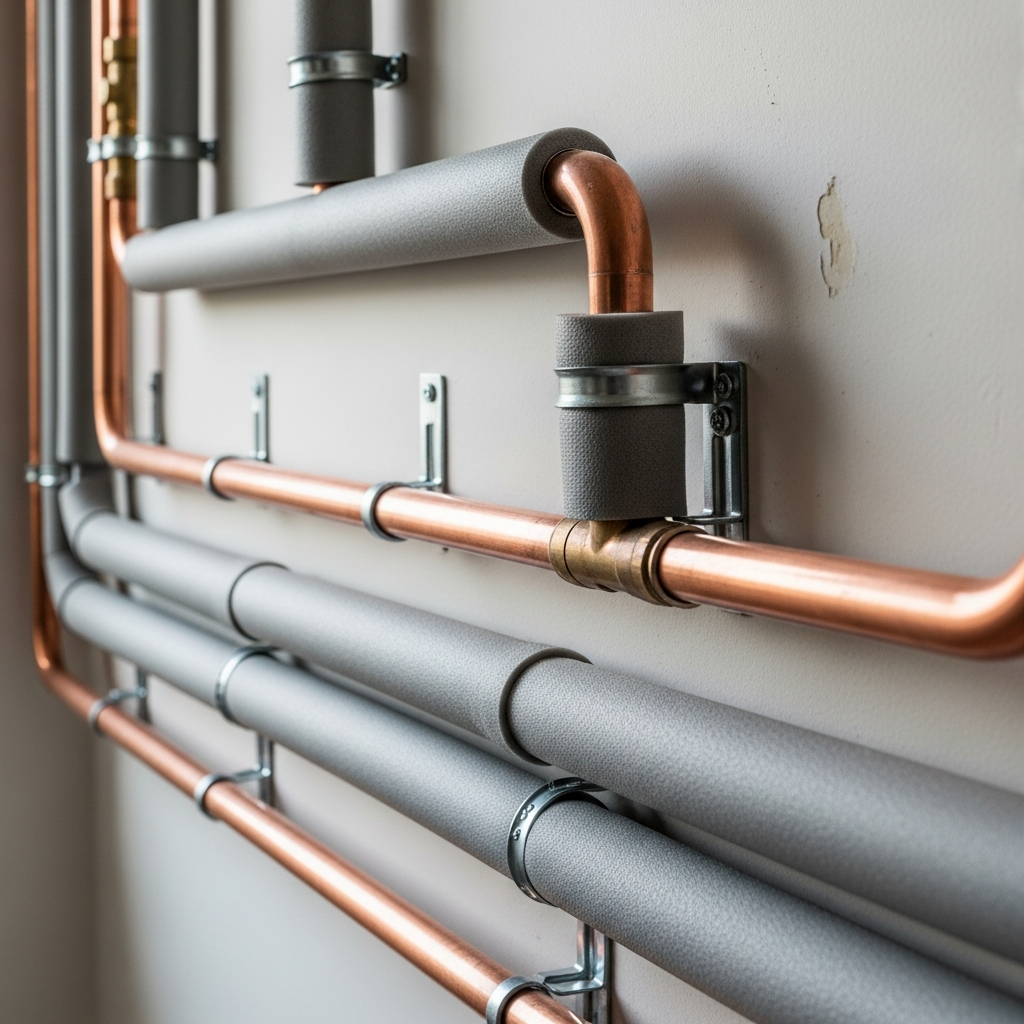
Because heat pump water is stored at a lower temperature, heat losses have a greater proportional impact. Quality heat pump cylinders have 50mm to 100mm of polyurethane foam insulation, minimising standing heat losses to around 1-2 kWh per day.
Immersion Heater Backup
Most heat pump cylinders include one or two immersion heater elements. These serve as backup heating (if the heat pump is offline for maintenance) and for the weekly legionella pasteurisation cycle that heats the water to 60°C. The immersion heater runs at COP 1.0 (pure electric), so it should be used sparingly.
Thermostat and Sensor Pockets
Heat pump cylinders have dedicated pockets for temperature sensors that communicate with the heat pump controller, allowing the system to manage heating cycles efficiently.
What Size Cylinder Do You Need?
Cylinder size depends on your household's hot water usage. Getting this right is important — too small and you will run out of hot water; too large and you waste money on an unnecessarily big cylinder and the energy to heat unused water.
Size Guide by Household
- 1-2 people, one bathroom: 150 litres
- 2-3 people, one bathroom: 170-200 litres
- 3-4 people, one bathroom plus en-suite: 200-250 litres
- 4-5 people, two bathrooms: 250-300 litres
- 5+ people, multiple bathrooms: 300 litres or twin-cylinder setup
A 200-litre cylinder is the most common choice for UK heat pump installations. It provides enough hot water for a family of three to four with one bathroom and an en-suite shower. If you regularly run deep baths, consider sizing up.
Bath vs Shower Usage
A full bath uses approximately 80 to 120 litres of hot water. A shower uses 30 to 50 litres (depending on flow rate and duration). If your household takes mostly showers, a 150 to 200-litre cylinder is usually sufficient. If baths are frequent, go larger.
Remember, the cylinder mixes hot stored water with cold mains water at the tap. A 200-litre cylinder stored at 50°C can deliver approximately 280 litres of water at 40°C (a comfortable bath temperature). This is enough for two to three baths before the cylinder needs to reheat.
Popular Cylinder Brands for Heat Pumps
Budget Options (£400 to £700)
- Kingspan Ultrasteel Plus: Well-established UK manufacturer. Stainless steel construction with good insulation. The 200L model costs approximately £550 to £650
- Gledhill Stainless Lite Plus: Another reputable UK brand. Known for durability. The 200L heat pump model costs around £500 to £600
- Telford Tempest: Good value stainless steel cylinders. The 200L heat pump version costs approximately £450 to £550
Mid-Range Options (£700 to £1,100)
- Joule Cyclone: High-quality stainless steel with enhanced insulation. The 200L costs approximately £700 to £850
- OSO Accu: Norwegian-made cylinders known for excellent insulation and longevity. The 200L costs around £800 to £1,000
- McDonald Engineers: Scottish manufacturer offering well-insulated heat pump-specific cylinders. The 200L costs approximately £750 to £900
Premium Options (£1,000 to £1,500+)
- Vaillant uniSTOR: Designed specifically for Vaillant heat pumps. Excellent integration but costs approximately £1,000 to £1,300 for 200L
- Mitsubishi Ecodan cylinder: Purpose-built for Ecodan heat pumps. Premium price of £1,100 to £1,400 for 200L
- Daikin Altherma cylinder: Integrated design for Daikin systems. Approximately £1,000 to £1,300
Manufacturer-branded cylinders (Vaillant, Mitsubishi, Daikin) are not always necessary. A quality third-party cylinder from Kingspan, Gledhill, or Joule works perfectly well with any heat pump brand, provided it has the correct coil specification. Some installers prefer manufacturer-matched cylinders for warranty simplicity, but this is a preference rather than a requirement.
Can You Reuse Your Existing Cylinder?
If you already have a hot water cylinder (for example, from a system boiler), you might be able to reuse it. This saves £500 to £1,200. However, it must meet these criteria:
- Sufficient size: At least 150 litres, ideally 200 litres
- Large enough coil: The internal coil must have at least 3m2 of surface area for efficient heat transfer from the heat pump's lower-temperature water. Many standard boiler cylinders have smaller coils designed for higher temperatures
- Good condition: No signs of corrosion, leaks, or deteriorating insulation
- Immersion heater: Must have (or be able to accommodate) an immersion heater for backup and legionella cycles
In practice, most existing cylinders are either too small, have inadequate coils, or are old enough that replacement is sensible. Your installer will assess this during the survey.
Vented vs Unvented Cylinders
Vented Cylinders
Fed by a cold water tank in the loft. Water pressure depends on the height difference between the tank and the taps. Cheaper to buy and install, but typically lower water pressure at the taps (especially in bungalows where the height difference is minimal).
- Cost: £300 to £800 (supply only)
- Pros: Cheaper, simpler installation, no safety discharge pipe needed
- Cons: Lower pressure, requires loft tank, more pipework
Unvented Cylinders
Connected directly to the mains water supply. Provides mains-pressure hot water at all taps — a significant upgrade if you are used to low-pressure gravity-fed hot water. Most modern heat pump installations use unvented cylinders.
- Cost: £500 to £1,400 (supply only)
- Pros: Mains pressure, no loft tank needed, better shower performance
- Cons: More expensive, requires G3-qualified installer, needs pressure relief discharge pipe
If you are installing a new cylinder as part of a heat pump installation, an unvented cylinder is usually the better choice. The additional cost (approximately £200 to £400 more than vented) is well worth the improvement in water pressure and the elimination of the cold water tank.
Where to Put the Cylinder
A 200-litre cylinder is approximately 1,400mm tall and 550mm in diameter. It needs a space roughly 60cm x 60cm in floor area and 1.5m of height. Common locations include:
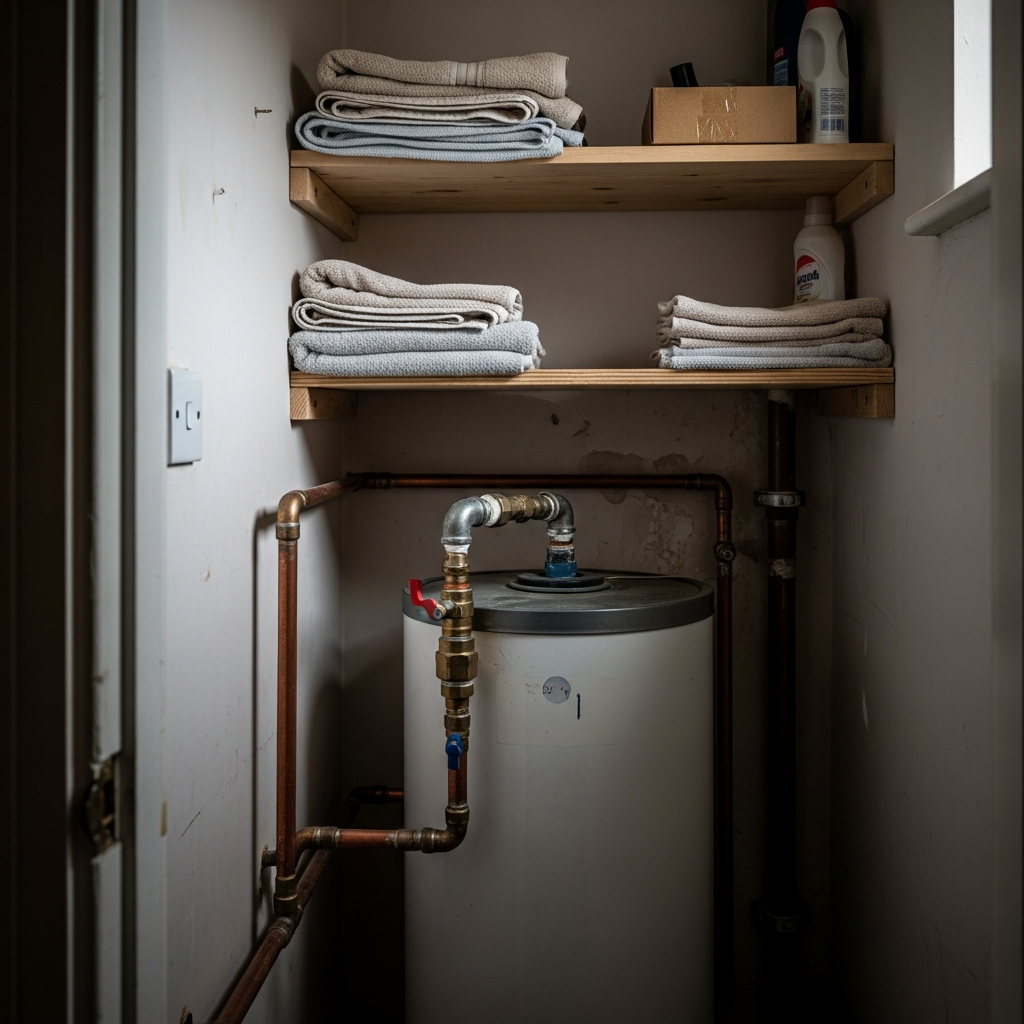
- Existing airing cupboard: The most common location. The existing hot water cylinder space is usually adequate for a heat pump cylinder of the same or slightly larger size
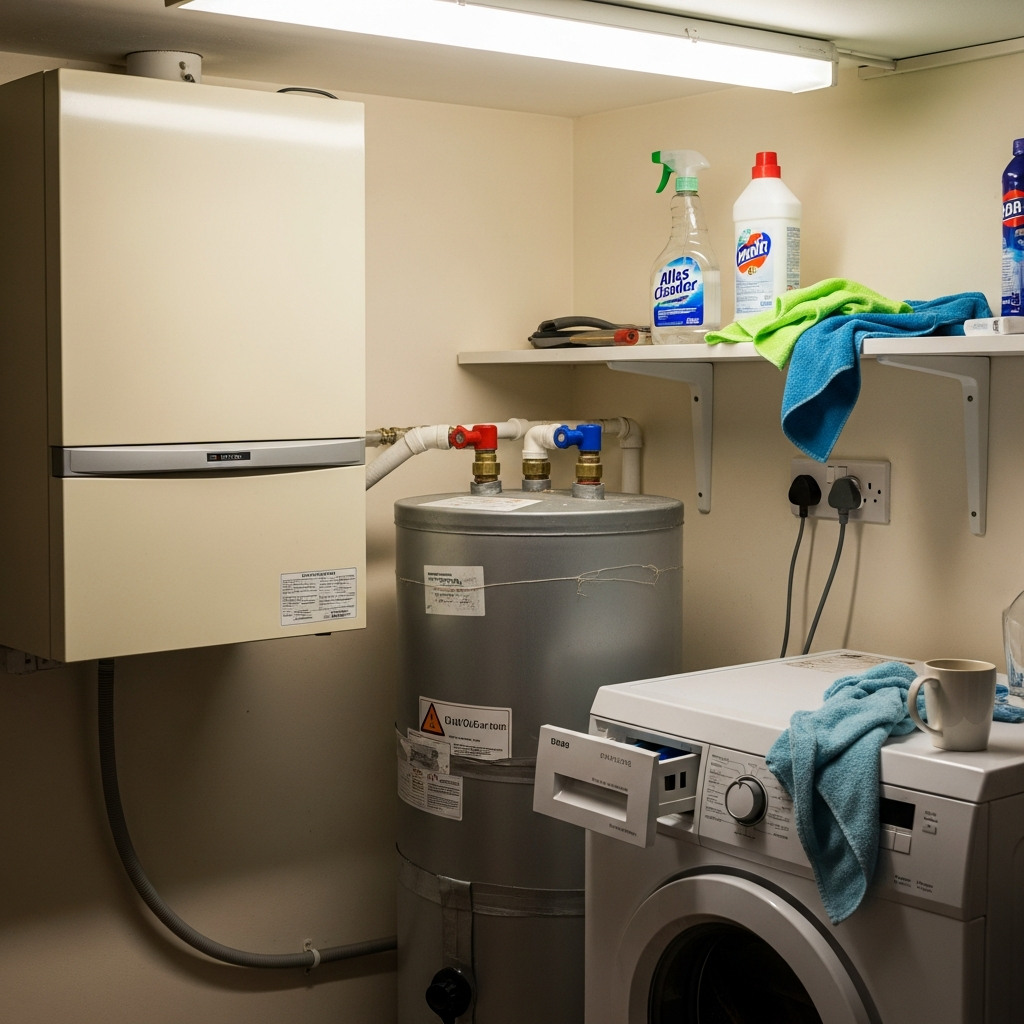
- Utility room: Ideal if space is available, keeping the cylinder out of living areas
- Under stairs: Works for shorter cylinders (some 150L models are under 1,200mm tall)
- Garage: Possible but not ideal — insulation is critical in an unheated space, and hot water delivery to distant taps involves longer pipe runs and more heat loss
If your home currently has a combi boiler (no existing cylinder), finding space for the new cylinder can be the biggest challenge. This is a common consideration covered in our installation guide.
Running Cost of the Cylinder
The cylinder itself does not consume energy, but heating and maintaining the water inside it does. Typical annual costs:
- Heating hot water via heat pump (COP ~2.5 for hot water): 3,000-4,000 kWh heat demand / 2.5 COP = 1,200-1,600 kWh electricity = £294-£392 per year
- Standing heat losses (well-insulated cylinder): 1-2 kWh per day = 365-730 kWh per year = approximately £90-£179 per year (included in the above)
- Legionella cycle (immersion heater to 60°C weekly): Approximately £30-£60 per year
Total hot water costs with a heat pump are typically £300 to £450 per year for a family of three to four. This is significantly less than heating water with a direct immersion heater alone, and comparable to or slightly less than hot water from a gas boiler. See our running costs guide for a full breakdown.
Frequently Asked Questions
How much does a hot water cylinder cost for a heat pump?
A 200-litre heat pump cylinder costs £550 to £1,100 for the unit, plus £300 to £800 for installation. Total installed cost is typically £800 to £1,400 for a standard installation. This is usually included in the overall heat pump installation quote.
Can I use a normal cylinder with a heat pump?
Only if it has a sufficiently large coil (3m2+ surface area), adequate capacity (150L+), and is in good condition. Most standard boiler cylinders have smaller coils optimised for higher-temperature water and will not transfer heat efficiently from a heat pump. Your installer will assess compatibility.
What size cylinder do I need for a four-person household?
A 200 to 250-litre cylinder is typically appropriate for four people with one bathroom and an en-suite. If the household takes frequent baths rather than showers, consider 250 litres. Our calculator can help estimate your needs.
Do I need a cylinder if I have a combi boiler now?
Yes. Heat pumps cannot deliver instant hot water like a combi boiler. You will need a new hot water cylinder installed, typically in an airing cupboard, utility room, or under the stairs. This is one of the main space considerations when switching from a combi boiler to a heat pump.
How long does a heat pump cylinder last?
A quality stainless steel cylinder should last 25 years or more. Many come with 25-year warranties. The cylinder is likely to outlast the heat pump itself.
Will I run out of hot water with a heat pump?
If the cylinder is correctly sized, no. A 200-litre cylinder can deliver enough hot water for two to three baths or six to eight showers before needing to reheat. The heat pump will reheat the cylinder in two to four hours, so even if you empty it, hot water is available again relatively quickly. If you consistently run out, either the cylinder is undersized or the heat pump's hot water schedule needs adjusting.