Heat Pump Cost by Property Type UK
The cost of installing a heat pump varies dramatically depending on your property type. A ground-floor flat might need a 4kW system costing £7,000 total, while a large detached house could require a 16kW system costing £18,000 or more. Understanding what drives these differences helps you budget accurately and avoid surprises in your quotes.
This guide breaks down typical heat pump installation costs for every common UK property type, explains why costs differ, and shows the after-grant price you can realistically expect to pay.
Cost Overview Table
Here is the summary. Detailed breakdowns for each property type follow below.
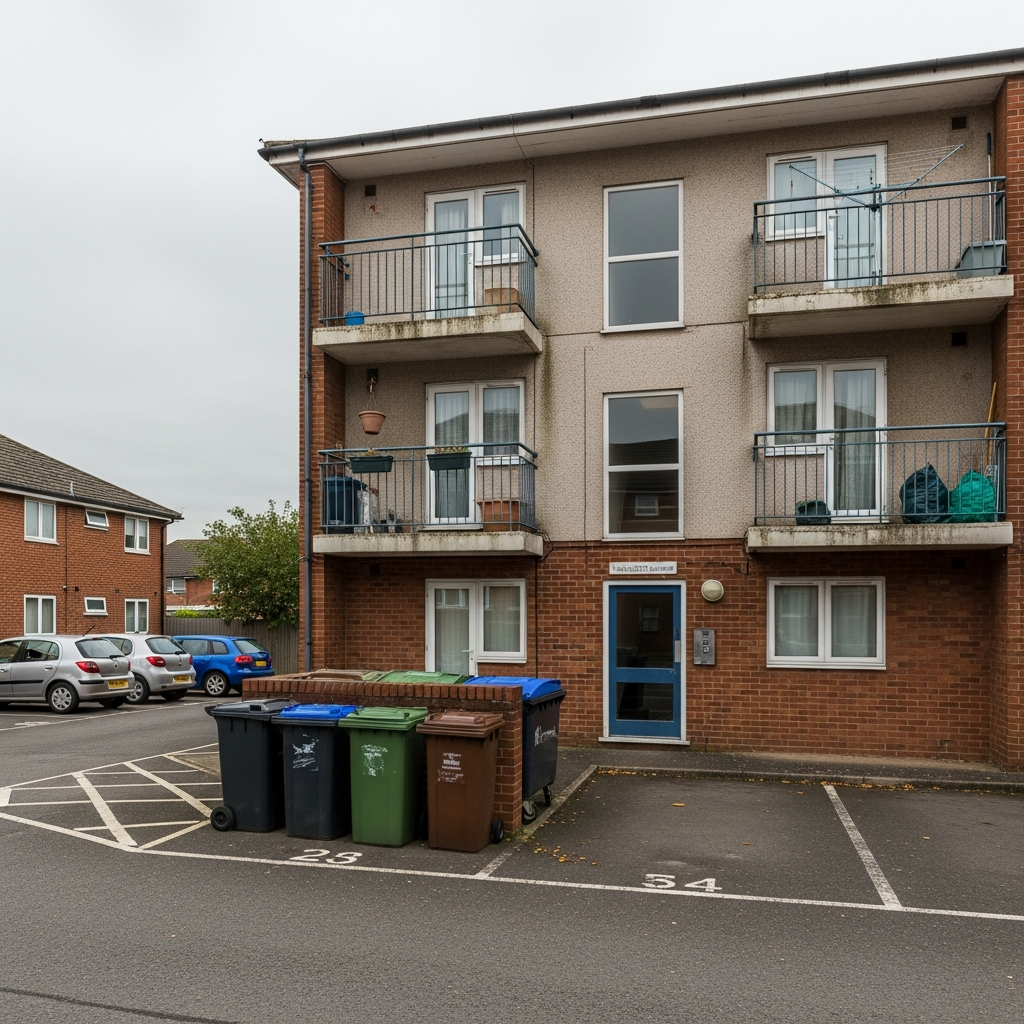
- Ground-floor flat (1-2 bed, 40-65m2): £6,000-£9,000 before grant | £0-£1,500 after grant
- Mid-floor flat (1-2 bed, 40-65m2): £7,500-£11,000 before grant | £0-£3,500 after grant
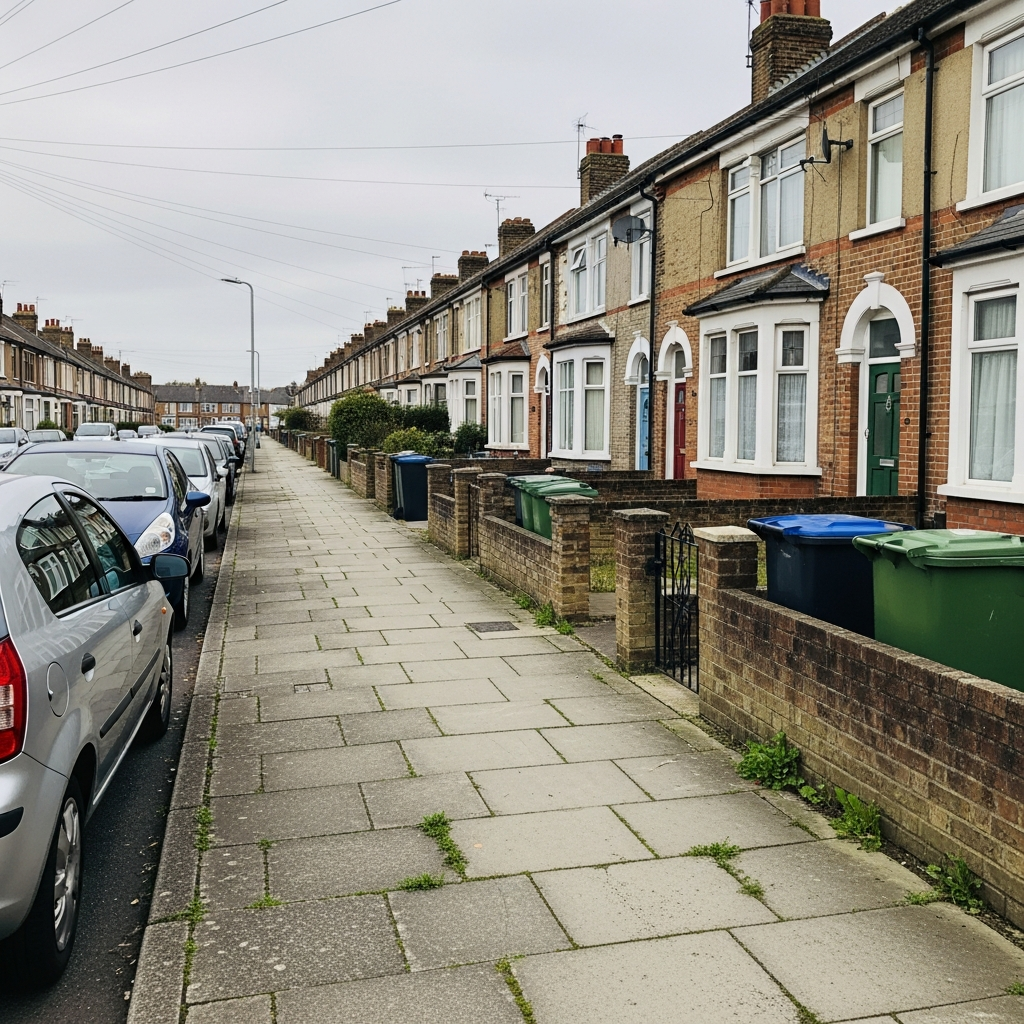
- Terraced house (2-3 bed, 65-90m2): £8,000-£11,000 before grant | £500-£3,500 after grant
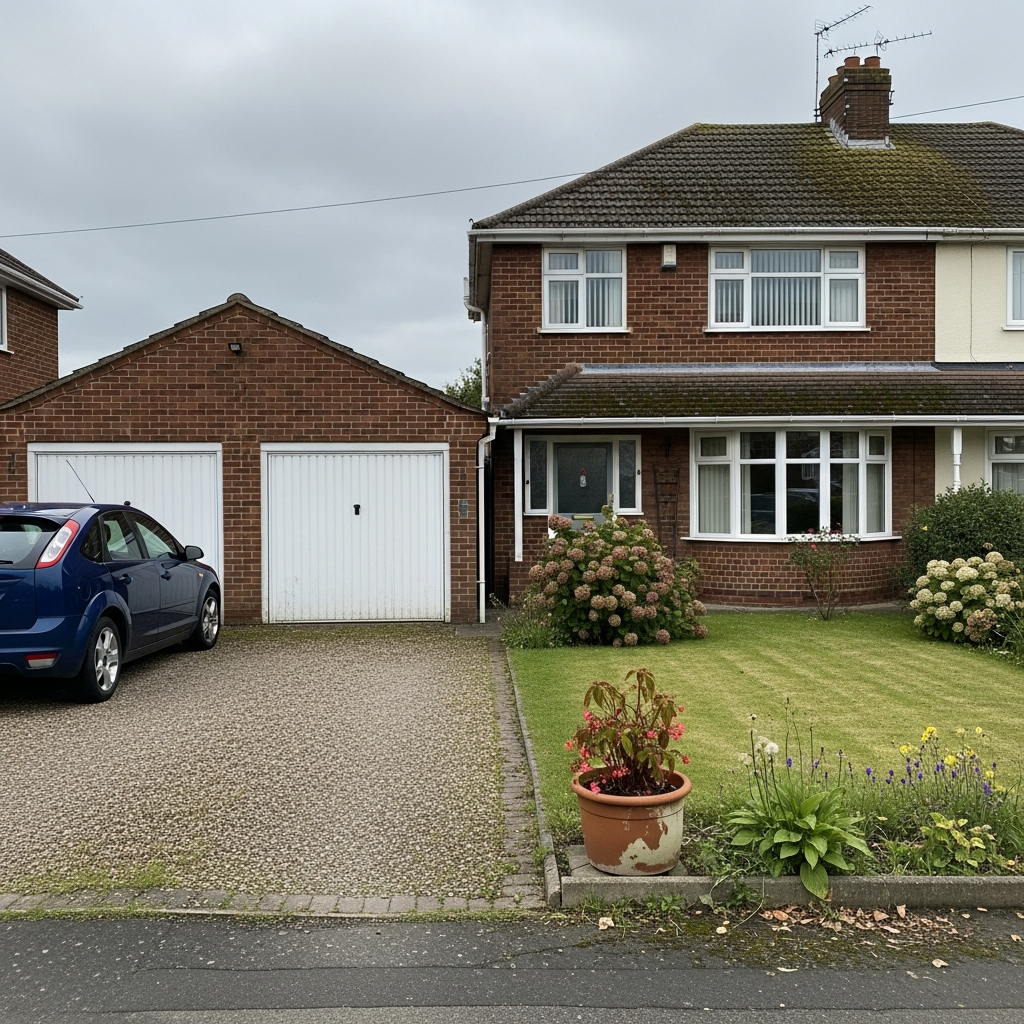
- Semi-detached house (3 bed, 85-110m2): £10,000-£14,000 before grant | £2,500-£6,500 after grant
- Detached house (3-4 bed, 110-170m2): £12,000-£17,000 before grant | £4,500-£9,500 after grant
- Large detached (5+ bed, 200m2+): £15,000-£22,000 before grant | £7,500-£14,500 after grant
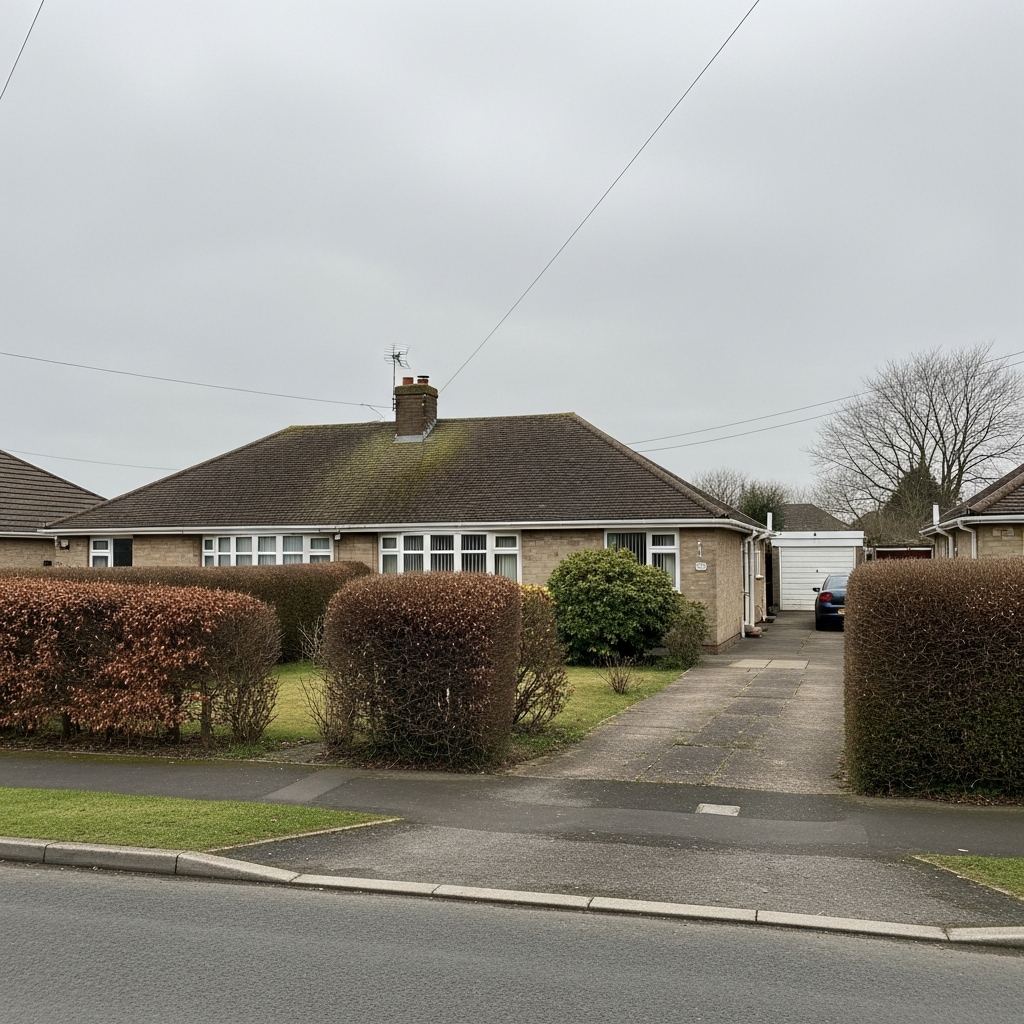
- Bungalow (2-3 bed, 70-100m2): £9,000-£13,000 before grant | £1,500-£5,500 after grant
All prices assume an air source heat pump installation. Ground source heat pumps add approximately £8,000 to £15,000 to these figures due to ground works. For full cost details, see our main heat pump cost guide.
Ground-Floor Flat
Typical Cost: £6,000 to £9,000 (before grant)
Ground-floor flats are often the cheapest property type for heat pump installation. The reasons:
- Low heat demand (3,000-6,000 kWh/year): Smaller space plus neighbours above providing warmth means less heating needed
- Small heat pump (4-6kW): Cheaper unit, less electrical capacity required
- Short pipework: Ground-floor access means the outdoor unit connects directly through the wall
- Fewer radiators (3-5): Less potential need for upgrades
Specific Considerations
- Planning permission: Flats in England do not benefit from permitted development rights for heat pumps. You may need planning permission and freeholder consent
- Outdoor unit placement: Limited garden or patio space may restrict positioning options
- Noise: The outdoor unit must be at least one metre from a neighbour's window. In a flat, this can be challenging
- Leasehold restrictions: Check your lease for restrictions on external alterations
After BUS grant: £0 to £1,500. Many ground-floor flat installations are fully covered by the grant.
Mid-Floor and Top-Floor Flat
Typical Cost: £7,500 to £11,000 (before grant)
Upper-floor flats present additional challenges that increase costs:
- Outdoor unit placement: May need to be at ground level with long pipe runs up through the building, or on a balcony (structural assessment needed)
- Longer pipework: Running pipes from ground level to the second or third floor adds £500 to £2,000
- Communal areas: Pipes may need to pass through shared spaces, requiring freeholder permission and potentially more complex routing
- Scaffolding or access equipment: May be needed for installation, adding £500 to £1,500
Despite these challenges, heat pumps are technically viable in most flats. The heat demand is typically low (shared walls with heated neighbours reduce heat loss), so a small, efficient unit works well.
After BUS grant: £0 to £3,500.
Terraced House
Typical Cost: £8,000 to £11,000 (before grant)
Terraced houses are generally good candidates for heat pumps. Being sandwiched between neighbours reduces heat loss significantly, keeping the heat demand moderate.
Cost Breakdown
- Heat pump unit (6-8kW): £3,000-£5,000
- Hot water cylinder (150-200L): £500-£1,000
- Installation labour: £2,000-£3,000
- Radiator upgrades (2-4 radiators): £600-£1,500
- Pipework: £500-£1,500
Specific Considerations
- Side access: Mid-terrace properties have no side access, so the outdoor unit must go in the front or back garden
- Front garden placement: If the outdoor unit must go at the front, noise and aesthetics may be concerns. Planning permission may be needed in conservation areas
- Small gardens: Urban terraced houses often have small rear gardens, but even a 1m x 1m space against the back wall is sufficient for a compact unit
- Party wall: The outdoor unit should not be mounted directly on a party wall due to vibration transfer. A freestanding base is preferable
After BUS grant: £500 to £3,500. Terraced houses frequently achieve very affordable after-grant installations.
Semi-Detached House
Typical Cost: £10,000 to £14,000 (before grant)
The three-bedroom semi is Britain's most common property type and the benchmark for most heat pump cost discussions. Costs are moderate because the property shares one wall but has three exposed walls plus a roof.
Cost Breakdown
- Heat pump unit (8-10kW): £4,000-£6,000
- Hot water cylinder (200-250L): £700-£1,200
- Installation labour: £2,500-£4,000
- Radiator upgrades (3-5 radiators): £900-£2,000
- Pipework: £800-£2,000
Specific Considerations
- Side access: Most semis have side access, making outdoor unit placement straightforward
- Hot water demand: Families in three-bedroom semis typically have higher hot water demand, requiring a 200-250L cylinder
- Loft insulation: Many 1930s-1970s semis have inadequate loft insulation. Topping up before installation reduces heat demand and potentially allows a smaller heat pump
- Cavity wall insulation: If not already insulated, cavity walls can be filled for £500-£1,000, significantly reducing heat demand
After BUS grant: £2,500 to £6,500. The typical three-bed semi costs £3,000 to £5,000 out of pocket after the grant.
Detached House (3-4 Bedrooms)
Typical Cost: £12,000 to £17,000 (before grant)
Detached houses have four exposed walls and typically more floor area, meaning higher heat demand and a larger heat pump.
Cost Breakdown
- Heat pump unit (10-14kW): £5,000-£7,500
- Hot water cylinder (250L): £900-£1,500
- Installation labour: £3,000-£4,500
- Radiator upgrades (4-7 radiators): £1,200-£3,000
- Pipework: £1,000-£2,500
Specific Considerations
- Higher heat demand: 14,000-25,000 kWh annual heat demand is typical, requiring a larger system
- Longer pipe runs: Larger footprint means potentially longer distances from the outdoor unit to far-flung radiators
- More radiators: More rooms means more potential for radiator upgrades
- Outdoor unit placement: Plenty of garden space makes positioning easier
After BUS grant: £4,500 to £9,500. Use our calculator for a property-specific estimate.
Large Detached House (5+ Bedrooms)
Typical Cost: £15,000 to £22,000 (before grant)
Large properties push costs higher across every category. Heat demand of 25,000-40,000 kWh may require a large heat pump or even two units working in cascade.
Key Cost Drivers
- Larger heat pump or cascade system: A single 16kW unit or two smaller units working together
- Larger cylinder: 300L or twin-cylinder setups for high hot water demand
- More radiator upgrades: 8-12 radiators may need upsizing
- Buffer tank: Large systems may benefit from a buffer tank to prevent short-cycling
- Potentially underfloor heating in extensions: Larger properties often have extensions where underfloor heating is the most effective option
After BUS grant: £7,500 to £14,500. The grant makes a smaller proportional impact on expensive installations, but still represents a significant contribution.
Bungalow
Typical Cost: £9,000 to £13,000 (before grant)
Bungalows are excellent candidates for heat pumps in many ways, but they have unique cost characteristics.
Advantages
- No stairs: All pipework runs are on one level, simplifying installation
- Easy outdoor unit access: Ground-level placement with no access issues
- Often older occupants: Heat pumps provide consistent, even warmth that many find more comfortable than the heat-and-cool cycles of gas boilers
Disadvantages
- Large roof area relative to floor area: Bungalows lose more heat through the roof than equivalent two-storey houses, increasing heat demand
- Often larger footprint: A three-bedroom bungalow has a bigger footprint than a three-bedroom house, meaning more exposed floor area
- Older construction: Many bungalows are from the 1950s-1970s with solid walls and less insulation
The net effect is that bungalows often have slightly higher heat demand than equivalent houses, but simpler installations. Costs are typically in the middle of the range.
After BUS grant: £1,500 to £5,500.
What Affects Cost Within Each Property Type
Even two identical-looking semis can have very different installation costs. The key variables are:
- Insulation quality: Better insulation means lower heat demand, smaller heat pump, fewer radiator upgrades. A well-insulated semi might need a 7kW system while a poorly insulated one needs 12kW
- Existing radiator sizes: If your radiators are already generously sized (common in older properties), you may not need any upgrades. See our radiator guide
- Current heating system: If you already have a system boiler with a hot water cylinder, you may save on cylinder costs. If switching from a combi boiler, you need a new cylinder
- Accessibility: Easy access for the outdoor unit and short pipe runs reduce labour costs
- Electrical supply: Older properties may need a consumer unit upgrade or main fuse upgrade, adding £300-£800
The best way to understand your specific cost is to get quotes from MCS-certified installers. Our free quote service connects you with local professionals.
Frequently Asked Questions
Can you install a heat pump in a flat?
Yes, though it is more complex than in a house. Ground-floor flats are straightforward. Upper-floor flats need longer pipe runs and may face leasehold or planning restrictions. You will typically need freeholder consent for the outdoor unit. Costs range from £6,000 to £11,000 before the grant.
Which property type is cheapest for a heat pump?
Ground-floor flats and small terraced houses are typically cheapest due to low heat demand, small heat pumps, and fewer radiators. After the BUS grant, these installations can cost nothing out of pocket.
Is my house too big for a heat pump?
No UK home is too big for a heat pump. Very large properties may need cascade systems (two heat pumps working together) or a ground source heat pump, but the technology scales to any size. Costs increase proportionally with property size.
Does house age affect heat pump cost?
Yes. Older properties (pre-1930s) often have solid walls, single glazing, and poor insulation, leading to higher heat demand and potentially more radiator upgrades. However, improving insulation before installing the heat pump brings costs back down. Victorian and Edwardian houses often have generously sized radiators that work well at lower temperatures.
Is a bungalow suitable for a heat pump?
Bungalows are excellent for heat pumps. Single-storey design simplifies pipework, and ground-level access makes outdoor unit placement easy. The only consideration is that bungalows can have higher heat loss per square metre due to their larger roof-to-floor ratio.
Do I need different sized heat pumps for different house types?
Yes. Heat pump size is determined by heat loss, which depends on property size, insulation, and exposure. A flat might need 4-6kW, a terraced house 6-8kW, a semi 8-10kW, and a detached house 10-16kW. Correct sizing is critical — use our calculator for an initial estimate.