Heat Pump for a Conservation Area
Living in a conservation area adds an extra layer of planning consideration to almost any external change to your property — and installing a heat pump is no exception. But conservation area status does not prevent you from installing a heat pump. With the right approach, thousands of homeowners in conservation areas across the UK have successfully made the switch.
This guide explains the planning rules that apply, how to position an air source heat pump to maximise your chances of approval, why ground source heat pumps are often the preferred option, and the step-by-step process for getting permission.
What Is a Conservation Area?
Conservation areas are areas of special architectural or historic interest, designated by local planning authorities under the Planning (Listed Buildings and Conservation Areas) Act 1990. There are over 10,000 conservation areas in England alone, covering everything from Georgian terraces to medieval village centres to Victorian suburbs.
The key planning principle in conservation areas is that development should preserve or enhance the character and appearance of the area. This does not mean no change is allowed — it means change must be sensitively managed.
Conservation Area vs Listed Building
It is important to distinguish between the two:
- Conservation area: Controls relate to the external appearance of buildings and the character of the area. Internal works are not affected. You do not automatically need planning permission for all external changes, but permitted development rights are restricted
- Listed building: Controls relate to both internal and external works that affect the building's character. Listed Building Consent is always required for significant works. See our guide to heat pumps in listed buildings
Many properties are in a conservation area without being individually listed. If your property is both listed and in a conservation area, both sets of rules apply.
Planning Rules for Air Source Heat Pumps in Conservation Areas
Permitted Development
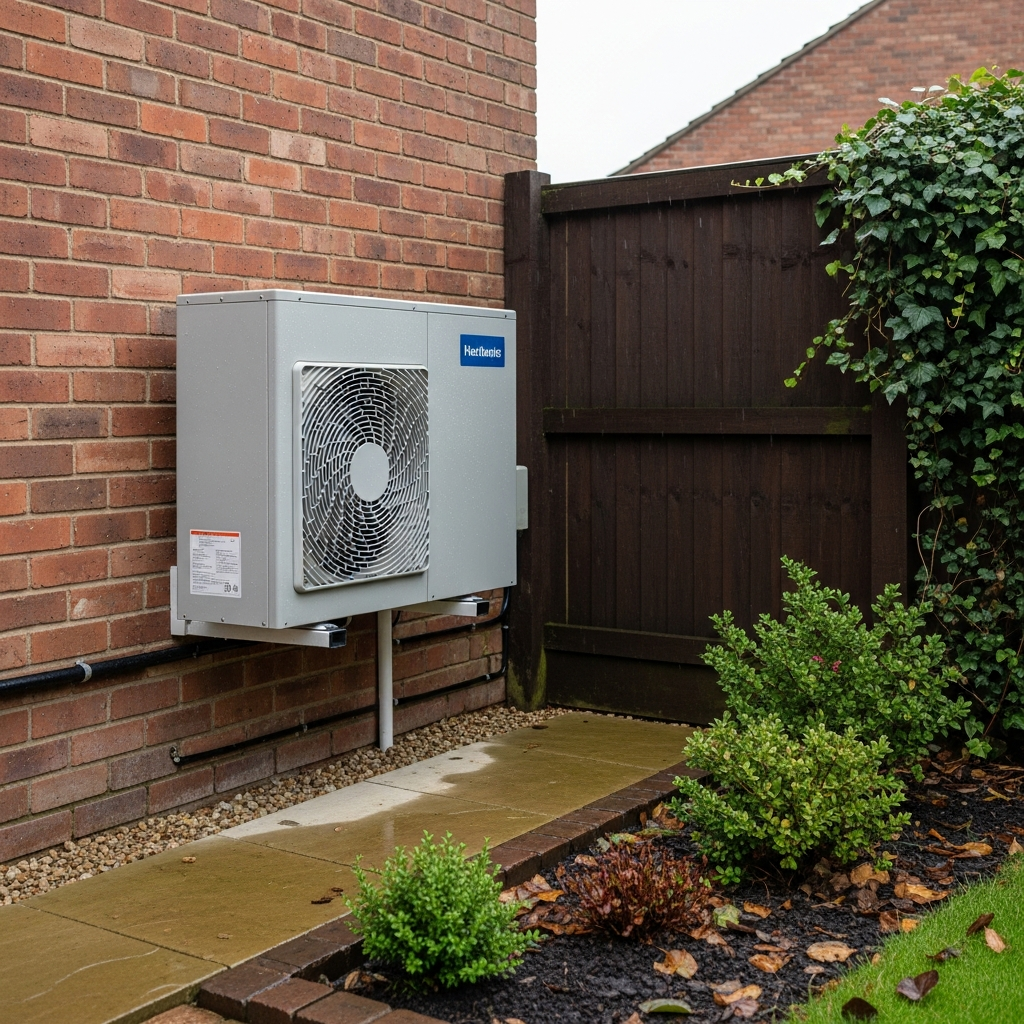
Under normal circumstances, an air source heat pump can be installed under permitted development rights without planning permission, provided it meets certain conditions (noise limits, size limits, positioning). However, in conservation areas, permitted development rights for ASHPs are restricted.
The key restriction is:
- An ASHP installed on a wall or roof that fronts a highway in a conservation area requires planning permission
- An ASHP installed on a wall or roof that does not front a highway may still fall under permitted development, subject to the standard conditions (noise below 42 dB at the nearest neighbour, only one unit, etc.)
In practice, this means rear and side installations that are not visible from the road may be permitted without a formal planning application. But because conservation area rules can be interpreted differently by different local authorities, we strongly recommend checking with your local planning department before proceeding.
What Planners Look For
If you do need planning permission, the key considerations are:
- Visual impact: Can the unit be seen from the street or public areas? How does it affect the character of the area?
- Noise: Does the unit comply with noise limits, and will it affect the tranquil character of the area?
- Reversibility: Could the unit be removed without permanent damage to the building or the area's character?
- Design and colour: Does the unit blend with the building, or does it create an incongruous modern addition?
Strategies for Getting ASHP Approval in a Conservation Area
1. Choose the Right Location
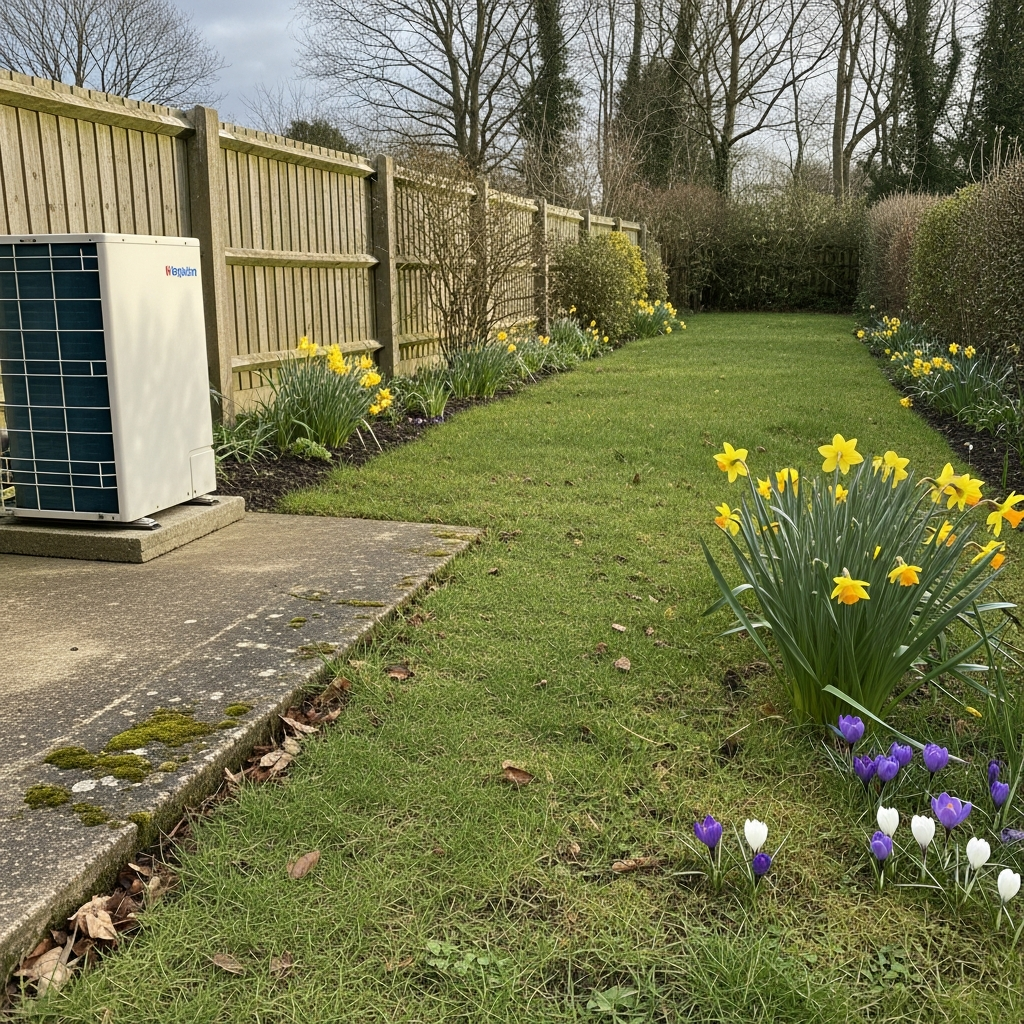
- Rear garden: A ground-mounted unit in the rear garden, screened from view, is often the easiest to approve
- Rear wall: A wall-mounted unit on the rear elevation, where it is not visible from public vantage points
- Side return: The narrow passage beside many terraced and semi-detached houses can be an effective location if there is adequate airflow
- Behind outbuildings: Positioning the unit behind a garage, shed, or wall screen
2. Use Screening
Sensitive screening can make an ASHP virtually invisible:
- Slatted timber fencing or trellis with climbing plants (leave 300mm clearance around the unit)
- Low walling in materials that match the property (brick, stone)
- Planting — evergreen shrubs provide year-round screening
Ensure any screening does not restrict airflow to the unit, as this would reduce efficiency and increase noise.
3. Choose a Quiet, Compact Unit
Select a heat pump with low noise output (40 dB or below at 1 metre) and a compact physical footprint. Some manufacturers produce units specifically designed for sensitive locations, with noise levels as low as 35 dB.
4. Match Materials and Colours
If the unit will be partially visible, consider having the casing painted or powder-coated to match the building. Some manufacturers offer colour options as standard.
Ground Source Heat Pumps: The Conservation Area Solution
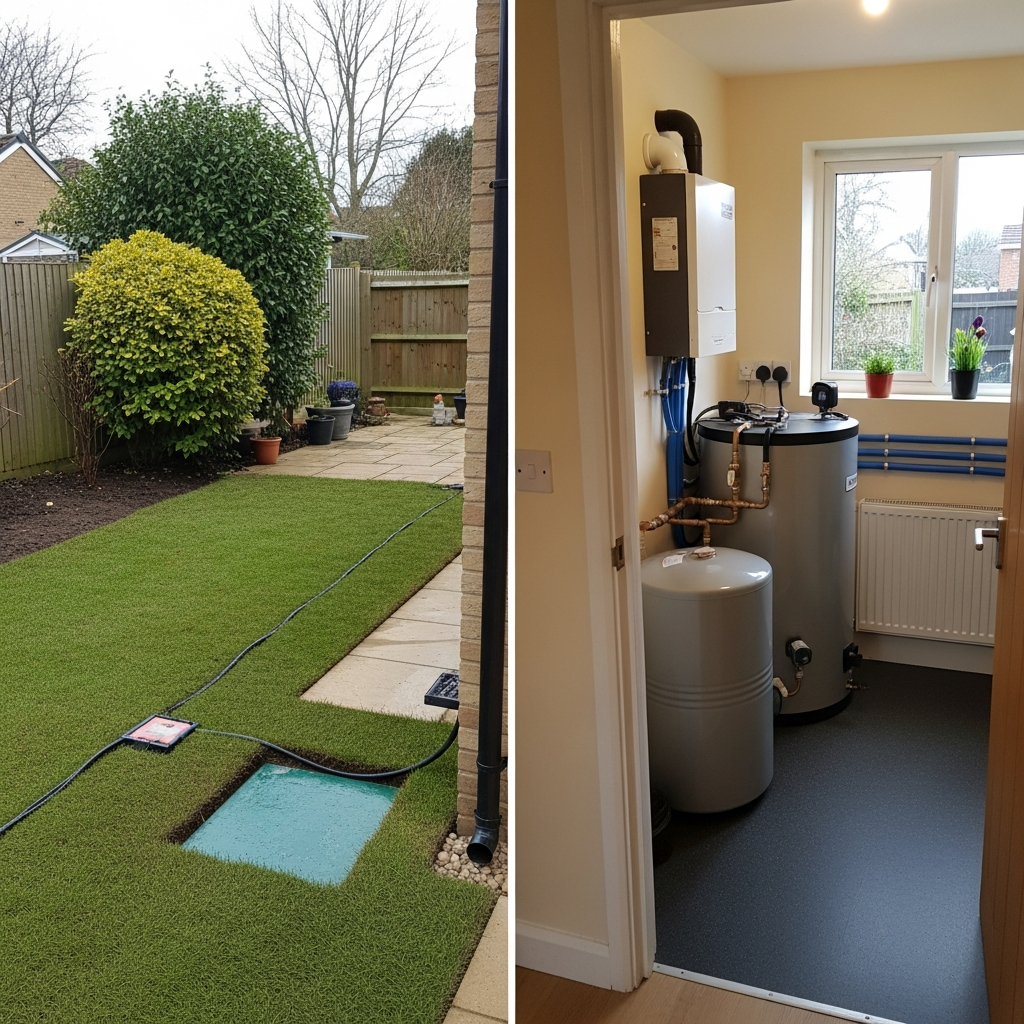
For many conservation area properties, a ground source heat pump is the ideal solution because it has zero visual impact once installed:
- No external unit visible on the building
- Ground loops are buried and invisible
- No noise impact
- The indoor unit is no more visually intrusive than a conventional boiler
Planning for GSHP in a Conservation Area
Ground source heat pumps typically do not require planning permission in conservation areas because there is no external equipment visible. The ground loops are installed by excavation (trenches or boreholes) and backfilled, leaving no permanent visible change.
However, if the excavation is in the curtilage of a listed building, or in an area of known archaeological interest, you may need additional consents. Check with your local planning authority.
GSHP Options for Conservation Area Properties
- Horizontal loops: Require a garden area roughly 2-3 times the floor area of the house. Trenches are 1.2-1.5m deep and are fully backfilled — the garden is restored afterwards
- Vertical boreholes: Require much less space — typically just one or two boreholes in a small area. Ideal for properties with limited garden space
- Shared systems: In terraces, neighbours can share a ground source system, reducing the land requirement per property
The Planning Application Process
Step 1: Pre-Application Advice
Most local authorities offer pre-application advice, either free or for a small fee (typically £30-£100). This is invaluable in conservation areas — the planning officer can tell you early on whether your proposal is likely to be approved, and suggest modifications.
Step 2: Prepare Your Application
A planning application for an ASHP in a conservation area should include:
- Site plan: Showing the proposed location of the unit relative to the building, boundaries, and any public viewpoints
- Design and access statement: Explaining how the installation preserves or enhances the character of the conservation area
- Photographs and photomontages: Showing the proposed location from key viewpoints, ideally with a mockup of the unit in place
- Noise data: The manufacturer's noise specification and a statement of compliance with the 42 dB limit at the nearest neighbour
- Screening proposals: If applicable, details and materials for any screening
Step 3: Determination
Standard planning applications are determined within 8 weeks. The application will be assessed by the planning officer, with input from the conservation officer. Neighbours will be consulted and can submit comments.
Step 4: Conditions
Approval may come with conditions — specifying colours, screening requirements, noise limits, or maintenance obligations. Your installer must comply with all conditions.
Costs for Conservation Area Heat Pump Installation
The additional costs for installing a heat pump in a conservation area are relatively modest:
- Pre-application advice: £0-£100
- Planning application fee: £258 (standard householder application in England)
- Design and access statement: £200-£500 if prepared professionally
- Screening or landscaping: £300-£1,500
The heat pump itself and installation costs are the same as for any property. See our full cost guide for typical prices, and remember that the £7,500 BUS grant is available for conservation area properties on the same terms as any other home.
Get quotes from experienced installers through our free service.
Real-World Success Stories
Conservation area heat pump installations are becoming increasingly common:
- Bath: Multiple Georgian townhouses in Bath's conservation area have installed ASHPs in rear courtyards and basements, screened from the famous streetscapes
- Cotswolds: Stone cottages in Cotswold conservation villages have used GSHPs to avoid any visual impact
- London: Victorian terraces across London's many conservation areas are installing ASHPs in rear gardens and side returns, with planning approval rates improving as councils become more familiar with the technology
- York: Properties in York's historic core have used a combination of ASHPs and GSHPs, with careful placement and screening to satisfy conservation requirements
What If Planning Permission Is Refused?
If your application is refused, you have several options:
- Amend and resubmit: Address the reasons for refusal (different placement, additional screening) and submit a revised application
- Switch to GSHP: If the visual impact of an ASHP was the issue, a ground source system may be approved without planning permission
- Appeal: You can appeal the decision to the Planning Inspectorate, though this takes time and there is no guarantee of success
- Pre-application discussion: If you did not do this before, arrange a meeting with the conservation officer to understand what would be acceptable
Frequently Asked Questions
Do I always need planning permission for a heat pump in a conservation area?
Not always. If the air source heat pump is installed on a wall or roof that does not face a highway, and it meets all the standard permitted development conditions (noise, size, etc.), it may be permitted without planning permission. However, rules vary by local authority, and we recommend checking with your planning department before proceeding.
Can I install a ground source heat pump without planning permission in a conservation area?
In most cases, yes. Ground source heat pumps have no visible external equipment, so they do not affect the character or appearance of the conservation area. The excavation for ground loops is considered engineering works and is usually permitted development. Check with your local authority if you are unsure.
How long does the planning process take?
A standard householder planning application is determined within 8 weeks. Pre-application advice takes 2-4 weeks. Including preparation time, allow 3-4 months from starting the process to receiving a decision.
Will my neighbours object?
Neighbours are consulted on planning applications and can submit comments. Common concerns are noise and visual impact. Choosing a quiet unit and providing effective screening can address these concerns. A well-prepared application with a noise assessment and photomontages showing the screening is the best way to pre-empt objections.
Is there any extra grant funding for conservation area properties?
The standard BUS grant of £7,500 applies. There are no specific additional grants for conservation area properties, but there are no additional restrictions either. The grant covers the heat pump installation regardless of whether planning permission was required.