Heat Pump for a Flat-Roofed Property
Flat-roofed properties are common across the UK, from 1960s and 1970s bungalows to modern extensions, maisonettes, and converted commercial buildings. If you live in a flat-roofed home and are considering a heat pump, you may wonder whether the roof design creates any specific challenges. The short answer is that heat pumps work perfectly well in flat-roofed properties, but the roof itself needs attention — specifically, its insulation.
This guide covers why flat roofs matter for heat pump performance, how to insulate them effectively, and what to consider when planning your installation.
Why Flat Roofs Lose More Heat
All roofs lose heat, but flat roofs are typically worse than pitched roofs for several reasons:
Less Space for Insulation
A pitched roof with a loft space can accommodate 270mm or more of mineral wool insulation at ceiling level. Flat roofs have far less depth to work with. Many older flat roofs have just 25mm to 50mm of insulation, or none at all. The structural depth of the roof joists limits how much insulation can be fitted between them, often to 100 to 150mm.
Larger Roof Area Relative to Floor Area
In a bungalow or single-storey extension, the roof covers the entire floor area. In a two-storey house with a pitched roof, only the upstairs ceiling (half the total floor area) has roof exposure. This means flat-roofed single-storey properties lose proportionally more heat through the roof than multi-storey homes.
Poor Original Construction
Many flat roofs built before the 1990s were constructed with little regard for thermal performance. Typical construction was timber joists, plywood decking, and felt — with minimal or no insulation. Building Regulations at the time required far less insulation than today's standards.
The result is that an uninsulated or poorly insulated flat roof can have a U-value of 1.5 to 2.0 W/m2K, compared to a target of 0.16 W/m2K for new roofs under current regulations. This means an old flat roof can lose ten times as much heat per square metre as a modern insulated roof.
How Flat Roof Heat Loss Affects Heat Pump Sizing
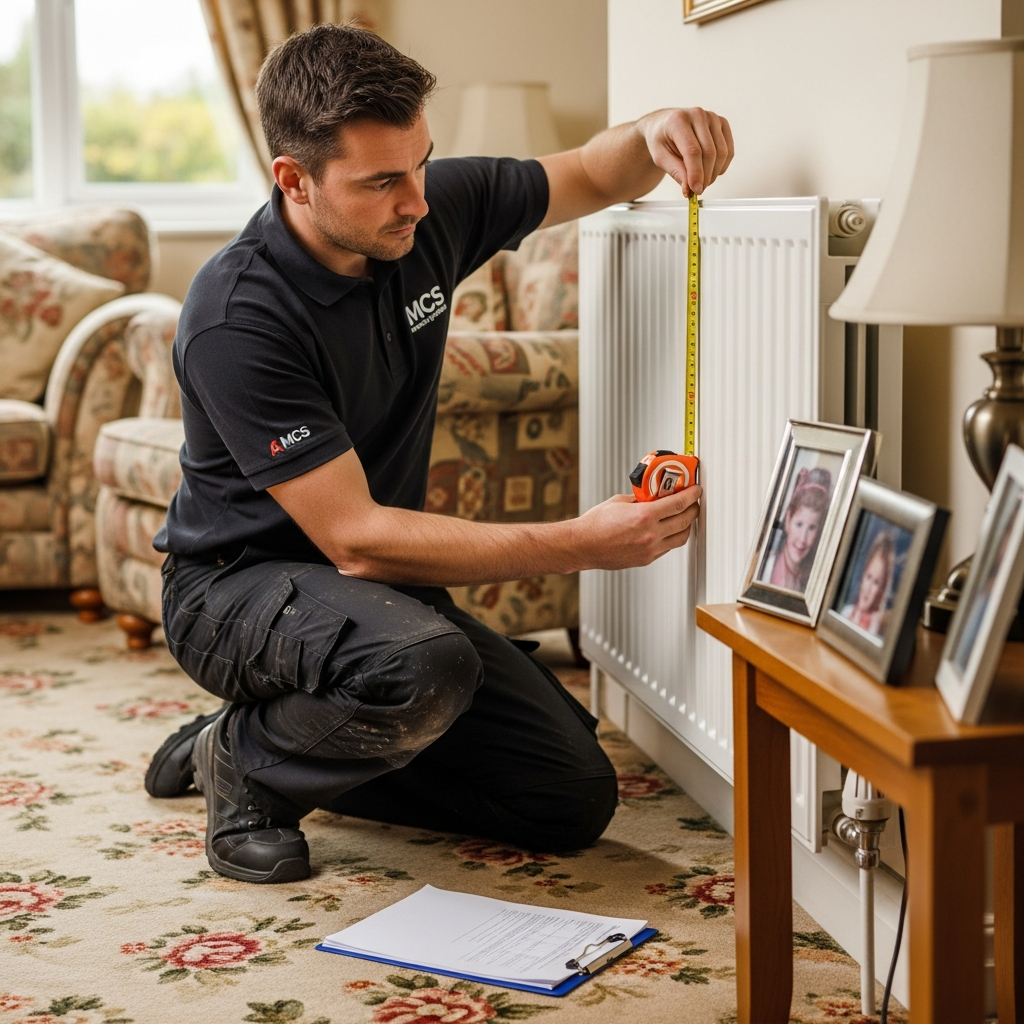
When an MCS installer carries out a heat loss calculation for a flat-roofed property, the roof heat loss will be a significant proportion of the total. In a single-storey bungalow with a poorly insulated flat roof, the roof alone might account for 30 to 40 per cent of total heat loss.
This directly affects heat pump sizing. A flat-roofed bungalow with poor roof insulation might need a 12kW heat pump, whereas the same property with a well-insulated roof might only need 8kW. That difference translates to £1,500 to £3,000 in heat pump cost and proportionally higher running costs every year the system operates.
Insulating a Flat Roof: Your Options
There are three main approaches to insulating a flat roof, each with different advantages and costs. The right choice depends on the roof's condition, the budget, and whether the roof is due for replacement.
Warm Roof (Insulation Above the Deck) — Recommended
A warm roof places rigid insulation boards on top of the existing roof deck, with a new waterproof membrane on top. This is considered the best method because:
- The insulation is continuous with no thermal bridges from the joists
- The existing roof structure stays warm, reducing the risk of condensation
- Insulation depth is not limited by joist depth — you can achieve excellent U-values
- The roof height increases slightly (typically 100 to 200mm), which may affect eaves details
Typical cost: £80 to £120 per square metre, including insulation and new membrane. For a 50 square metre roof, that is £4,000 to £6,000. This is best done when the existing roof covering needs replacing anyway, making it excellent value as a combined project.
Cold Roof (Insulation Between the Joists)
A cold roof places insulation between the roof joists, below the deck. This is cheaper and less disruptive than a warm roof, but has drawbacks:
- The joist depth limits insulation thickness — typically 100 to 150mm
- Thermal bridges through the timber joists reduce overall performance
- The roof deck stays cold, increasing condensation risk — adequate ventilation above the insulation is essential
- A vapour control layer on the warm side is critical to prevent moisture damage
Typical cost: £30 to £60 per square metre if done from inside during a refurbishment. This approach is best when the roof covering is in good condition and does not need replacing.
Inverted Roof (Insulation Above the Waterproof Layer)
An inverted roof places insulation on top of the existing waterproof membrane, weighted down with ballast (gravel or paving slabs). This protects the membrane from UV damage and temperature extremes, extending its life.
- Can be installed without disturbing the existing membrane
- Excellent for green roof or terrace roof applications
- Requires specialist XPS (extruded polystyrene) insulation that can withstand water exposure
Typical cost: £60 to £100 per square metre. This approach works well when the existing membrane is in good condition and you want to add insulation without re-roofing.
What U-Value Should You Aim For?
Current Building Regulations require a U-value of 0.16 W/m2K for new flat roofs. For a retrofit, achieving 0.20 to 0.25 W/m2K is a realistic and cost-effective target that will dramatically reduce heat loss compared to an uninsulated or poorly insulated roof.
To achieve 0.20 W/m2K, you need approximately:
- 120mm of PIR (polyisocyanurate) rigid insulation board, or
- 150mm of EPS (expanded polystyrene), or
- 200mm of mineral wool
Other Considerations for Flat-Roofed Properties
Outdoor Unit Placement
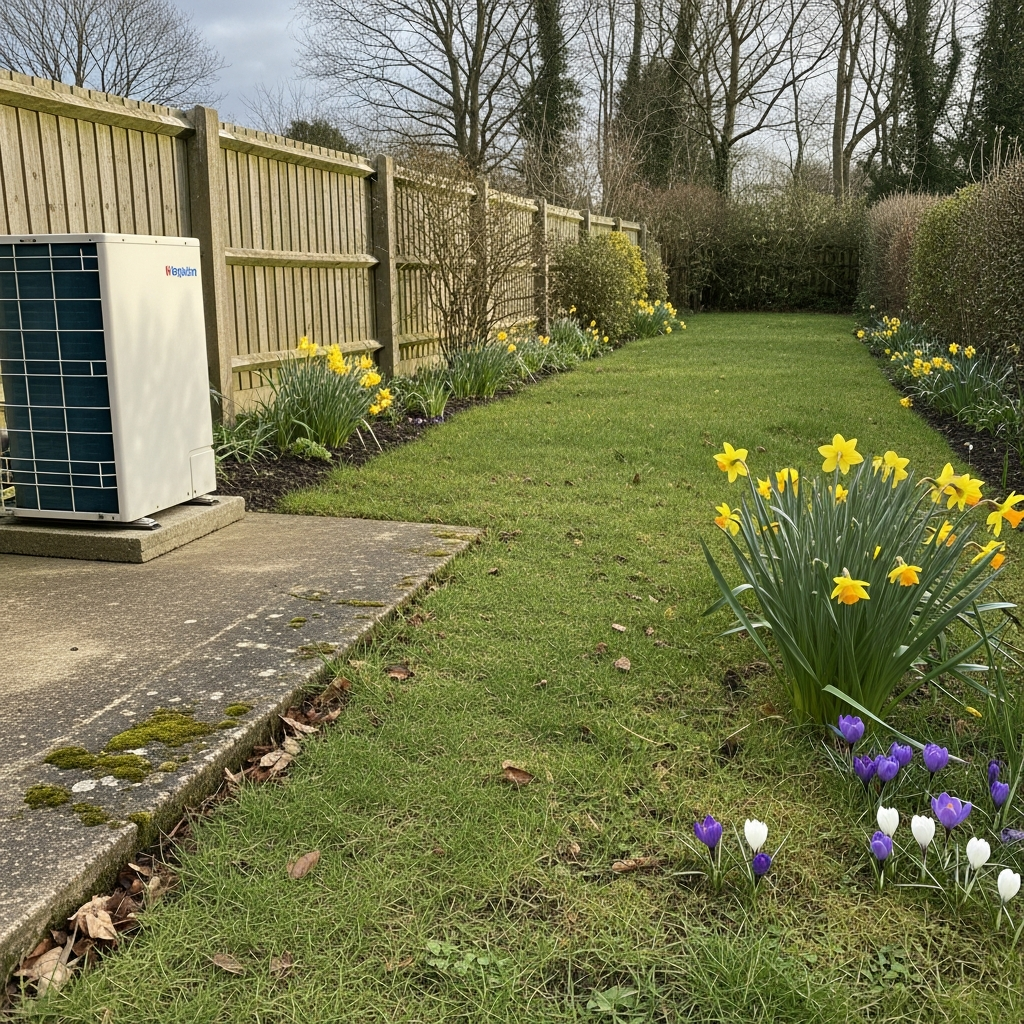
The air source heat pump outdoor unit needs good airflow and adequate clearance from walls and boundaries. Flat-roofed properties — particularly bungalows — sometimes have less external wall space for mounting or positioning the unit. However, this is rarely a serious issue. Most units can be positioned on a concrete base within 300mm of an external wall.
In some cases, the outdoor unit can be placed on a flat roof itself, provided the roof structure can support the weight (typically 70 to 120kg) and vibration is managed with anti-vibration mounts. This is more common in commercial installations but can work for residential properties too. Always check with a structural engineer first.
Noise
Flat-roofed properties, particularly bungalows, have bedrooms at ground level — closer to where the outdoor unit is positioned. This makes noise levels more important to consider. Choose a unit with low noise output (ideally under 45dB at one metre) and position it away from bedroom windows where possible.
Pipework Runs
In a bungalow, all rooms are on one level, which often means longer pipework runs between the heat pump and the furthest radiators. Longer runs mean slightly higher pump energy and potentially some heat loss from pipes. Ensure all pipework is well insulated, particularly any runs through unheated spaces or under the floor.
Underfloor Heating
Flat-roofed bungalows are excellent candidates for underfloor heating if you are planning a renovation. With all rooms on one level, installing underfloor heating is more straightforward than in a two-storey house. Underfloor heating works at lower flow temperatures (25 to 35 degrees) than radiators, which significantly improves heat pump efficiency.
Flat Roof Extensions
Many homes have flat-roofed extensions — a kitchen extension or conservatory added at a later date. These extensions are often the weakest point thermally in the whole house, with poor roof insulation, single glazing, and sometimes no cavity wall insulation.
When sizing a heat pump for a property with a flat-roofed extension, the extension's heat loss needs to be included in the calculation. If the extension is poorly insulated, it can add disproportionately to the total heat loss. Insulating the flat roof extension (often a straightforward warm roof upgrade when the felt needs replacing) can make a significant difference to the heat pump size needed.
Cost Comparison: Insulate the Roof vs Bigger Heat Pump
Here is a worked example for a three-bedroom flat-roofed bungalow with 80 square metres of roof area:
- Without roof insulation: Roof U-value 1.5 W/m2K. Roof heat loss contribution approximately 4.5kW. Total heat loss 13kW. Heat pump cost approximately £12,000 installed. Annual heating electricity approximately 4,500 kWh (£1,080).
- With warm roof insulation (U-value 0.20): Roof heat loss contribution approximately 0.6kW. Total heat loss 9kW. Heat pump cost approximately £9,500 installed. Annual heating electricity approximately 3,100 kWh (£744). Insulation cost approximately £5,000.
The insulation saves £2,500 on the heat pump and £336 per year on running costs. The net additional cost of insulation (£5,000 minus £2,500 heat pump saving = £2,500) pays for itself in about 7 to 8 years through reduced energy bills, and then saves you £336 every year after that for the remaining 12+ years of the heat pump's life.
Planning Permission and Building Regulations
Installing a heat pump at a flat-roofed property generally falls under permitted development rights, the same as any other domestic property. The outdoor unit must comply with MCS noise standards and be positioned appropriately.
For flat roof insulation, Building Regulations apply if you are carrying out a re-roofing project or a major renovation. The building control officer will expect the thermal performance to be improved to meet current standards as far as reasonably practicable. This is actually helpful — it means the insulation cost can be treated as a regulatory requirement rather than an optional extra.
Frequently Asked Questions
Can I install a heat pump on a flat-roofed property?
Yes. Heat pumps work on any property type. The flat roof itself does not prevent installation. The main consideration is ensuring the roof is well insulated to minimise heat loss and keep the heat pump running efficiently.
Is a flat roof a problem for a heat pump?
Only if the roof is poorly insulated. An uninsulated flat roof loses significant amounts of heat, which increases the size and running cost of the heat pump needed. Insulating the roof before or during heat pump installation solves this completely.
Can the heat pump outdoor unit go on a flat roof?
In some cases, yes, but it requires structural assessment to ensure the roof can support the weight and suitable anti-vibration mounting to prevent noise transmission. Ground-level installation on a concrete base is more common and usually simpler.
How much does it cost to insulate a flat roof?
A warm roof upgrade (the recommended approach) typically costs £80 to £120 per square metre. For a typical bungalow roof of 60 to 80 square metres, that is £4,800 to £9,600. If done when the roof covering needs replacing anyway, the additional cost for the insulation alone is lower.
Should I insulate the flat roof before installing a heat pump?
Yes, ideally. Insulating first means the heat loss calculation reflects the improved roof, resulting in a correctly sized (smaller) heat pump. This follows the fabric first approach, which is widely recommended by energy experts and MCS installers.
What is the best insulation for a flat roof?
PIR (polyisocyanurate) rigid insulation boards are the most common choice for flat roof insulation due to their high thermal performance relative to thickness. For a warm roof, 100 to 150mm of PIR achieves a U-value of 0.16 to 0.22 W/m2K. For cold roofs, mineral wool between joists is more common but less effective overall.