Heat Pump Cost for a 3-Bed Semi UK 2026
The three-bedroom semi is the UK's most common property type, and a heat pump installation typically costs £8,000-£12,000 before the grant -- falling to just £500-£4,500 after the £7,500 BUS grant. That is comparable to a new gas boiler, with 20+ years of lower running costs ahead.
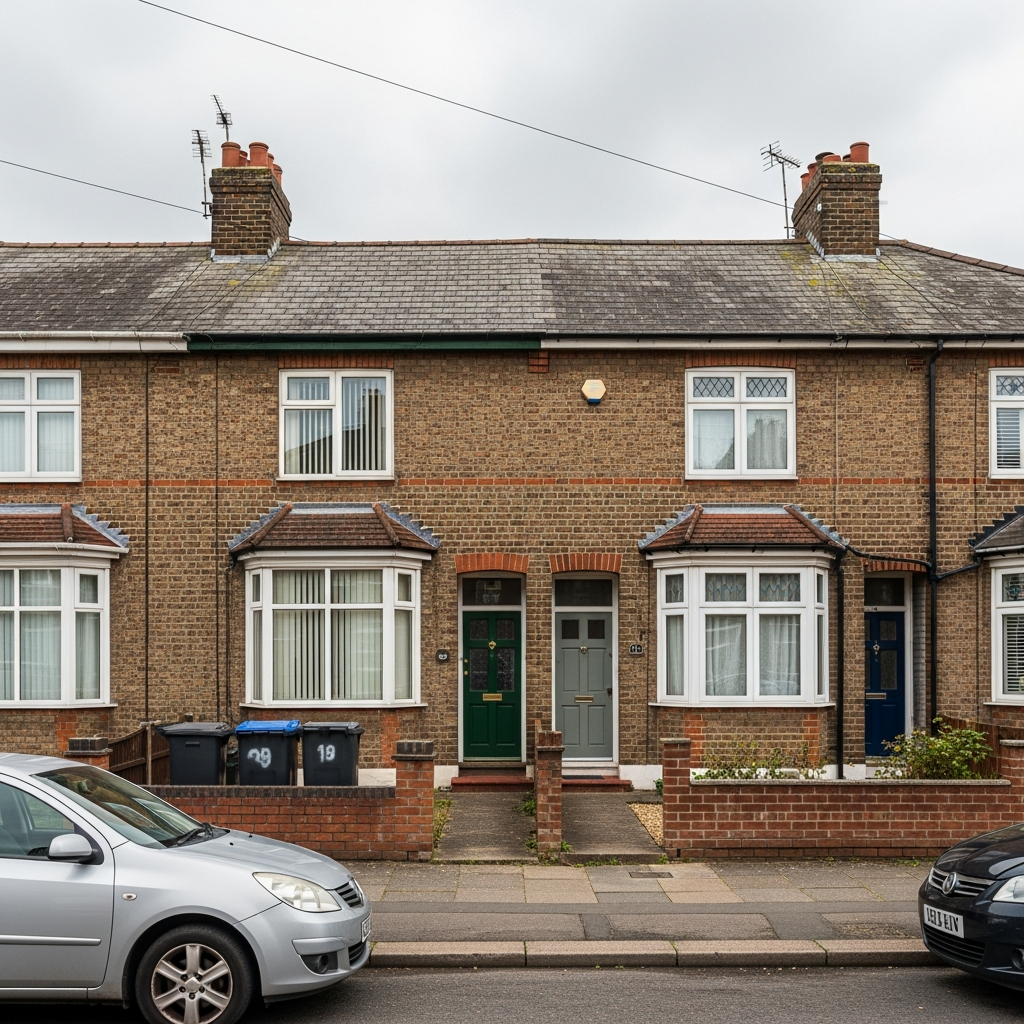
If you own a 3-bed semi and you are considering a heat pump, you are not an early adopter -- you are the mainstream market. Installers know these properties inside out, and the costs are well established. This guide gives you the specific numbers for a 3-bed semi. For the broader cost picture, see our main heat pump cost guide.
Get a personalised cost estimate for your 3-bed semi
Use the free calculatorTakes 30 seconds. Based on your property age and insulation level.
What Size Heat Pump for a 3-Bed Semi?
A typical three-bedroom semi has a floor area of 80-110m2. The heat pump size depends on heat loss:
| Insulation Level | HP Size | Annual Heat Demand |
|---|---|---|
| Well-insulated (post-2000) | 6-7kW | 8,000-10,000 kWh |
| Average (1960s-2000s, cavity wall, double glazing) | 7-9kW | 10,000-14,000 kWh |
| Below average (1930s-1960s solid wall) | 9-11kW | 14,000-18,000 kWh |
Your installer will conduct a room-by-room heat loss calculation during the survey. Do not accept a quote from anyone who sizes based on floor area alone. Our calculator gives you an initial estimate.
Installation Cost Breakdown
Standard Installation (Existing Wet System, Minimal Upgrades)
This includes the heat pump unit (£4,500-£7,000), hot water cylinder (£900-£1,600), installation labour (£2,500-£4,000), ancillaries (£800-£1,500), electrical work (£300-£600), and commissioning (£200-£400).
With Radiator Upgrades
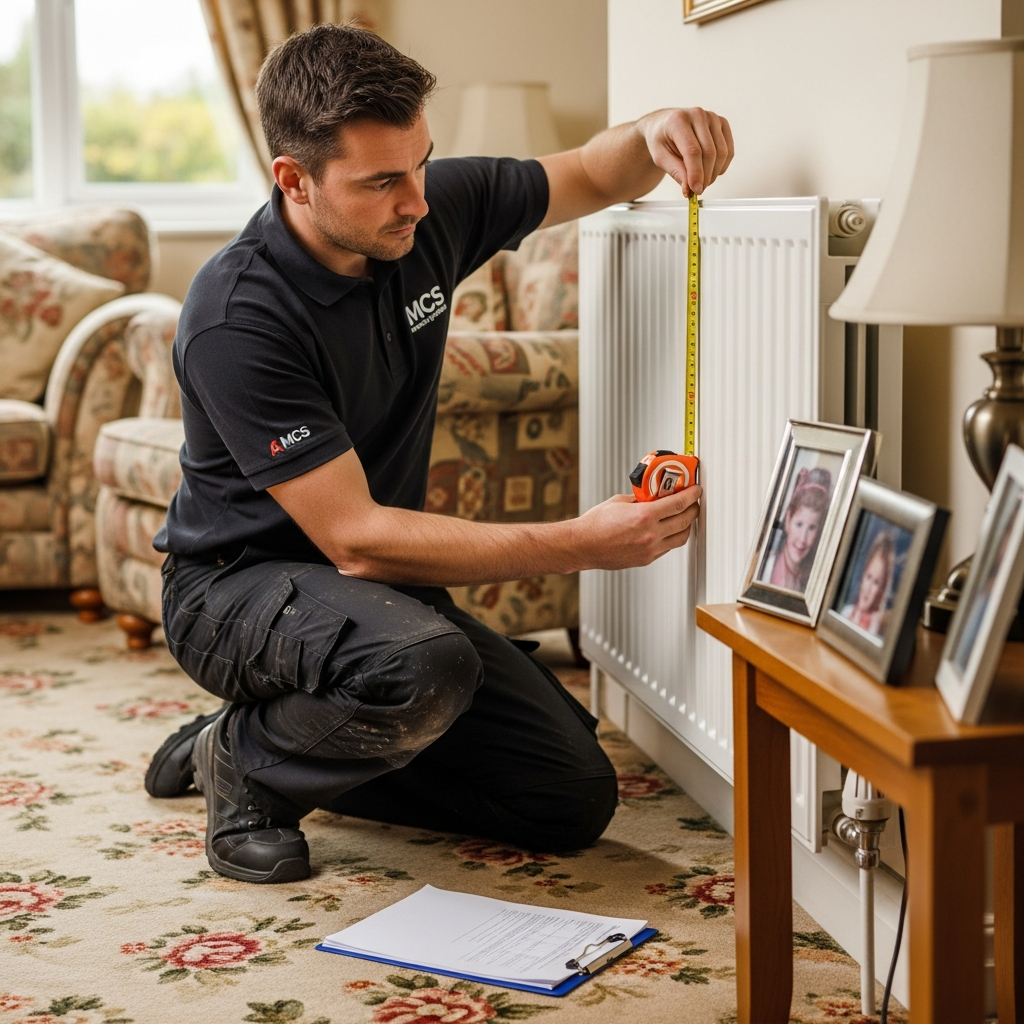
If existing radiators are undersized for lower flow temperatures: partial upgrades (3-5 radiators) add £1,000-£2,500; full replacement adds £2,500-£5,000. Not all installations need upgrades. See our guide on whether you need new radiators.
What Affects the Price?
Property age and condition (a 2010-built semi might cost £8,000-£9,000, while a 1930s solid-wall semi might cost £11,000-£15,000), heat pump brand, installer pricing (always get at least three quotes), and location all play a role. Our quote service connects you with vetted local installers.
Running Costs
For a 3-bed semi with 11,500 kWh heat demand and COP of 3.0:
The running cost comparison with gas is close at current prices. The financial case rests on the BUS grant making installation affordable, avoiding a future gas boiler replacement cost (£2,500-£4,000), and expected electricity price improvements. For a full comparison, see our heat pump vs gas boiler guide.
Compare installer quotes for your 3-bed semi
Get free quotes3 quotes from MCS-certified installers. No obligation.
Real-World Example: 1970s 3-Bed Semi
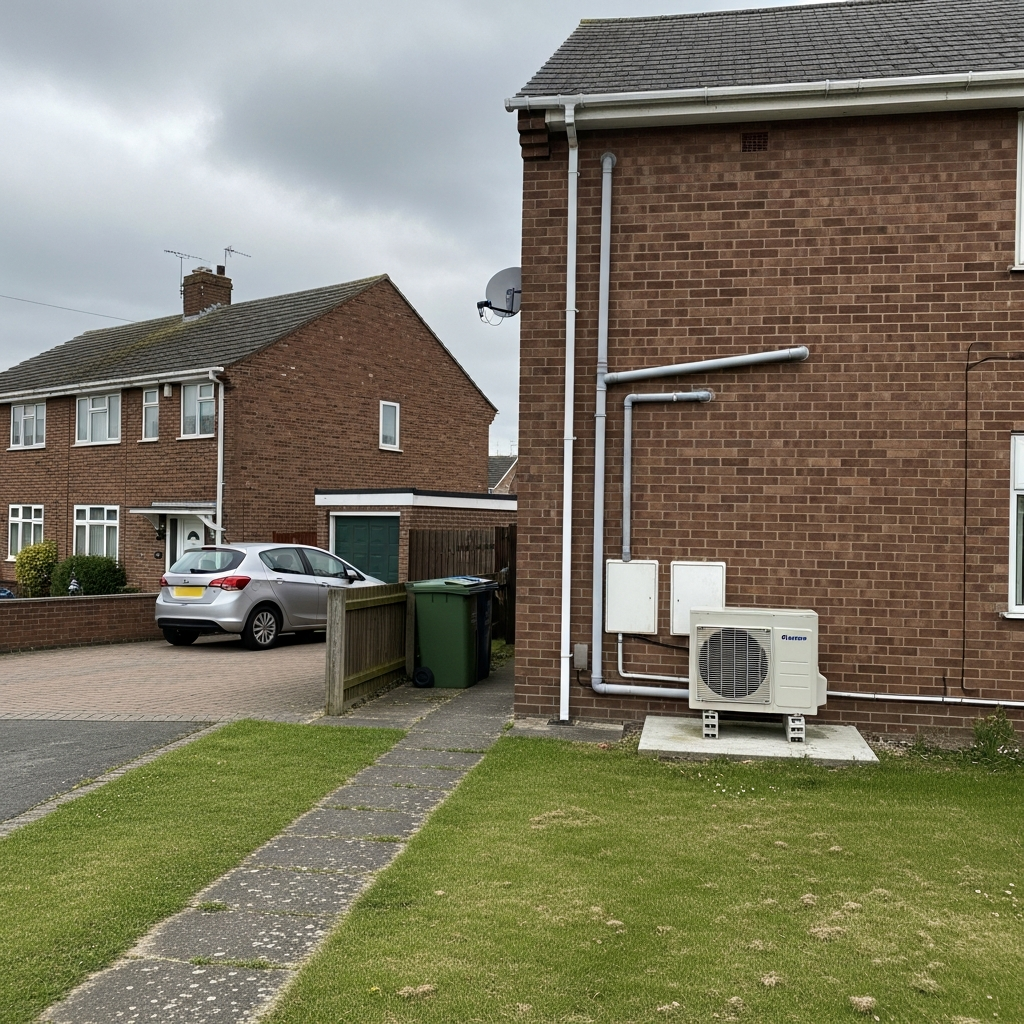
| Property | 1975-built semi, 95m2, cavity walls insulated, double glazing, 200mm loft insulation |
| Previous system | 15-year-old gas combi boiler |
| Heat pump installed | 8kW air source, 200-litre cylinder, 4 radiators upgraded |
| Total cost | £10,800 |
| After BUS grant | £3,300 |
| Previous gas bill | £920/year |
| Heat pump electricity cost | £850/year (standard tariff) |
| Net cost after grant + avoided boiler | £300 |
The homeowner essentially gets a brand-new heating system for £300 net, with comparable running costs and a 20-year lifespan. If you add solar panels to reduce electricity costs further, the economics become even more compelling.
Timeline: What to Expect
Getting quotes takes 2-4 weeks, survey and design 1-2 weeks, BUS grant approval 2-4 weeks, and the installation itself takes 2-3 days (3-5 with radiator upgrades). For a complete walkthrough, see our installation guide.
Frequently Asked Questions
Is a 3-bed semi big enough for a heat pump?
Absolutely. A 3-bed semi is an ideal property for a heat pump. Most heat pump installations in the UK are in properties of this size.
Will I save money with a heat pump in a 3-bed semi?
Compared to gas, running cost savings are modest (£0-£250 per year). The financial benefit comes from the BUS grant, avoided boiler costs, and expected future price movements. Compared to oil, LPG, or electric heating, savings are much larger. See whether heat pumps are worth it.
Do I need to upgrade my radiators?
Not necessarily. Many 3-bed semis have adequately sized radiators. See our radiator guide.
Where does the outdoor unit go?
Most 3-bed semis have a side passage, which is ideal. The unit needs 300mm clearance from the wall and adequate airflow.
How long does installation take?
A standard installation takes 2-3 days. With significant radiator upgrades, allow 3-5 days.
What happens to my gas supply?
It remains connected unless you choose to have it removed. If you do not use gas for anything else, capping the supply saves approximately £115 per year in standing charges.
See exactly what a heat pump costs for your 3-bed semi
Get your estimate nowFree, instant, and based on your specific property details.
About this guide: This article covers heat pump costs specifically for the UK's most common property type. For air source heat pump installations in 3-bed semis, the Boiler Upgrade Scheme brings out-of-pocket costs down to levels comparable with a new gas boiler. Combining with solar panels can make the long-term economics even more favourable.