Heat Pump Cost for a 2-Bed Flat UK 2026
A heat pump for a two-bedroom flat costs £7,500 to £13,000 before the BUS grant -- and many installations come in under £7,500, meaning the grant could cover the entire cost. Flats have lower heat demands, need smaller systems, and benefit from shared walls that reduce heat loss.
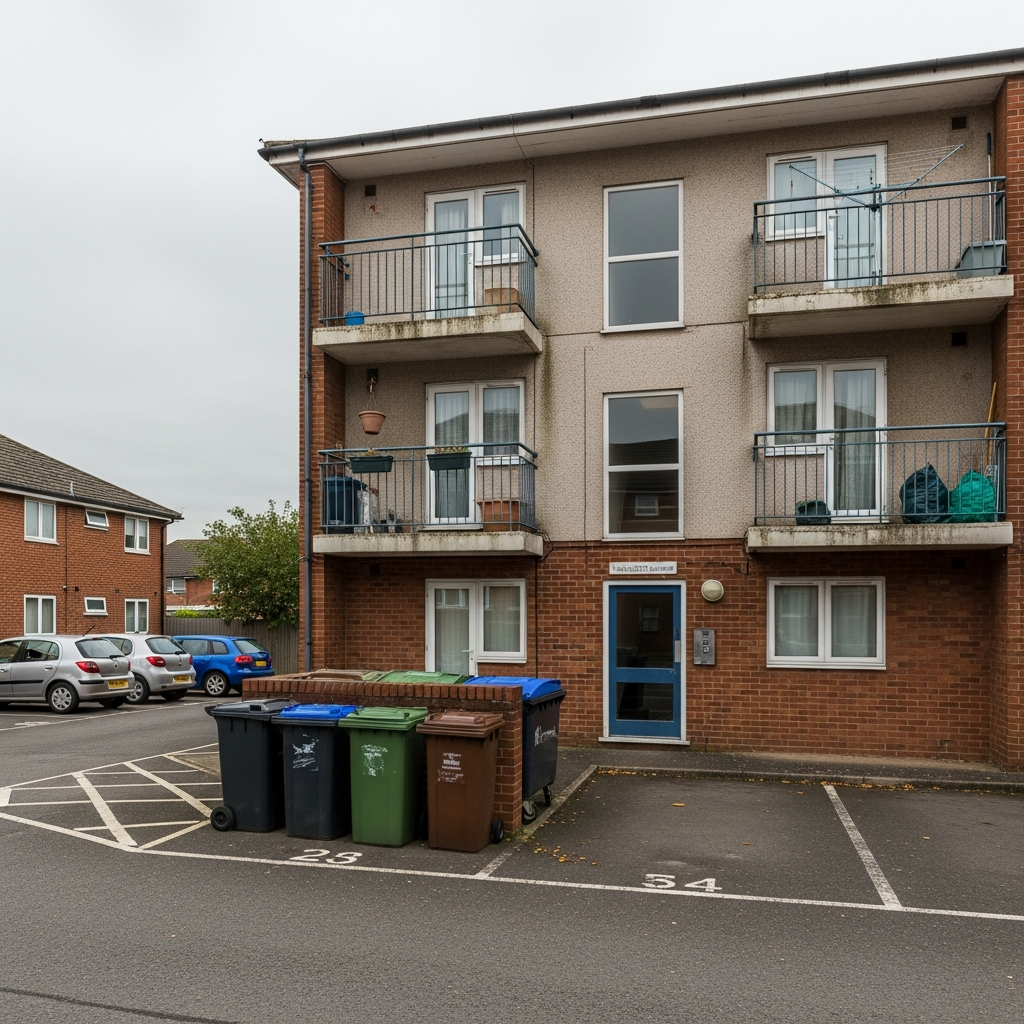
Flats are often overlooked in heat pump discussions, but they are actually well-suited in many ways. The challenges are practical -- finding space for the outdoor unit and getting permission -- rather than technical. This guide covers everything a flat owner needs to know.
See what a heat pump would cost for your flat
Use the free calculatorInstant estimate. Works for flats, houses, and bungalows.
What Size Heat Pump Does a 2-Bed Flat Need?
A two-bedroom flat typically has a floor area of 45-75m2. The heat demand depends on the flat's position in the building, insulation quality, and age:
| Flat Type | Heat Demand | HP Size |
|---|---|---|
| Well-insulated modern (post-2000) | 3,000-5,000 kWh | 3-4kW |
| Average (1970s-2000s) | 5,000-7,000 kWh | 4-5kW |
| Older/poorly insulated (pre-1970s) | 7,000-9,000 kWh | 5-6kW |
Middle-floor flats benefit from being sandwiched between heated spaces above and below, which significantly reduces heat loss. Our suitability checker can help estimate your specific requirements.
Installation Costs
System With Existing Wet Central Heating
If your flat already has radiators and pipework from an existing gas boiler, the installation is simpler and cheaper:
System Without Existing Wet Heating
If your flat currently has electric storage heaters, you need a complete new heating system, pushing the total to £11,500-£18,000 before grant (£4,000-£10,500 after). For a full breakdown of UK heat pump pricing, see our heat pump cost guide.
Running Costs
The lower heat demand of a flat means lower running costs. Using a seasonal COP of 3.0:
| Flat Type | Heat Demand | Annual Cost (Standard) | Annual Cost (TOU) |
|---|---|---|---|
| Modern well-insulated | 4,000 kWh | £427-£477 | £340-£390 |
| Average | 6,000 kWh | £590-£640 | £460-£510 |
| Older | 8,000 kWh | £753-£803 | £580-£630 |
Compare these to typical gas heating costs for the same flat (approximately £350-£550 per year) or electric storage heater costs (£640-£1,280 per year). The savings are most dramatic when replacing electric heating. For a detailed comparison, see our running costs guide.
Get quotes from installers experienced with flat installations
Get free quotesMCS-certified installers in your area. No obligation.
Flat-Specific Challenges
Where to Put the Outdoor Unit
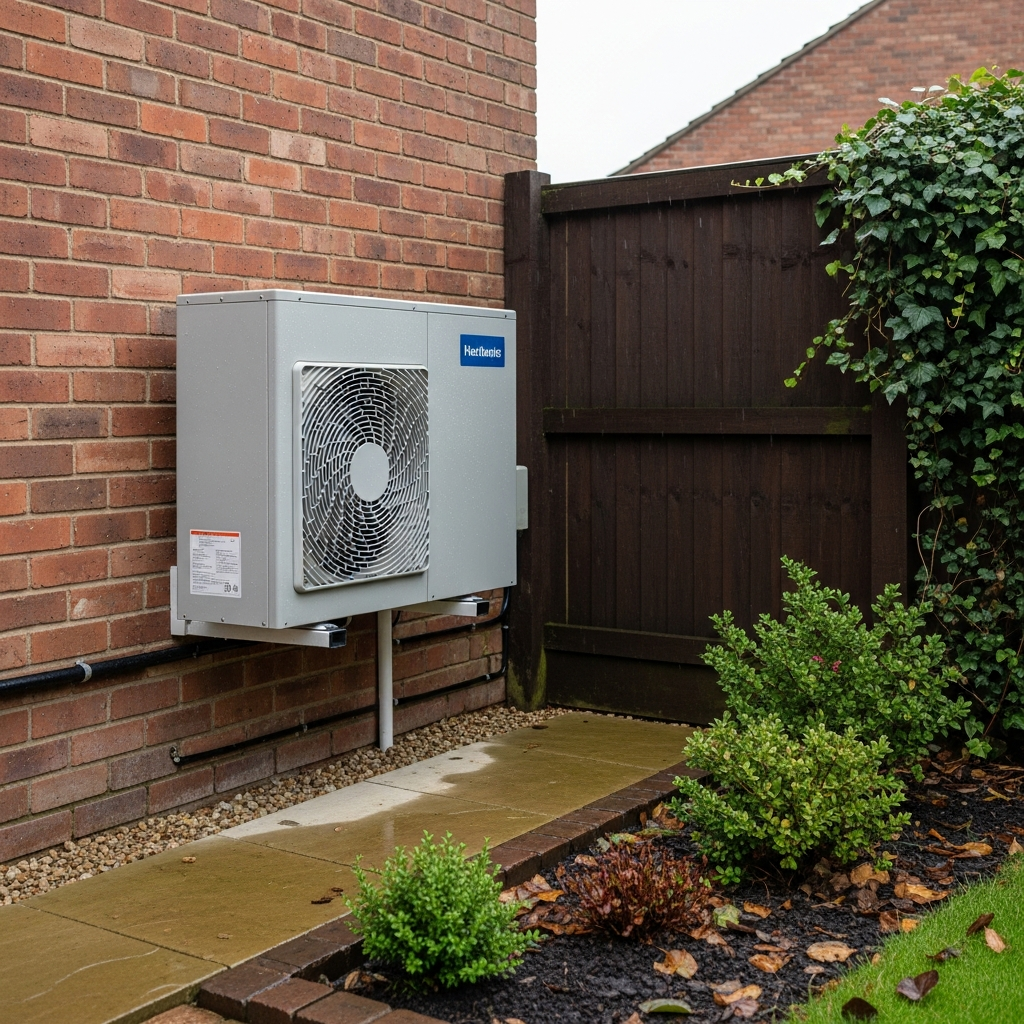
Every air source heat pump needs an outdoor unit. Options include balconies (if structurally sound), wall brackets (similar to an air conditioning unit), ground level for ground-floor flats, or communal areas with freeholder permission.
Permission and Leasehold Issues
If you own a leasehold flat, you will typically need permission from the freeholder or management company to install an external unit. Some freeholders are proactive about heat pump installations, especially in blocks facing EPC upgrade requirements.
Noise Considerations
Modern small heat pumps (4-6kW) are typically very quiet -- 40-48 dB at 1 metre, comparable to a refrigerator. Wall-mounted units should include anti-vibration mounts to prevent noise transmission through the building structure.
Space for the Hot Water Cylinder
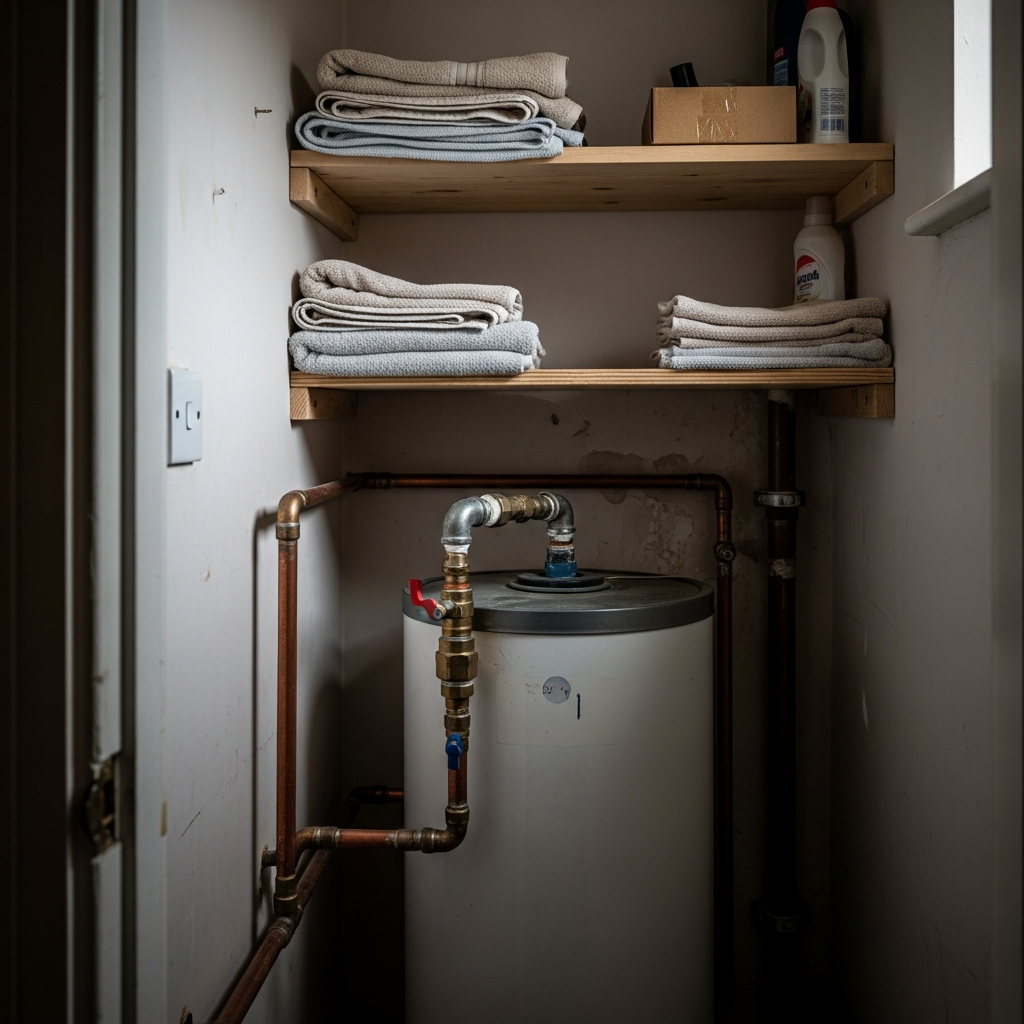
Heat pumps need a hot water cylinder (typically 150-200 litres for a 2-bed flat). Slimline cylinders (450mm diameter) are available for tight spaces.
Communal Heat Pump Systems
An alternative to individual flat heat pumps is a communal system serving the entire building. This can be more cost-effective per flat and avoids the need for individual outdoor units. If you are interested, raise it with your management company.
The BUS Grant for Flats
The Boiler Upgrade Scheme is available for individual flat installations. The £7,500 grant applies per dwelling, so each flat in a block can apply individually. The property must have a valid EPC and be replacing an existing heating system.
Is a Heat Pump Worth It for a 2-Bed Flat?
- Replacing electric heating: Strongly worth it. Savings of £350-£700 per year with payback in 6-15 years. Plus a massive improvement in comfort and control.
- Replacing a gas boiler: Marginal on running costs alone, but the BUS grant can make the installation cost comparable to a new boiler. Worth it for future-proofing.
- Replacing an old gas boiler (pre-2005): Better case, as the efficiency gain is larger and you avoid the cost of a new gas boiler.
Read our full analysis on whether heat pumps are worth it. If you also have a south-facing roof or balcony, solar panels can further reduce running costs.

Frequently Asked Questions
Can you install a heat pump in a flat?
Yes, heat pumps can be installed in flats. You need an appropriate location for the outdoor unit, permission from the freeholder if leasehold, and space inside for a hot water cylinder. Many UK flats have successfully installed heat pumps.
What size heat pump for a 2-bed flat?
Typically 4-6kW, depending on the flat's insulation and position in the building. Your installer will calculate the exact requirement during the survey.
Do I need planning permission for a heat pump on a flat?
Permitted development rights for heat pumps apply to flats, but with more restrictions than for houses. Always check with your local planning authority.
Will a heat pump be noisy for my neighbours?
Modern small heat pumps are very quiet -- typically 40-48 dB at 1 metre. With anti-vibration mounts and sensible placement, noise should not be an issue.
What if there is no space for a hot water cylinder?
Slimline cylinders fit in narrow cupboards. Your installer will find a workable solution during the survey.
Find out if your flat qualifies for a free or low-cost heat pump
Check now -- takes 30 secondsMany flat installations are fully covered by the £7,500 BUS grant.
About this guide: This article covers heat pump costs specifically for UK flats and apartments. Heat pumps are a key part of the UK's strategy to decarbonise home heating, with the Boiler Upgrade Scheme making them accessible to flat owners. For properties with roof access, combining a heat pump with solar panels offers further savings.