How Much Does a Heat Pump Cost in the UK?
A fully installed air source heat pump costs £8,000–£18,000 before the grant — but after the £7,500 BUS grant, most UK homeowners pay just £500–£10,500 out of pocket.
This is the definitive UK heat pump cost guide for 2026 — covering equipment, installation, running costs, grants, and total lifetime costs so you can budget accurately and avoid surprises.

Heat pump costs are the single biggest question — and the single biggest barrier — for UK homeowners considering the switch from gas, oil, or electric heating. The answer is not a single number. It depends on the type of heat pump, the size of your property, the complexity of the installation, and the grants available. This guide breaks it all down.
We cover equipment costs, installation costs, running costs, available grants, and total lifetime costs. Every figure is based on real 2026 UK market data. Bookmark this page — it is the most comprehensive heat pump cost resource you will find.
Get a personalised heat pump cost estimate in 60 seconds
Enter your postcode, property type, and current heating system — see your estimated costs, savings, and grant eligibility instantly.
Calculate my costs →In this guide:
Heat Pump Cost at a Glance
Before we go into detail, here are the headline figures:
| Type | Total Installed Cost | After BUS Grant (£7,500) | Annual Running Cost |
|---|---|---|---|
| Air source heat pump | £8,000–£18,000 | £500–£10,500 | £500–£1,200 |
| Ground source (horizontal loops) | £18,000–£28,000 | £10,500–£20,500 | £400–£1,000 |
| Ground source (boreholes) | £22,000–£35,000 | £14,500–£27,500 | £400–£1,000 |
Total installed costs include heat pump unit, hot water cylinder, pipework, controls, and commissioning. Individual quotes will vary based on your property.
Air Source Heat Pump Costs
Air source heat pumps (ASHPs) are the most popular type in the UK, accounting for roughly 85% of installations. They are also the more affordable option.

Equipment Costs
- Small ASHP (5–8 kW): £3,000–£6,000 — suitable for well-insulated 2–3 bed homes
- Medium ASHP (8–12 kW): £4,500–£8,000 — suitable for average 3–4 bed homes
- Large ASHP (12–16 kW): £6,000–£10,000 — suitable for larger or less well-insulated homes
These are the costs for the outdoor unit alone. Popular brands in the UK market include Vaillant, Daikin, Mitsubishi, Samsung, and Grant. Prices vary between manufacturers, but the differences are modest at comparable output levels.
Installation Costs
The installation cost typically equals or exceeds the equipment cost. It includes:
- Hot water cylinder (200–300L): £1,000–£2,500
- Pipework modifications: £1,000–£3,000
- Radiator upgrades (if needed): £1,000–£4,000
- Buffer tank (if required): £300–£800
- Controls and wiring: £500–£1,500
- Concrete base for outdoor unit: £200–£500
- Commissioning and MCS registration: £300–£600
- Labour (typically 2–4 days): £1,500–£3,000
Total Air Source Heat Pump Cost
- Straightforward installation (replacing gas combi, adequate radiators): £8,000–£12,000
- Moderate installation (some radiator upgrades, new cylinder): £10,000–£15,000
- Complex installation (full radiator replacement, extensive pipework, larger property): £14,000–£18,000
For a deeper dive into air source costs specifically, see our dedicated air source heat pump guide. You can also explore our full cost-to-buy-and-install breakdown for an itemised view.
Ground Source Heat Pump Costs
Ground source heat pumps (GSHPs) are more efficient than air source but significantly more expensive due to the ground works required.
Equipment Costs
- Small GSHP (5–8 kW): £5,000–£7,000
- Medium GSHP (8–12 kW): £6,000–£9,000
- Large GSHP (12–16 kW): £8,000–£12,000
Ground Loop Costs
This is where the significant additional cost comes in:
- Horizontal ground loops (straight): £3,000–£6,000
- Horizontal slinky coils: £4,000–£7,000
- Vertical boreholes (1–2 boreholes, 60–150m deep): £8,000–£15,000
Borehole costs vary significantly depending on ground conditions. Soft clay or chalk is cheaper to drill; hard rock is expensive. Access for the drilling rig also affects cost — restricted access can add thousands.
Total Ground Source Heat Pump Cost
- With horizontal loops: £18,000–£28,000
- With boreholes: £22,000–£35,000
For ground source specifics, see our ground source heat pump guide.
Grants: The Boiler Upgrade Scheme (BUS)
The Boiler Upgrade Scheme is the main UK government grant for heat pump installations in England and Wales. As of 2026:

- Air source heat pump grant: £7,500
- Ground source heat pump grant: £7,500
Eligibility Requirements
- The property must have an existing fossil fuel heating system being replaced (or electric heating)
- A valid EPC (Energy Performance Certificate) must be held, with no outstanding loft or cavity wall insulation recommendations — or these must be addressed before applying
- The installer must be MCS-certified
- The property must be in England or Wales (Scotland has separate schemes)
- The grant is applied by the installer as a discount on the invoice — you do not apply directly
After-Grant Costs
- Air source heat pump (after grant): £500–£10,500
- Ground source with horizontal loops (after grant): £10,500–£20,500
- Ground source with boreholes (after grant): £14,500–£27,500
For full grant details and how to apply, see our heat pump grants guide.
Compare heat pump quotes from MCS-certified UK installers — grant applied automatically
Get 3 free quotes in 2 minutes →No obligation. No sales calls. We are not installers.
Running Costs: How Much Does a Heat Pump Cost to Operate?
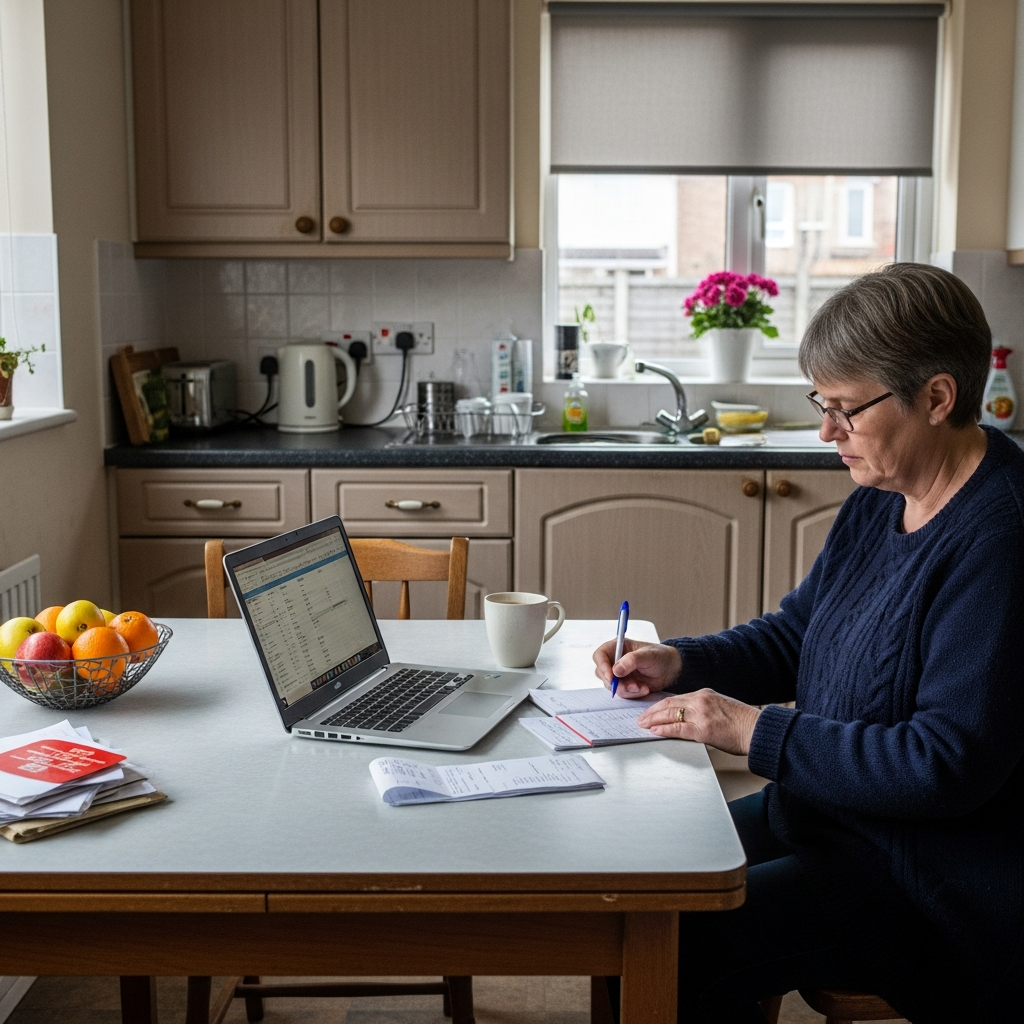
Running costs depend on four factors: the efficiency of the heat pump (COP/SCOP), the electricity tariff, the heat demand of the property, and how well the system is set up and operated.
Annual Running Cost Estimates (2026 Prices)
Based on Ofgem's electricity price cap rate of 24.5p/kWh and a typical SCOP of 3.2 for air source or 4.0 for ground source:
| Property Type | Heat Demand | Air Source (SCOP 3.2) | Ground Source (SCOP 4.0) |
|---|---|---|---|
| 2-bed terrace/flat | 8,000 kWh/yr | ~£613/yr | ~£490/yr |
| 3-bed semi-detached | 12,000 kWh/yr | ~£919/yr | ~£735/yr |
| 4-bed detached | 18,000 kWh/yr | ~£1,378/yr | ~£1,103/yr |
Based on Ofgem Q1 2026 price cap (24.5p/kWh). Off-peak tariffs reduce these figures by 40–50%.
With Off-Peak / Heat Pump Tariff (12p/kWh)
If you can access a favourable tariff, running costs roughly halve:
- 3-bed semi (air source): approximately £450/year
- 3-bed semi (ground source): approximately £360/year
For detailed running cost analysis including comparisons with gas and oil, see our heat pump running costs guide. Combining your heat pump with solar panels can reduce these costs further — see our heat pump and solar panels guide or visit Home Solar Guide for full solar information.
Running Costs Compared to Other Heating Systems
For a typical 3-bed semi-detached house (12,000 kWh heat demand, 2026 prices):
On a standard tariff, heat pumps are more expensive to run than gas but cheaper than oil and LPG. On an off-peak tariff, they are cheaper than everything. If you are replacing an oil boiler or LPG system, the running cost savings are immediate and significant.
What Affects Heat Pump Installation Cost?
Costs vary widely between installations. Here are the main factors:
Property Size and Heat Demand
A larger property needs a larger heat pump, a bigger hot water cylinder, and potentially more radiator upgrades. A 2-bed terrace will be at the lower end of costs; a 5-bed detached house at the upper end. See our cost by property type guide for specific figures.
Existing Heating System
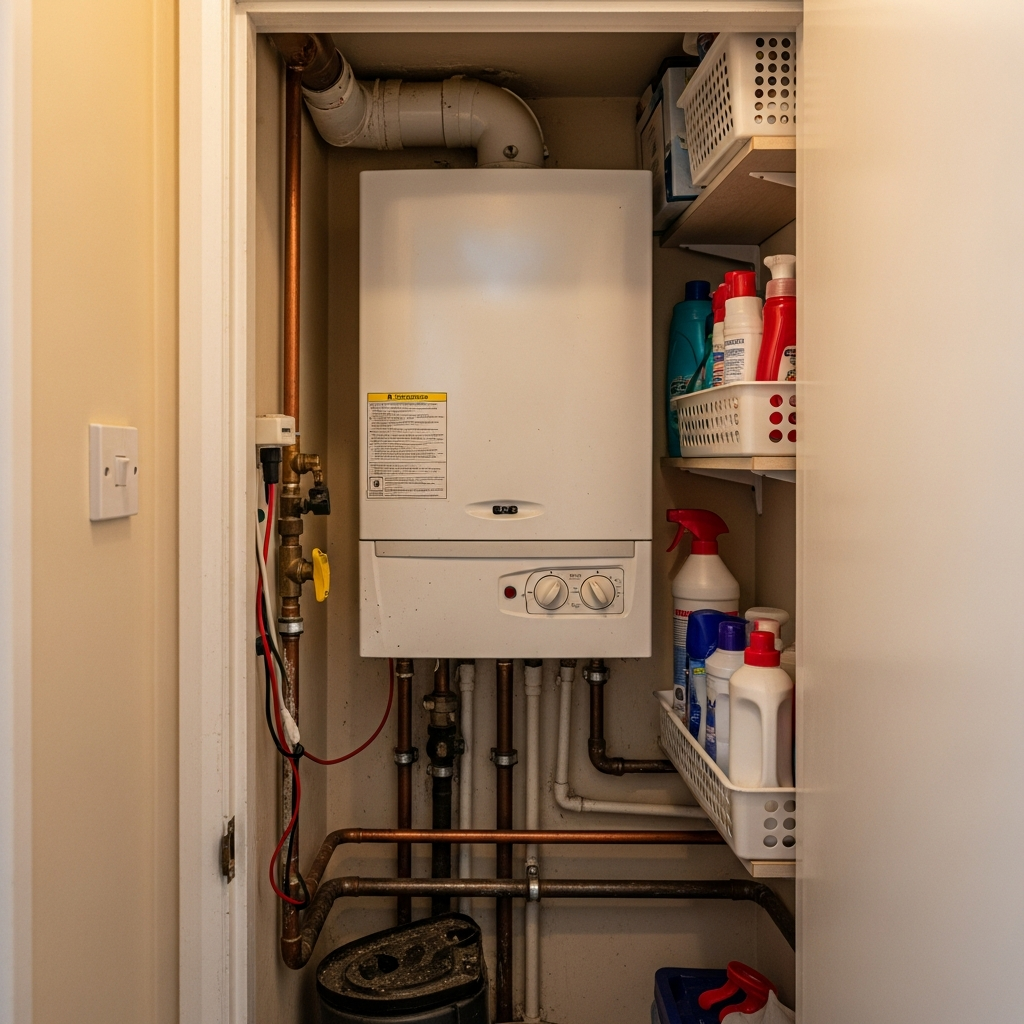
Replacing a system boiler with a cylinder is simpler than replacing a combi boiler (which has no cylinder — one must be installed). Properties with existing wet radiator systems are cheaper to convert than those with electric storage heaters (which need a complete wet system installed).
Radiator Adequacy
If your existing radiators are large enough to work at the lower flow temperatures a heat pump produces (35–50°C), no upgrades are needed. If some rooms have undersized radiators, these must be replaced — at £200–£500 per radiator including installation. Read our guide on radiators for heat pumps.
Insulation Level
Better insulation means a smaller heat pump, lower running costs, and a cheaper installation overall. If your EPC recommends insulation improvements, addressing these before or during the heat pump installation reduces long-term costs significantly.
Access and Location
Restricted access (narrow passages, upper-floor flats, listed buildings) adds complexity and cost. Remote locations may incur higher travel charges from installers.
Ground Conditions (GSHP Only)
For ground source, the soil type and access for machinery directly affect cost. Easy-to-dig clay soil is cheapest; hard rock requiring specialist drilling is most expensive.
How to Get the Best Price
- Get at least three quotes: Prices vary significantly between installers. Three competitive quotes give you a realistic picture of the market rate for your property.
- Check MCS certification: Only MCS-certified installers qualify for the BUS grant. Always verify certification before proceeding.
- Ask what is included: Some quotes include everything; others exclude items like the hot water cylinder, radiator upgrades, or the MCS registration fee. Compare like for like.
- Consider timing: The heat pump market has seasonal demand — spring and summer are busier. Getting quotes in autumn or winter may yield slightly better prices and shorter wait times.
- Do not over-specify: A good installer will recommend the right size system. Bigger is not better — an oversized heat pump costs more to buy and runs less efficiently.
You can request quotes through our free quote service.
Total Cost of Ownership: 20-Year View
The real cost of any heating system includes both installation and running costs over its lifetime. Here is the 20-year total cost of ownership for a 3-bed semi (12,000 kWh/year demand), including installation, running costs, and maintenance:
20-Year Total Cost of Ownership — 3-Bed Semi
Gas boiler
~£23,000
incl. replacement at yr 15
ASHP (standard tariff)
~£24,880
after BUS grant
ASHP (off-peak tariff)
~£15,500
after BUS grant
GSHP (off-peak, horiz.)
~£21,700
after BUS grant
Based on 2026 energy prices, BUS grant applied, annual maintenance included. See full methodology below.
Gas Boiler
- Installation: £3,000
- Running costs (20 years): £14,000
- Maintenance and repairs: £3,000
- Boiler replacement at year 15: £3,000
- Total: approximately £23,000
Air Source Heat Pump (Standard Tariff)
- Installation (after grant): £4,500
- Running costs (20 years): £18,380
- Maintenance: £2,000
- Total: approximately £24,880
Air Source Heat Pump (Off-Peak Tariff)
- Installation (after grant): £4,500
- Running costs (20 years): £9,000
- Maintenance: £2,000
- Total: approximately £15,500
Ground Source Heat Pump (Off-Peak Tariff, Horizontal Loops)
- Installation (after grant): £12,500
- Running costs (20 years): £7,200
- Maintenance: £2,000
- Total: approximately £21,700
The 20-year view shows that heat pumps on off-peak tariffs are genuinely cheaper than gas over their lifetime. On standard tariffs, they are roughly equivalent to gas — but with declining carbon emissions and increasing energy security.

Find out exactly what a heat pump would cost for your home
MCS-certified installers in your area will provide free, no-obligation quotes tailored to your property — with the BUS grant applied automatically.
Get my personalised quotes →Free. No obligation. No sales calls from us.
Frequently Asked Questions
What is the cheapest heat pump to install?
A small air source heat pump in a straightforward installation (existing radiators adequate, easy access, replacing a system boiler with cylinder) can cost as little as £8,000 before the grant — potentially under £1,000 after the BUS grant. This is the most affordable entry point.
Why are heat pump installations so expensive compared to boilers?
The equipment itself is more expensive (a heat pump is a more complex piece of machinery than a boiler), the installation involves more work (hot water cylinder, potential radiator upgrades, electrical connections, MCS documentation), and the installer labour market is still constrained — fewer qualified installers means higher labour rates. As the market matures, costs are expected to fall.
Are heat pump prices coming down?
Yes, gradually. Equipment costs have fallen roughly 10–15% over the past three years as manufacturing scales up. Installation costs have fallen less because they are labour-intensive. Industry projections suggest a further 15–25% reduction in total installed costs by 2030 as the market grows and the installer workforce expands.
Can I install a heat pump myself to save money?
The heat pump must be installed and commissioned by an MCS-certified installer to qualify for the BUS grant and to comply with Building Regulations. Some homeowners save money by doing preparatory work (radiator upgrades, pipework modifications) themselves, with the installer handling the heat pump unit, controls, and commissioning. Discuss this with your installer — some are open to it, others prefer to manage the entire project.
Is finance available for heat pumps?
Yes. Many installers offer finance packages, and green home improvement loans are available from several lenders. Some local authorities also offer interest-free loans for energy efficiency improvements. Monthly repayments on a financed heat pump can sometimes be offset by the running cost savings, making the switch cost-neutral from month one.
How much does a heat pump service cost?
An annual heat pump service typically costs £100–£200 — comparable to or slightly cheaper than a gas boiler service. Some manufacturers offer extended warranty packages that include annual servicing for a fixed fee.
Use our heat pump calculator to estimate costs and savings specific to your property.
About UK Heat Pump Costs
Heat pump costs in the UK are shaped by equipment prices, installation complexity, MCS certification requirements, and the Boiler Upgrade Scheme (BUS) grant of £7,500. Air source heat pumps account for approximately 85% of UK residential installations, with ground source systems offering higher efficiency at greater upfront cost. This guide is part of our comprehensive resource hub covering air source heat pumps, ground source heat pumps, grants, installation, and running costs for UK homeowners. For information on combining a heat pump with solar panels to reduce running costs further, visit our sister site Home Solar Guide.