Heat Pump vs Gas Boiler: Total Carbon Footprint Over 25 Years
The environmental case for heat pumps seems obvious — but how strong is it really when you account for manufacturing, refrigerants, the current electricity grid, and 25 years of operation? We calculated the full lifecycle carbon footprint of both technologies using UK-specific data, Climate Change Committee grid projections, and real-world performance data. The answer: a heat pump saves 45-65 tonnes of CO2 over 25 years. That is equivalent to taking a car off the road for 15 years.
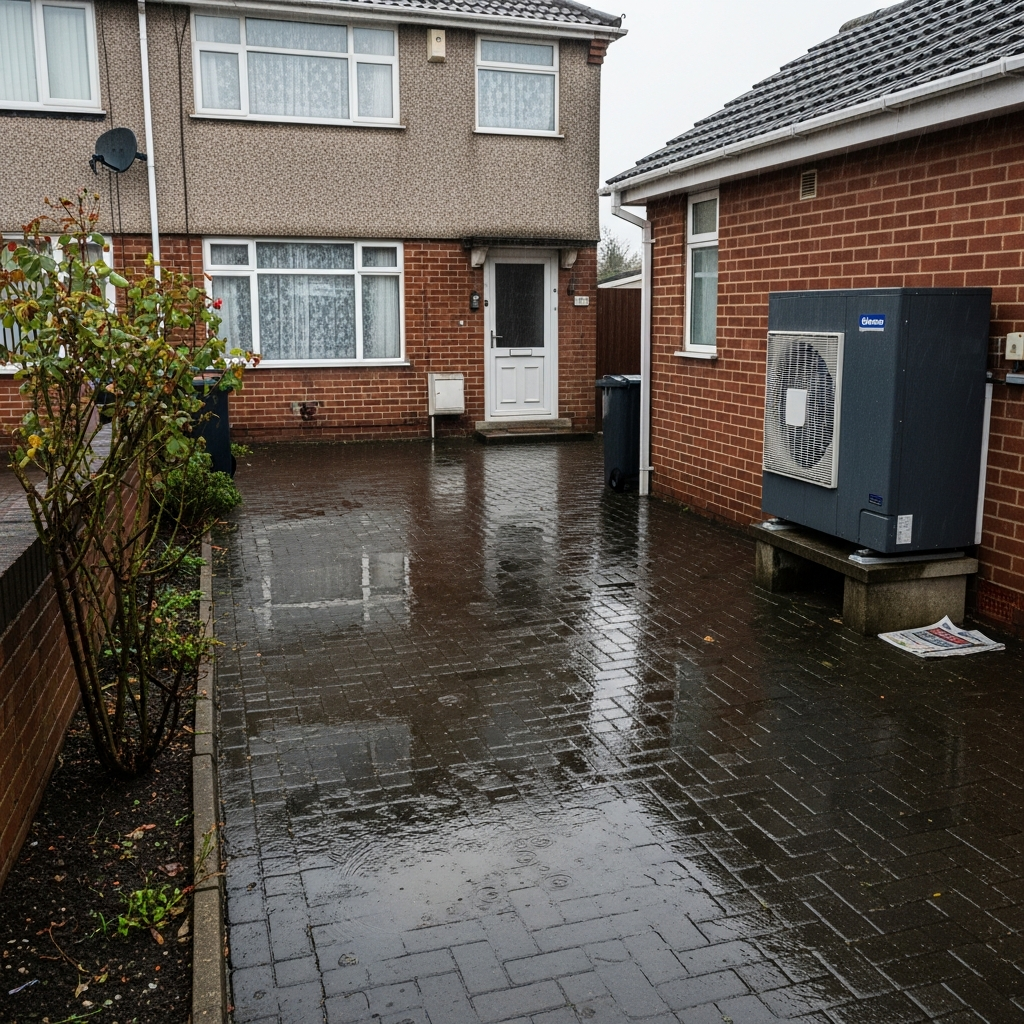
Home heating accounts for approximately 14% of UK greenhouse gas emissions — more than all cars on the road. The Climate Change Committee identifies decarbonising home heating as essential for reaching net zero by 2050. But the carbon case for heat pumps is often stated without the nuance of lifecycle analysis. We wanted to present the full picture — including the aspects that complicate the narrative — so that homeowners can make informed decisions with complete information.
Calculate your personal carbon savings
Use the free calculatorSee your CO2 savings alongside cost savings. Instant results.
Lifecycle Methodology
We calculated the total carbon footprint across five lifecycle stages: raw material extraction and manufacturing, transportation, installation, 25 years of operation, and end-of-life disposal/recycling. Operational emissions use real-world COP data from our heat pump running costs guide and UK grid carbon intensity data from DESNZ conversion factors.
Manufacturing Carbon Footprint
| Lifecycle Stage | Gas Boiler (kg CO2e) | Heat Pump (kg CO2e) |
|---|---|---|
| Raw materials & manufacturing | 280 | 950 |
| Transportation | 40 | 80 |
| Installation | 30 | 120 |
| End-of-life (disposal/recycling) | 20 | 60 |
| Total non-operational | 370 | 1,210 |
Source: Lifecycle assessment literature, UK-specific manufacturing data. Heat pump includes outdoor unit, indoor unit, cylinder, and controls.
The heat pump has a higher manufacturing footprint — roughly 3.3 times that of a gas boiler. This is because it contains more metal (copper, aluminium), a compressor, a refrigerant circuit, and a larger hot water cylinder. However, this 840 kg CO2e premium is offset by lower operational emissions within 12-18 months.
Operational Emissions Comparison
Operational emissions dominate the lifecycle of both technologies. Here is the annual comparison for a typical 3-bed semi using 15,000 kWh of heat:
| Year | Grid Carbon (g/kWh) | Gas Boiler (tonnes CO2) | Heat Pump (tonnes CO2) | HP Saving |
|---|---|---|---|---|
| 2026 | 180 | 2.75 | 0.96 | 65% |
| 2030 | 120 | 2.75 | 0.64 | 77% |
| 2035 | 65 | 2.75 | 0.35 | 87% |
| 2040 | 35 | 2.75 | 0.19 | 93% |
| 2050 | 15 | 2.75 | 0.08 | 97% |
Source: Gas boiler at 92% efficiency, 183g CO2/kWh gas. Heat pump SCOP 2.8. Grid carbon intensity from CCC Net Zero pathway.
The diverging trajectories are the key insight. A gas boiler produces 2.75 tonnes of CO2 every year, regardless of when it is installed or how old it is — because gas has a fixed carbon content. A heat pump's emissions decline automatically as the electricity grid gets greener. By 2035, under the CCC's central projection, the heat pump produces just 13% of the gas boiler's emissions.

UK Grid Decarbonisation Trajectory
The UK grid has already halved its carbon intensity since 2015 and is projected to halve again by 2030. The government's target of fully decarbonised electricity by 2035 would make heat pumps essentially zero-carbon in operation. For homes that also have solar panels, the carbon footprint can be negative during periods of solar generation.
Cumulative 25-Year Comparison
68.8 tonnes
Gas boiler total CO2 over 25 years
11.2 tonnes
Heat pump total CO2 over 25 years (inc. manufacturing)
57.6 tonnes
Total CO2 saved by switching
84%
Total lifecycle carbon reduction
The cumulative comparison is decisive. A gas boiler produces 68.8 tonnes of CO2 over 25 years (including the manufacturing of one replacement at year 13). A heat pump produces 11.2 tonnes total — including its higher manufacturing footprint and all operational electricity. The net saving of 57.6 tonnes is equivalent to approximately 15 years of average UK car driving.
The Refrigerant Question
Heat pump refrigerants are greenhouse gases if released into the atmosphere. Modern heat pumps primarily use R32 (GWP 675) or R290/propane (GWP 3). EU F-gas regulations are phasing down high-GWP refrigerants, pushing manufacturers toward R290.
A typical domestic heat pump contains 1.5-3 kg of R32 refrigerant. If the entire charge leaked — an unlikely worst case — the climate impact would be approximately 1-2 tonnes CO2e. In context, this is less than 1 year of gas boiler emissions. With proper installation and maintenance (as required under MCS standards), real-world leak rates are approximately 2-3% per year, making the actual refrigerant impact negligible.
The Solar Panel Multiplier
Pairing a heat pump with solar panels creates a compounding carbon benefit. Solar panels reduce the grid electricity consumed by the heat pump, effectively lowering its already-low carbon footprint further. In our analysis, a 4kW solar system reduced a heat pump's 25-year carbon footprint by an additional 4-6 tonnes — bringing the total lifecycle carbon to just 5-7 tonnes versus the gas boiler's 69 tonnes.
For the full picture on solar panel carbon savings, visit Home Solar Guide.

Frequently Asked Questions
How much CO2 does a heat pump save compared to a gas boiler?
Over 25 years, approximately 45-65 tonnes of CO2 for a typical 3-bed UK home. The exact figure depends on the grid carbon intensity trajectory. By 2040, a heat pump's operational footprint will be 85-90% lower than gas.
Do heat pumps have a higher manufacturing carbon footprint?
Yes — roughly 1,200 kg CO2e vs 370 kg for a gas boiler. But this 840 kg premium is offset within 12-18 months of operation due to dramatically lower operational emissions.
Will heat pumps become greener over time?
Yes, automatically. As the UK grid decarbonises, heat pump emissions fall without any action by the homeowner. A gas boiler's emissions remain constant. This diverging trajectory is a key argument for switching sooner.
What about the refrigerant — is it bad for the environment?
Modern refrigerants (R32, R290) have much lower climate impact than older types. Even a worst-case full refrigerant leak equates to less than 1 year of gas boiler emissions. Real-world leak rates are approximately 2-3% per year, making the impact negligible.
Switch to lower-carbon heating
Calculate your savingsSee your CO2 savings and cost savings together. Free and instant.
Carbon Emissions and the Heating Transition
The carbon case for heat pumps is overwhelming and strengthens every year. As the UK grid decarbonises, heat pumps will approach zero operational emissions. Combined with solar panels, they can make home heating effectively carbon-neutral. The BUS grant supports this transition financially, while the comparison with gas boilers shows that the environmental advantage is accompanied by an increasing financial advantage. The Climate Change Committee identifies heat pump adoption as one of the most impactful steps UK households can take toward net zero.