Home Heat Pump Guide

Heat Pump Boiler: What It Is and How It Differs from a Traditional Boiler

If you have searched for "heat pump boiler," you are not alone — it is one of the most searched heating terms in the UK. The phrase reflects a natural confusion: if a heat pump replaces your boiler, is it just a different kind of boiler? The answer is no. A heat pump and a boiler are fundamentally different machines that achieve the same end result — a warm home and hot water — through completely different methods.

This guide clears up the confusion, explains how heat pump heating actually works, and covers everything you need to know about making the transition from boiler thinking to heat pump thinking.

Why People Search for "Heat Pump Boiler"

The term "heat pump boiler" exists because most UK homeowners think about heating in boiler terms. For decades, the boiler has been the centre of our heating systems — a box on the wall that burns gas or oil to heat water, which is then pumped through radiators. When people hear about heat pumps as a boiler replacement, they naturally assume it is a similar box that works in a similar way.

In reality, a heat pump is a completely different technology. Understanding the differences is important because it affects your expectations, your home setup, and how you use the system day to day.

How a Traditional Boiler Works

A gas or oil boiler works by combustion — burning fuel to create heat:

  1. Gas or oil is ignited in a combustion chamber
  2. The flame heats a metal heat exchanger
  3. Water passes through the heat exchanger and absorbs the heat
  4. Hot water (typically at 60°C to 75°C) is pumped through radiators or to a hot water cylinder
  5. Waste gases are expelled through a flue

The maximum theoretical efficiency is 100% — one unit of fuel energy producing one unit of heat energy. Modern condensing boilers achieve 90% to 95% efficiency in practice.

How a Heat Pump Works

A heat pump does not burn anything. Instead, it moves heat from one place to another — from the outside environment into your home:

  1. A refrigerant in the outdoor unit absorbs warmth from the air (or ground)
  2. A compressor raises the temperature of this refrigerant
  3. The hot refrigerant passes through a heat exchanger, transferring warmth to water
  4. This heated water (typically at 35°C to 55°C) circulates through radiators or underfloor heating
  5. The cooled refrigerant returns to the outdoor unit to absorb more warmth, and the cycle repeats

Because a heat pump moves existing warmth rather than creating it, it delivers 2.5 to 4 units of heat for every 1 unit of electricity it consumes. This gives it an effective efficiency of 250% to 400% — far exceeding any boiler.

Key Differences That Matter

1. Flow Temperature

This is the single most important practical difference. A gas boiler heats water to 60°C to 75°C. A heat pump works most efficiently at lower temperatures — typically 35°C to 45°C for well-insulated homes, or up to 55°C for older properties.

This means:

  • Your radiators may need to be larger to deliver the same warmth at a lower water temperature. See our guide on whether you need new radiators
  • Underfloor heating is ideal for heat pumps because it is designed for low flow temperatures
  • Your home feels just as warm — the heat is delivered more gently and evenly, rather than in short, intense bursts

2. How You Get Hot Water

A combi boiler heats water on demand — turn the tap and hot water appears instantly. There is no storage tank.

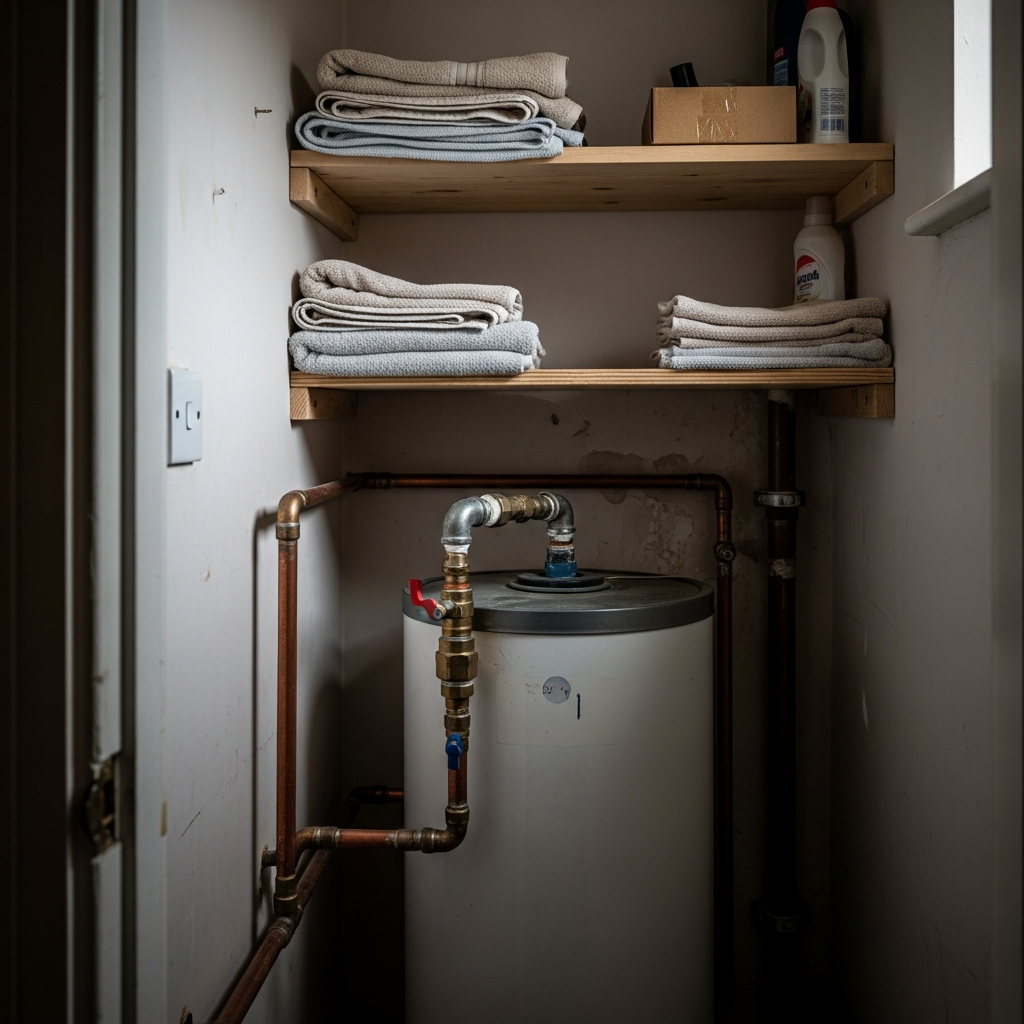
A heat pump system includes a hot water cylinder (typically 150 to 250 litres). The heat pump heats this cylinder throughout the day, usually during the most efficient periods. Hot water is then available from the cylinder when you need it.

This means you need space for a cylinder — typically in an airing cupboard. If you currently have a combi boiler with no cylinder, one will need to be installed. This is one of the most common practical considerations when switching.

3. Heating Pattern

Gas boilers typically run in short, intense bursts — firing up to full power, heating the house quickly, then switching off until the temperature drops. This on/off cycling is how most people are used to their heating working.

Heat pumps work best when they run for longer periods at a lower intensity. Instead of blasting heat for 30 minutes then stopping, a heat pump might run gently for several hours, maintaining a steady, comfortable temperature. This "low and slow" approach is more efficient and actually more comfortable — no temperature swings between "too hot" and "too cold."

Many heat pump owners find they can leave their heating on at a constant temperature rather than using a timer, and their bills are still lower than with their old boiler.

4. The Components

A typical gas combi boiler system consists of:

  • One wall-mounted boiler
  • Radiators and pipework
  • A thermostat

A typical air source heat pump system consists of:

  • An outdoor unit (containing the fan, evaporator, and compressor)
  • An indoor unit or connection point (some systems integrate this into the cylinder)
  • A hot water cylinder
  • Radiators and/or underfloor heating and pipework
  • A controller (often with a smartphone app)

The heat pump system has more components, but each one is straightforward and reliable.

5. Location

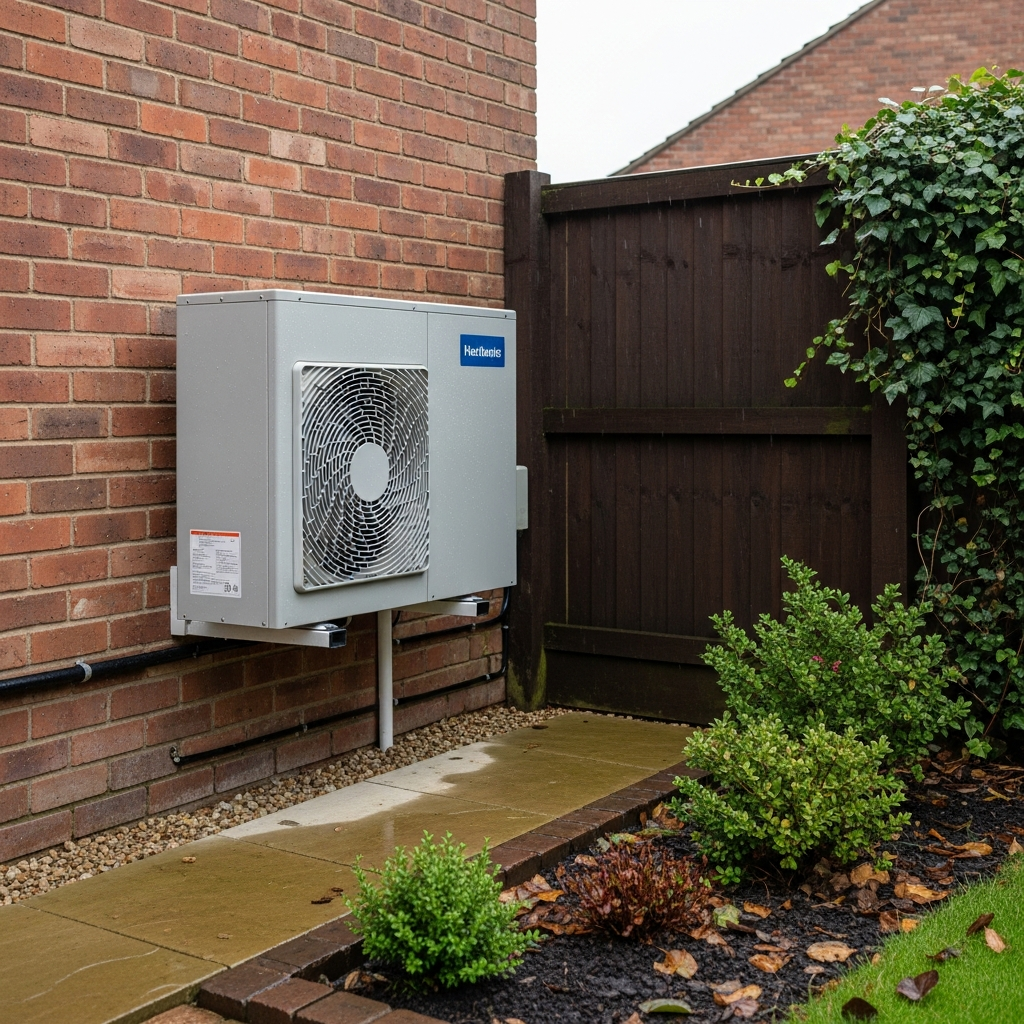
A gas boiler hangs on a wall, typically in the kitchen or utility room. An air source heat pump has its main unit outside — on a patio, side return, or garden area — with the cylinder and controls inside. A ground source heat pump has its unit inside (in a plant room or utility area) with the ground loop buried outside.

6. Noise

A gas boiler is virtually silent. An air source heat pump produces a low hum from the outdoor unit — typically 40 to 50 dB(A), comparable to a quiet conversation or a modern fridge. Most homeowners get used to it quickly, and modern units are significantly quieter than older models.

What Stays the Same

Despite the differences, many things remain familiar:

  • Radiators still work. Your existing radiators can often be reused, though some may need upgrading for optimal performance
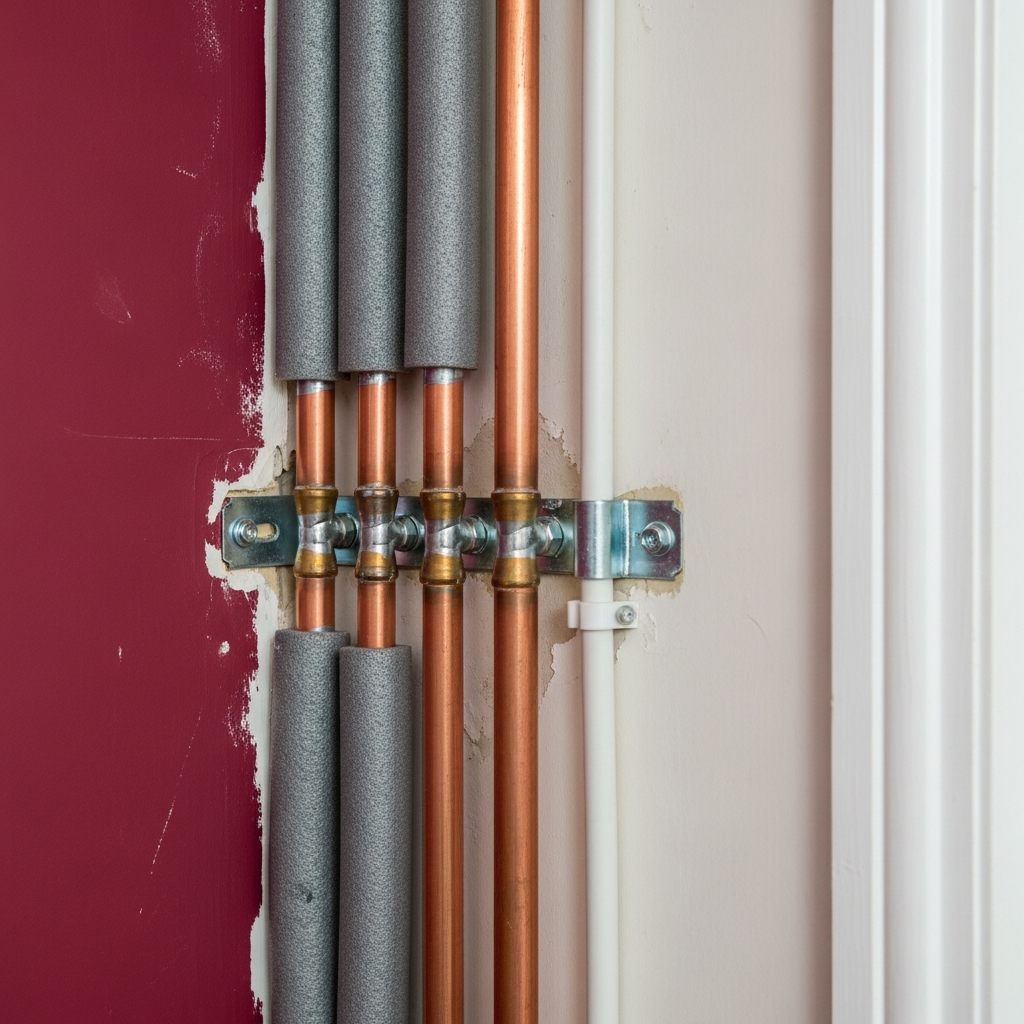
  • Pipework is mostly reused. The existing heating pipework in your home is typically compatible
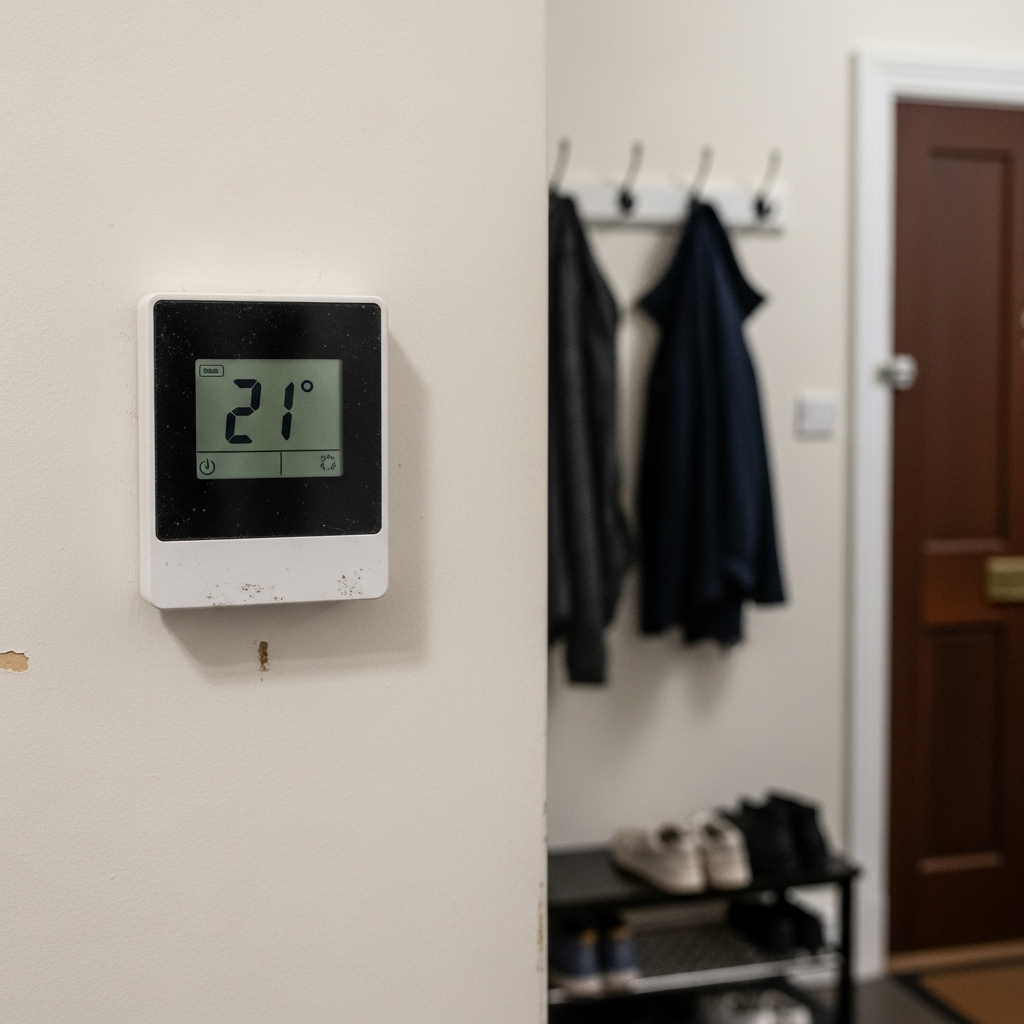
  • Thermostatic control. You still set a desired temperature and the system maintains it — often more accurately than a boiler
  • Hot water on tap. Hot water is available whenever you need it, from the cylinder
  • Programmer/timer. You can still schedule heating times, though many heat pump owners find constant low temperature more effective

Common Misconceptions About Heat Pumps

"A heat pump cannot heat my home properly"

False. A properly designed and installed heat pump will heat your home to exactly the same temperature as a gas boiler. The heat is delivered differently (lower water temperature, longer running times), but the end result — a warm, comfortable home — is the same.

"Heat pumps do not work in winter"

False. Modern heat pumps are designed to work in temperatures as low as -15°C to -25°C. The UK rarely experiences temperatures below -5°C. Countries far colder than the UK — Norway, Sweden, Finland — have the highest heat pump adoption rates in the world.

"Heat pumps are too expensive to run"

False. Because a heat pump delivers 2.5 to 4 units of heat per unit of electricity, the effective cost per kWh of heat is comparable to or lower than gas, despite electricity being more expensive per unit. Our running costs guide has full calculations.

"I need to rip out all my radiators"

Usually false. Most existing radiator systems work adequately with a heat pump. Some individual radiators may need upgrading to larger models, but a wholesale replacement is rarely necessary.

"Heat pumps are unreliable"

False. Heat pumps use the same proven refrigeration technology as your fridge and air conditioning — technology that has been reliable for over a century. Breakdown rates are comparable to or lower than gas boilers, and modern units come with 5 to 10 year warranties.

The Transition: What to Expect

Switching from a boiler to a heat pump involves a short adjustment period. Here is what to expect:

The First Week

Your home may feel different — not colder, but differently warm. The gentle, even heat from a heat pump takes getting used to after years of intense bursts from a boiler. Most people prefer it once they adjust.

The First Month

You will learn the best settings for your home. Your installer should commission the system and may return to fine-tune it. Many modern heat pumps have apps that help you monitor performance and optimise settings.

After Three Months

By this point, most homeowners have completely adjusted and wonder why they were worried. The heating "just works" — quietly, efficiently, and without you needing to think about it.

See our full installation guide for what the process involves.

Is a Heat Pump Worth It?

For a detailed analysis covering costs, savings, grants, and long-term value, see our comprehensive guide: are heat pumps worth it?

The short answer for most UK homes: yes. The £7,500 BUS grant brings upfront costs within reach, running costs are competitive with gas, and you future-proof your home against the gas boiler phase-out. Use our calculator to estimate costs for your specific property.

Frequently Asked Questions

Is a heat pump the same as a boiler?

No. A boiler burns fuel to create heat. A heat pump uses electricity to move heat from the outside environment into your home. The result is the same — warm rooms and hot water — but the technology and operation are fundamentally different.

Do I need a hot water cylinder with a heat pump?

Yes. Unlike a combi boiler, a heat pump system requires a hot water storage cylinder (typically 150 to 250 litres). If you currently have a combi with no cylinder, one will need to be installed — usually in an airing cupboard or utility room.

Can a heat pump replace a combi boiler?

Yes, absolutely. A heat pump replaces both the space heating and hot water functions of a combi boiler. The main difference is that you will need a hot water cylinder for stored hot water instead of on-demand heating.

Will my heating feel different with a heat pump?

Slightly, yes — but most people prefer it. Instead of intense blasts of heat followed by cooling periods, a heat pump provides gentle, consistent warmth. Rooms maintain a steady temperature without the fluctuations common with boiler systems.

How much does a heat pump cost compared to a new boiler?

A new gas combi boiler costs approximately £2,500 to £4,000 installed. A heat pump costs £10,000 to £16,000 installed, but the £7,500 BUS grant reduces this to £4,000 to £8,500 net. The heat pump lasts longer (20-25 years versus 12-15) and has lower lifetime costs.

What is a "heat pump boiler" system?

The term sometimes refers to a hybrid system — a heat pump combined with a gas boiler. The heat pump handles most heating, while the gas boiler provides a boost during extreme cold or high demand. These hybrid systems can be a stepping stone for homes not yet ready for a full heat pump transition.