Heat Pump and Radiator Balancing Guide
Radiator balancing is one of the most important — and most overlooked — steps in a heat pump installation. Without proper balancing, some rooms overheat while others stay cold. The radiators nearest to the heat pump hog all the flow, and those at the end of the circuit barely get warm.
With a gas boiler running at 70°C, poor balancing is inconvenient but manageable. With a heat pump running at 40°C, poor balancing can make the difference between a comfortable home and an uncomfortable one. Here is how to get it right.
What Is Radiator Balancing?
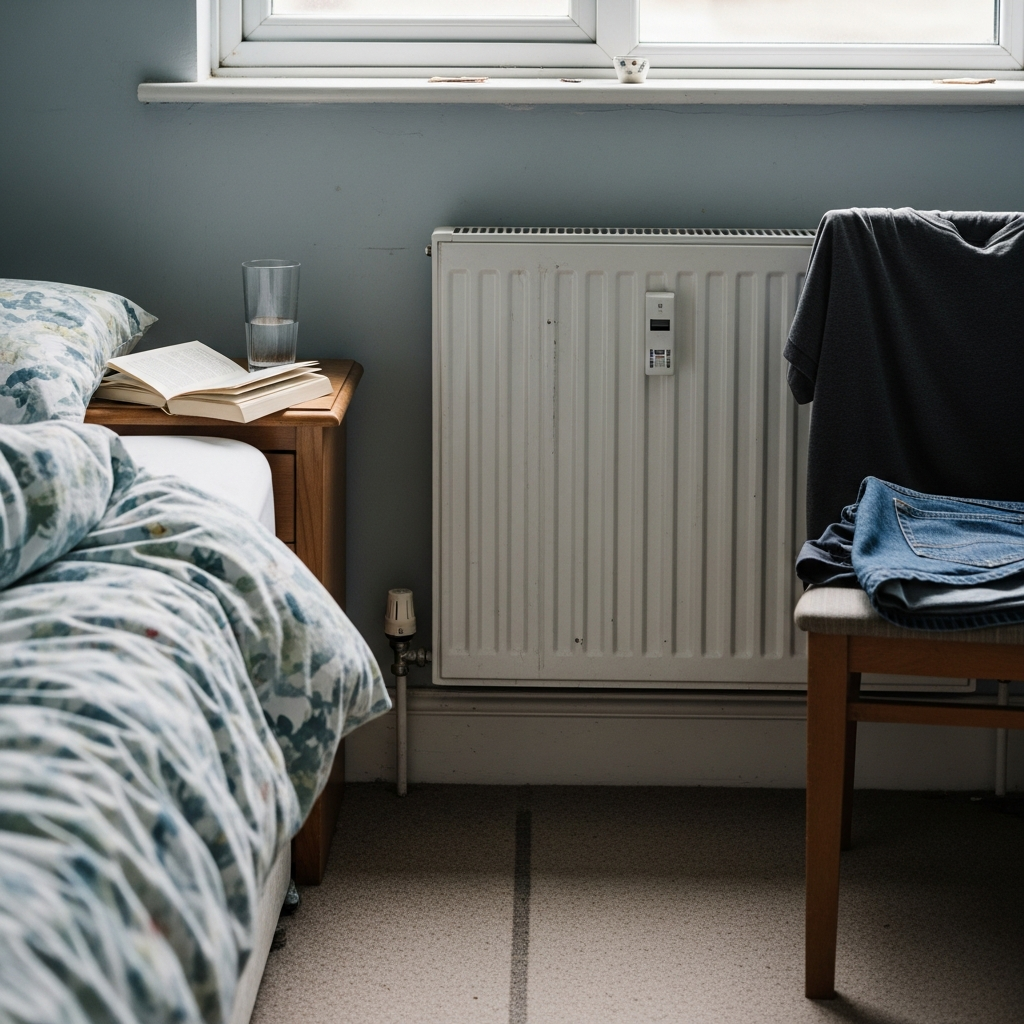
Radiator balancing is the process of adjusting the flow rate to each radiator so that every radiator in the system receives the correct proportion of heated water. It is done by opening or closing the lockshield valve on each radiator — the valve at the opposite end from the thermostatic radiator valve (TRV).
The goal is a specific temperature drop (delta T) across each radiator. When every radiator has the correct delta T, heat is distributed evenly, and every room reaches its target temperature.
Why Is It More Important with Heat Pumps?
With a gas boiler at 70°C flow temperature, even a poorly balanced system has enough thermal headroom to heat most rooms adequately. The excess temperature compensates for uneven flow distribution.
With a heat pump at 40°C flow temperature, there is much less margin. A radiator receiving only half its designed flow rate at 40°C may not deliver enough heat to warm the room. The lower the flow temperature, the more critical proper balancing becomes.
Additionally, heat pumps are more efficient when the return temperature is as low as possible. Proper balancing ensures each radiator extracts the maximum heat from the water, keeping the return temperature low and the delta T within the correct range.
Understanding Delta T for Heat Pumps
Delta T (ΔT) is the temperature difference between the water flowing into a radiator (flow) and the water flowing out (return). For a heat pump system, the target delta T is typically 5°C to 7°C across each radiator.
For example, if your heat pump flow temperature is 40°C, the return from each radiator should be approximately 33°C to 35°C. This means the radiator is extracting 5°C to 7°C of heat from the water — the heat that warms your room.
Why Not a Larger Delta T?
A larger delta T (say 10°C or more) means the water cools too much as it passes through the radiator. The top of the radiator may be warm but the bottom will be noticeably cooler, and the radiator's average surface temperature drops, reducing its heat output. With heat pump systems running at low flow temperatures, you cannot afford this reduction.
Why Not a Smaller Delta T?
A very small delta T (say 2°C) means water is rushing through the radiator too fast, not giving up enough heat. This wastes pump energy and returns warm water to the heat pump, reducing the heat pump's efficiency. Each radiator needs enough time to transfer its heat to the room.
Tools You Will Need
- Digital thermometer or infrared thermometer — to measure pipe temperatures at the flow and return connections of each radiator
- Lockshield valve key or adjustable spanner — to adjust the lockshield valves
- Pipe temperature clips (optional but recommended) — clip-on thermocouples that attach to the pipes for accurate, hands-free readings
- Notebook and pen — to record readings for each radiator
- Patience — balancing takes time, typically 2 to 4 hours for a whole house
Step-by-Step Radiator Balancing Process
Step 1: Preparation
- Turn off your heat pump and let the system cool completely (all radiators should be at room temperature)
- Open all lockshield valves fully — remove the cap and turn the spindle fully anticlockwise
- Open all TRVs to maximum (usually setting 5 or the highest number)
- If you have zone valves, ensure all zones are open and calling for heat
Step 2: Identify the Radiator Order
Turn on the heat pump. As the system heats up, note which radiator gets warm first, which gets warm second, and so on. This tells you the order of the circuit — the first radiator to warm up is closest to the heat pump and gets the most flow.
Write down the order. This is the sequence you will balance in.
Step 3: Begin Balancing from the First Radiator
- Go to the first radiator that warmed up (nearest to the heat pump)
- Measure the temperature at the flow pipe (where water enters — usually the pipe connected to the TRV side) and the return pipe (where water exits — the lockshield valve side)
- Close the lockshield valve on this radiator until the delta T reads approximately 5°C to 7°C. This restricts the flow, forcing more water to the remaining radiators
- Wait 10 to 15 minutes for the system to stabilise before taking final readings
Step 4: Move to Each Subsequent Radiator
Repeat the process for every radiator, working in order from nearest to furthest from the heat pump. Each time you restrict a nearer radiator, more flow reaches the more distant ones.
The radiators closest to the heat pump will have their lockshield valves most restricted (perhaps a quarter to half turn open). The furthest radiators will be less restricted (perhaps three-quarters to fully open).
Step 5: Final Check
Once all radiators have been adjusted, wait 30 minutes for the system to fully stabilise. Then go around and recheck the delta T on every radiator. Fine-tune any that have drifted from the 5°C to 7°C range. Adjusting one radiator can affect others, so a second pass is almost always necessary.
Common Mistakes to Avoid
Not Waiting Long Enough Between Adjustments
Every adjustment takes 10 to 15 minutes to fully propagate through the system. Making rapid changes without waiting leads to incorrect readings and endless re-adjustments. Be patient.
Using TRVs Instead of Lockshield Valves
TRVs (thermostatic radiator valves) are for temperature control, not balancing. They open and close based on room temperature. Balancing must be done on the lockshield valve at the other end of the radiator. Never use TRVs for balancing — they will constantly change position, undoing your work.
Balancing with TRVs in Different Positions
During balancing, all TRVs must be fully open (maximum setting). If some are partially closed, they restrict flow and give misleading delta T readings. Open them all first, balance the system, then set TRVs to your desired room temperatures afterwards.
Ignoring the Circulation Pump Speed
If your system has an adjustable circulation pump, the speed setting affects overall flow rate. If the pump speed is too low, you will not achieve the correct delta T on all radiators regardless of balancing. Most heat pump systems have an integrated pump that adjusts automatically, but standalone pumps may need checking.
Professional Balancing
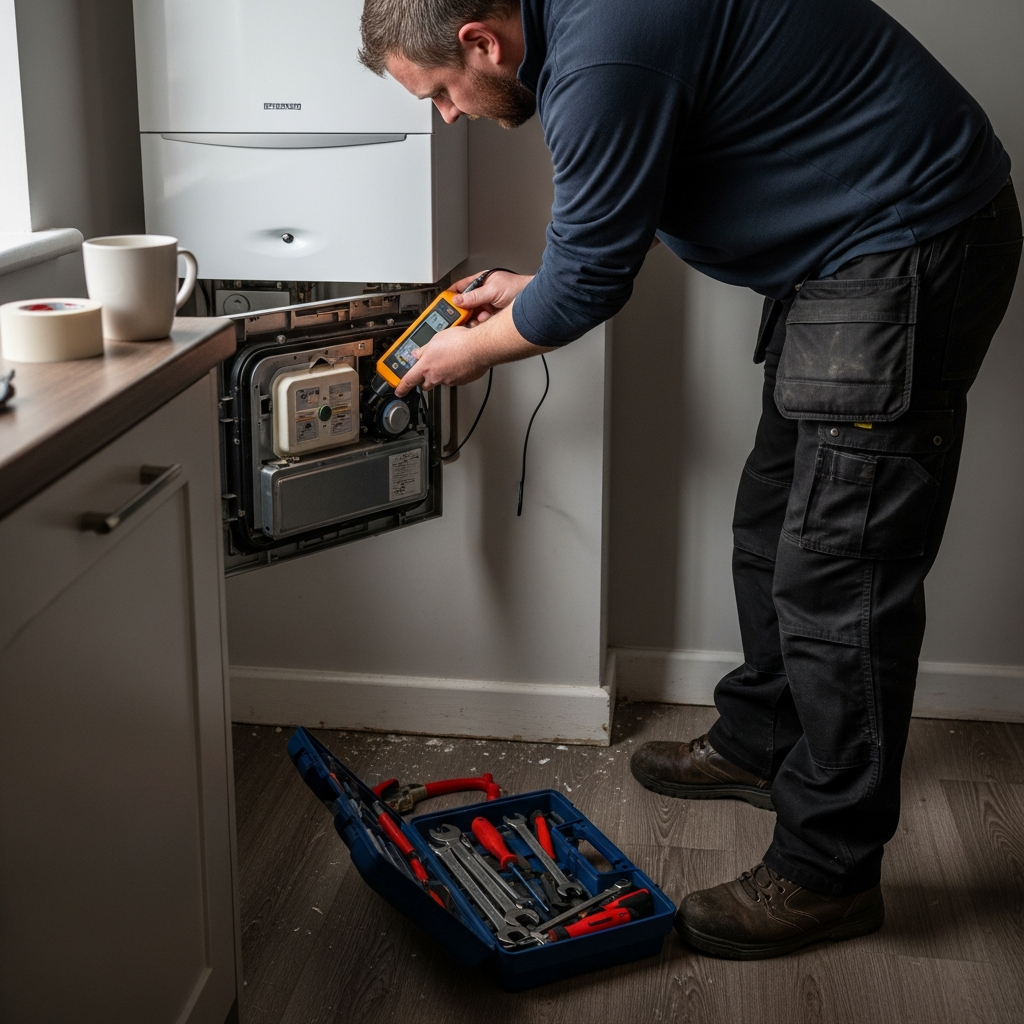
If balancing sounds involved, it is. Many homeowners prefer to have their installer do it during the heat pump commissioning visit. A competent MCS installer should include balancing as part of the installation process. If your radiators were not balanced during installation and you are experiencing uneven heating, ask your installer to return and complete this step.
Some installers use automatic balancing valves — self-adjusting valves that maintain a preset delta T without manual adjustment. These cost more (£30 to £60 per radiator) but eliminate the need for manual balancing entirely. They are particularly useful in complex systems with many radiators.
Signs Your Radiators Need Rebalancing
- Some rooms reach temperature quickly while others take hours
- Radiators nearest the heat pump are warm but distant ones are cool
- One or two radiators are noticeably hotter than the rest
- The heat pump short-cycles (turns on and off frequently) because the nearest radiators satisfy their thermostats quickly
- You have added or removed radiators since the system was last balanced
- You have changed radiator sizes as part of a heat pump upgrade
Balancing Mixed Systems
If you have a mixed system with radiators and underfloor heating, the two circuits are typically on separate loops with independent flow rates. The UFH manifold has its own balancing adjustments (flow meters on each circuit). Balance the radiator circuit and UFH circuit separately.
The key is to ensure the UFH circuit and radiator circuit each receive the correct proportion of flow from the heat pump. A mixing valve or buffer vessel helps manage this. Your installer should set this up correctly during commissioning.
After Balancing: What to Expect
A properly balanced system should deliver:
- Every room reaching its target temperature within a similar timeframe
- All radiators feeling evenly warm (not some hot and some cool)
- A delta T of 5°C to 7°C across each radiator
- The heat pump running steadily without short-cycling
- Lower return temperatures, improving heat pump efficiency
- Reduced electricity consumption — a well-balanced system can improve seasonal efficiency by 5% to 10%
Frequently Asked Questions
How often should I rebalance my radiators?
Once balanced correctly, a system should not need rebalancing unless you change radiators, add rooms, or modify the pipework. An annual check of delta T across a few radiators during your heat pump service is good practice.
Can I balance radiators myself?
Yes, with the right tools and patience. You need a thermometer that can measure pipe temperature accurately and a lockshield valve key. The process takes 2 to 4 hours for a typical house. If you are not confident, ask your heating engineer to do it.
What delta T should I aim for with a heat pump?
5°C to 7°C is the standard target for heat pump systems. Some manufacturers recommend a specific delta T — check your heat pump documentation. For underfloor heating circuits, the delta T may be slightly different (often 5°C).
Will balancing reduce my heating bills?
Yes. A balanced system allows the heat pump to run more efficiently by lowering return temperatures and preventing short-cycling. The improvement varies, but 5% to 10% reduction in electricity consumption is realistic.
My lockshield valve is stuck — what should I do?
Lockshield valves can seize if they have not been touched for years. Apply penetrating oil and leave it for 24 hours before trying again. If it will not budge, a heating engineer can replace it. Do not force it — you risk snapping the valve spindle.
Do I need to balance if I have smart TRVs?
Smart TRVs help with room-by-room temperature control, but they do not replace proper balancing. TRVs control the maximum temperature in a room; balancing controls the flow distribution across the system. Both work together — balance first, then set your TRV temperatures.