Ground Source Heat Pump Efficiency vs Air Source
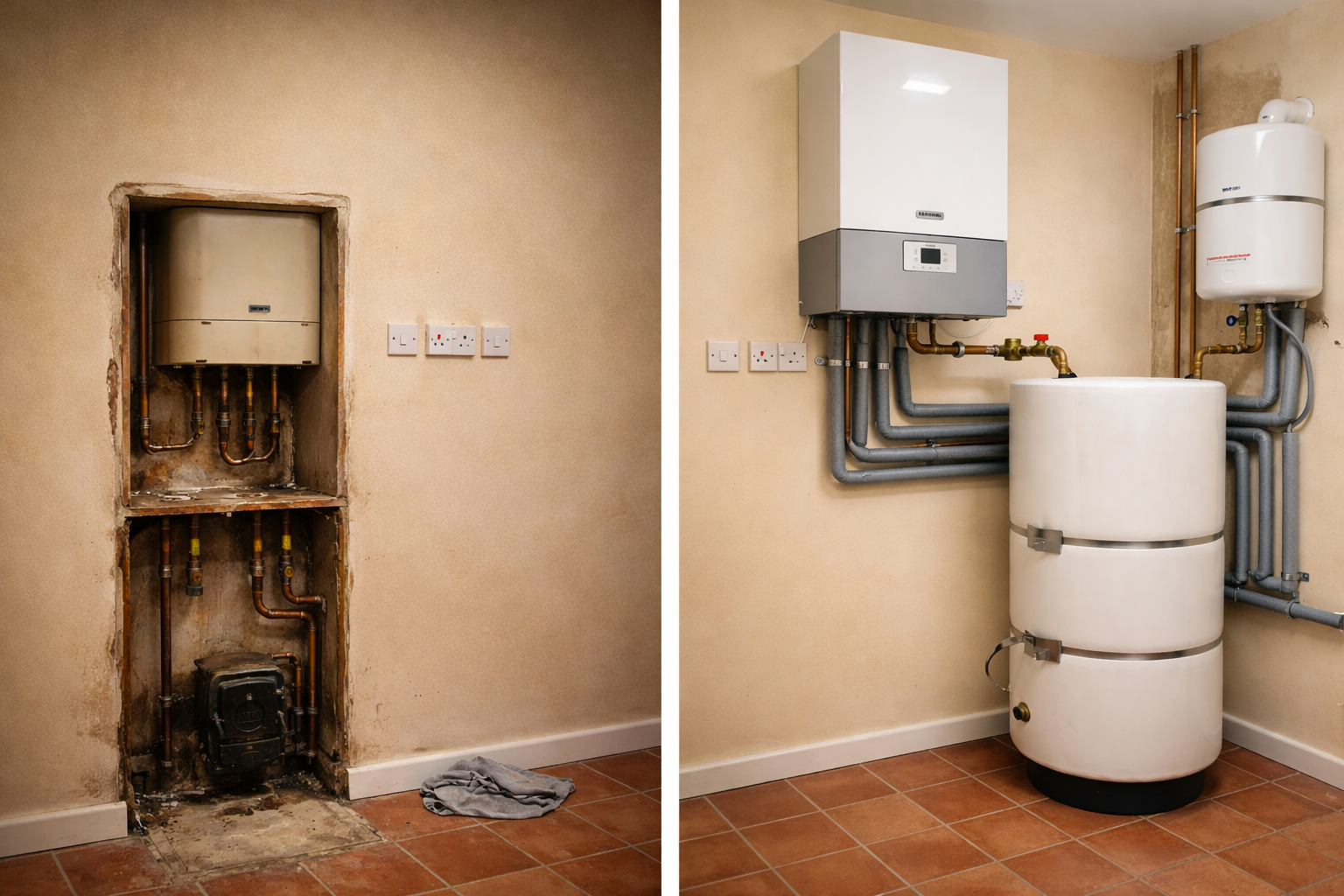
Ground source heat pumps are 15-25% more efficient than air source across a full heating season. But here is what matters more: that gap widens to 40-60% on the coldest winter days -- exactly when your home needs the most heat and your electricity bill climbs fastest.
This guide compares real-world efficiency figures, explains what drives the difference, and helps you work out whether the extra cost of ground source installation is justified by the efficiency gains for your specific property.
Which system type saves you more? Get a personalised estimate
Try the Heat Pump CalculatorCompare ground source and air source running costs for your home in under two minutes.
Understanding Heat Pump Efficiency: COP and SCOP
Before comparing the two technologies, you need to understand how heat pump efficiency is measured.
COP (Coefficient of Performance)
COP measures how much heat a heat pump produces for each unit of electricity it consumes, at a specific moment in time. A COP of 3.5 means the heat pump produces 3.5 kW of heat for every 1 kW of electricity used. The remaining 2.5 kW comes from the environment -- the ground or the air.
SCOP (Seasonal Coefficient of Performance)
SCOP is the average COP over an entire heating season. This is the more useful figure because it accounts for varying outdoor temperatures, defrost cycles, standby losses, and hot water production. SCOP gives you a realistic picture of what the system will deliver over a full year.
The Numbers: Ground Source vs Air Source Efficiency
| Metric | Ground Source | Air Source |
|---|---|---|
| Typical COP (design conditions) | 3.8 - 4.5 | 3.0 - 4.0 |
| Real-world SCOP | 3.5 - 4.0 | 2.8 - 3.5 |
| Winter COP (coldest months) | 3.5 - 4.2 | 2.0 - 3.0 |
| Winter efficiency advantage | Ground source 40-60% more efficient in coldest weather | |
Ground source heat pumps extract heat from the ground, where the temperature remains remarkably stable at 8-12 degrees C throughout the year. Whether it is a scorching August day or a freezing January night, the ground loop is drawing heat from earth at roughly the same temperature.
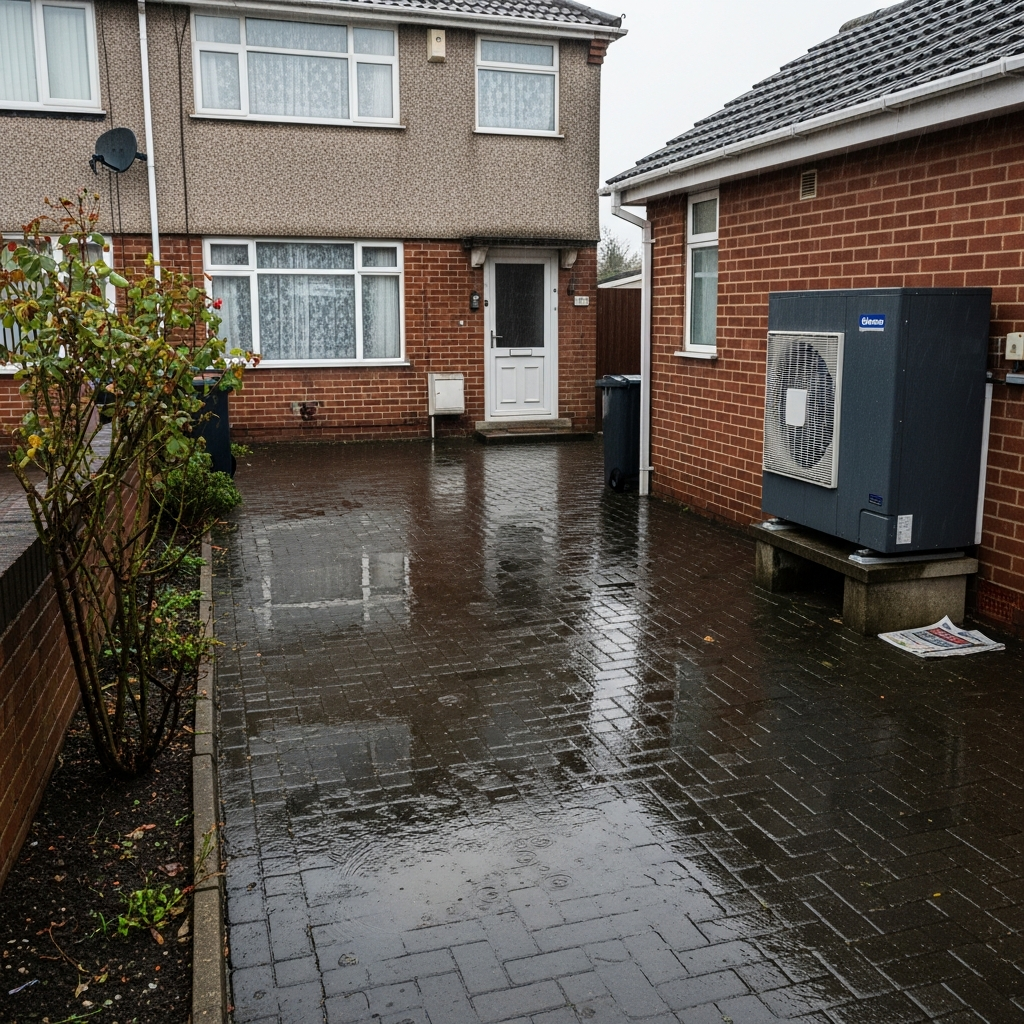
Air source heat pumps extract heat from outside air. When air temperature is mild (10-15 degrees C), they perform well -- sometimes matching ground source. But as the temperature drops towards and below freezing, efficiency falls significantly.
Why Ground Source Is More Efficient
The efficiency advantage comes down to three factors:
1. Stable Source Temperature
The ground temperature at loop depth stays between 8 and 12 degrees C all year. Air temperature in the UK ranges from -5 to 30 degrees C. A heat pump extracting heat from a 10 degree C source will always be more efficient than one extracting heat from -2 degree C air. This is basic thermodynamics -- the smaller the temperature gap, the less work the compressor does.
2. No Defrost Cycles
Air source heat pumps must periodically reverse their refrigerant cycle to defrost the outdoor evaporator coil. This happens when air temperature is between roughly -3 and 5 degrees C and humidity is high -- common UK winter conditions. During a defrost cycle, the heat pump consumes electricity without producing useful heat, reducing seasonal efficiency by 5-10%.
Ground source heat pumps never need to defrost. The ground loop fluid never drops low enough to cause icing.
3. Less Extreme Operating Conditions
When an air source heat pump operates at -5 degrees C ambient, the compressor is under maximum stress. When a ground source compressor operates on the coldest winter night, it is drawing from 10 degree C ground -- comfortable operating conditions. Less stress means higher efficiency and a longer component life.
When Does the Efficiency Difference Matter Most?
Mid-Season (Autumn/Spring): Small gap. When outdoor temperatures are 8-15 degrees C, air source heat pumps perform well. The efficiency gap narrows to perhaps 10-15%.
Deep Winter (December-February): Large gap. On a -3 degree C January morning, a ground source heat pump maintains a COP of 3.5-4.0. An air source unit might achieve only 2.0-2.5. Since deep winter is when you use the most heating energy, this is when the difference hits your bill hardest.
Summer Hot Water: Small gap. Both systems perform reasonably similarly for hot water production in warm weather.
Running Cost Comparison
How does this translate into actual running costs? For a typical 3-bedroom semi with 12,000 kWh annual heating demand:
For a larger, less well-insulated property with 20,000 kWh annual demand, the saving rises to roughly £245 per year. Over the 25-year life of the system, that compounds to £3,700-£6,100 in running cost savings.
However, a ground source installation typically costs £8,000-£15,000 more than an air source system. So the running cost savings alone do not always recoup the extra capital outlay -- though the longer lifespan of GSHP systems shifts the equation further in ground source's favour. Pairing either system with solar panels reduces the electricity cost and improves the financial case for both.
Not sure which type suits your home?
Take the Suitability CheckInstant assessment based on your property type, garden size, and heating needs.
When Ground Source Efficiency Justifies the Extra Cost
You have high heating demand. Larger, older, or poorly insulated properties use more energy, so the percentage efficiency gain translates to bigger absolute savings.
You are replacing oil or LPG. The running cost savings compared to oil or LPG are substantial. When displacing expensive fuel, ground source's higher efficiency adds meaningful extra savings. See our heat pump vs gas boiler comparison.
You plan to stay long-term. The efficiency advantage compounds over time. If you expect to live in the house for 20+ years, ground source's higher initial cost is spread over enough years for savings to accumulate.
You have suitable land. If your garden can accommodate a ground loop without enormous expense, the installation cost premium is lower.
You live in a colder region. Properties in Scotland, northern England, or at altitude experience more heating degree days. The efficiency gap is wider here.
When Air Source Is Efficient Enough
Well-insulated homes with low heat demand. If your property only needs 8,000-10,000 kWh of heat per year, the absolute running cost difference is perhaps £80-£120 annually. That will never recoup a £10,000+ installation cost premium.
Mild climate areas. In the south of England, winter temperatures are milder and air source heat pumps maintain better efficiency.
Limited budgets. If the budget does not stretch to ground source, a well-installed air source system with a SCOP of 3.0-3.5 is still vastly more efficient than any gas or oil boiler. Do not let the perfect be the enemy of the good -- heat pumps are worth it in either form.
Real-World Data from UK Installations
The Energy Saving Trust's RHPP field trial monitored hundreds of UK heat pump installations. Key findings:
The important takeaway: installation quality matters as much as technology choice. A well-installed air source heat pump outperforms a poorly installed ground source one. The technology sets the ceiling -- but the installer determines how close you get to it.
Get quotes from MCS-certified installers experienced in your chosen technology through our free quotes service.
Improving Efficiency for Either System
Regardless of which type you choose, these steps maximise efficiency:
Insulate first. Reducing your home's heat loss means the heat pump delivers at lower flow temperatures, which increases COP. Every pound spent on insulation improves the heat pump's performance for its entire life.
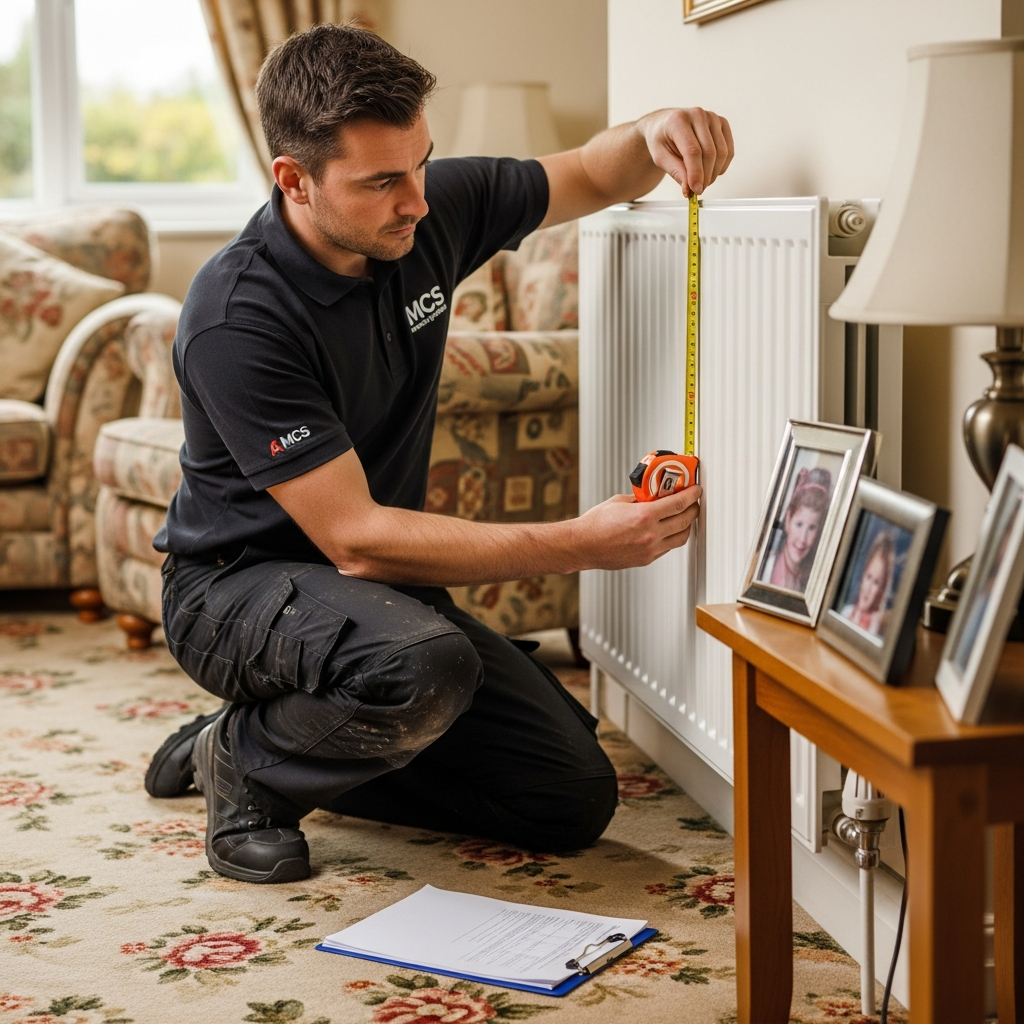
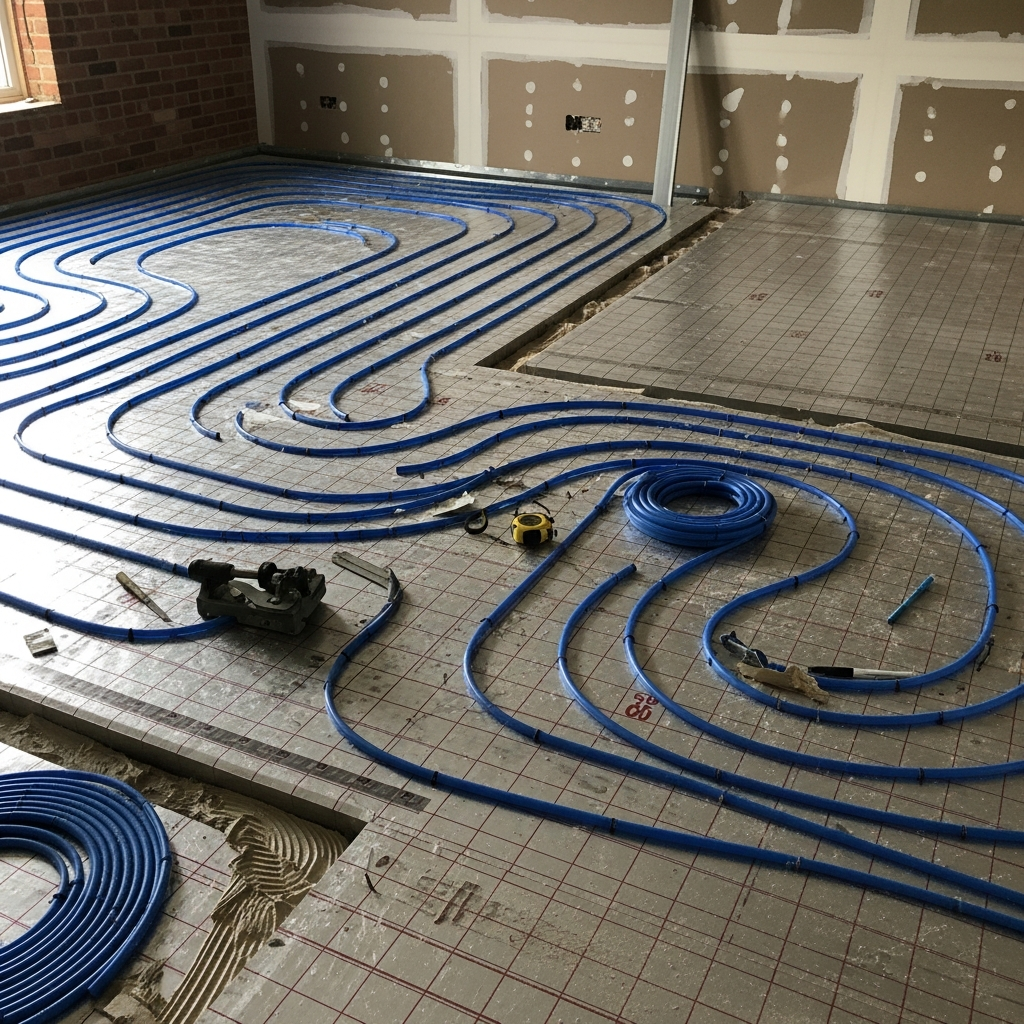
Use low-temperature emitters. Underfloor heating or correctly sized radiators operating at 35-45 degrees C allow the heat pump to run at its most efficient. See our guide on radiators for heat pumps.
Get the design right. Proper heat loss calculations, correct system sizing, and appropriate weather compensation settings are essential. Read our installation guide for what to expect.
Consider solar panels. Generating your own electricity with solar panels effectively makes your heat pump even cheaper to run, regardless of type.
Compare ground source and air source quotes side by side
Get Free Quotes NowMCS-certified installers. No obligation. See real prices for your property.
Frequently Asked Questions
How much more efficient is a ground source heat pump than air source?
On a seasonal basis, ground source is typically 15-25% more efficient. A GSHP might achieve an SCOP of 3.5-4.0 versus 2.8-3.5 for an ASHP. The gap is widest during the coldest winter months, when ground source can be 40-60% more efficient.
Is ground source always more efficient than air source?
In mild weather (above 10 degrees C), a good air source heat pump can match or even slightly exceed ground source efficiency because the air temperature is similar to the ground temperature. Ground source's advantage is consistency.
Does the higher efficiency of ground source offset its higher installation cost?
For high-demand properties replacing oil or LPG, the payback on the extra investment can be 12-18 years. For low-demand properties on mains gas, it may never fully pay back through efficiency savings alone -- though the longer GSHP lifespan tilts the equation.
What COP should I expect from a ground source heat pump?
A well-installed system should achieve an SCOP of 3.5 to 4.0. At peak conditions (mild weather, low flow temperature to underfloor heating), instantaneous COP can exceed 5.0. If your system is consistently below 3.0, something needs investigation.
Do ground source heat pumps work well with radiators?
Yes, but efficiency is highest with underfloor heating or oversized radiators allowing low flow temperatures (35-45 degrees C). Standard radiators may need the flow temperature raised to 50-55 degrees C, reducing COP by roughly 10-15%.
Will climate change affect ground source vs air source efficiency?
Warmer winters would narrow the efficiency gap slightly. However, ground source would remain more efficient overall, and warmer summers increase cooling demand -- where ground source also has an efficiency advantage.
Heat Pump Efficiency in Context
Heat pump efficiency connects to the broader UK energy landscape, including government incentive schemes, electricity tariff structures, and the national push towards net zero carbon heating. Understanding COP and SCOP helps homeowners make informed decisions about renewable heating investments. For homes that also generate electricity through solar energy systems, efficiency gains compound further as self-generated power reduces the effective cost per kilowatt hour.