Ground Source Heat Pump Land Requirements
Not sure whether your garden is big enough for a ground source heat pump? You are not alone -- land requirements are the number one question homeowners ask. The good news: if horizontal trenches will not fit, vertical boreholes or slinky coils might, and the right option depends on your garden size, soil type, and budget.
This guide gives you concrete numbers for every ground loop type, realistic assessments for common UK property sizes, and alternatives if your garden falls short.
Wondering if your garden is big enough? Get a professional assessment
Check Your Property SuitabilityFree, instant assessment based on your property type and location.
The Three Types of Ground Loop
There are three main ways to install a ground loop for a ground source heat pump. Each has different land requirements:
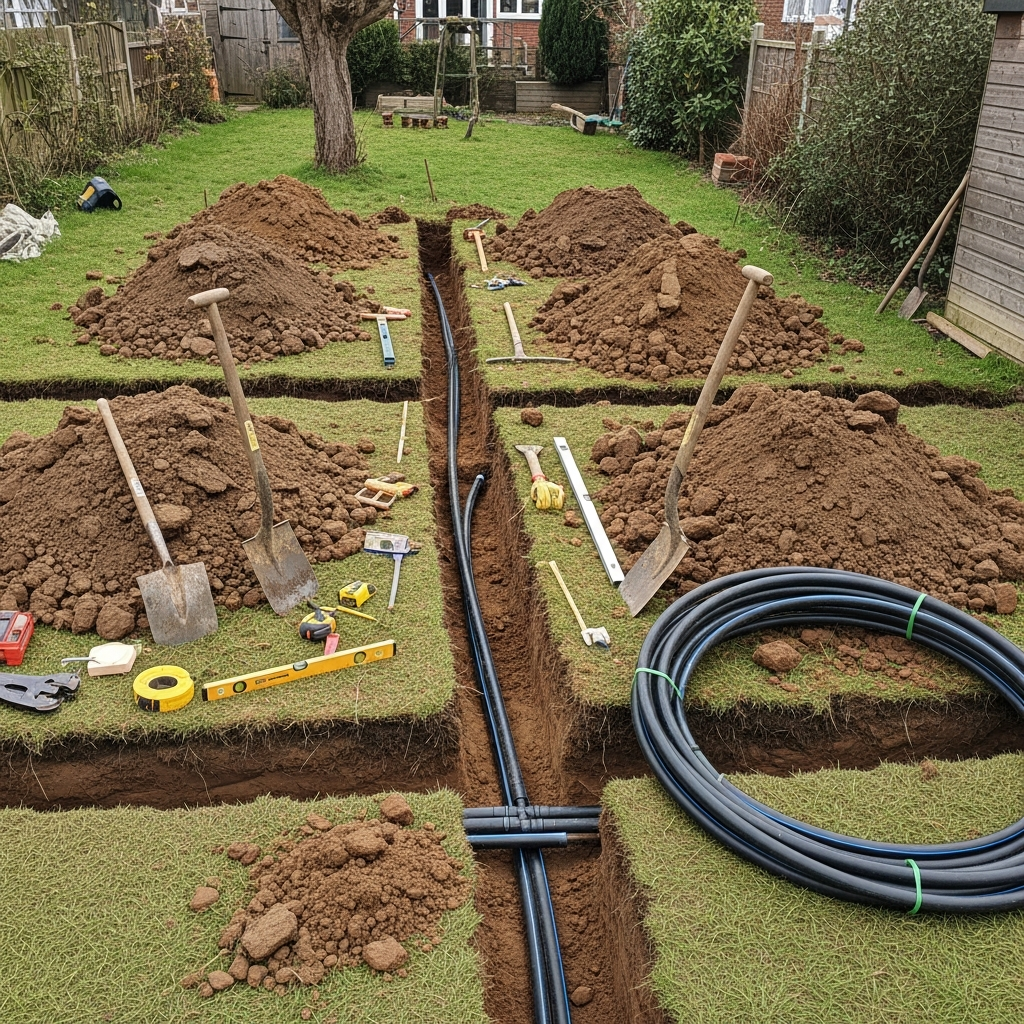
1. Horizontal Loops (Straight Trenches): Pipes laid in trenches 1.0 to 1.5 metres deep. The most common and cheapest method, but requires the most land.
2. Slinky Coils (Coiled in Trenches): Pipes coiled in wider trenches, reducing trench length needed by 40-60%. A good middle ground option.
3. Vertical Boreholes: One or more boreholes drilled 60 to 200 metres deep. Requires very little surface area but is the most expensive.
Horizontal Loop Land Requirements
Horizontal loops are the default choice for properties with sufficient garden space.
The Rule of Thumb
You need approximately 2 to 3 times the floor area of the house being heated. For a typical 3-bedroom semi with 85 square metres of floor area, you would need roughly 170-255 square metres of garden -- an area approximately 10m x 20m.
| Property Size | Heat Demand | Garden Area Needed | Approximate Trench Length |
|---|---|---|---|
| Small well-insulated house | 6 kW | 120-180 m2 | 100-150m |
| Medium house | 10 kW | 200-300 m2 | 150-250m |
| Large house | 15 kW | 300-450 m2 | 250-400m |
| Very large / poorly insulated | 20 kW+ | 400-600 m2+ | 350m+ |
The actual area depends on your home's heat demand (well-insulated properties need less), soil type and moisture (wet clay conducts heat well, dry sand is poor), and pipe spacing (at least 0.5 to 1.0 metres apart to avoid thermal interference).
What Counts as Usable Land?
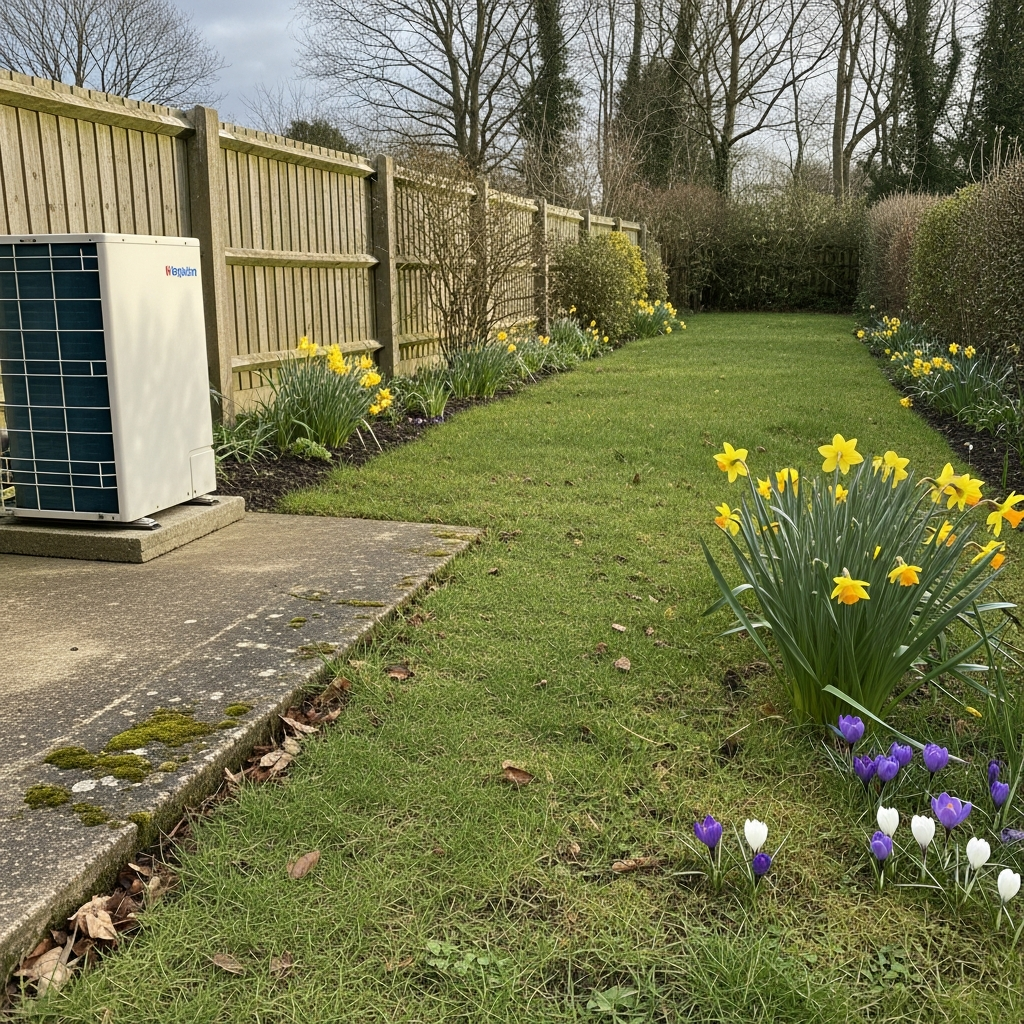
The ground loop area does not have to be a neat rectangle. Loops can follow the shape of your garden, curve around obstacles, and run under lawn, flowerbeds, or vegetable patches. However:
No building over the loop. You cannot build permanent structures over horizontal ground loops. The ground needs access to rainfall and solar heat to recharge.
No deep-rooted trees. Large trees should be at least 3-5 metres from the loops. Roots can damage pipes, and tree canopy blocks the rain and sun that help recharge the ground.
No hard surfaces. Tarmac or concrete over the loop area reduces ground recharge. Gravel, grass, or planted beds are fine.
Access for excavation. A mini-digger needs to reach the area during installation. Consider gate width and access routes.
Slinky Coil Land Requirements
Slinky coils reduce the land area needed by fitting more pipe into each trench. The pipe is coiled in overlapping loops laid on its side in a wider trench.
| Property Size | Horizontal Loop Area | Slinky Coil Area | Space Saving |
|---|---|---|---|
| Small house (6 kW) | 120-180 m2 | 80-120 m2 | ~40% |
| Medium house (10 kW) | 200-300 m2 | 130-200 m2 | ~40% |
| Large house (15 kW) | 300-450 m2 | 200-300 m2 | ~40% |
Slinky coils are a good middle ground -- cheaper than boreholes but requiring less space than straight horizontal loops. They are popular for medium-sized UK gardens where space is tight but not impossibly restricted.
Vertical Borehole Land Requirements
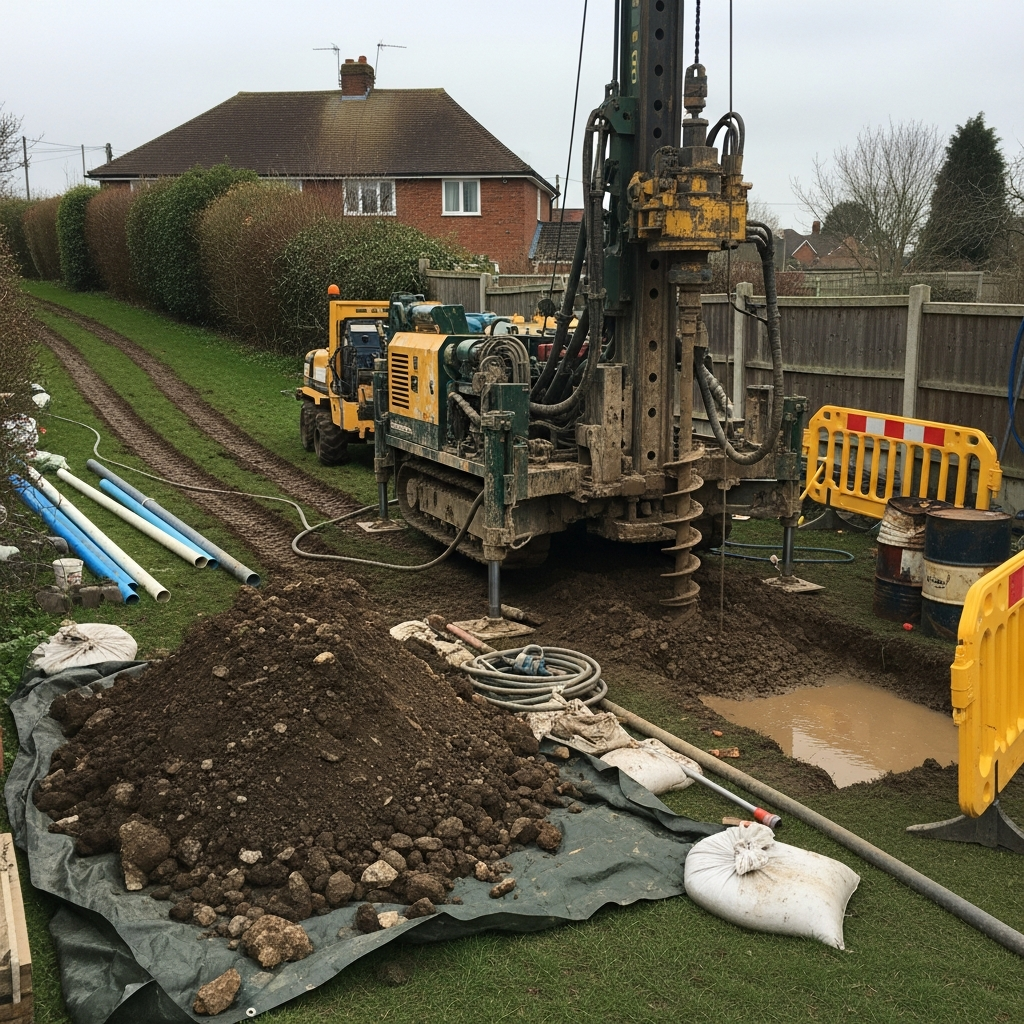
Vertical boreholes are the solution when garden space is limited. A drilling rig bores one or more holes 60-200 metres deep.
This makes boreholes viable for properties with very small gardens, courtyards, or even driveways. The trade-off is cost -- borehole drilling typically costs £40-£80 per metre, so a single 100m borehole costs £4,000-£8,000 just for drilling. Check our full cost guide for current pricing.
Can Your Garden Fit a Ground Source Heat Pump?
Here is a practical assessment for common UK property types:
Detached House with Large Garden (200-500+ m2): Almost always suitable for horizontal loops. This is the ideal scenario and the most cost-effective installation.
Semi-Detached with Medium Garden (80-200 m2): Often suitable for slinky coils, sometimes for horizontal loops if well insulated. If smaller, vertical boreholes may be needed.
Terraced House with Small Garden (30-80 m2): Horizontal loops are unlikely to fit. Vertical boreholes are the main option, though the cost premium may make air source more attractive.
Flat or Apartment: Individual ground source is rarely practical. However, shared ground loop systems serving entire blocks are increasingly common.
Use our suitability checker to assess your specific property.
Get expert advice on ground loop options for your garden
Request Free Installer QuotesMCS-certified ground source specialists will survey your garden and recommend the best option.
Soil Type and How It Affects Land Requirements
Good Ground Conditions (Less Land Needed)
Wet clay: Thermal conductivity 1.5-2.0 W/mK. Excellent for ground loops -- common across much of lowland England.
Saturated sand/gravel: Also good. The water content conducts heat effectively.
Poor Ground Conditions (More Land Needed)
Dry sand: Thermal conductivity 0.3-0.8 W/mK. Can require 50% more ground loop than wet clay.
Peat: Very poor thermal conductivity. More common in Scotland, Wales, and northern England.
A reputable installer will assess your soil conditions as part of the design process. For boreholes, a thermal response test may be carried out to measure exact thermal conductivity.
What Happens to Your Garden After Installation?
Horizontal loops: The trenches are backfilled and reinstated. Within a few months, the grass regrows and the garden looks normal. You can plant shrubs, flowers, and vegetables over the loops -- just avoid deep-rooted trees.
Slinky coils: Same as horizontal loops. The wider trenches take slightly longer to settle.
Boreholes: The only visible evidence is a small inspection cover at each borehole head, which can be hidden with planting.
Alternatives If Your Garden Is Too Small
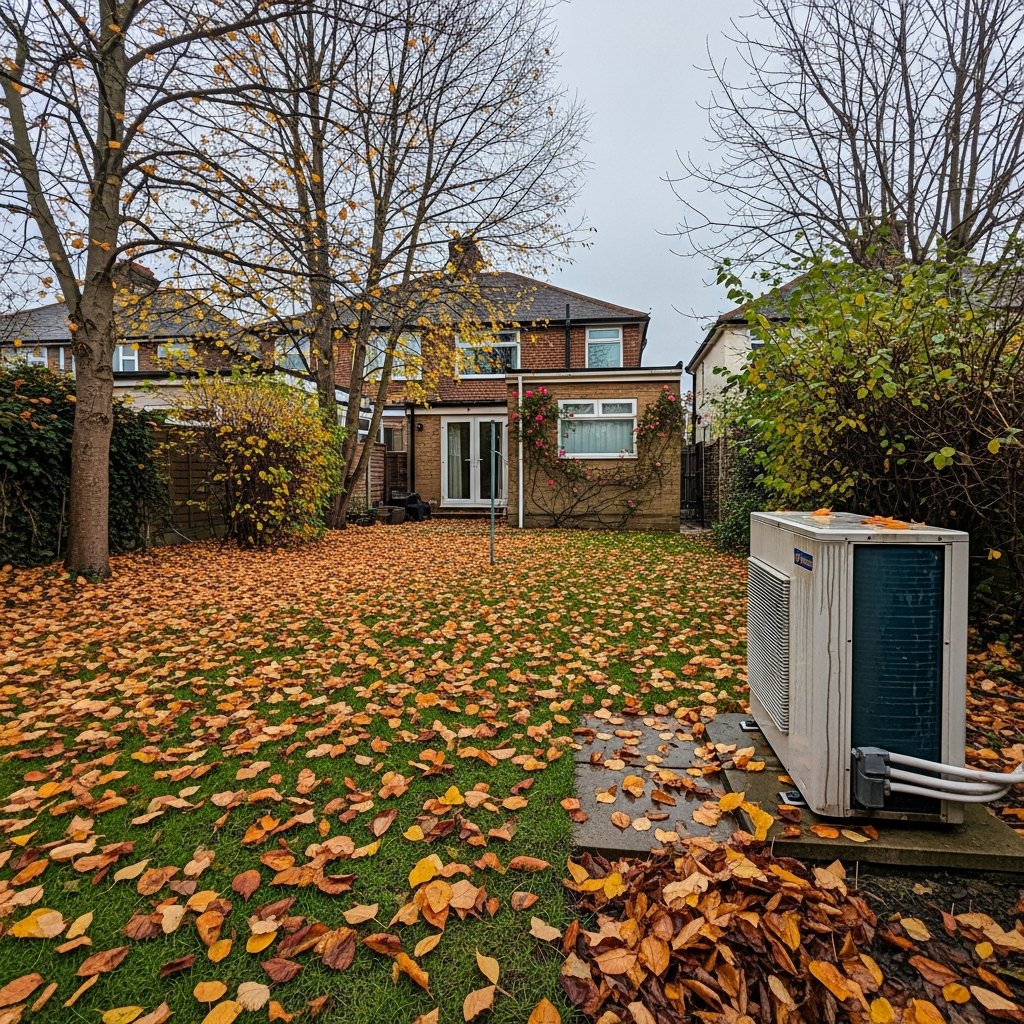
Air source heat pump. An air source system needs only a small external area for the outdoor unit. If land constraints are your main barrier, air source may be the pragmatic choice.
Shared ground loop. If neighbours are also interested, a shared ground loop system can serve multiple properties from a communal array.
Water source heat pump. If your property is near a river, lake, or has a borehole for groundwater, a water source system needs very little land.
Whatever your situation, get quotes from specialist installers who can survey your property and advise on the best solution.
Grant Funding and Land Requirements
The Boiler Upgrade Scheme (BUS) provides £7,500 towards ground source heat pump installation regardless of whether you install horizontal loops, slinky coils, or boreholes. This helps offset the higher price of borehole systems where the drilling cost is significant.
Homeowners who combine a ground source heat pump with solar panel installation can access separate grant funding for both technologies, maximising the financial support available for whole-home energy upgrades.
Find out exactly what ground loop type suits your garden
Use the Free CalculatorInstant cost and sizing estimates based on your property details.
Frequently Asked Questions
How much garden do I need for a ground source heat pump?
For horizontal loops, roughly 2 to 3 times the floor area of your house. A typical 3-bed semi needs approximately 170-250 m2 of garden. Slinky coils reduce this by 40-60%. Vertical boreholes need as little as 25-80 m2 of working area during installation and virtually no permanent surface space.
Can I put a ground source heat pump in a small garden?
Yes, with vertical boreholes. A borehole system can work in gardens as small as 25-30 m2, though you need enough access for a drilling rig. The cost is higher than horizontal loops, but the land requirement is minimal.
Can I build over a ground loop?
No. Horizontal ground loops need access to rainfall and solar heat to recharge the ground. Building permanent structures, laying concrete, or paving over the loop area will reduce its performance.
Can I plant trees over a ground loop?
Small shrubs and plants are fine. Large trees should be kept at least 3-5 metres from the loop pipes. Tree roots can damage pipes, and large canopies prevent rain and sun from recharging the ground.
Does the soil type affect how much land I need?
Yes, significantly. Wet clay conducts heat well and requires less pipe per kilowatt than dry sandy soil. In poor ground conditions, you might need 50% more pipe -- and therefore 50% more land.
How deep are horizontal ground loops buried?
Typically 1.0 to 1.5 metres deep. This is below the frost line in the UK, where ground temperature is stable.
Ground Source Heat Pump Land and Planning
Understanding land requirements is a crucial step in planning any ground source heat pump installation. It connects directly to installation costs, planning permission rules, and overall project feasibility. For properties with large gardens, combining ground source heating with rooftop solar energy generation creates a comprehensive renewable energy system that utilises your property's full potential.