Air to Water Heat Pumps Explained: The UK's Most Popular System
Air-to-water heat pumps account for the vast majority of UK domestic installations — and with the £7,500 BUS grant, many homeowners pay just £500-£4,500 out of pocket. They replace your gas boiler, connect to existing radiators, heat your hot water, and typically save 20-40% on annual heating bills.
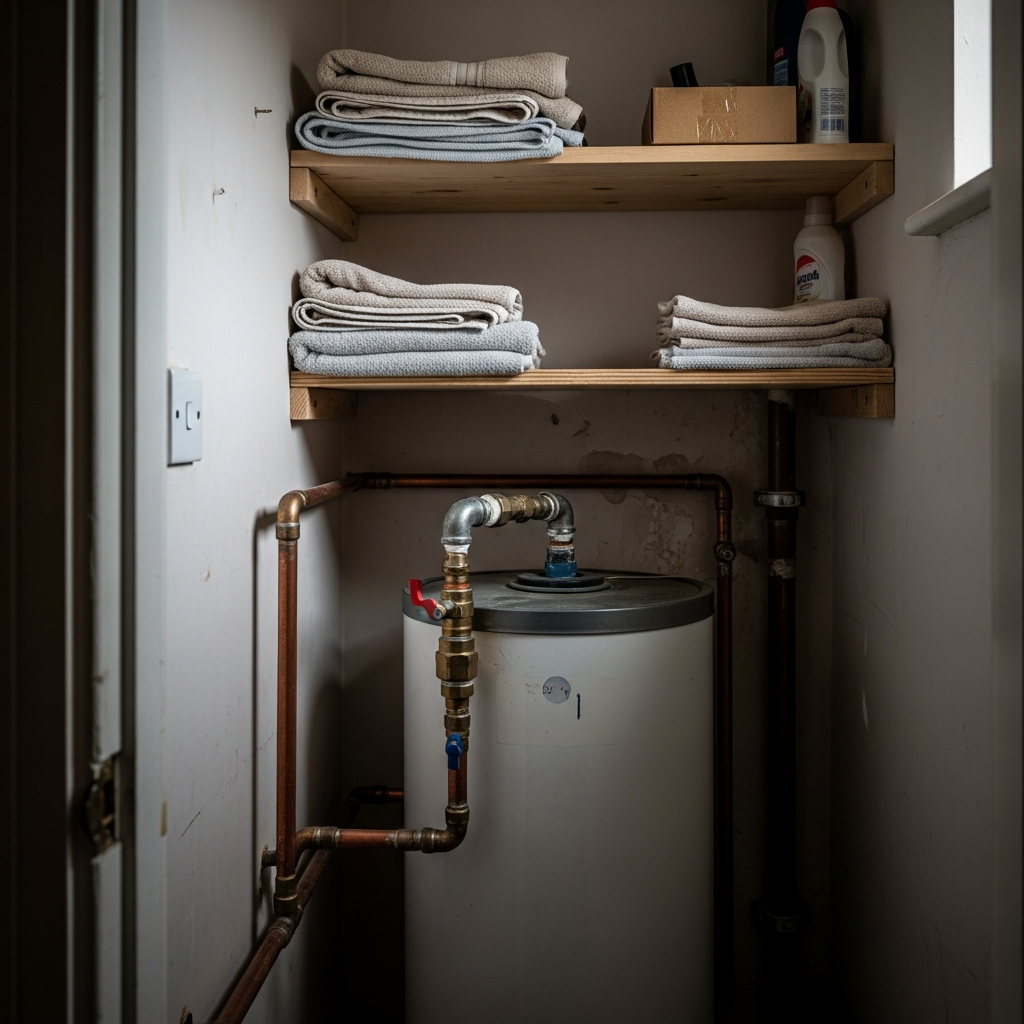
If you're looking at heat pumps for your UK home, the chances are you'll end up with an air-to-water system. It's by far the most popular type in Britain, accounting for the vast majority of domestic air source heat pump installations. And for good reason — it's the most practical replacement for a gas boiler, connecting to your existing radiators and providing both space heating and hot water.
See what an air-to-water heat pump would cost for your home
Use the free calculatorNo email required. Instant results based on your property details.
What Is an Air-to-Water Heat Pump?
An air-to-water heat pump extracts heat from the outdoor air and transfers it to water. That heated water circulates through your radiators or underfloor heating to warm your rooms, and also heats your domestic hot water cylinder. In practical terms, it replaces your gas boiler.
How Air-to-Water Heat Pumps Work
The process happens in four stages:
- Heat Absorption: A fan draws outdoor air across an evaporator coil containing cold refrigerant, which absorbs heat and evaporates into a gas.
- Compression: The gaseous refrigerant passes through a compressor, dramatically increasing its temperature.
- Heat Transfer: The hot refrigerant passes through a heat exchanger, transferring heat to water for your radiators and hot water cylinder.
- Expansion: The liquid refrigerant passes through an expansion valve, dropping its temperature ready to absorb heat again.
You get 2.5-4.0 units of heat for every unit of electricity consumed. For more on efficiency, see our COP and SCOP guide.
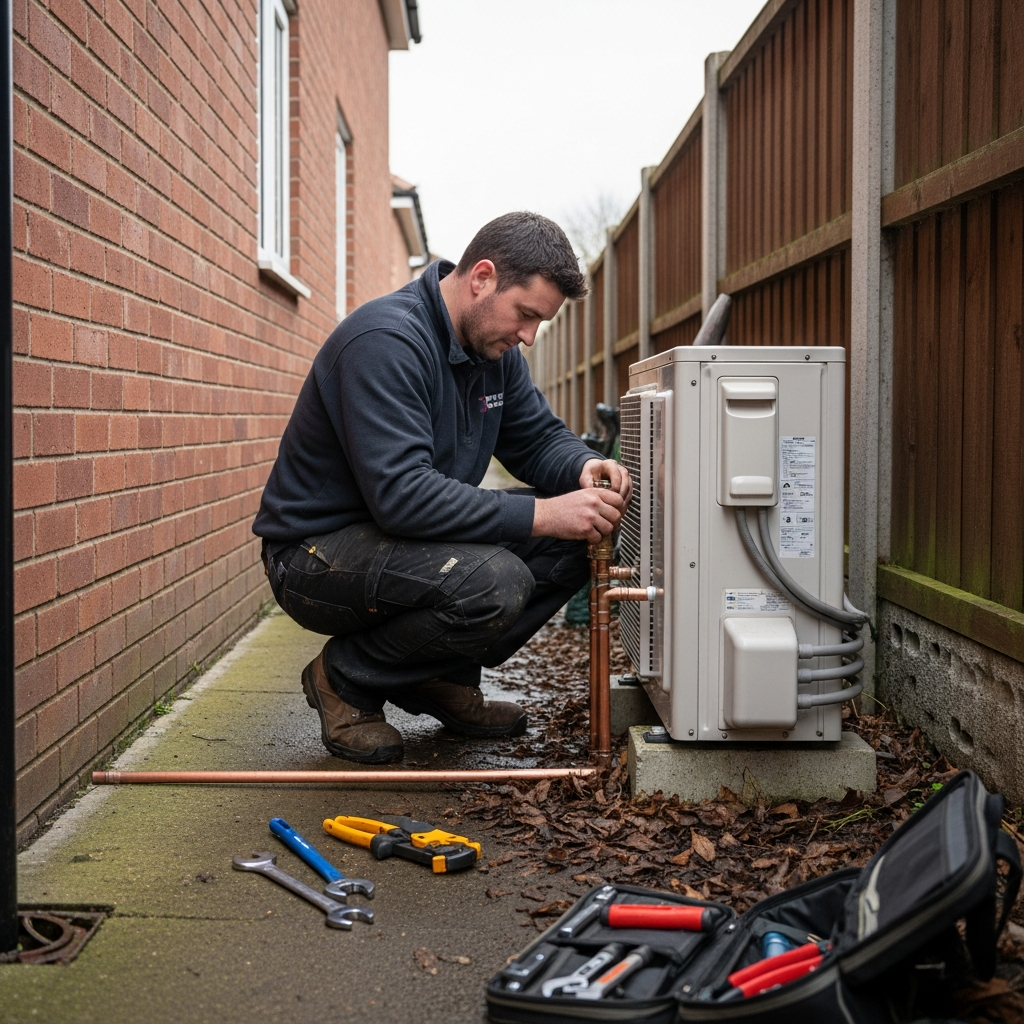
How They Work with Radiators
A gas boiler typically heats water to 60-80°C. A heat pump works most efficiently at 35-55°C. Lower water temperature means each radiator produces less heat. To compensate, you may need to upsize some radiators, add radiators in certain rooms, or accept slightly higher flow temperatures (50-55°C) as a compromise.
For a detailed look, read our guide on whether you need new radiators for a heat pump.
How They Work with Underfloor Heating
Underfloor heating is the ideal partner for an air-to-water heat pump. UFH works optimally at 30-40°C, which is exactly where heat pumps are most efficient. COP with UFH is typically 0.5-1.0 higher than with radiators.
Hot Water: How It Works
Unlike air-to-air systems, an air-to-water heat pump heats your domestic hot water. You'll need a cylinder (typically 150-250 litres), heat pumps typically heat water to 45-55°C with periodic Legionella pasteurisation to 60°C, and reheat takes 1-2 hours versus 20-40 minutes with gas.
Costs: What to Expect
| Property Type | System Size | Total Cost (before grant) | After BUS Grant (£7,500) |
|---|---|---|---|
| 2-bed flat/terrace | 5-7 kW | £7,000 – £10,000 | £0 – £2,500 |
| 3-bed semi | 7-10 kW | £8,000 – £12,000 | £500 – £4,500 |
| 4-bed detached | 10-16 kW | £10,000 – £15,000 | £2,500 – £7,500 |
| Large/older property | 14-20 kW | £12,000 – £18,000 | £4,500 – £10,500 |
Annual running costs for a typical 3-bed semi are approximately £600-900, compared to £900-1,200 for gas. For detailed analysis, visit our heat pump running costs guide.
Get a personalised cost estimate for your property
Calculate your costs nowFree, instant results. Accounts for your property type, size, and current heating.
Why Air-to-Water Is the UK's Default Choice
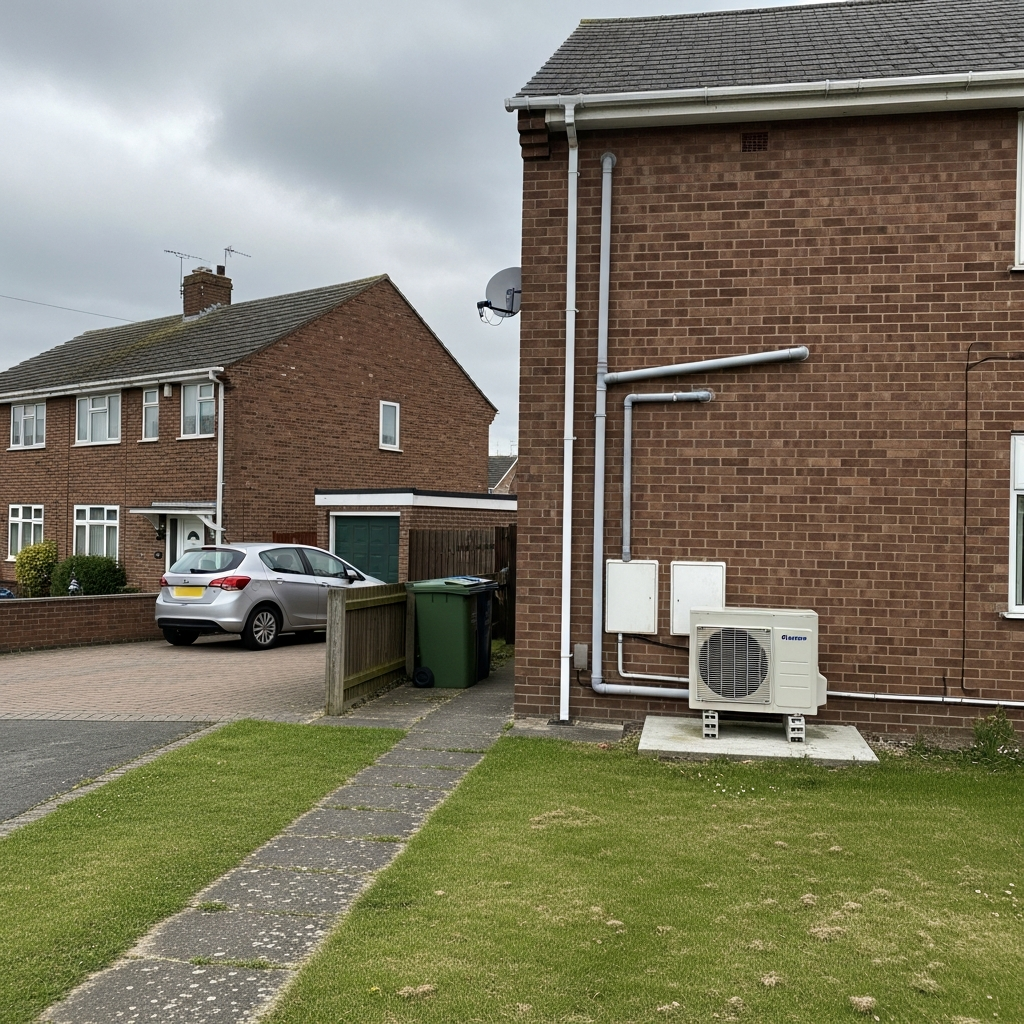
- Direct boiler replacement: Connects to existing central heating pipework
- Handles heating and hot water: One system does everything
- BUS grant eligible: The £7,500 grant makes it significantly more affordable
- Invisible heating: No indoor units on walls — radiators and UFH work silently
- Proven in UK conditions: Hundreds of thousands of installations
- Works with existing infrastructure: Most UK homes have compatible wet central heating
Installation: What's Involved
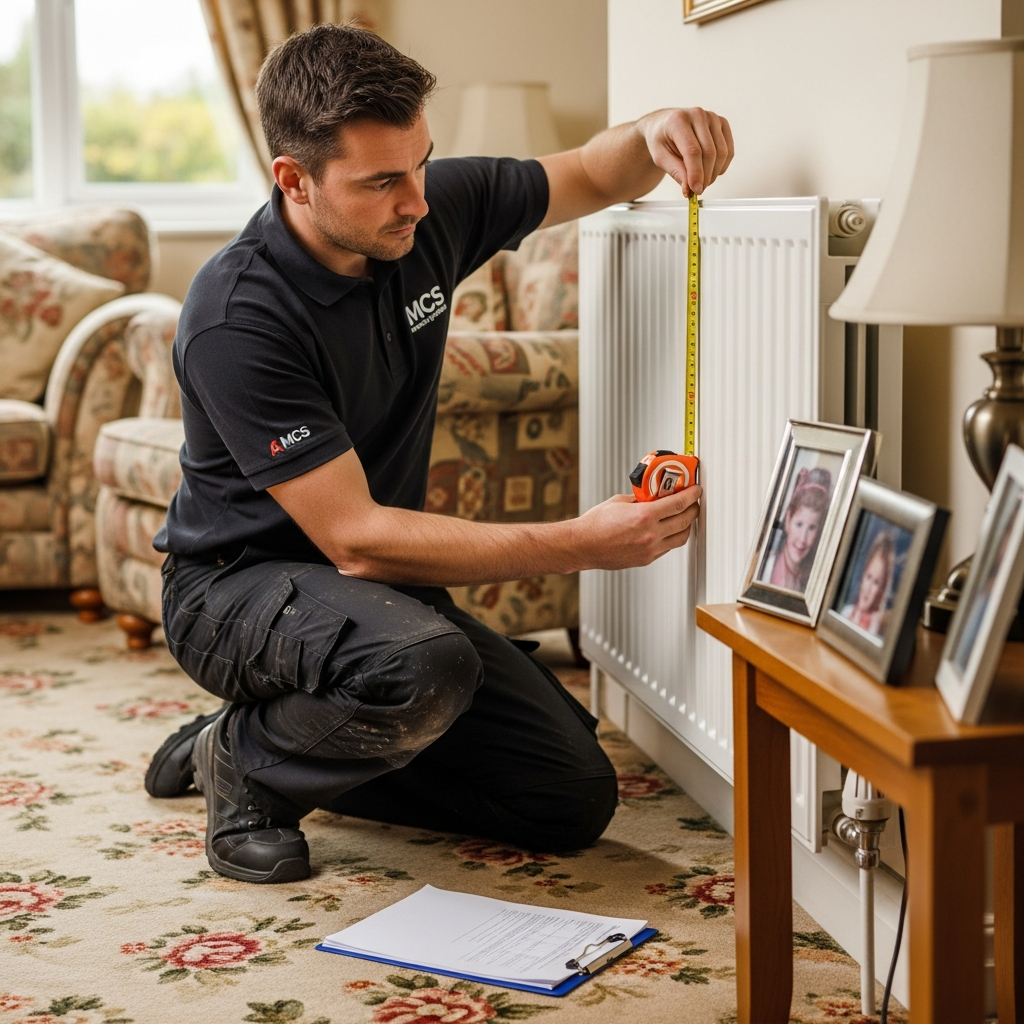
A typical installation takes 2-5 days: preparation (concrete base, wall penetrations, old boiler removal), main installation (outdoor unit, indoor hydraulics, cylinder, pipework, electrics), and completion (filling, flushing, commissioning, handover). For a detailed walkthrough, see our 3-bed semi installation guide.
Choosing the Right Size
Correct sizing is critical. As a rough guide: well-insulated 2-bed needs 4-6 kW, average 3-bed semi needs 7-10 kW, 4-bed detached needs 10-14 kW. Always get a proper heat loss survey — use our heat pump calculator for a starting estimate.
Popular Brands in the UK
The UK market has several well-established brands: Vaillant (aroTHERM), Daikin (Altherma), Mitsubishi Electric (Ecodan), Samsung (EHS), Bosch, Grant (Aerona3), and NIBE.
Frequently Asked Questions
Can an air-to-water heat pump replace my combi boiler?
Yes, but you'll need to add a hot water cylinder since combi boilers heat water on demand without a tank. You'll need space for the cylinder — typically a cupboard or utility room.
Will I need to change my radiators?
Not necessarily. Many existing radiators work fine. Your installer will calculate whether each radiator delivers enough heat at lower flow temperatures. You may need to upsize 2-4 radiators.
How long does an air-to-water heat pump last?
With proper maintenance, 15-20 years for the main unit. The hot water cylinder can last even longer.
Is an air-to-water heat pump noisy?
The outdoor unit produces 40-50 dB at one metre — similar to a fridge humming. Indoors, the system is effectively silent.
Can I keep my existing hot water cylinder?
Sometimes, if it's in good condition with a suitable coil arrangement. Many installers recommend a new cylinder designed for heat pump temperatures.
What electricity supply do I need?
Most domestic systems run on standard single-phase. Larger systems (above about 16 kW) may require three-phase.
The Bottom Line
Air-to-water heat pumps are the standard choice for UK homeowners switching from gas or oil boilers. They provide both heating and hot water, work with existing radiators, qualify for the £7,500 BUS grant, and deliver genuine running cost savings. The key to success is correct sizing, quality installation, and appropriate radiator setup for low flow temperatures. Pairing with solar panels can further reduce electricity costs.
Ready to explore whether an air-to-water heat pump suits your home?
Get free quotes from local installersMCS-certified, vetted installers. Free, no obligation quotes.
Understanding Air-to-Water Heat Pumps in Context
Air-to-water heat pumps are the backbone of the UK's transition from gas heating. They connect to existing wet central heating systems, qualify for the Boiler Upgrade Scheme, and provide both space heating and hot water from a single system. Their efficiency ratings (SCOP 2.8-3.8) translate to meaningful bill savings for most households. Combined with home insulation improvements and solar energy, air-to-water heat pumps represent the most practical path to decarbonising home heating for the majority of UK properties.