Air Source Heat Pump for a 4-Bed Detached House: Complete Guide
A 4-bed detached house is well-suited to a heat pump — with flexible placement, no neighbour noise issues, and annual savings of £300-£1,400 depending on your current fuel. With the £7,500 BUS grant reducing costs to £2,500-£7,500, the investment pays back in 3-15 years.
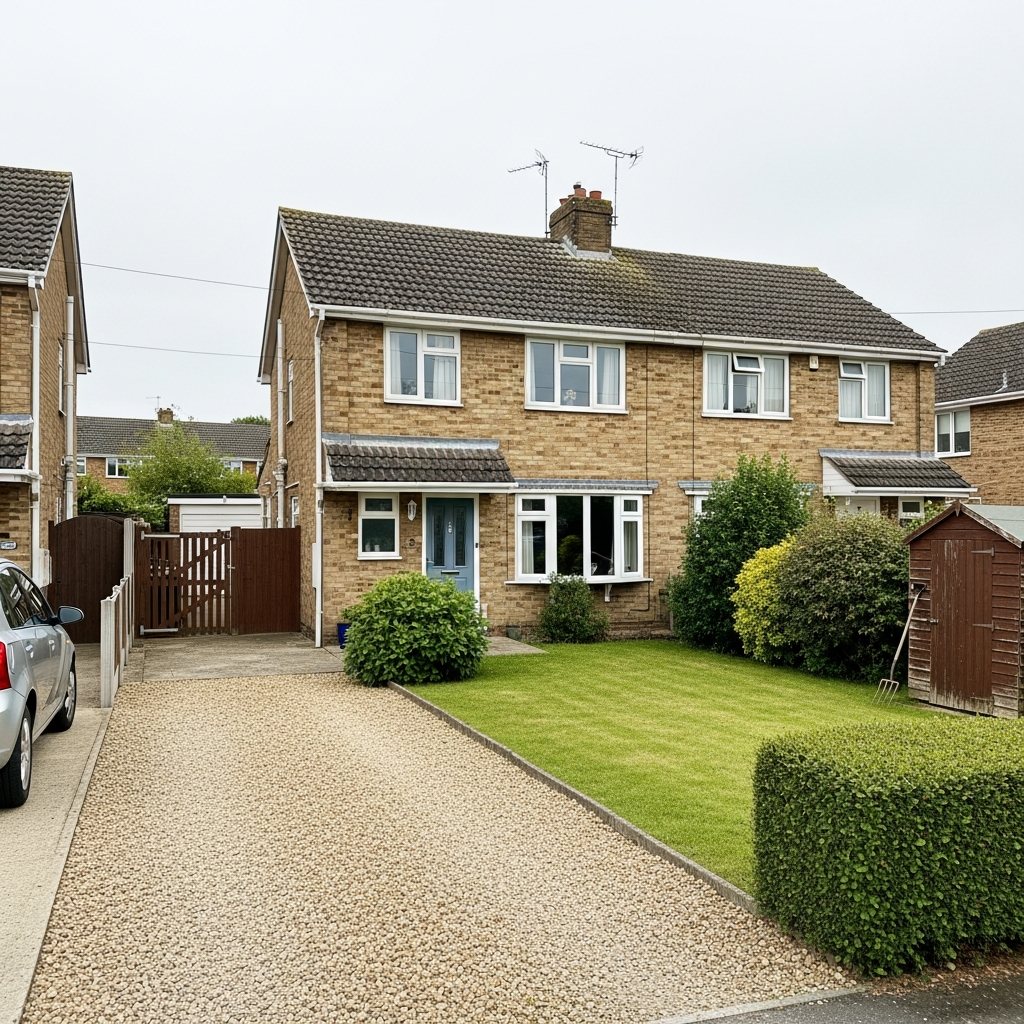
If you own a 4-bedroom detached house and you're considering a heat pump, you'll want specific answers. Detached houses have advantages — more space for the outdoor unit, no shared walls — but they also present challenges around higher heat demand. This guide gives you the practical detail.
Get a personalised cost estimate for your detached property
Use the free calculatorNo email required. Instant results based on your property details.
What Size Heat Pump for a 4-Bed Detached?
Most 4-bed detached houses need 10-16 kW:
| Property Characteristics | Floor Area | Heat Pump Size |
|---|---|---|
| Modern build (post-2000), well-insulated | 120-150 m² | 8-11 kW |
| 1970s-1990s, average insulation | 130-170 m² | 10-13 kW |
| 1930s-1960s, basic insulation | 120-160 m² | 11-14 kW |
| Victorian/Edwardian, solid walls | 140-200 m² | 13-18 kW |
| Large modern executive home | 180-250 m² | 14-20 kW |
Detached houses lose more heat than terraced or semi-detached properties because all four external walls are exposed. Use our heat pump calculator for a starting estimate.
Installation Costs
| Component | Typical Cost |
|---|---|
| Heat pump unit (10-16 kW) | £5,000 – £8,500 |
| Hot water cylinder (210-300L) | £1,000 – £2,000 |
| Installation labour (3-5 days) | £2,000 – £3,000 |
| Pipework, fittings, modifications | £600 – £1,000 |
| Electrical work | £400 – £700 |
| Concrete base/ground works | £250 – £500 |
| Controls and commissioning | £250 – £500 |
| Total before grant | £10,000 – £15,000 |
| Minus BUS grant | -£7,500 |
| Your cost after grant | £2,500 – £7,500 |
Additional costs: radiator upgrades (£700-2,500), buffer tank (£500-1,000), zoning (£300-800), electrical upgrade if needed (£500-1,500).
Running Costs
| Heating System | Estimated Annual Cost (4-bed detached) |
|---|---|
| Gas boiler (90% efficient) | £1,200 – £1,700 |
| Air source heat pump (SCOP 3.0) | £850 – £1,200 |
| Air source heat pump (SCOP 3.5) | £700 – £1,000 |
| Oil boiler | £1,400 – £2,000 |
| LPG boiler | £1,800 – £2,500 |
Monthly breakdown: summer £20-40, spring/autumn £50-90, winter £110-170. For detailed analysis, visit our running costs guide.
Advantages of a Detached House for Heat Pumps
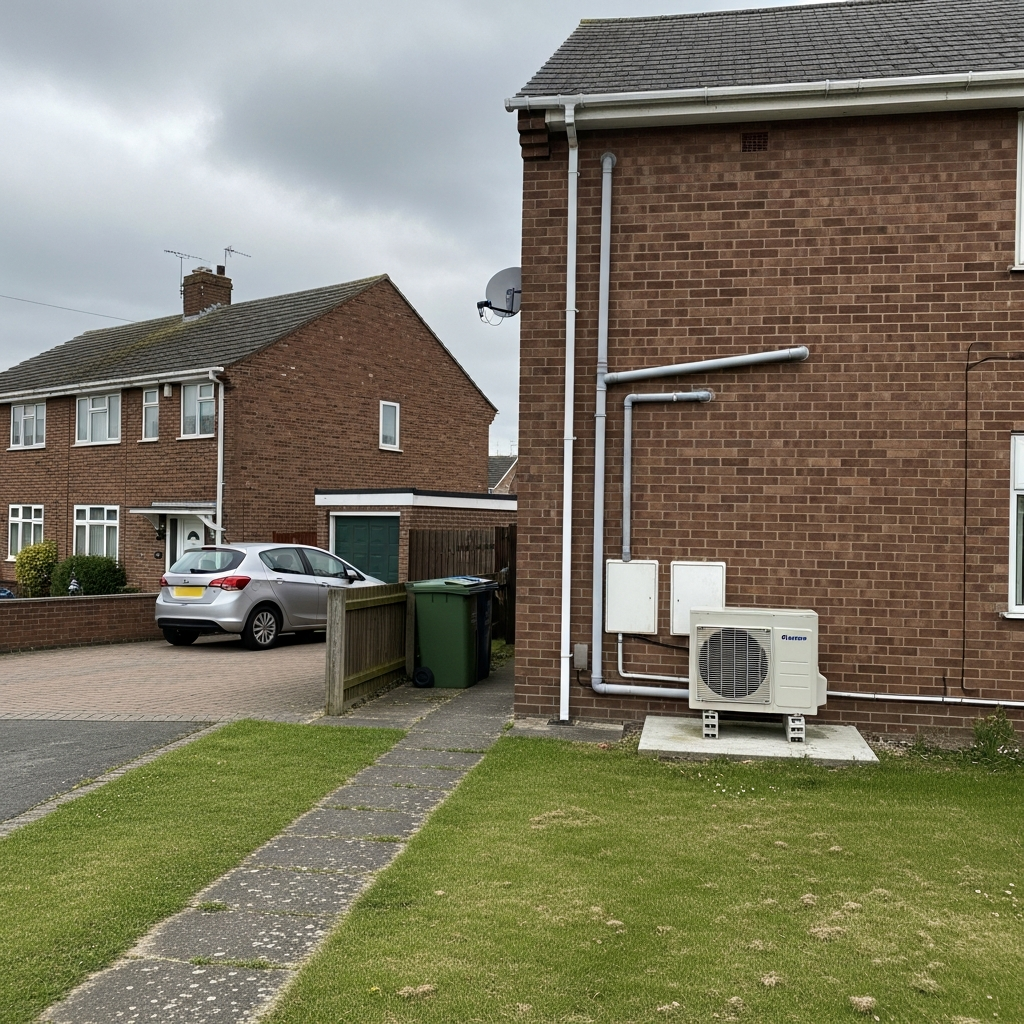
- Flexible outdoor unit placement: No party walls, more garden space
- No shared boundary noise issues: The 42 dB limit is easier to achieve
- Space for hot water cylinder: Utility rooms, garages, large airing cupboards
- Potential for ground source: Large gardens may accommodate horizontal trenches or boreholes
Challenges for Larger Properties
- Higher heat demand = larger system: A 14 kW system costs more than an 8 kW one
- More radiator changes: 8-12 radiators with 3-5 potentially needing upgrades
- Longer pipe runs: Greater distances from outdoor unit to furthest radiator
- Electrical considerations: Larger systems draw more power; check your supply capacity
Find out the exact cost for your 4-bed detached property
Get free quotes from local installersExperienced with larger properties. Free, no obligation.
Insulation: Especially Important for Detached Houses
Because all four walls are exposed, insulation improvements have a proportionally larger impact. Cavity wall insulation (if unfilled) can reduce wall heat loss by 50-60%. Loft insulation to 270mm+, floor insulation for suspended timber floors, and double glazing all contribute significantly. Consider these as part of your heat pump project.
System Design Considerations
Zoning can improve comfort and reduce energy use: living areas at 20-21°C during occupied hours, bedrooms at 18°C, and utility rooms at lower temperatures. Hot water demand for 4-6 people suggests a 250-300L cylinder. Three-phase power may be needed for systems above 14 kW — check early as upgrading can take months.
Is It Worth It for a 4-Bed Detached?
Replacing gas: Net cost £2,500-7,500, annual saving £300-600, payback 6-15 years. Replacing oil: Annual saving £500-900, payback 3-10 years. Replacing LPG: Annual saving £800-1,400, payback 2-7 years.
For detached houses off the gas network, the financial case is very strong. Pairing with solar panels further improves returns, especially for properties with good roof orientation.
Frequently Asked Questions
Is a 4-bed detached house too big for a heat pump?
No. Heat pumps are available up to 20+ kW for residential use, sufficient for the vast majority of 4-bed detached houses.
What size hot water cylinder do I need?
For 4-6 people, a 250-300L cylinder provides ample hot water for multiple bathrooms.
Will a heat pump cope with a large living room?
Yes, provided radiators are correctly sized. A large room might need a double-panel double-convector radiator or two radiators.
Do I need three-phase electricity?
Only if you need a heat pump larger than about 14 kW. Most 4-bed detached houses can be served on single-phase.
Is ground source better for a detached house?
Ground source is more efficient (SCOP 3.5-4.5) with lower running costs. If you have sufficient garden space, it's worth considering. The BUS grant covers £7,500 for ground source too.
Can I heat a garage or annex with the same heat pump?
If insulated and total demand falls within the heat pump's capacity, yes. Uninsulated garages waste energy and shouldn't be heated this way.
The Bottom Line
A 4-bed detached house is well-suited to a heat pump, with flexible placement and no neighbour noise concerns. The system costs more than for smaller properties, but absolute savings are also larger — particularly replacing oil or LPG. Focus on insulation first, get a proper heat loss survey, and choose an experienced installer.
Ready to explore heat pump options for your detached property?
Get free quotes from experienced installersMCS-certified installers experienced with larger properties. Free, no obligation.
Understanding Heat Pumps for Larger Properties in Context
The 4-bed detached house represents the upper end of mainstream domestic heat pump installations. Properly sized 10-16 kW air-to-water systems deliver reliable heating and hot water for larger families. Efficiency optimisation through zoning, radiator upgrades, and insulation improvements is particularly impactful for detached homes with four exposed walls. For properties off the gas grid using oil or LPG, the financial case is compelling even without considering carbon reduction. Pairing with solar panels and battery storage can make larger properties substantially energy-independent.