Quietest Heat Pumps UK
Noise is one of the most common concerns homeowners raise about air source heat pumps. The outdoor unit contains a compressor and a fan, both of which produce sound. In a terraced street or a quiet suburban estate, even modest noise can cause friction with neighbours.
The good news is that modern heat pumps are significantly quieter than models from even five years ago. The best units are no louder than a fridge humming — genuinely difficult to hear from a few metres away. This guide compares every major brand by noise level, explains what the numbers actually mean, and offers practical advice for keeping your installation as quiet as possible.
Understanding Heat Pump Noise Levels
How Decibels Work
Sound is measured in decibels (dB). The scale is logarithmic, which means a 10 dB increase represents a perceived doubling of loudness. This makes seemingly small differences significant:
- 30 dB: Quiet whisper, rural nighttime
- 40 dB: Quiet library, residential area at night
- 45 dB: Quiet conversation at home
- 50 dB: Moderate rainfall, quiet office
- 55 dB: Normal conversation
- 60 dB: Background music, busy restaurant
- 70 dB: Vacuum cleaner, busy traffic
Most modern heat pumps produce between 40 and 60 dB(A) at 1 metre from the unit. At 3 metres — the distance typically used for planning assessments — this drops by approximately 10 dB.
When Noise Matters Most
Heat pump noise is most noticeable at night, when background noise levels drop. This is why planning regulations focus on nighttime noise limits. During the day, traffic, wind, and general activity typically mask heat pump sound. At 2am on a still winter night, even 42 dB can seem intrusive.
Variable-speed heat pumps are quieter at night because they modulate down to lower output, reducing compressor and fan speed. Fixed-speed units run at full power whenever they are on, making them noticeably louder during nighttime heating.
Noise Comparison: Every Major Brand
The following table compares noise levels for mid-range models (6 to 10kW) at both 1 metre and 3 metres distance. All figures are A-weighted sound pressure levels measured at nominal operating conditions.
| Brand & Model | Size (kW) | dB(A) at 1m | dB(A) at 3m | Compressor Type | Quiet Mode Available |
|---|---|---|---|---|---|
| Samsung EHS Mono | 8 | 52 | 42 | Variable speed | Yes (35 dB at 3m) |
| Vaillant aroTHERM plus | 7 | 55 | 45 | Variable speed | Yes (38 dB at 3m) |
| Panasonic Aquarea | 9 | 56 | 46 | Variable speed | Yes (39 dB at 3m) |
| Daikin Altherma 3 | 8 | 57 | 47 | Variable speed | Yes (40 dB at 3m) |
| NIBE S2125 | 8 | 57 | 47 | Variable speed | Yes (40 dB at 3m) |
| LG Therma V | 9 | 58 | 48 | Variable speed | Yes (41 dB at 3m) |
| Mitsubishi Ecodan | 8.5 | 58 | 48 | Variable speed | Yes (41 dB at 3m) |
| Bosch Compress 7400i | 7 | 56 | 46 | Variable speed | Yes (39 dB at 3m) |
| Worcester Bosch Greenstar | 8 | 57 | 47 | Variable speed | Yes (40 dB at 3m) |
| Grant Aerona3 | 10 | 62 | 52 | Fixed speed | No |
The Quietest: Samsung EHS Mono
The Samsung EHS Mono is consistently the quietest heat pump on the UK market. At 42 dB(A) at 3 metres in normal operation — and as low as 35 dB(A) in quiet mode — it is genuinely difficult to hear from inside a house with closed windows.
Samsung achieves this through a combination of advanced inverter compressor technology, optimised fan blade design, and comprehensive acoustic insulation around the compressor housing. The unit also benefits from Samsung's decades of experience in air conditioning, where noise control is a primary design consideration.
For terraced houses, flats with shared outdoor spaces, or any property where the outdoor unit will be close to a neighbour's window, Samsung is the safest choice for avoiding noise complaints.
The Premium Quiet Option: Vaillant aroTHERM plus
The Vaillant aroTHERM plus is only marginally louder than the Samsung at 45 dB(A) at 3 metres, with a quiet mode that drops to 38 dB(A). Given that it also leads the market on efficiency, the Vaillant is the best choice if you want both minimal noise and maximum COP.
Planning Rules and Noise Limits
In England and Wales, air source heat pumps are permitted under Permitted Development rights provided they meet specific conditions, including noise limits:
- The noise level must not exceed 42 dB(A) at 1 metre from a neighbour's nearest habitable room window (with the window closed).
- The outdoor unit must be at least 1 metre from the property boundary.
- Only one air source heat pump is permitted per property under Permitted Development.
In Scotland, the rules are similar but assessed by local planning authorities. In Northern Ireland, planning permission is required in most cases.
For a heat pump producing 52 dB(A) at 1 metre, the sound will reduce to approximately 42 dB(A) at 3 metres and 36 dB(A) at 6 metres. If a neighbour's window is 6 metres from your outdoor unit, even a moderately loud heat pump will meet planning requirements.
What If My Site Is Tight?
If the outdoor unit must be placed close to a boundary or neighbour's window, choose the quietest model available (Samsung at 42 dB at 3m). You can also:
- Use an acoustic enclosure or barrier (can reduce noise by 5 to 10 dB)
- Enable quiet mode during nighttime hours
- Position the unit so it faces away from the nearest sensitive window
- Mount the unit on anti-vibration feet to reduce structural noise transfer
What Makes Some Heat Pumps Louder?
Compressor Type
Variable-speed (inverter) compressors are significantly quieter than fixed-speed units because they modulate output. At part load — which is most of the time in the UK — they run slowly and quietly. Fixed-speed compressors are either fully on or fully off, producing full noise whenever they operate.
Fan Design
The fan that draws air across the outdoor heat exchanger produces much of the audible noise. Modern units use aerodynamically optimised fan blades that reduce turbulence and noise. Larger, slower-spinning fans are generally quieter than smaller, faster ones.
Unit Size
Larger capacity units are generally louder because the compressor and fan work harder. A 16kW unit will be noticeably louder than an 8kW unit from the same brand. Correct sizing is important — an oversized unit will produce more noise than necessary.
Defrost Cycles
During defrost, the heat pump temporarily reverses its cycle, which can produce a brief increase in noise and sometimes a rushing or hissing sound. This is normal and typically lasts 2 to 5 minutes. More sophisticated defrost controls (as found in premium units) reduce the frequency and duration of defrost cycles.
Noise Reduction Tips for Any Heat Pump
- Distance is your best friend: Every doubling of distance reduces noise by approximately 6 dB. Placing the unit 6 metres from a window instead of 3 metres halves the perceived noise.
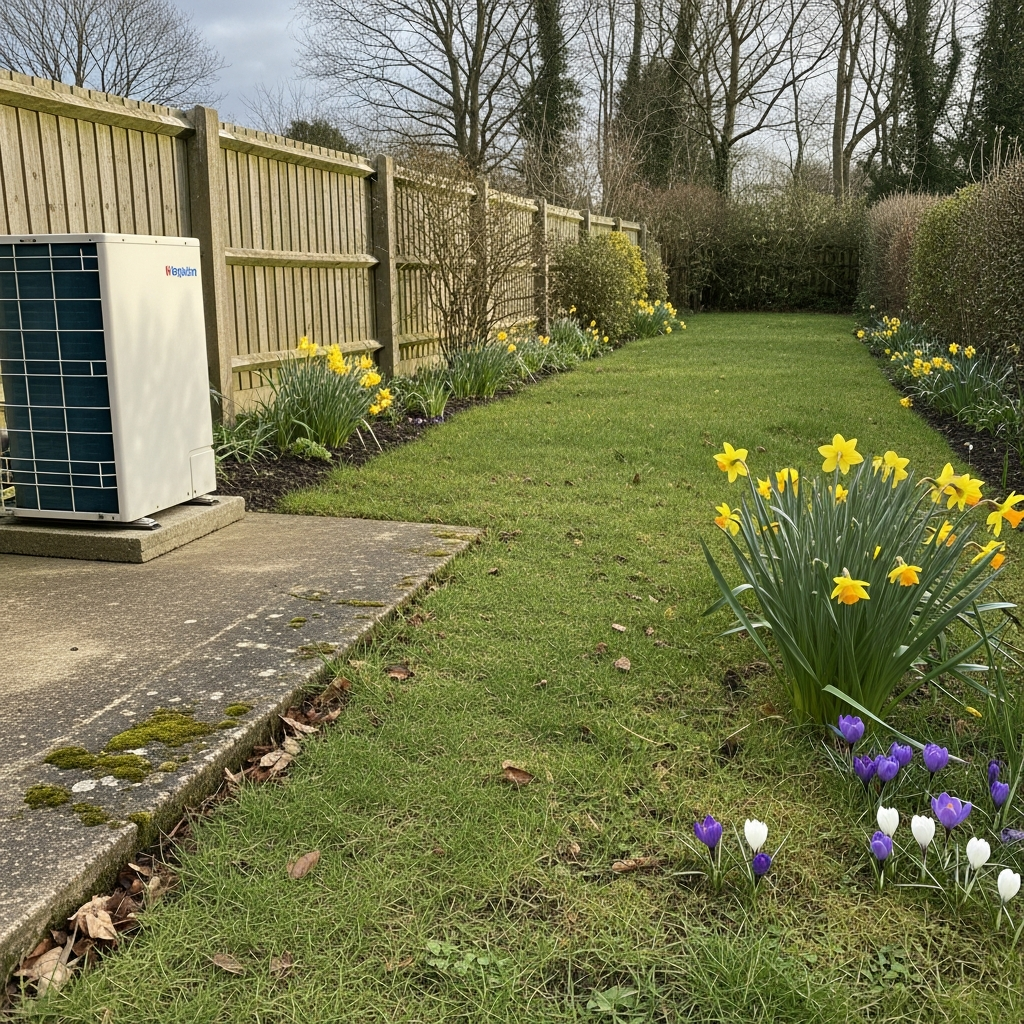
- Use a solid barrier: A close-boarded fence, brick wall, or purpose-built acoustic screen between the unit and the nearest sensitive area can reduce noise by 5 to 10 dB. Ensure adequate airflow around the unit.
- Avoid reflective surfaces: Hard walls on both sides of the unit can create a canyon effect that amplifies sound. A corner location between two walls is the worst position for noise.
- Anti-vibration mounting: Rubber or spring anti-vibration mounts prevent compressor vibration from transmitting through the ground or wall to the building structure.
- Schedule quiet mode: Most variable-speed units allow you to schedule a quiet or night mode that reduces output (and noise) during sleeping hours. The slight reduction in capacity is rarely noticeable for comfort.
- Maintain the unit: A dirty heat exchanger or worn fan bearing can increase noise levels. Annual servicing keeps the unit running quietly.
Indoor Noise
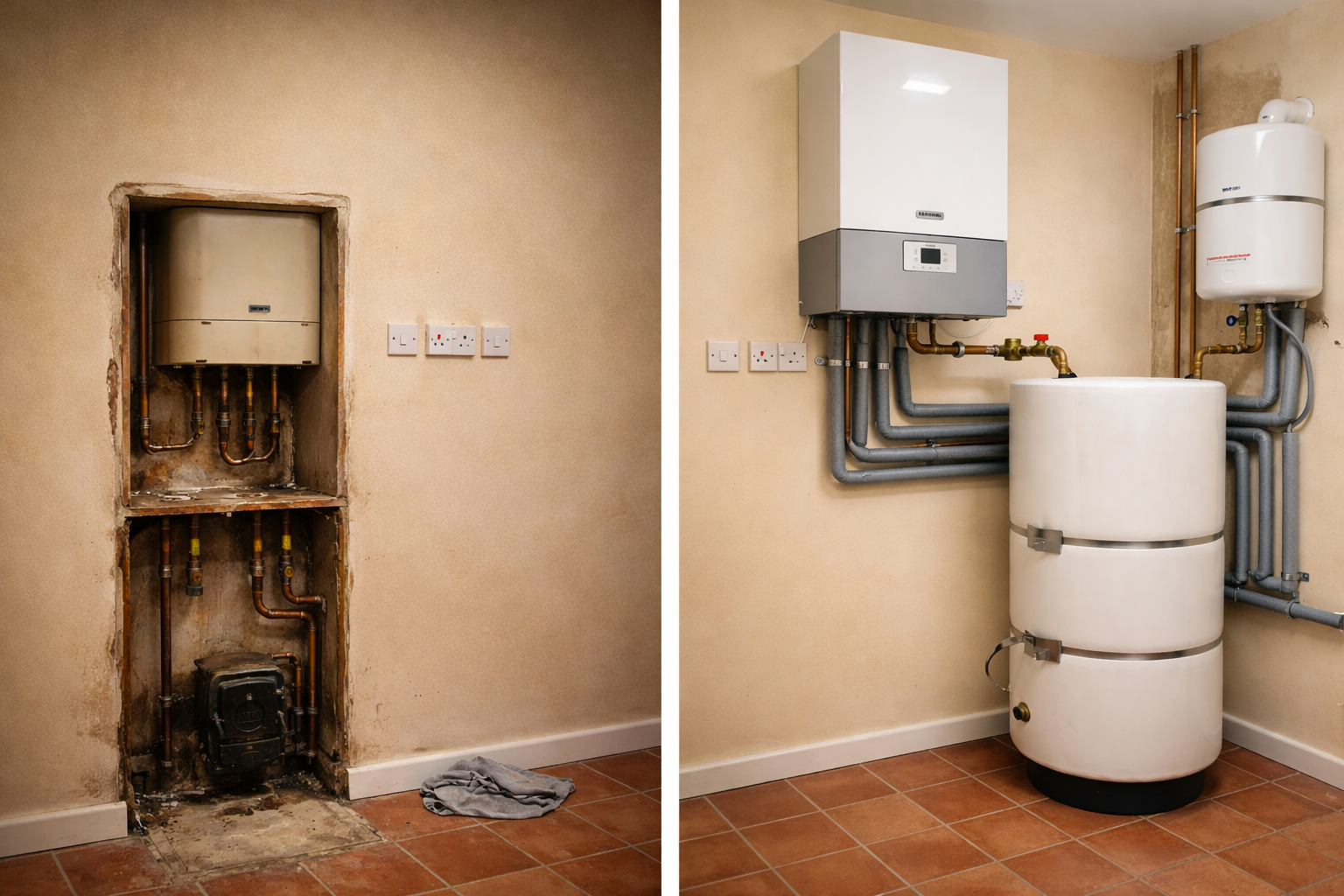
The outdoor unit is not the only noise source. The indoor components — circulation pump, hot water cylinder filling, and pipework — also produce some sound. These are generally much quieter (20 to 35 dB) but can be noticeable in very quiet homes.
Monobloc systems, where all refrigerant components are in the outdoor unit, tend to have quieter indoor installations than split systems, which have an indoor unit containing the compressor expansion valve. If indoor noise is a concern, a monobloc system with the hot water cylinder located away from bedrooms is the best approach.
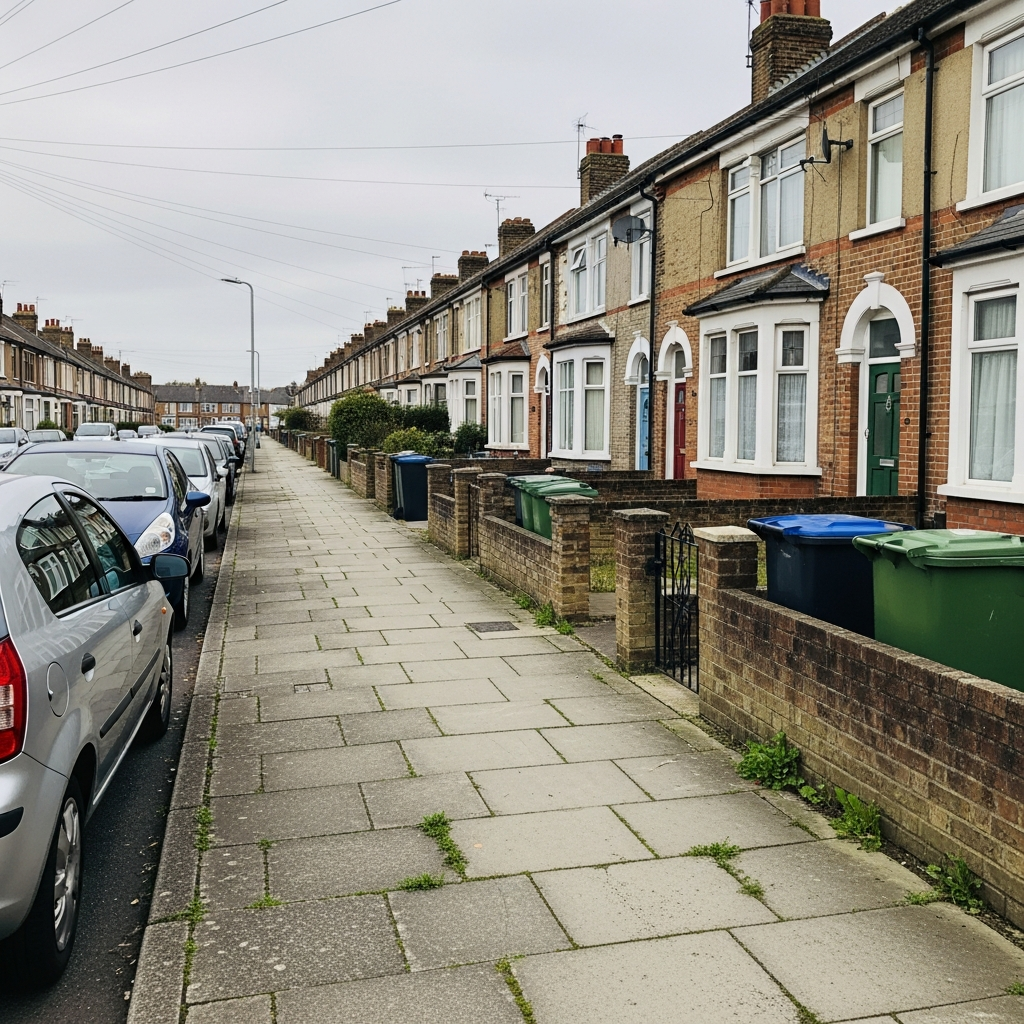
Noise and Terraced Houses
Terraced houses present the biggest noise challenge because gardens are small and neighbours are close. If you live in a terrace:
- Choose Samsung EHS Mono or Vaillant aroTHERM plus for the lowest noise levels
- Position the unit at the front of the house if the rear garden faces neighbours' bedrooms
- Use quiet mode overnight
- Consider an acoustic enclosure
- Talk to your neighbours before installation — managing expectations prevents complaints
Most noise complaints arise from surprise rather than genuine nuisance. A neighbour who has been informed and consulted is far less likely to complain about a sound level that is, objectively, no louder than a quiet conversation.
Frequently Asked Questions
How loud is a heat pump compared to a boiler?
A gas boiler produces approximately 40 to 50 dB inside the house. A heat pump outdoor unit produces 42 to 55 dB at 3 metres outside. In practice, a heat pump is quieter from inside the house than a boiler mounted on an internal wall, but the outdoor noise is new and noticeable until you adjust to it.
Can neighbours complain about heat pump noise?
Neighbours can complain, but if the installation meets Permitted Development noise limits (42 dB at the nearest habitable room window), the local authority is unlikely to take action. If the unit exceeds limits, you may be required to take mitigation measures such as adding an acoustic enclosure or enabling quiet mode.
Do heat pumps get louder over time?
Well-maintained heat pumps should not get significantly louder. However, worn fan bearings, loose panels, or dirty heat exchangers can increase noise. Annual servicing prevents this. If your heat pump suddenly becomes louder, contact your installer to investigate.
Is quiet mode worth using?
Yes, especially overnight. Quiet mode typically reduces noise by 5 to 10 dB by limiting compressor speed. The trade-off is slightly reduced heating capacity, but in a well-insulated home, this is rarely noticeable. Most systems can schedule quiet mode to activate automatically at night.
What is the quietest heat pump available in the UK?
The Samsung EHS Mono at 42 dB(A) at 3 metres in standard mode and 35 dB(A) in quiet mode. This is quieter than most domestic refrigerators measured from a similar distance.
Does underfloor heating make the system quieter?
Indirectly, yes. Underfloor heating operates at lower flow temperatures, which means the heat pump compressor works less hard, which reduces noise. The difference is modest (2 to 4 dB) but contributes to a quieter overall system.