Samsung Heat Pump UK Review: EHS Mono, Price, COP, Quiet Operation

Samsung may not be the first name you think of for home heating, but the South Korean electronics giant has been quietly building a serious UK heat pump presence. Their EHS (Eco Heating System) range delivers the quietest operation of any major brand — as low as 35dB — combined with competitive pricing that makes heat pump ownership achievable for more UK homeowners. If noise concerns or budget are your main barriers to switching from gas, Samsung deserves a close look.
This review covers the Samsung EHS range in detail, with a focus on real-world UK performance, pricing, noise, and an honest assessment of where Samsung excels and falls short compared to more established heat pump brands.
Could a Samsung heat pump work for your home?
Get Your Free Size & Cost EstimatePersonalised results in under 2 minutes — no obligation.
The Samsung EHS Range
Samsung's UK domestic heat pump offering centres on the EHS Mono (monobloc) range. All refrigerant is contained within the outdoor unit with only insulated water pipes connecting to the indoor system.
Samsung also offers the ClimateHub — an integrated indoor unit combining a hot water cylinder (200 or 260 litres), hydraulic module, and controls in a single floor-standing unit, simplifying installation significantly.
Quiet Operation: Samsung's Standout Feature
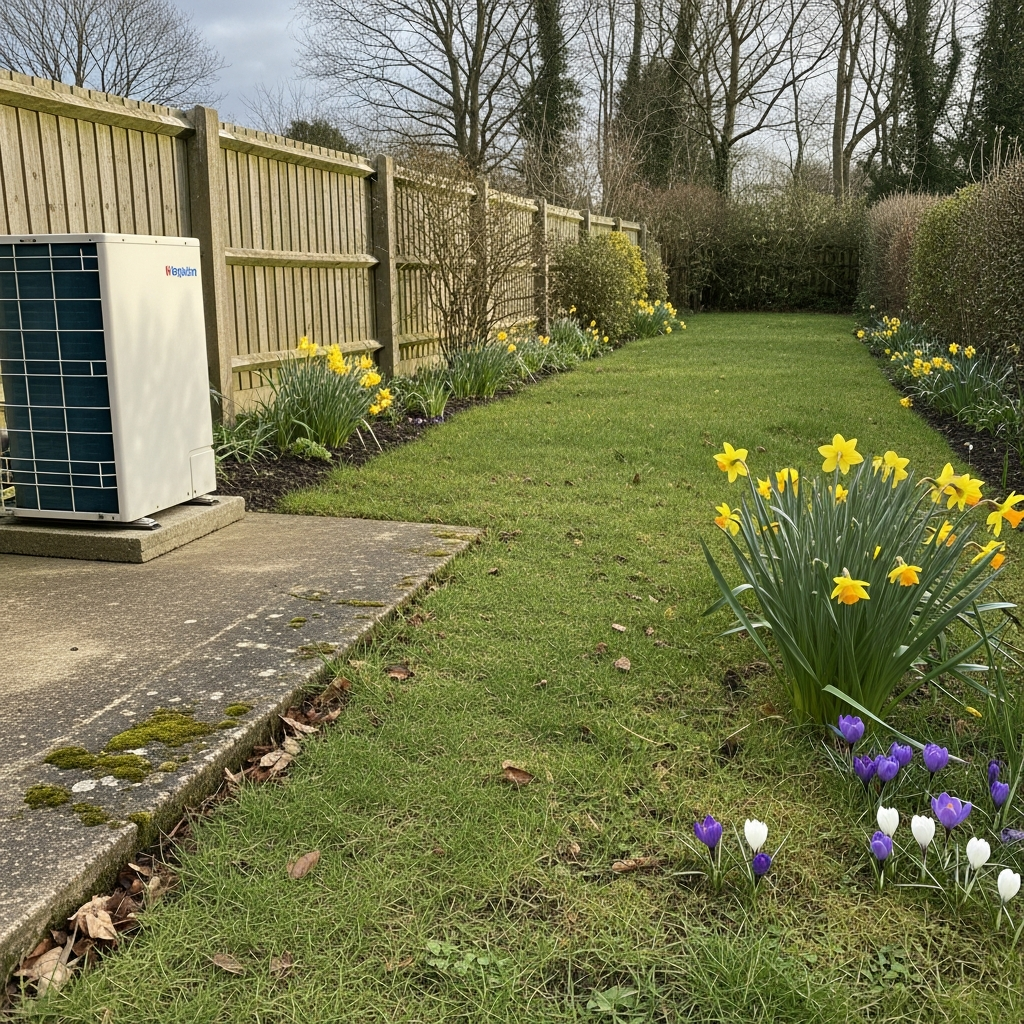
The most impressive aspect of the Samsung EHS Mono is how quiet it is. The 5kW model achieves just 35dB at one metre — quieter than a whisper and significantly below typical suburban garden background noise.
For properties where noise is a primary concern — terraced houses, small gardens, units near boundary walls — the Samsung's quiet operation is a genuine differentiator. In many installations, the unit is essentially inaudible from just a few metres away.
Efficiency and Real-World COP
Samsung's SCOP of up to 4.60 places it alongside Vaillant and ahead of Mitsubishi in laboratory testing. Real-world performance in UK homes:
- 3.2 to 3.8 seasonal COP at 35–40°C flow (well-insulated homes)
- 2.6 to 3.2 at 45–55°C (moderately insulated homes)
- 2.2 to 2.7 at 55–65°C (older homes, standard radiators)
The key factor remains flow temperature. A Samsung EHS running at 35°C in a well-insulated home with appropriately sized radiators will deliver excellent efficiency. Check your potential running costs with our calculator.
Smart Home Integration
Samsung leverages its consumer electronics heritage for some of the best smart home integration in the heat pump market. The EHS integrates with Samsung SmartThings for remote control, energy monitoring, error notifications, and voice control via Google Assistant and Amazon Alexa.
The Installer Network Question
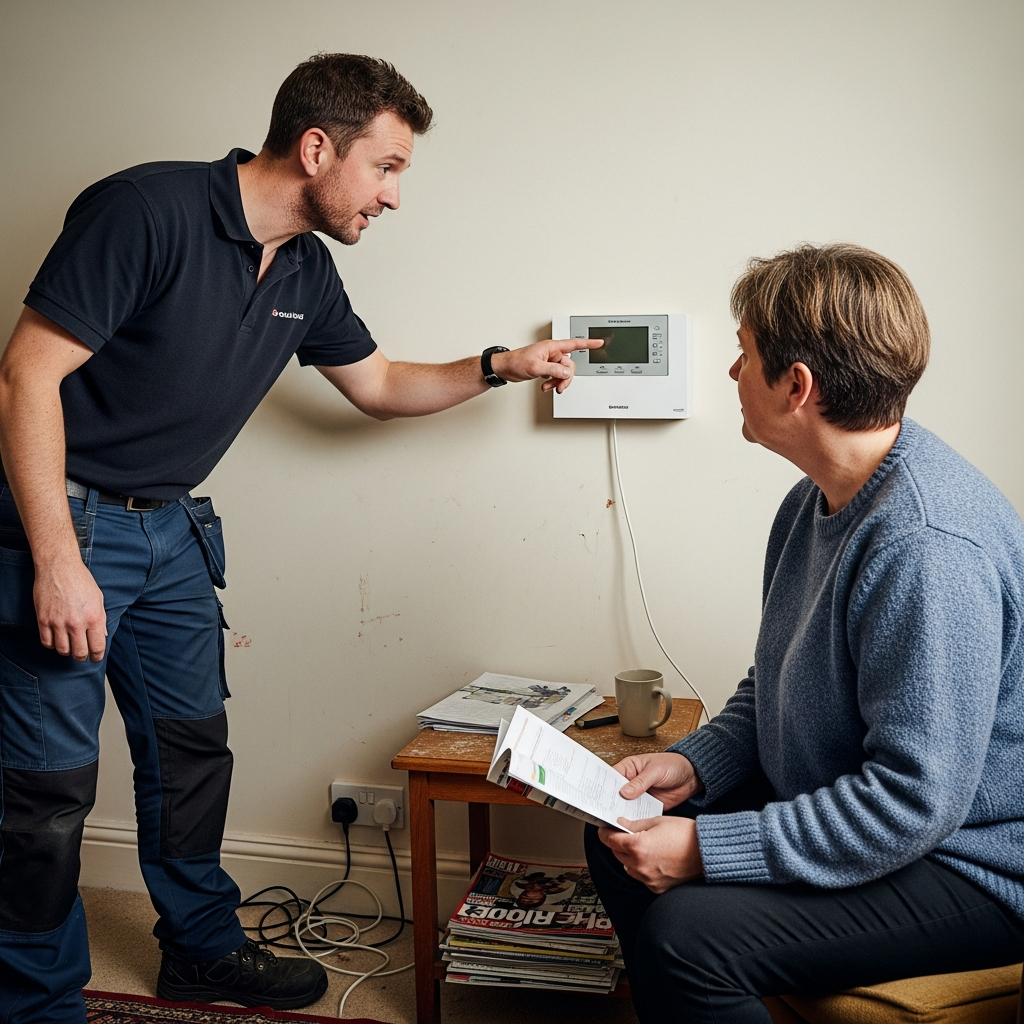
This is where Samsung lags behind. While Mitsubishi has thousands of trained Ecodan installers across the UK, Samsung's dedicated network is smaller. Before committing, confirm that there are at least two or three Samsung-trained installers in your area for future servicing and support.
Compare Samsung heat pump quotes in your area
Get Free Installer QuotesUp to 3 MCS-certified quotes — no obligation.
Pricing
| Model | Unit Price | Total Installed | After BUS Grant |
|---|---|---|---|
| 5kW | £3,000–£3,800 | £7,000–£9,000 | £0–£1,500 |
| 8kW | £3,500–£4,200 | £8,000–£10,000 | £500–£2,500 |
| 12kW | £4,200–£5,000 | £9,500–£11,500 | £2,000–£4,000 |
| 16kW | £5,000–£5,500 | £10,500–£12,000 | £3,000–£4,500 |
After the Boiler Upgrade Scheme grant, Samsung is one of the most affordable routes to heat pump ownership. Pair with solar panels to reduce electricity costs further.
Samsung vs Competitors
Samsung vs Daikin Altherma 3
Samsung is cheaper and quieter. Daikin has a longer track record, larger installer network, and up to 10-year warranty. Similar COP. Samsung is the value choice; Daikin the established choice.
Samsung vs Mitsubishi Ecodan
Samsung beats the Ecodan on noise, SCOP, and price. Mitsubishi has an unmatched track record and the largest UK installer network. For risk-averse buyers, Mitsubishi is safer.
Samsung vs Vaillant Arotherm Plus
Vaillant offers R290 and higher flow temperatures (75°C vs 65°C). Samsung is significantly cheaper and quieter. Samsung is the budget pick; Vaillant the premium environmental choice.
Pros and Cons
Pros
- Quietest heat pump on the market — as low as 35dB
- Competitive pricing — typically the best value major brand
- Excellent SCOP — up to 4.60
- 65°C max flow temperature — works with most existing radiators
- Strong SmartThings smart home integration
- Lightweight outdoor unit — easier handling during installation
Cons
- Smaller UK installer network than Mitsubishi, Daikin, or Vaillant
- Shorter UK heat pump track record
- Uses R32 refrigerant (not R290)
- 5-year warranty only — no extended option matching Daikin's 10 years

Frequently Asked Questions
Is Samsung a good heat pump brand?
Yes. The EHS Mono delivers excellent COP figures, industry-leading quiet operation, and competitive pricing. While Samsung has a shorter UK heat pump track record than Mitsubishi or Daikin, the product is well-engineered.
How much does a Samsung heat pump cost installed?
Total installed costs typically range from £7,000 to £12,000 before the BUS grant. After the grant, many homeowners pay £500 to £5,000 out of pocket.
How quiet is the Samsung heat pump?
The 5kW model achieves 35dB at one metre — the quietest domestic heat pump widely available in the UK. Even the 16kW model stays under 44dB.
What COP does the Samsung EHS achieve?
Manufacturer-rated SCOP is up to 4.60 at 35°C. Real-world seasonal COP in UK homes is typically 3.2 to 3.8 at low flow temperatures.
Can I get a Samsung heat pump installer near me?
Samsung's UK installer network is growing. In urban areas, finding an installer is usually straightforward; rural areas may have fewer options. Check Samsung's Climate Solutions website for your area.
Does Samsung offer an extended warranty?
Currently Samsung offers a 5-year standard warranty with no publicly available extended programme. This compares unfavourably with Daikin (up to 10 years).
See if Samsung is the right fit for your home
Check Your Home's SuitabilityFree 2-minute assessment.
Samsung and the Affordable Heat Pump Transition
Samsung's entry into the UK heat pump market has helped make renewable heating accessible to a wider audience. With the Boiler Upgrade Scheme bringing net costs under £2,000 for many installations, the financial case for switching from a gas boiler is stronger than ever. Combine with solar panels to generate your own electricity and the savings multiply further.