Property Surveyors: What We Check Before Recommending a Heat Pump
Before a heat pump installer ever surveys your home, a building surveyor can tell you whether your property is ready — or what needs fixing first. We asked experienced RICS surveyors what they look for when assessing a home's heat pump suitability. Their checklist covers the building fabric, structure, electrics, and more — issues that, if missed, can turn a good installation into an expensive problem.
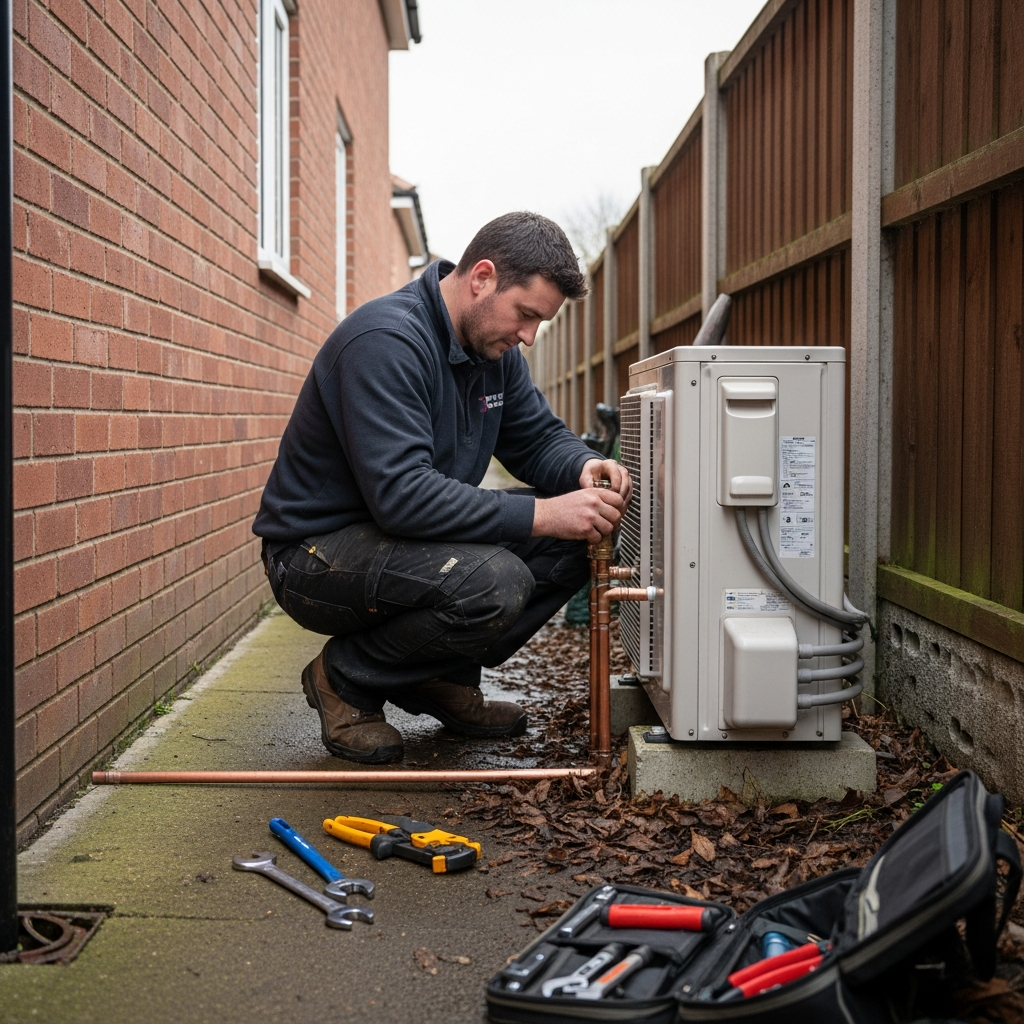
Property surveyors see homes that heat pump installers sometimes miss the bigger picture on. While an MCS installer focuses on heat loss calculations and system design, a surveyor assesses the building holistically — identifying structural issues, damp problems, and insulation gaps that could undermine a heat pump installation if not addressed first.
Increasingly, surveyors are being asked specifically about heat pump readiness, either by homeowners planning an installation or by buyers assessing properties. The Royal Institution of Chartered Surveyors (RICS) has recognised this growing demand and now includes energy system assessment as a component of building surveys. For the installer perspective, see our complete installation guide.
Check your home's suitability in 60 seconds
Use the suitability checkerInstant online assessment — then get detailed quotes from MCS installers.
Wall Construction and Insulation
"The walls are the first thing I look at. They account for 30-40% of a home's heat loss, and the type of wall determines what insulation options are available. Cavity walls can usually be filled cheaply. Solid walls are a bigger challenge." — RICS surveyor, Birmingham
Surveyors assess wall construction by examining the brickwork pattern (Flemish bond usually indicates solid walls), checking wall thickness, looking for drill holes from previous cavity fill, and reviewing the EPC for U-value data.
| Wall Type | Typical U-value | Insulation Options | Impact on Heat Pump Sizing |
|---|---|---|---|
| Solid brick (uninsulated) | 2.1 W/m²K | Internal or external wall insulation | Significantly increases required size |
| Cavity (unfilled) | 1.5 W/m²K | Cavity fill injection (£800-£2,000) | Moderately increases required size |
| Cavity (filled) | 0.5 W/m²K | Already insulated — check condition | Standard sizing |
| Modern cavity (insulated) | 0.25-0.35 W/m²K | Meets current standards | Allows smaller heat pump |
| External wall insulation | 0.15-0.20 W/m²K | Best retrofit option for solid walls | Significantly reduces required size |
Roof and Loft Insulation
"I always stick my head into the loft. You'd be amazed how many homes have only 50-100mm of loft insulation when the current standard is 270mm. Topping up loft insulation is one of the cheapest and most effective improvements you can make before a heat pump." — Surveyor, Newcastle
A surveyor checks the depth and condition of loft insulation, looks for gaps around pipes and hatches, assesses the condition of the roof covering, and checks for signs of condensation in the loft space. Topping up loft insulation from 100mm to 270mm typically costs just £300-£600 and can reduce heat loss through the roof by 40-60%. This is often available free through ECO4 schemes.
Windows and Glazing
"Windows matter, but they're often overemphasised. Replacing single glazing with double glazing makes a meaningful difference. But upgrading from decent double to triple glazing is often not cost-effective purely for heat pump purposes." — Surveyor, Bristol
Surveyors assess glazing type (single, double, or triple), frame condition, seal integrity, and ventilation provision. For heat pump installations, the priority order is: replace any single glazing first, ensure all double glazing seals are intact, and consider triple glazing only if you are already undertaking major renovation.
Damp and Ventilation
"Damp must be resolved before a heat pump goes in. Heat pumps run at lower temperatures than boilers, which means less drying capacity. If you have rising damp or condensation issues, they need addressing first — otherwise the heat pump gets blamed for a problem that was already there." — Surveyor, Cardiff
Heat pumps operate at lower flow temperatures than boilers (35-45°C vs 60-80°C), which means radiators feel warm rather than hot. In a damp home, the reduced heat output can slow the drying process, potentially making existing damp issues more noticeable. This is not a heat pump problem — it is a building problem that should be fixed regardless of heating system. Our comprehensive ASHP guide addresses this common concern.
Electrical Supply Assessment
"I check the consumer unit and main fuse rating. Most modern homes have 80A or 100A supplies which are fine for a heat pump. Older properties with 60A fuses may need an upgrade — not expensive, but it needs planning." — Surveyor, London
A heat pump typically requires a dedicated 16A or 32A circuit. The key electrical checks include the main fuse rating (60A may need upgrading to 80A or 100A), the consumer unit capacity (is there space for additional circuits?), the earthing system (TN-CS or TN-S — both suitable), and the condition of existing wiring. If you are also considering solar panels, planning both electrical connections at the same time can save money.
Existing Heating Pipework
"Pipework tells a story. Microbore 8mm pipes are common in 1970s-80s houses and can restrict flow for heat pumps. Standard 15mm and 22mm pipes are usually fine. I also look for signs of corrosion, leaks, and sludge." — Surveyor, Leeds
Most existing pipework works well with heat pumps, but a surveyor can identify potential issues early. Microbore pipe (8mm) may need replacing in some circuits, particularly long runs. Corrosion or sludge in the system indicates a need for a powerflush before the heat pump is connected. Our guide on heat pump sizing explains how system design accounts for these factors.
Outdoor Space Assessment
"The outdoor unit needs a sensible home. I look at boundary distances, noise exposure to neighbours, airflow clearance, and drainage. Most properties have at least one suitable location — it's about finding the best one." — Surveyor, Surrey
Key considerations include meeting the 42 dB(A) noise limit at the nearest neighbour's window (see our heat pump noise guide), ensuring minimum clearances for airflow, providing a solid foundation (concrete pad or wall brackets), and planning for condensate drainage.
Internal Space for Hot Water Cylinder
"For combi boiler replacements, finding cylinder space is often the biggest practical challenge. I help homeowners identify options — an existing airing cupboard, a corner of the utility room, under the stairs, or even a purpose-built cupboard." — Surveyor, Oxford
A typical 200-litre cylinder requires approximately 600mm × 600mm of floor space and 1.5m of height. Common locations include existing airing cupboards, utility rooms, garages, under-stairs cupboards (if tall enough), or a dedicated new cupboard built into a bedroom or landing. The cost guide includes cylinder costs in the budget breakdown.
Listed Buildings and Conservation Areas
"Listed buildings and conservation areas add complexity but are not deal-breakers. Planning permission is usually required for the outdoor unit, but most applications succeed. Internal changes rarely need consent unless they affect the building's character." — Surveyor specialising in historic buildings, Bath
Heat pump installations in listed buildings may require listed building consent and/or conservation area planning permission. Common conditions include screening the outdoor unit, restricting its position, and minimising impact on the building's historic fabric. A surveyor experienced in historic buildings can advise on the best approach.
Get expert assessment of your home
Get free installer quotesMCS installers conduct detailed surveys as part of their quoting process.
Frequently Asked Questions
What does a surveyor check before recommending a heat pump?
Wall construction and insulation, roof insulation, glazing, damp and ventilation, electrical supply, pipework condition, outdoor space, and internal space for equipment.
Do I need a separate survey from a heat pump installer?
Yes. A property survey covers general building condition, while the installer's survey focuses on heat loss calculations and system design. Both are valuable.
How much does a pre-heat pump building survey cost?
A standard building survey costs £400-£800. Some surveyors offer retrofit assessments for £200-£400. The EPC (£60-£120) provides a basic overview.
What building issues can prevent a heat pump installation?
Very few are absolute deal-breakers. Severe structural problems, active damp, or inadequate electrics may need resolving first, but these are fixable.
Should I fix damp before installing a heat pump?
Yes. Heat pumps operate at lower temperatures, so existing damp issues should be resolved first. A surveyor can identify the source and recommend remediation.
Ready to assess your home's heat pump potential?
Get your personalised estimateFree, instant results based on your property type and current heating.
Property Assessment in the Heat Pump Journey
A thorough property assessment is the foundation of a successful heat pump installation. Understanding your building's condition through professional surveying, combined with an MCS installer's technical survey, ensures the system is designed correctly from the start. With the Boiler Upgrade Scheme covering £7,500 of installation costs and solar panels available to further reduce running costs, addressing any building issues before installation maximises the return on your investment in heat pump technology.