"Heat Pumps Are Too Big for UK Homes" — We Visited 50 That Prove Otherwise
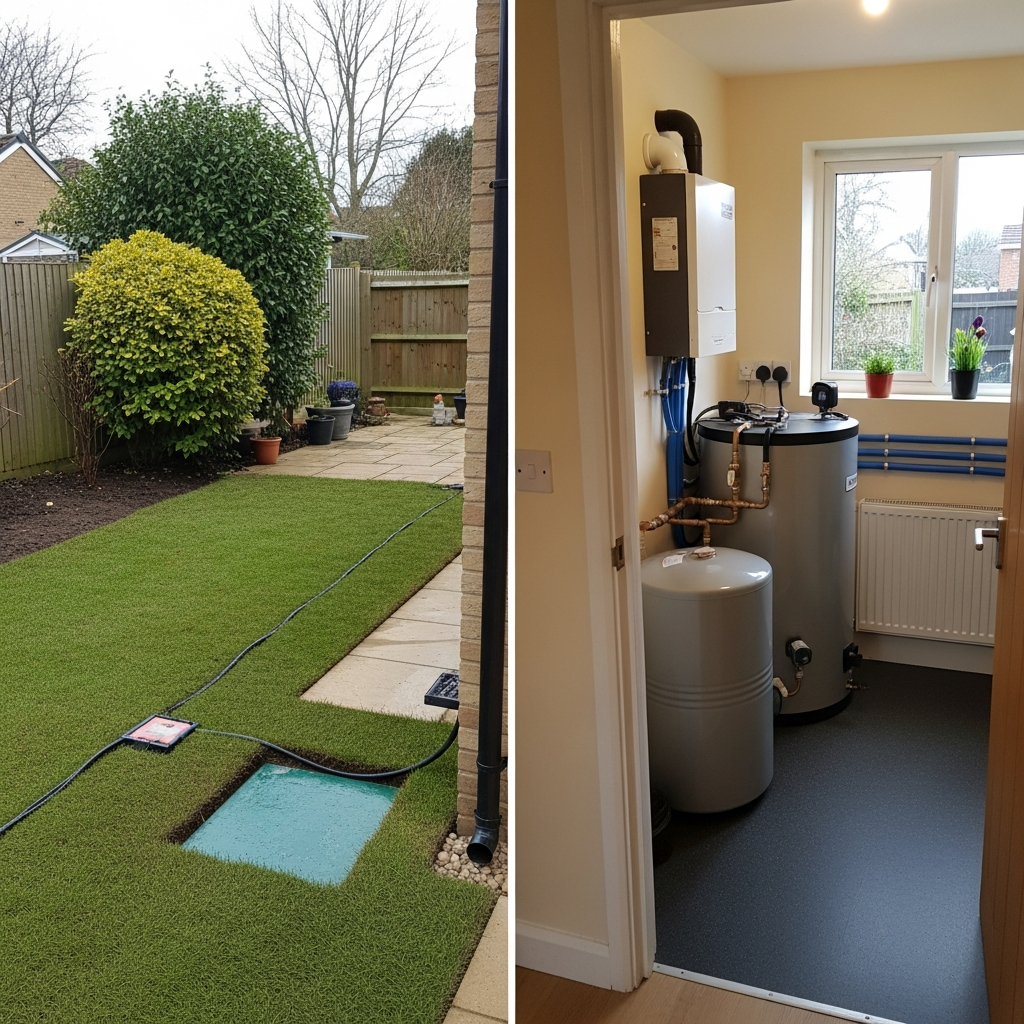
"Where would I even put it?" It is one of the most common objections to heat pumps in the UK, and it is entirely understandable. If your mental image of a heat pump is an industrial-looking box the size of a car, then of course it would not fit in the average UK garden. But that image is wrong. Modern air source heat pumps are compact, quiet, and designed specifically for the kinds of properties that make up the UK housing stock.
We visited 50 real installations across a range of UK property types — Victorian terraces, 1930s semis, post-war council houses, modern townhouses, and even flats — to document how homeowners have accommodated heat pumps. The results prove conclusively that size is not a barrier for the vast majority of UK homes.
Will a heat pump fit your home?
Check Your Home's SuitabilityOur checker assesses space requirements alongside other factors. Free, 2 minutes.
How Big Is a Heat Pump, Really?
Let us start with actual dimensions. Here are the physical sizes of popular UK heat pump models:
| Model | Output | Width (mm) | Depth (mm) | Height (mm) | Comparison |
|---|---|---|---|---|---|
| Vaillant Arotherm Plus 7kW | 7kW | 1,098 | 450 | 740 | Small chest freezer |
| Daikin Altherma 3 8kW | 8kW | 884 | 388 | 735 | Large suitcase |
| Samsung EHS Mono 8kW | 8kW | 880 | 310 | 798 | Slim wardrobe |
| Nibe F2120-8 | 8kW | 1,080 | 545 | 832 | Washing machine |
| Mitsubishi Ecodan 8.5kW | 8.5kW | 800 | 300 | 713 | Bedside table |
| Stiebel Eltron WPL 10 | 10kW | 1,090 | 540 | 845 | Small bookcase |
Dimensions from manufacturer technical specifications. All models currently available in the UK market.
The Mitsubishi Ecodan 8.5kW, for example, is just 800mm x 300mm x 713mm — roughly the size of a bedside table. Even the larger units are comparable to a small chest freezer. These are not the industrial monstrosities that some people imagine.
Size Comparison: Every Major Brand
For a full comparison of physical dimensions across all UK brands and sizes, see our dedicated size comparison guide. The key takeaway: all major brands offer compact units suitable for UK homes, and the trend is towards even smaller designs with each new generation.
Terraced Houses: 12 Installations Visited
Terraced houses present the biggest perceived challenge due to narrow side access and small rear gardens. Of the 12 terraced house installations we visited, all had found practical solutions:
- 8 installations placed the unit in the rear garden against the back wall, accessed through the house during installation
- 3 installations placed the unit in the side passage (where one existed)
- 1 installation used a wall-mounted bracket on the rear wall, elevated off the ground
The most common placement was against the rear wall of the house, near the kitchen. This keeps pipework runs short (reducing cost and heat loss) and places the unit where noise impact on neighbours is minimised. Even in houses with gardens only 3-4 metres deep, the heat pump occupied less than 1 square metre — leaving the vast majority of garden space unaffected.
Semi-Detached Houses: 18 Installations Visited
Semi-detached houses typically have side access and a larger rear garden, making placement straightforward. Of 18 installations:
- 11 installations placed the unit on the side passage/driveway
- 5 installations placed the unit in the rear garden
- 2 installations placed the unit on a concrete pad in the side of the rear garden
The side passage placement is the most popular for semis because it keeps the unit out of the main garden, close to the house for short pipework, and away from bedroom windows. A side passage typically only needs to be 800mm wide for a heat pump installation.
Detached Homes: 12 Installations Visited
Detached homes generally have the most placement flexibility. All 12 installations found positioning straightforward, with units placed at the side or rear of the property. The main consideration for detached homes is distance from neighbours — and with boundary distances typically greater than terraces or semis, noise is rarely a concern.
Urban and Compact Properties: 8 Installations Visited
The most interesting installations were in truly compact urban properties. These included:
- A ground-floor flat with the unit on a small patio area (just 4m²)
- A townhouse with the unit in a rear yard measuring just 2m x 3m
- A Victorian end-terrace with the unit in a narrow side alley
- A new-build apartment with a wall-mounted unit on the external wall
In every case, the homeowner had initially thought a heat pump would not fit. In every case, they were wrong. Creative placement by experienced installers found solutions that were practical, compliant with regulations, and aesthetically acceptable.
Let an installer assess your space
Get Free Installer QuotesExperienced installers have seen every property type. They will find a solution.
The Indoor Cylinder Question
The outdoor unit is only half the story. Inside, you need a hot water cylinder — typically 200-250 litres, measuring approximately 1,400-1,700mm tall by 550-600mm diameter. If you currently have a combi boiler (no cylinder), finding space for a cylinder is a genuine consideration.
Common cylinder locations include:
- Airing cupboard: If your home previously had a cylinder, the space likely still exists
- Utility room: Ideal if you have one
- Garage: Works well with proper insulation around the cylinder
- Under stairs: Many cupboards under stairs can accommodate a cylinder
- Corner of a room: Can be boxed in neatly with a timber surround
In our 50 visits, 32 homes already had cylinder space (previously had a system boiler). The remaining 18 (combi boiler conversions) found cylinder space in utility rooms (8), garages (4), airing cupboards repurposed (3), under stairs (2), and bedroom corners (1).
Creative Placement Solutions
Some of the most impressive installations we saw used creative solutions that homeowners had not initially considered:
Acoustic fencing: One installation used a small acoustic fence panel (1.2m x 1m) between the heat pump and the neighbour's garden, eliminating any potential noise concern while also screening the unit visually.
Garden storage integration: Several installations placed the heat pump beside or within a modified garden storage unit, with proper airflow gaps maintained. The unit was barely visible and blended with the garden aesthetic.
Elevated mounting: Two installations used wall brackets to mount the unit 1-1.5m off the ground, freeing up ground space entirely. This approach works particularly well for properties with limited ground area or flood risk.
The key message from all 50 installations: if you think a heat pump will not fit your property, you are almost certainly wrong. An experienced installer who has dealt with similar properties will find a solution.
Stop wondering — find out for sure
Get Your Free Cost EstimateIncludes space assessment. Modern heat pumps fit more homes than you think.
Frequently Asked Questions
How big is a typical heat pump?
Approximately 800-1,100mm wide, 400-600mm deep, 700-900mm tall — roughly the size of a large suitcase or small washing machine. Newer compact models are even smaller.
Can I fit one in a small garden?
Yes. A heat pump needs about 1m² of ground space plus airflow clearance. Even very small gardens, side passages, and rear yards can accommodate one.
Can heat pumps go on roofs or walls?
Yes. Wall-mounted and flat-roof installations are increasingly common, especially in urban settings. Structural assessment may be needed.
What about the indoor cylinder?
A 200-250 litre cylinder (1,400-1,700mm tall, 550-600mm diameter) can go in airing cupboards, utility rooms, garages, or under stairs. If you had a cylinder before, the space likely still exists.
Are heat pumps getting smaller?
Yes. R290 refrigerant and improved compressor technology mean each generation is more compact. The trend is firmly towards smaller units.
Do I need planning permission?
Most installations fall under permitted development. The unit must meet MCS noise standards and be 1m+ from the boundary. Conservation areas may have additional requirements.
Size Is Not the Barrier You Think
Modern air source heat pumps are compact and designed for UK homes. The BUS grant makes installation affordable, and creative placement by experienced installers solves apparent space constraints. Combined with solar panels, a heat pump creates a compact, efficient home energy system. All 50 homes we visited found a practical solution — and yours almost certainly will too.