R290 Propane Heat Pumps: The Next Generation
The refrigerant inside your heat pump might seem like a minor technical detail, but it is rapidly becoming one of the most important factors in choosing a system. R290 — also known as propane — is a natural refrigerant that is transforming the heat pump industry. It offers higher efficiency, dramatically lower environmental impact, and future-proofing against tightening regulations.
This guide explains what R290 is, why it matters, which brands are already using it, and whether you should choose an R290 heat pump for your home.
What Is R290?
R290 is the refrigerant industry designation for propane — the same gas used in camping stoves and BBQs. As a refrigerant, it has properties that make it exceptionally well-suited to heat pumps:
- Natural substance: Propane occurs naturally and does not need to be synthesised in a factory. It is classified as a natural refrigerant alongside CO2 (R744) and ammonia (R717).
- Global Warming Potential (GWP): Just 3. For comparison, R32 (used in most current heat pumps) has a GWP of 675, and older R410A has a GWP of 2,088. If R290 leaks, its climate impact is negligible.
- Zero Ozone Depletion Potential: R290 has no impact on the ozone layer.
- Excellent thermodynamic properties: R290 has a high latent heat of vaporisation and good heat transfer characteristics, which translate to higher COP values — particularly at low outdoor temperatures.
Why Is the Industry Moving to R290?
F-Gas Regulation
The EU's F-Gas Regulation (which the UK has adopted in modified form) is progressively phasing down the use of high-GWP fluorinated gases. The phase-down schedule means:
- From 2025: Restrictions on pre-charged equipment using refrigerants with GWP above 750 (affecting R410A)
- From 2027: Further restrictions on refrigerants with GWP above 150 in certain applications
- From 2030: Significant restrictions expected on R32 (GWP 675) for new equipment
- By 2035-2040: Only very low GWP refrigerants likely to be permitted for new installations
R290, with a GWP of just 3, is comfortably below any current or anticipated threshold. Choosing an R290 heat pump today means your system will not face regulatory obsolescence for servicing or replacement parts.
Efficiency Advantage
R290's thermodynamic properties give it a genuine efficiency advantage over R32 in heat pump applications. The Vaillant aroTHERM plus achieves an SCOP of 5.08 — the highest of any domestic air source heat pump on the UK market. This is partly attributable to R290's superior performance at the temperatures typical of UK heating applications.
R290 also performs better than R32 at very low outdoor temperatures, making it particularly suitable for cold climate installations in Scotland and Northern England.
Is R290 Safe?
The most common concern about R290 is that propane is flammable. This is a legitimate consideration, but one that manufacturers have addressed comprehensively.
How Safety Is Managed
- Small charge volumes: Domestic R290 heat pumps use very small amounts of refrigerant — typically 300 to 1,000 grams. This is far less than the propane in a standard BBQ gas bottle (3,900 grams) or a camping stove canister (220 grams).
- Sealed system: The refrigerant circuit is hermetically sealed. Under normal operation, no propane is released. The system is designed to contain the refrigerant for the entire 20+ year lifespan.
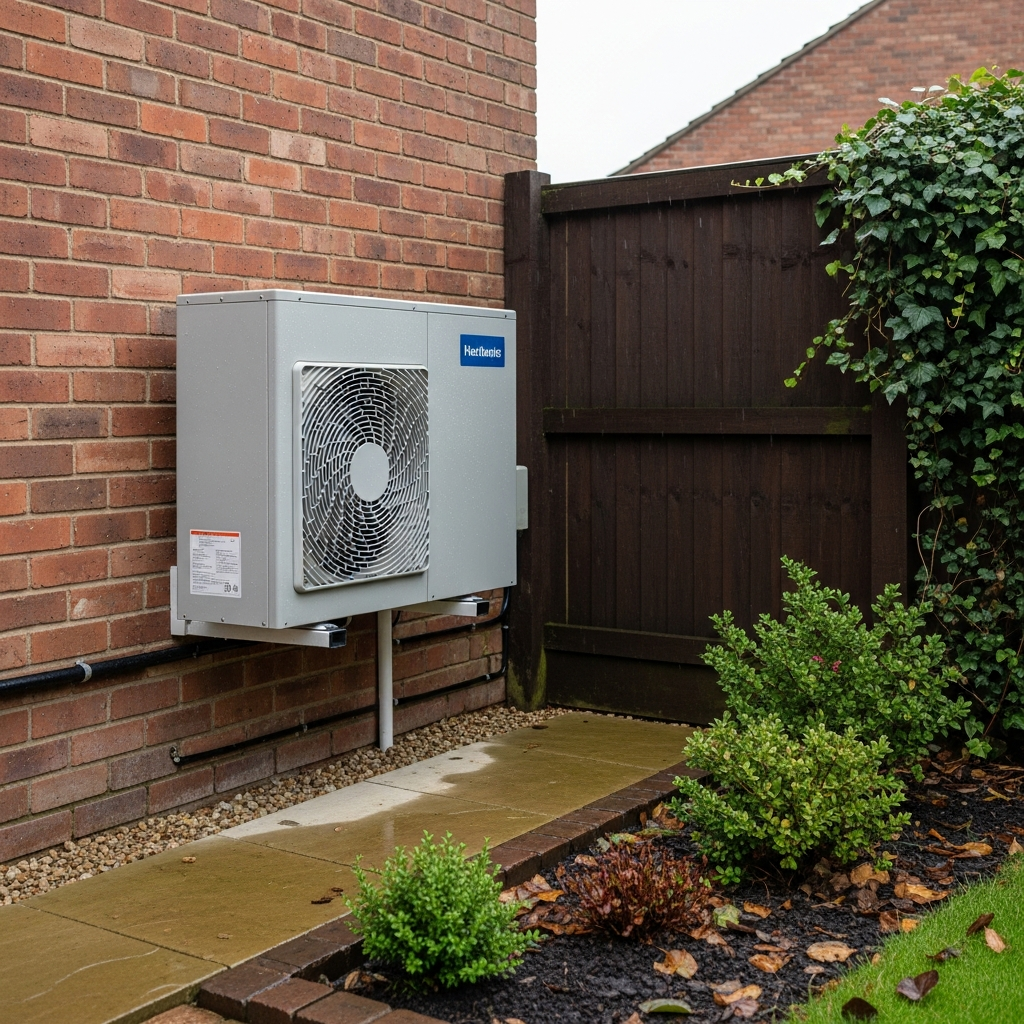
- Outdoor location: In monobloc heat pumps (the most common type in the UK), all refrigerant-containing components are in the outdoor unit. Any leak disperses harmlessly into the open air. The refrigerant circuit never enters the home.
- Leak detection: R290 heat pumps include gas sensors that shut down the system immediately if a leak is detected.
- Installation standards: Engineers installing R290 systems must hold appropriate certifications. The installation must comply with BS EN 378 and manufacturer-specific requirements regarding clearances and ventilation.
In practice, the safety risk from an R290 heat pump is extremely low — comparable to having a gas hob in your kitchen. Millions of R290 heat pumps are operating safely across Europe, and there have been no reported safety incidents with properly installed domestic systems.
Which Brands Use R290?
The transition to R290 is well underway. As of 2026, the following major brands offer R290 domestic heat pumps in the UK:
| Brand | Model | R290 Charge (g) | SCOP (A7/W35) | Available Sizes |
|---|---|---|---|---|
| Vaillant | aroTHERM plus | ~500 | 5.08 | 3.5–12kW |
| NIBE | S2125 | ~650 | 4.80 | 6–12kW |
| Bosch | Compress 7400i AW | ~480 | 4.55 | 5–10kW |
| Worcester Bosch | Greenstar HP | ~500 | 4.50 | 6–10kW |
| Viessmann | Vitocal 250-A | ~550 | 4.70 | 6–13kW |
| Panasonic | Aquarea L Generation (2026 models) | ~600 | 4.55 | 5–12kW |
Samsung, Daikin, Mitsubishi, LG, and Grant currently use R32 in their domestic ranges. Most have R290 models in development or already launched in other markets, and UK availability is expected within the next 1 to 3 years.
R290 vs R32: Head-to-Head Comparison
| Property | R290 (Propane) | R32 |
|---|---|---|
| Global Warming Potential | 3 | 675 |
| Ozone Depletion Potential | 0 | 0 |
| Flammability | Highly flammable (A3) | Mildly flammable (A2L) |
| Typical charge (domestic) | 300–1,000g | 1,500–4,000g |
| Efficiency (COP) | Higher at typical UK temps | Good but lower than R290 |
| Cold weather performance | Better at very low temps | Good but drops off faster |
| Future regulatory risk | None — well below all thresholds | Medium — may face restrictions from 2030 |
| System type | Monobloc only (UK) | Monobloc or split |
| Availability | Growing — 6+ brands | Wide — all major brands |
| Cost premium | 5–15% more than equivalent R32 | Baseline |
The Monobloc Requirement
In the UK, R290 heat pumps are currently available only as monobloc units. This means all refrigerant-containing components — compressor, heat exchangers, expansion valve — are housed in the outdoor unit. Only water pipes run between the outdoor unit and the house.
This design eliminates the risk of refrigerant leaking inside the home, which is why it is the approved configuration for R290 in domestic settings. Split systems, where refrigerant pipes run between an outdoor and indoor unit, are not currently approved for R290 in UK homes due to the flammability classification.
For most homeowners, this distinction is irrelevant — monobloc systems are simpler to install, easier to maintain, and are already the preferred configuration for the majority of UK domestic heat pump installations.
Should You Buy an R290 Heat Pump Now?
If you are buying a heat pump in 2026, there are strong reasons to choose R290:
- Higher efficiency: R290 models currently top the efficiency rankings. You will pay less to heat your home.
- Future-proofing: No risk of regulatory restrictions affecting servicing or parts availability for the system's entire lifespan.
- Environmental responsibility: If you are installing a heat pump partly for environmental reasons, R290's GWP of 3 versus R32's 675 is a meaningful difference.
- Resale value: As regulations tighten, an R290 system may add more value to your property than an R32 equivalent.
The main reasons to consider R32 instead:
- Budget: R32 units from Samsung and Grant are the cheapest options on the market. If budget is the primary constraint, an R32 budget heat pump is still far better than keeping a gas boiler.
- Installer familiarity: More UK installers have experience with R32 systems. If your preferred local installer does not yet handle R290, you may need to look further afield.
- Brand preference: If you specifically want a Samsung, Daikin, or Mitsubishi, their UK ranges are currently R32. Waiting for their R290 models may mean delaying your installation.
R290 and the Future of UK Heating
The direction of travel is clear. R290 will become the standard refrigerant for domestic heat pumps in the UK within the next 5 to 10 years. The regulatory pressure, efficiency advantages, and environmental benefits are all aligned.
For buyers in 2026, R290 represents the best combination of current performance and future security. The cost premium is modest (5 to 15% more than an equivalent R32 model), and the efficiency savings can offset this within 3 to 5 years. Read our technology trends guide for a broader view of what is coming next in heat pump innovation.
Frequently Asked Questions
Is propane in a heat pump dangerous?
No, not in practical terms. The amount of R290 in a domestic heat pump (300 to 1,000 grams) is far less than a camping gas canister, and it is contained in a sealed system outdoors. Millions of R290 heat pumps operate safely across Europe. The risk is comparable to having a gas hob.
Can R290 heat pumps be installed indoors?
In the UK, R290 domestic heat pumps are monobloc units installed outdoors. The refrigerant-containing components are all in the outdoor unit, with only water pipes entering the building. This design ensures no flammable refrigerant enters the home.
Will R32 heat pumps be banned?
Not immediately. R32 heat pumps can still be sold and installed in 2026, and existing systems will continue to be serviced. However, tightening F-gas regulations may restrict R32 in new equipment from 2030 onwards. Existing R32 installations will not be forcibly removed, but servicing may become more expensive as R32 supply is constrained.
Do I need a special installer for R290?
Yes. Installers working with R290 must hold appropriate qualifications for handling flammable refrigerants, in addition to standard F-Gas certification. Most manufacturer-accredited installers for R290 brands (Vaillant, NIBE, Bosch) already have this training. Check with your installer before booking.
Does R290 affect heat pump noise?
R290 heat pumps are not inherently louder or quieter than R32 equivalents. Noise levels depend on compressor design, fan engineering, and acoustic insulation — not the refrigerant type. The Vaillant aroTHERM plus (R290) is one of the quieter heat pumps on the market.
Can an R32 heat pump be converted to R290?
No. The compressor, heat exchangers, controls, and safety systems are specifically designed for one refrigerant type. Converting between refrigerants would require replacing virtually every major component and is not economically or technically viable.