Heat Pump vs Electric Storage Heaters
Storage heater households pay the highest heating bills in the UK — and get the worst comfort for their money. A heat pump uses electricity three times more efficiently, cutting heating costs by 60-70% and delivering consistent warmth all day, not just in the morning. With the £7,500 BUS grant, most homes see payback within six to eight years.

If you heat your home with electric storage heaters, you are almost certainly paying more for heating than anyone else on your street. Electric storage heating is the most expensive common heating method in the UK — significantly more costly than gas, oil, LPG, or any other fuel. And it provides some of the least comfortable heat: too warm in the morning, stone cold by evening.
Switching to a heat pump transforms this picture. A heat pump uses electricity too, but it uses it three times more efficiently, cutting your heating bills by 60% to 70%. For context on how heat pumps compare to all fuel types, see our complete comparison guide.
See how much you could save by ditching storage heaters
Use the free calculatorNo email required. Instant results based on your property.
How Storage Heaters Work (And Why They Are So Expensive)
Electric storage heaters contain ceramic bricks that are heated overnight using cheaper off-peak electricity (Economy 7 or Economy 10 tariffs). During the day, the stored heat gradually releases into the room.
The fundamental problem is efficiency. Storage heaters convert electricity to heat at a ratio of 1:1 — one unit of electricity produces one unit of heat. Even on an Economy 7 tariff, the effective cost of heat is 10-12p per kWh. During peak hours (if you use boost heating), it rises to 30p+ per kWh.
How a Heat Pump Is Different
A heat pump also runs on electricity, but it does not convert electricity directly into heat. Instead, it moves heat from the outside air into your home. For every 1 kWh of electricity consumed, a heat pump delivers 2.5 to 3.5 kWh of heat.
Based on 2026 UK energy prices. Heat pump costs assume COP 3.0.
Running Cost Comparison
| Property | Heat Demand | Storage Heaters | Heat Pump (Standard) | Heat Pump (HP Tariff) | Annual Saving |
|---|---|---|---|---|---|
| 2-bed flat | 8,000 kWh | £1,280 | £653 | £400 | £627 - £880 |
| 3-bed semi | 12,000 kWh | £1,920 | £980 | £600 | £940 - £1,320 |
| 4-bed detached | 16,000 kWh | £2,560 | £1,307 | £800 | £1,253 - £1,760 |
Storage heaters costed at blended 16p/kWh. Heat pump at COP 3.0.
The larger the property, the greater the absolute savings. For detailed calculations tailored to your home, use our heat pump calculator. If you are also considering generating your own electricity, solar panels can power the heat pump during daylight hours for free.
Installation Cost and Payback
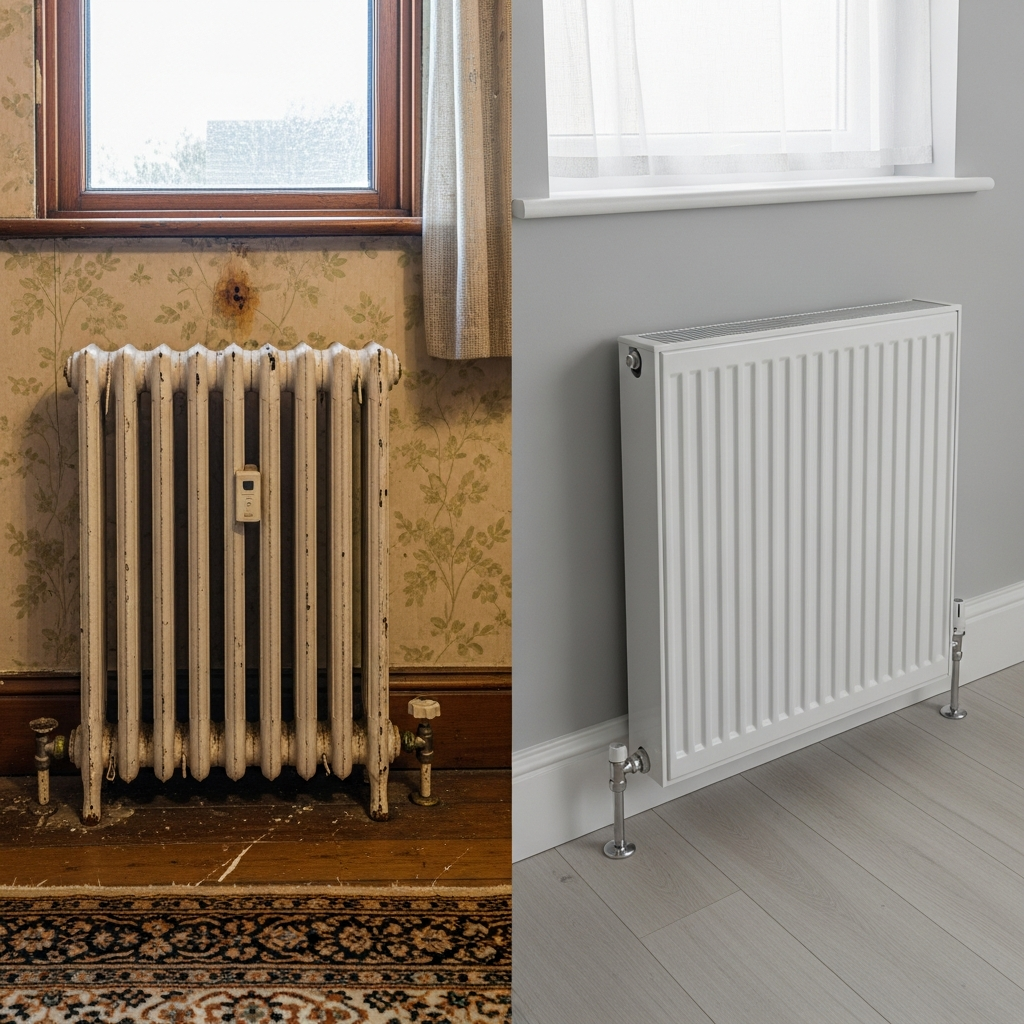
Homes with storage heaters typically do not have a central heating system — there are no radiators, no pipework, and no hot water cylinder. Switching to a heat pump means installing an entire wet central heating system from scratch.
Before Grant
£12,000 - £18,000
Full system including radiators and pipework
Payback Period
5 - 8 years
Then pure savings for 12-17 more years
After the payback period, every year is pure savings. With a heat pump lasting 20+ years, you could save £10,000 to £20,000 over the remaining life of the system after recovering your investment. See our cost guide for detailed breakdowns.
Get quotes for replacing your storage heaters
Compare installer quotesSpecify you have storage heaters so installers quote for the full system.
Comfort: Night and Day Difference
Storage Heater Problems
- Too hot in the morning: Most heat releases in the first few hours
- Too cold by evening: Stored heat dissipates by late afternoon
- No room-by-room control: Achieving consistent temperatures is virtually impossible
- Expensive boost heating: When stored heat runs out, you resort to peak-rate panel heaters
Heat Pump Advantages
- Consistent warmth: Maintains your set temperature continuously, morning to night
- Room-by-room control: Thermostatic radiator valves on every radiator
- Comfortable radiant heat: Wet radiators provide gentle, even warmth
- Hot water on demand: A properly sized cylinder provides reliable hot water at good pressure

BUS Grant Eligibility for Storage Heater Homes
Homes with electric storage heaters qualify for the full £7,500 BUS grant. Ofgem classifies electric heating as an eligible existing system. Your MCS-certified installer applies on your behalf.
Practical Considerations
Electrical Supply
Homes with storage heaters have an electricity supply designed for high consumption. Economy 7 meters are standard, and the supply is often robust (100A). This is typically more than adequate for a heat pump. Your meter may need updating to a smart meter, and your tariff will need changing.
Disruption During Installation
Installing a full wet central heating system is more disruptive than a simple boiler swap. Expect pipework running through the property, radiators fitted in each room, and five to seven working days for completion. See our installation guide for what to expect.
Removing Old Storage Heaters
Storage heaters are heavy (50-100 kg each) and contain ceramic bricks. Most heat pump installers will remove old storage heaters as part of the project. Once removed, you reclaim significant wall space in every room.
Is It Worth the Investment?
Unequivocally yes, for almost every storage heater household. The numbers speak for themselves:
- Annual savings: £600 to £1,500+ depending on property size
- Payback period: 5 to 8 years after the BUS grant
- Lifetime savings: £10,000 to £25,000+ over the heat pump's 20+ year lifespan
- Comfort improvement: Transformative — consistent warmth, room control, better hot water
- Property value: A wet central heating system significantly increases property value
The property value uplift alone can exceed the net installation cost. Estate agents consistently report that homes with central heating sell for more and sell faster than those with storage heaters. For an honest financial assessment, see are heat pumps worth it?
How to Get Started
- Check suitability: Use our suitability checker to confirm your property can accommodate a heat pump
- Get quotes: Request quotes from MCS-certified installers — specify that you currently have storage heaters
- Compare and choose: Get at least three quotes and compare specifications, not just price
- Apply for the grant: Your chosen installer applies for the BUS grant on your behalf
- Schedule installation: Plan for five to seven days of work
Transform your heating — ditch the storage heaters
Get free heat pump quotesMCS-certified installers. £7,500 BUS grant applied automatically. No obligation.
Frequently Asked Questions
Can I get the BUS grant if I have electric storage heaters?
Yes. Electric storage heaters are classified as an eligible existing heating system under the Boiler Upgrade Scheme. You qualify for the full £7,500 grant.
How much will I save on my electricity bill?
Most storage heater households save 60-70% on their heating costs by switching to a heat pump. For a typical three-bedroom home, that is £900 to £1,300 per year.
Will I need a new electricity meter?
You will likely need to switch from an Economy 7 meter to a smart meter. This is free and arranged through your energy supplier. You may also want to switch to a heat pump tariff for the best rates.
Is the installation very disruptive?
More so than a simple boiler replacement, because pipework and radiators are being installed for the first time. Expect five to seven days of work. Good installers minimise disruption and make good any disturbance to walls and floors.
Will a heat pump work in a flat?
Yes, heat pumps can be installed in flats, though there are additional considerations around placing the outdoor unit (balcony, ground-level area, or wall-mounted). You may need permission from your freeholder or management company.
What about the hot water — will it be better?
Almost certainly. Most storage heater homes have small immersion tanks (30-50 litres) that provide limited hot water. A heat pump system includes a 170-250 litre unvented cylinder delivering hot water at mains pressure — a significant upgrade in both capacity and performance.
About this guide: This article is part of our comparison and decision hub. Storage heater homes are among the strongest financial cases for heat pump installation. Pairing a heat pump with solar panels further reduces electricity costs. The Boiler Upgrade Scheme provides £7,500 towards the switch. Use our calculator for personalised savings estimates.