Heat Pump Tumble Dryer vs Heating Heat Pump: What's the Difference?
A heat pump tumble dryer costs £400–£1,200 and dries your clothes. A heating air source heat pump typically costs £11,128–£15,627 installed before the grant and replaces your boiler. Same technology, completely different products — here is the clear explanation.
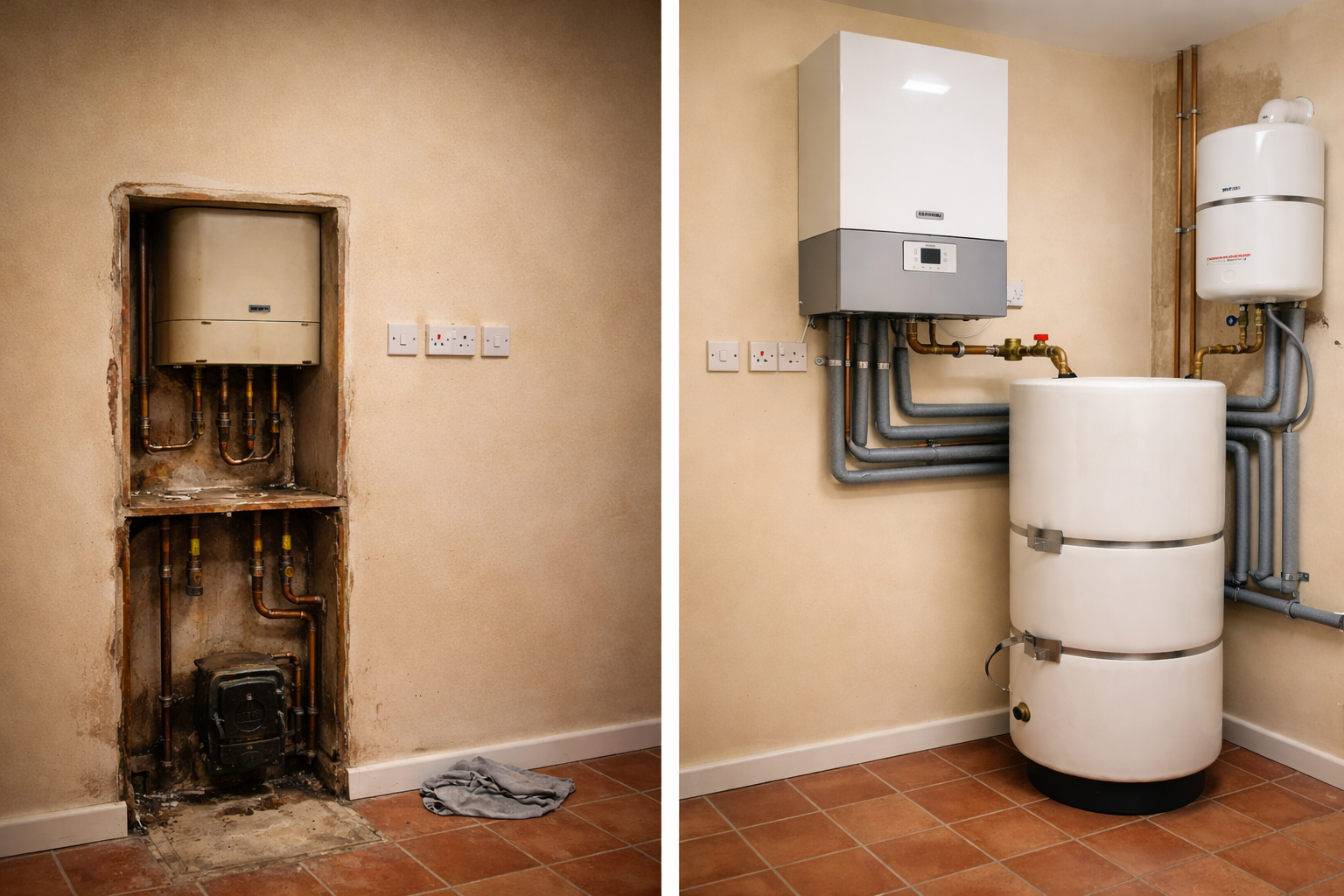
If you have searched for “heat pump” and ended up confused about whether people are talking about tumble dryers or home heating systems, you are not alone. The term “heat pump” is used for both — and they genuinely use the same underlying technology — but they are completely different products that serve completely different purposes.
This guide clears up the confusion in plain terms.
Looking for a heating heat pump? See what it would cost for your home
Enter your postcode and property type — get a personalised cost and savings estimate in 60 seconds.
Calculate my heating costs →In this guide:
The Quick Answer
A heat pump tumble dryer is a household appliance that dries clothes. It sits in your kitchen or utility room, plugs into a standard socket, and costs £400-£1,200.
A heating heat pump (air source or ground source) is a home heating system that replaces your gas boiler. It has a large outdoor unit, connects to your radiators and hot water, and an air source system typically costs £11,128–£15,627 installed before the grant (median £12,908, DESNZ 2026 Q2).
They share the same core technology — the refrigeration cycle — but that is where the similarity ends.
How Heat Pump Technology Works (In Both Products)
Both products use the refrigeration cycle to move heat from one place to another:
In a tumble dryer, the heat pump absorbs heat from the warm, moist air inside the drum, removes the moisture, and recycles the dried, reheated air back into the drum. It is a closed loop.
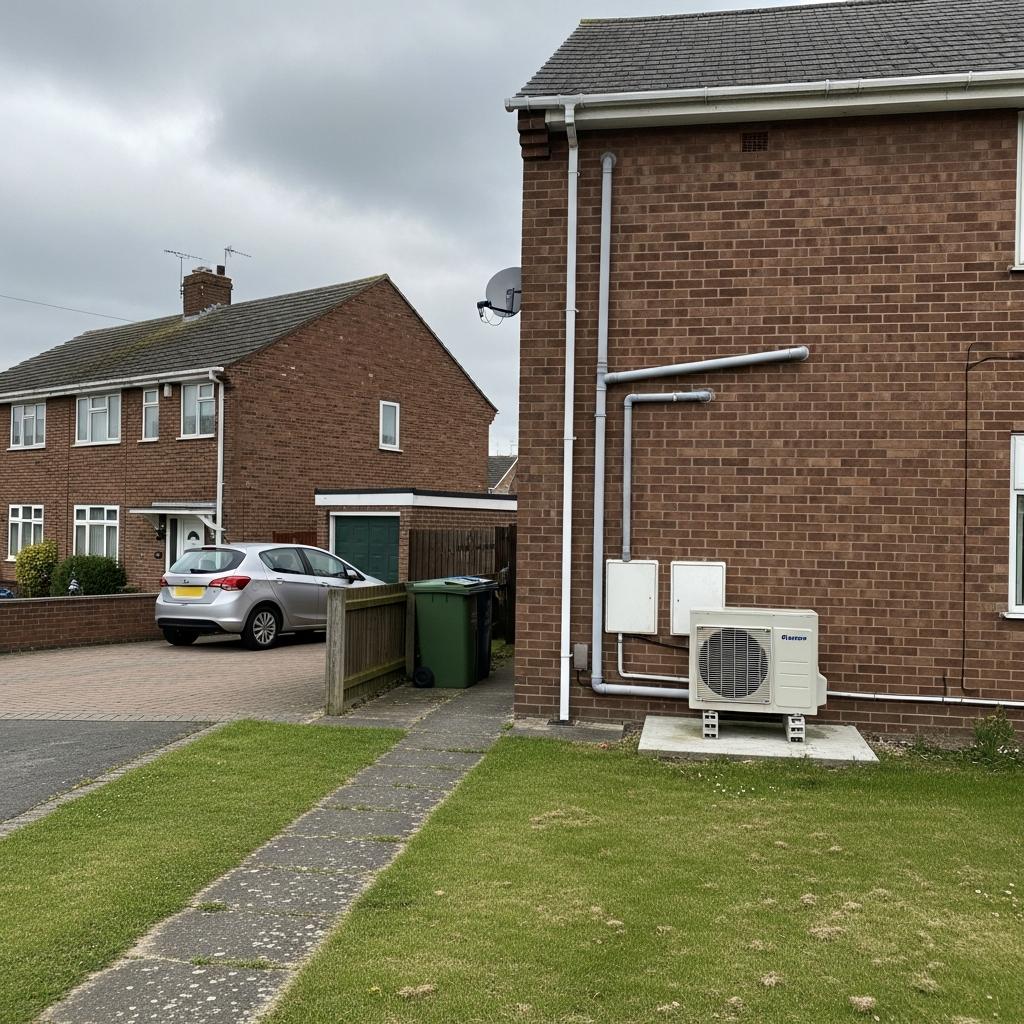
In a heating heat pump, the heat pump absorbs heat from the outside air (or ground) and releases it into water that flows through your radiators or underfloor heating. Heat is extracted from outdoors and delivered into your home.
Same principle, completely different scale and application. For a full explanation, read our guide on how air source heat pumps work.
Heat Pump Tumble Dryer: The Basics
Why People Choose Them
- Energy efficiency — roughly 50% less electricity than conventional condenser dryers (1.5-2.5 kWh vs 4-5 kWh per cycle)
- Lower running costs — roughly 40-60p per cycle, compared to £1.00-£1.20 for a conventional dryer
- Gentler on clothes — lower temperatures (50-60°C vs 70-80°C)
- No vent needed — moisture condenses into a removable tank
Downsides
- Slower drying (2-3 hours vs 1-2 hours)
- Higher purchase price (£400-£1,200 vs £200-£500 for conventional)
- Heat exchanger filter needs regular cleaning
Heating Heat Pump: The Basics
Why People Choose Them
- Lower carbon emissions — roughly 75% less CO² than a gas boiler
- Lower running costs — at a good efficiency, slightly cheaper to run than gas at current price-cap rates, and usually much cheaper than oil
- Government grants — the Boiler Upgrade Scheme provides £7,500, or £9,000 for air-to-water or ground source heat pumps replacing oil or LPG in homes without mains gas (until 31 March 2027)
- Future-proofing — gas boilers will eventually be phased out
- Improved EPC rating — can improve your property's rating by 1-3 bands
For the complete picture, read our comprehensive guide to air source heat pumps. To see costs, visit our heat pump cost guide.
Side-by-Side Comparison
| Feature | Tumble Dryer | Heating Heat Pump |
|---|---|---|
| Purpose | Drying clothes | Heating home + hot water |
| Size | Standard appliance (60x60x85cm) | Large outdoor unit + indoor cylinder |
| Cost | £400–£1,200 | £11,128–£15,627 typical air source (before grant) |
| Installation | Plug in and use | Professional (1-3 days) |
| Grants available | No | Yes — £7,500 BUS grant |
| Replaces | Conventional tumble dryer | Gas/oil boiler |
| Annual savings | £30–£50 | £200–£600+ |
The heating heat pump delivers dramatically larger savings — especially when paired with solar panels.

Interested in replacing your boiler with a heating heat pump?
Request a heat pump quote →Check if a heat pump suits your home and request a quote. No obligation.
Why the Confusion Exists
The confusion is understandable. “Heat pump” has become a marketing buzzword in two completely different product categories. Google searches return results for both products mixed together.
The simplest way to tell them apart: if someone is talking about a product that costs £400-£1,200 and sits in your kitchen, it is a tumble dryer. If they are talking about something that costs £8,000+ and has a unit outside your house, it is a heating system.
Other Products That Use Heat Pump Technology
Heat pump technology appears in several other products too:
- Heat pump hot water cylinders — standalone units for hot water only (£1,500-£3,500)
- Swimming pool heat pumps — dedicated units for pool heating (£1,500-£5,000)
- Dehumidifiers — many use compressor-based heat pump technology
- Heat pump dishwashers — a newer category for more efficient dish drying
All use the same refrigeration cycle principle, but each is a different product for a different purpose.
If You Are Looking for a Heating Heat Pump
If you landed on this page because you are interested in replacing your gas boiler with a heat pump for home heating, here are the guides that will help:
- The complete guide to air source heat pumps
- Heat pump costs UK
- Heat pump grants — how to get the £7,500 BUS grant
- Suitability checker — find out if your home is suitable
- Cost calculator — estimate your specific costs
- Heat pump vs gas boiler — direct comparison

Find out what a heating heat pump would cost for your home
Check if a heat pump suits your home and request a quote.
Request a heat pump quote →Free to request. No obligation.
Frequently Asked Questions
Are heat pump tumble dryers and heating heat pumps the same thing?
No. They use the same underlying technology (the refrigeration cycle) but are completely different products. A heat pump tumble dryer is a kitchen appliance for drying clothes (£400-£1,200). A heating heat pump is a home heating system that replaces your boiler (an air source system typically costs £11,128–£15,627 installed before the grant).
Can a heating heat pump dry my clothes?
Not directly. A heating heat pump heats your home via radiators or underfloor heating — it does not blow hot air at your clothes. However, a warm, well-heated home with good ventilation does help clothes dry faster on an airer.
Do heat pump tumble dryers qualify for the BUS grant?
No. The Boiler Upgrade Scheme grant of £7,500 is only for heating heat pumps (air source or ground source) that provide central heating and hot water. Tumble dryers do not qualify.
Which saves more money — a heat pump dryer or a heating heat pump?
A heating heat pump saves far more. A heat pump tumble dryer saves roughly £30-£50 per year compared to a conventional dryer. A heating heat pump running at a good efficiency is typically slightly cheaper to run than a gas boiler at current price-cap rates (more so if you also drop the gas standing charge), and usually much cheaper than oil or direct electric heating.
Why are both called “heat pump”?
Because both use the same fundamental technology: a refrigeration cycle that moves heat from one place to another. The name describes the technology, not the product.
Is a heat pump tumble dryer worth buying?
If you use a tumble dryer regularly, yes — the energy savings are roughly 50% less electricity per cycle. The higher purchase price is typically recovered within 3-5 years. If you rarely use a dryer, the savings are too small to justify the premium.
About Heat Pump Technology and Its Applications
Heat pump technology uses the refrigeration cycle to move heat efficiently and appears in products ranging from tumble dryers to whole-home heating systems. For home heating, air source heat pumps provide central heating and hot water while cutting carbon emissions by up to 75%. The Boiler Upgrade Scheme provides £7,500 towards heating heat pump installations, and pairing with solar panels further reduces electricity costs. This guide is part of our resource hub covering costs, running costs, and installation for UK homeowners.