UK Heat Pump Price Index: Tracking Costs Quarter by Quarter
Heat pump prices are falling — and we are tracking exactly how fast. Our quarterly price index monitors average installation costs across the UK, broken down by region, system size, and cost component. The latest data shows an 8.5% year-on-year decline, with prices now 16% below their 2024 peak. But the rate of decline varies by region, and some cost components are falling faster than others. Here is the full picture.

Get today's prices for your property
Use the free calculatorUpdated with Q1 2026 pricing data. Personalised to your home.
Latest Price Index: Q1 2026
£11,800
UK average installation cost (before grant)
-8.5%
Year-on-year change
-16%
Change from Q1 2024 peak
£4,300
Average cost after BUS grant
Quarterly Trend Data
| Quarter | Average Cost | QoQ Change | YoY Change | Index (Q1 2024 = 100) |
|---|---|---|---|---|
| Q1 2024 | £14,050 | — | — | 100.0 |
| Q2 2024 | £13,600 | -3.2% | — | 96.8 |
| Q3 2024 | £13,200 | -2.9% | — | 93.9 |
| Q4 2024 | £12,900 | -2.3% | — | 91.8 |
| Q1 2025 | £12,600 | -2.3% | -10.3% | 89.7 |
| Q2 2025 | £12,300 | -2.4% | -9.6% | 87.5 |
| Q3 2025 | £12,100 | -1.6% | -8.3% | 86.1 |
| Q4 2025 | £11,900 | -1.7% | -7.8% | 84.7 |
| Q1 2026 (latest) | £11,800 | -0.8% | -8.5% | 84.0 |
Source: Home Heat Pump Guide price index. Based on MCS installation data, installer quotes, and BUS grant application data.
The decline has been remarkably consistent — roughly 2-3% per quarter since Q1 2024. The rate of decline slowed slightly in Q1 2026, which may reflect a natural floor being approached on some cost components (particularly labour, which is harder to compress than equipment costs).
Price Trends by Region
Prices are falling fastest in the Midlands and Yorkshire — exactly the regions where installer numbers are growing most rapidly. London and the South East are seeing slower declines, reflecting tighter labour markets and persistent demand. For the full regional pricing picture, see our cost-by-region analysis.
Which Costs Are Falling Fastest
| Cost Component | Share of Total | YoY Change | Driver |
|---|---|---|---|
| Heat pump unit | 35% | -12% | Global manufacturing scale |
| Hot water cylinder | 10% | -6% | Increased UK supply |
| Installation labour | 35% | -4% | Growing installer numbers |
| Pipework & materials | 12% | -8% | Copper price decline |
| Electrical work | 8% | -3% | Minor efficiency gains |
Source: Home Heat Pump Guide component cost analysis
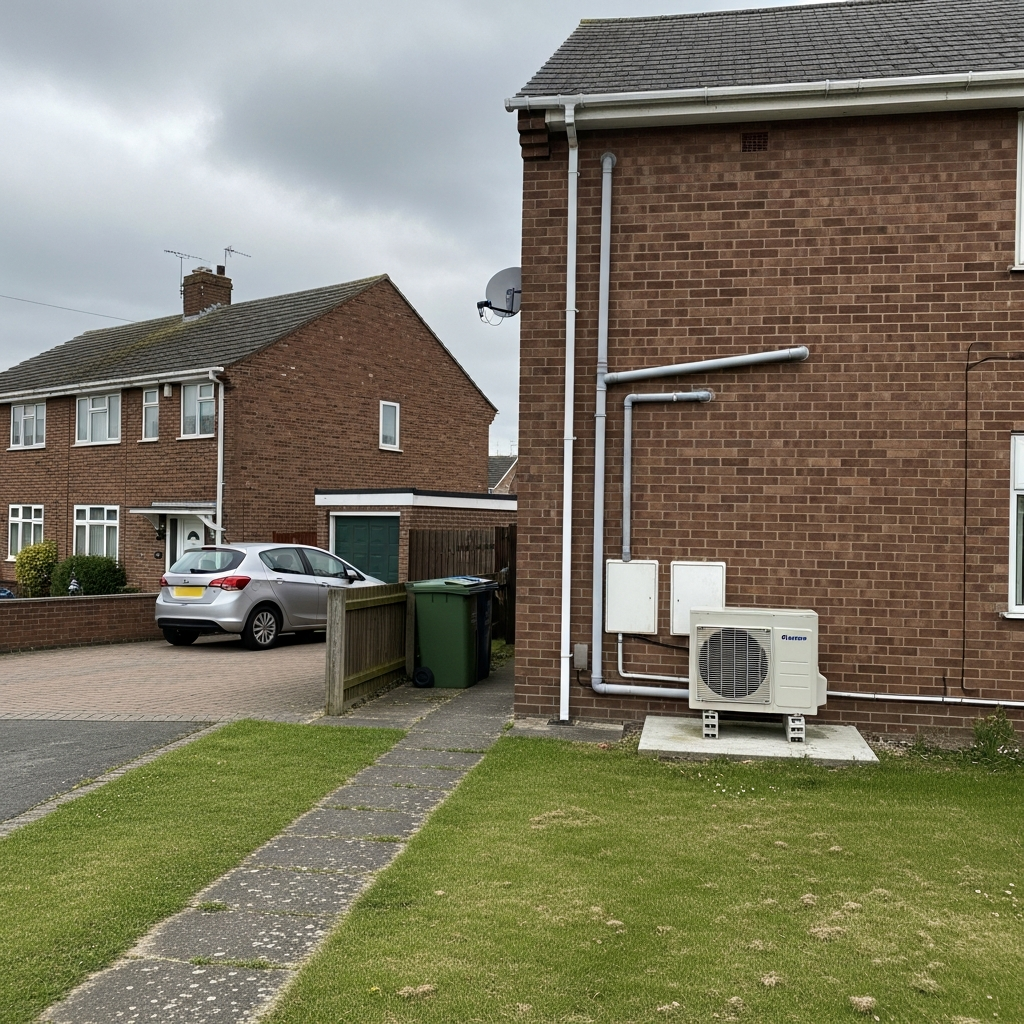
Equipment costs (the heat pump unit itself) are falling fastest, driven by global manufacturing scale — particularly from Japanese and Chinese manufacturers competing aggressively for the European market. Labour costs are more resistant to decline, though growing installer numbers are creating gradual competitive pressure. The Climate Change Committee projects that continued equipment cost declines of 5-8% per year are plausible through 2030.
Price Forecast
Based on current trends and industry analysis, we project:
- Q4 2026: Average cost approximately £11,200 (further 5% decline from current)
- Q4 2027: Average cost approximately £10,400-£10,800 (8-12% below current)
- 2030: Average cost approximately £8,500-£9,500 (20-28% below current)
If these projections materialise, by 2030 a standard heat pump installation before the grant could cost under £10,000 — and with the grant, under £2,500 for cheaper regions. This would make heat pumps unambiguously cheaper than a new gas boiler for the first time.
Should You Wait or Buy Now?
This is the most common question we receive. The analysis is straightforward:
- Expected annual price decline: 5-8%, saving approximately £600-£950 per year on a £11,800 installation
- BUS grant value: £7,500 (not guaranteed beyond March 2028)
- Annual running cost savings: £200-£1,200 per year depending on current fuel
Waiting one year saves £600-£950 on the purchase price but costs you £200-£1,200 in missed running cost savings. And if the BUS grant is reduced or ended, the net cost increase dwarfs any price decline. For most homeowners, acting while the grant is available is the financially optimal choice.
If you are considering pairing with solar panels, combined installation can often reduce total costs, and solar panel prices are also declining. Our complete cost guide covers all the variables.
Lock in today's prices while the grant is available
Get free quotesCompare prices from MCS-certified installers. No obligation.
Frequently Asked Questions
Are heat pump prices going down?
Yes. Our price index shows an 8.5% year-on-year decline and 16% decline from the 2024 peak. Equipment costs are falling fastest (12% per year), driven by global manufacturing scale.
How much does a heat pump cost in Q1 2026?
The UK average is approximately £11,800 before the BUS grant (£4,300 after). This varies from £10,200 in the West Midlands to £14,500 in London.
Will heat pump prices continue to fall?
Industry projections suggest 3-6% annual declines for the next 3-5 years. By 2030, average costs could be 20-28% below current levels.
Should I wait for heat pump prices to drop further?
Generally not. Waiting a year saves £600-£950 on purchase price but risks losing the £7,500 BUS grant and misses £200-£1,200 in running cost savings. Acting while the grant is available is usually optimal.
Get current market prices for your property
Try the free calculatorUpdated quarterly with the latest pricing data. Personalised to your home.
Price Trends and the Heating Market
Falling heat pump prices are a key indicator of market maturation. As costs decline and installer numbers grow, the economic case for switching from gas strengthens. Combined with government grants and complementary solar technology, the total cost of clean heating is approaching parity with fossil fuels. The regional picture shows that some areas have already crossed this threshold.