Heat Pump Installation Cost Breakdown UK 2026
When you receive a quote for a heat pump installation, you will see a total figure — often somewhere between £9,000 and £18,000 before the government grant. That number can feel opaque. What exactly are you paying for? Is the quote reasonable, or are you being overcharged?
This guide breaks down every component of a typical heat pump installation cost in the UK. Understanding where the money goes helps you compare quotes properly, spot anything missing, and negotiate from a position of knowledge.
Total Cost Overview
Before we break it down, here is the big picture. A typical air source heat pump installation in the UK costs between £10,000 and £16,000 for most homes, with the majority falling around £11,000 to £14,000. After the BUS grant of £7,500, most homeowners pay between £3,500 and £8,500 out of pocket.
Ground source heat pumps cost more — typically £18,000 to £35,000 before the grant — primarily because of the ground works required. The BUS grant for ground source is £7,500 as well. See our ground source heat pump guide for more on those costs.
Now let us look at each component individually.
1. The Heat Pump Unit
Typical cost: £4,000 to £9,000
The heat pump itself is the single largest cost item. Prices vary based on:
- Output capacity: A 5kW unit suitable for a small, well-insulated home costs less than a 16kW unit for a large, poorly insulated property
- Brand: Prices vary between manufacturers, though higher price does not always mean better performance
- Refrigerant type: Newer models using R290 (propane) refrigerant are increasingly common and generally similar in price to R32 models
- Features: Built-in weather compensation, smart controls, and hybrid-ready capabilities can add to the price
For most three- to four-bedroom homes, you are looking at a 7-12kW unit costing £5,000 to £7,500 for the unit alone.
2. Hot Water Cylinder
Typical cost: £800 to £1,800
Heat pumps need a compatible hot water cylinder — you cannot simply connect a heat pump to your existing gas boiler cylinder in most cases. Heat pump cylinders have a larger coil inside to compensate for the lower flow temperatures that heat pumps operate at.
Sizes typically range from 170 to 300 litres. Most three- to four-bedroom homes need a 200-250 litre cylinder. Larger families or homes with multiple bathrooms may need 300 litres.
If you already have a suitable unvented cylinder in good condition, your installer may be able to reuse it, saving this cost. This is more common in homes that previously had a system boiler rather than a combi boiler.
3. Installation Labour
Typical cost: £2,000 to £4,500
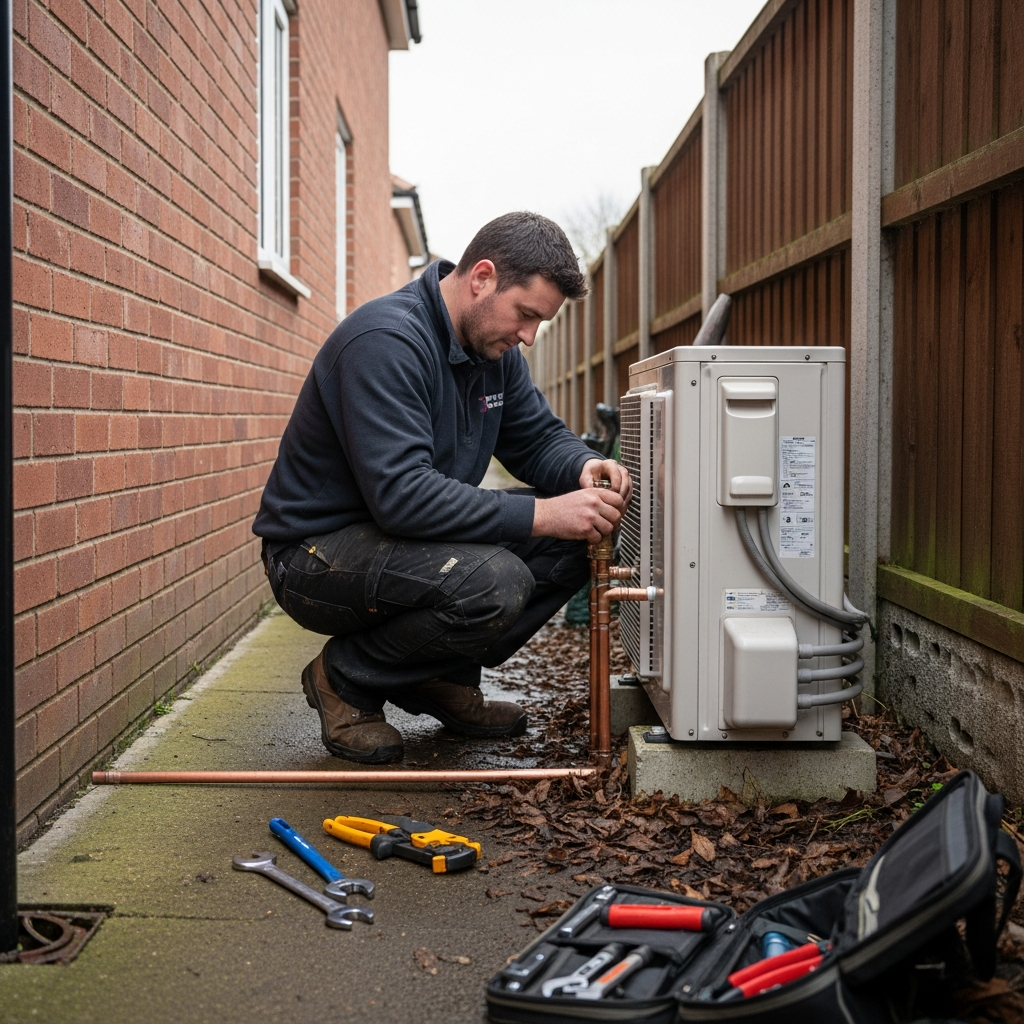
Labour is the second largest cost after the unit itself. A standard air source heat pump installation takes two to three days with a team of two to three engineers. This covers:
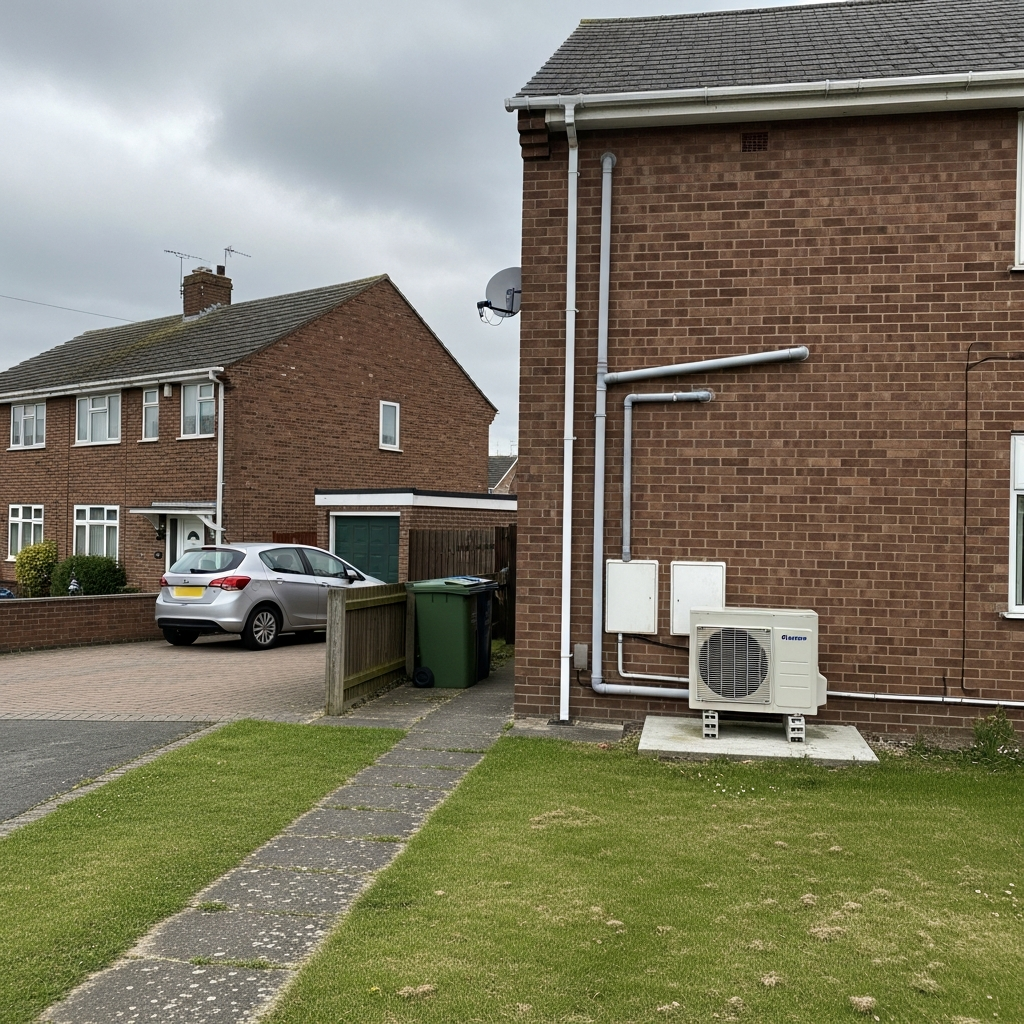
- Positioning and mounting the outdoor unit
- Running refrigerant pipework between outdoor and indoor units
- Installing the hot water cylinder
- Connecting the heat pump to the existing heating system
- Wiring and controls
- Commissioning — setting up the system, configuring weather compensation, and testing all functions
- MCS certification paperwork
Labour costs vary by region. London and the South East tend to be 15-25% more expensive than the Midlands or the North. Rural areas can also be pricier due to travel time.
Commissioning is a critical part of the labour cost and should not be skimped on. A properly commissioned heat pump runs efficiently from day one. A poorly commissioned one causes frustration, high bills, and unnecessary call-outs. Our installation guide explains what proper commissioning involves.
4. Pipework and Fittings
Typical cost: £500 to £1,500
This covers the refrigerant pipework between the outdoor unit and the indoor hydraulic module (or directly to the cylinder in monobloc systems), plus any modifications to the central heating pipework.
The cost depends on the distance between the outdoor unit and the point of connection inside the property. A short, straightforward run of five metres costs less than a fifteen-metre run that needs to go through walls and around obstacles.
Some installations require modifications to the existing central heating pipework — for example, adding a buffer tank, a low-loss header, or adjusting pipe diameters to suit the heat pump's flow requirements.
5. Electrical Work
Typical cost: £300 to £1,200
Every heat pump installation requires electrical work. At a minimum, this means installing a dedicated circuit from your consumer unit (fuse box) to the heat pump. This involves:
- A new dedicated MCB (miniature circuit breaker) in your consumer unit
- Cabling from the consumer unit to the outdoor unit location
- An isolator switch near the outdoor unit
In some cases, your electrical supply may need upgrading. Heat pumps typically draw 2-5kW of electrical power (not the same as heat output — a 10kW heat pump might draw only 3kW of electricity). Most modern UK homes have a 60A or 100A supply, which is usually sufficient. Older properties with a 40A supply may need an upgrade from the Distribution Network Operator (DNO), which can add £500 to £1,000 and several weeks of delay.
If your consumer unit is an old-style fuse box without RCD protection, the electrician may recommend or require an upgrade to a modern consumer unit. This costs £400 to £700 and is separate from the heat pump installation, but it is often bundled into the quote.
6. Concrete Base or Mounting
Typical cost: £200 to £600
The outdoor unit needs a solid, level base. Options include:
- Concrete pad: The most common approach. A simple concrete slab poured to the correct dimensions and allowed to cure. Cost: £200 to £400.
- Pre-cast concrete slabs: Quicker than pouring, can be placed immediately. Similar cost to a poured pad.
- Wall brackets: Used when ground space is limited or the unit needs to be elevated. Cost: £150 to £400 for the brackets plus fitting.
- Raised frame: Some installers use a metal frame, particularly on uneven ground. Cost: £200 to £500.
Anti-vibration mounts should be fitted between the unit and its base. These are inexpensive (£20-50 for a set) but essential for reducing noise transmission into the building structure.
7. Radiator Upgrades
Typical cost: £0 to £4,000+
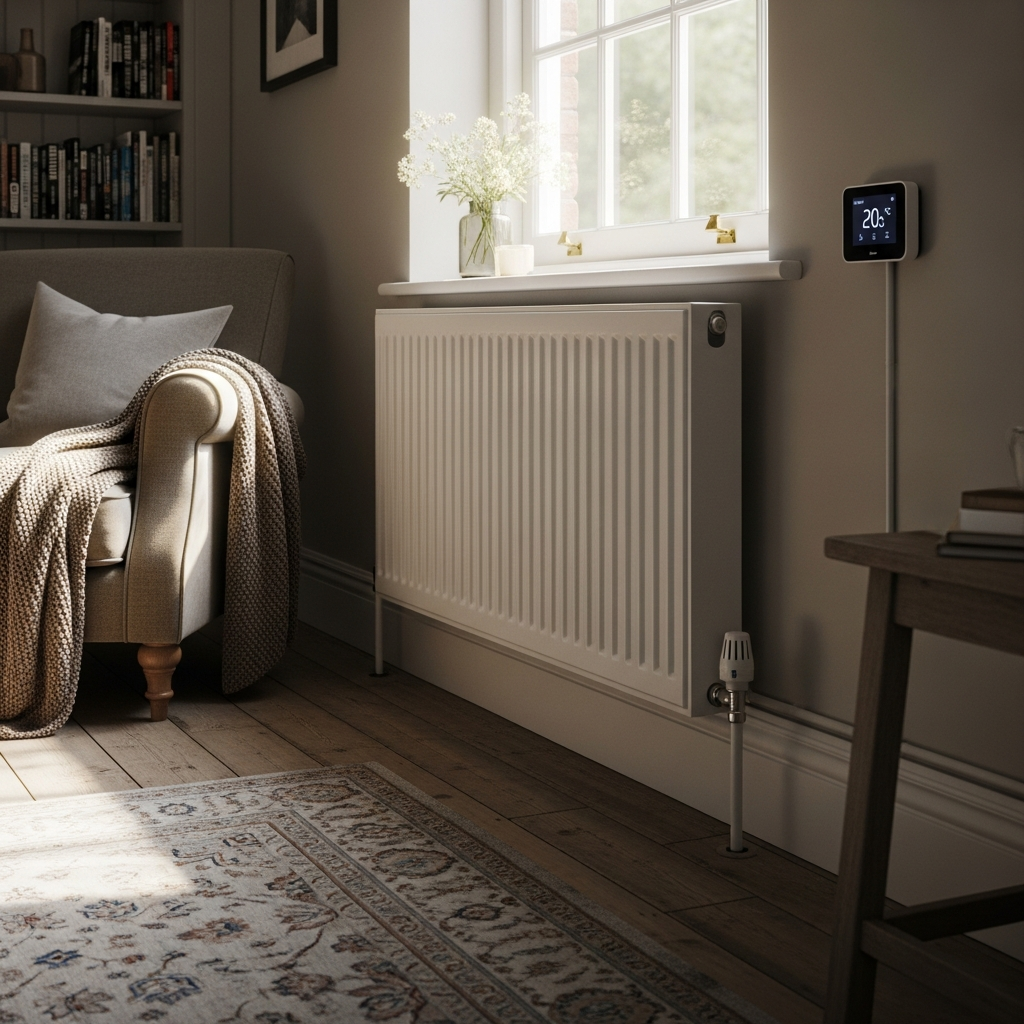
This is the most variable cost item in any heat pump installation. Some homes need no radiator changes at all. Others need several radiators replaced with larger ones.
Heat pumps run most efficiently at lower flow temperatures than gas boilers — typically 35-50°C compared to 60-75°C. At lower flow temperatures, each radiator emits less heat. If a radiator was only just large enough at gas boiler flow temperatures, it will not be large enough for a heat pump.
A good installer will carry out a room-by-room heat loss calculation and check each radiator's output at the proposed flow temperature. Typically, in a three-bedroom semi-detached house:
- Well-insulated home with modern radiators: Zero to two radiators need upgrading. Cost: £0 to £800.
- Average insulation with older radiators: Two to four radiators need upgrading. Cost: £600 to £2,000.
- Poor insulation with small radiators: Most radiators need upgrading. Cost: £2,000 to £4,000+.
Read our detailed guide on whether you need new radiators for a heat pump — it covers how to assess your existing radiators and what replacement options are available.
8. Controls and Thermostat
Typical cost: £100 to £500
Most heat pumps come with their own controller, but you may also need a room thermostat, outdoor temperature sensor (for weather compensation), and possibly zone valves if you want different temperatures in different parts of the house.
Many installers include basic controls in their quote. Smart thermostats (like Hive or Nest) can work with heat pumps but must be configured correctly — they need to allow the heat pump to run for longer periods rather than short cycling on and off.
9. Removal of Existing System
Typical cost: £200 to £500
If you are replacing a gas boiler, the old boiler needs to be removed and the gas supply capped. If you are replacing an oil boiler, the old boiler and oil tank both need removing. Oil tank removal can be more expensive due to environmental regulations around contamination risk.
Some homeowners choose to keep their gas boiler as a backup, running a hybrid system. This avoids the removal cost but adds complexity to the controls.
10. Ancillary Costs
Several smaller costs can add up:
- Scaffolding: If the outdoor unit is wall-mounted at height or the pipework route requires access to upper floors. Cost: £300 to £800.
- Planning permission: Usually not required under permitted development rules, but listed buildings or conservation areas may need an application. Cost: £200 to £500 for the application.
- Building regulations notification: Required for most installations and handled by the MCS-certified installer. Usually included in the installation cost.
- Condensate drain: Heat pumps produce condensate that needs draining away from the unit. A simple soakaway or drain connection. Cost: £50 to £200.
Putting It All Together: Example Quotes
Example 1: Straightforward Installation
Three-bedroom semi-detached, EPC C, replacing a combi boiler:
- 8kW air source heat pump unit: £5,800
- 210-litre hot water cylinder: £1,100
- Installation labour (2.5 days): £3,000
- Pipework and fittings: £700
- Electrical work: £450
- Concrete base with anti-vibration mounts: £350
- One radiator upgrade: £400
- Controls: £200
- Boiler removal and gas cap: £300
- Total before grant: £12,300
- After BUS grant: £4,800
Example 2: More Complex Installation
Four-bedroom detached, EPC D, replacing an oil boiler, needs several radiator upgrades:
- 12kW air source heat pump unit: £7,200
- 250-litre hot water cylinder: £1,400
- Installation labour (3 days): £3,800
- Pipework and fittings: £1,200
- Electrical work (including supply upgrade): £1,100
- Concrete base: £300
- Five radiator upgrades: £2,200
- Controls: £300
- Oil boiler and tank removal: £450
- Total before grant: £17,950
- After BUS grant: £10,450
Use our cost calculator to get a personalised estimate based on your property's specific details.
How to Compare Quotes Properly
When you receive quotes from different installers, compare like with like:
- Check that all quotes include the same components — some installers exclude radiator upgrades or electrical work
- Look at the heat pump brand and model — ensure they are quoting similar-quality equipment
- Confirm that the quote includes commissioning, MCS certification, and building regulations notification
- Check the warranty terms — both on the unit and on the installation workmanship
- Ask about aftercare — does the installer offer annual servicing?
The cheapest quote is not always the best value. A well-installed system runs efficiently for 20+ years. A poorly installed one causes problems from day one. Our quotes service connects you with vetted, MCS-certified installers who have been checked for quality.
Frequently Asked Questions
Why do heat pump installation costs vary so much between quotes?
Variation comes from different labour rates, different brands of equipment, different approaches to radiator upgrades, and different levels of aftercare included. Quotes that seem unusually cheap may be excluding important items. Always ask for an itemised breakdown.
Is the installation cost higher if I have a combi boiler?
Slightly, because you will not have an existing hot water cylinder. The cost of a new cylinder (£800-1,800) is an additional item that homes with existing system boilers may not need. You will also need space to install the cylinder, which can be a constraint in smaller homes.
Can I reduce costs by doing some work myself?
You can prepare the concrete base yourself to save £200-400. However, the actual installation must be carried out by an MCS-certified installer to qualify for the BUS grant and to ensure the system is safe, compliant, and warrantied. Do not attempt to handle refrigerant or electrical connections.
Do I need to pay the full amount upfront?
Most installers ask for a deposit (typically 10-30%) when you accept the quote, with the balance due on completion. The BUS grant is paid directly to the installer, so you only pay the amount after the grant deduction. Some installers offer interest-free payment plans.
Are there any ongoing costs after installation?
Yes — annual servicing (£100-200 per year), electricity to run the unit, and occasional repairs as the system ages. These ongoing costs are covered in our guides to running costs and maintenance.
What if my quote is much higher than these figures?
If your quote significantly exceeds the ranges given here, ask the installer to explain why. There may be legitimate reasons — difficult access, extensive radiator upgrades, electrical supply issues, or a large property requiring a premium unit. But if the explanation does not stack up, get additional quotes from other MCS-certified installers for comparison.