Ground Source Heat Pump Planning Permission
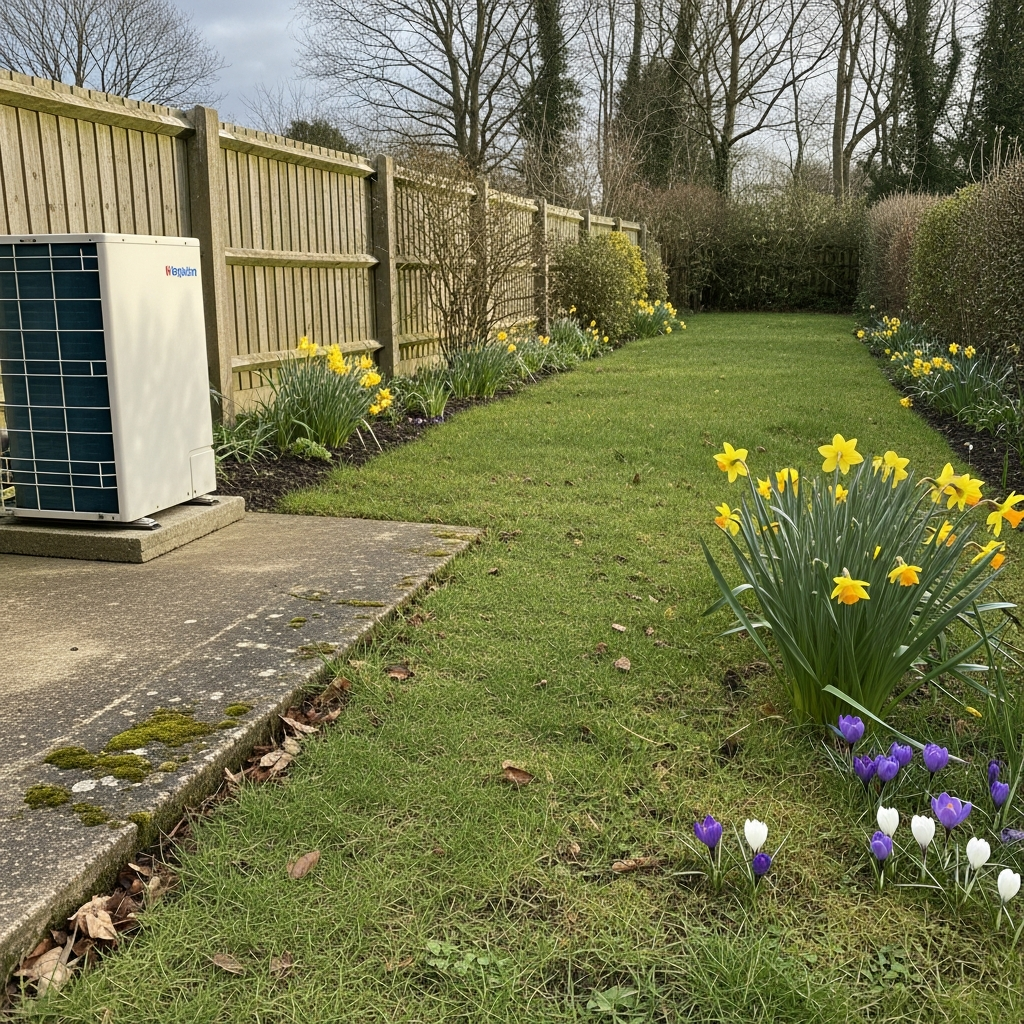
One of the practical advantages of a ground source heat pump over air source is the planning situation. Ground source systems are almost always permitted development — meaning no planning application is needed. There is no outdoor unit to create noise or visual impact, which removes the two main planning considerations that apply to air source heat pumps.
However, there are exceptions. Boreholes, conservation areas, listed buildings, and certain types of property do have planning implications. This guide explains the rules for England, Wales, Scotland, and Northern Ireland so you know exactly where you stand.
The General Rule: Permitted Development
In England and Wales, ground source heat pumps are classified as permitted development under the Town and Country Planning (General Permitted Development) (England) Order 2015 (as amended). This means you do not need to apply for planning permission, provided certain conditions are met.
The key conditions are:
The installation is within the grounds of the property (the curtilage). The ground loop must be on your own land. You cannot install a ground loop in someone else's garden, a public park, or common land without separate permissions.
The installation is for a domestic dwelling. Commercial or industrial ground source installations may have different planning requirements.
The property is not in a restricted area (see below for conservation areas, listed buildings, and other designations).
For most UK homeowners, this means a ground source heat pump with horizontal ground loops requires no planning permission whatsoever. You can proceed with installation after simply appointing an MCS-certified installer.
Boreholes: When You May Need Consent
While horizontal ground loops are straightforward, vertical boreholes introduce additional considerations:
Building Regulations
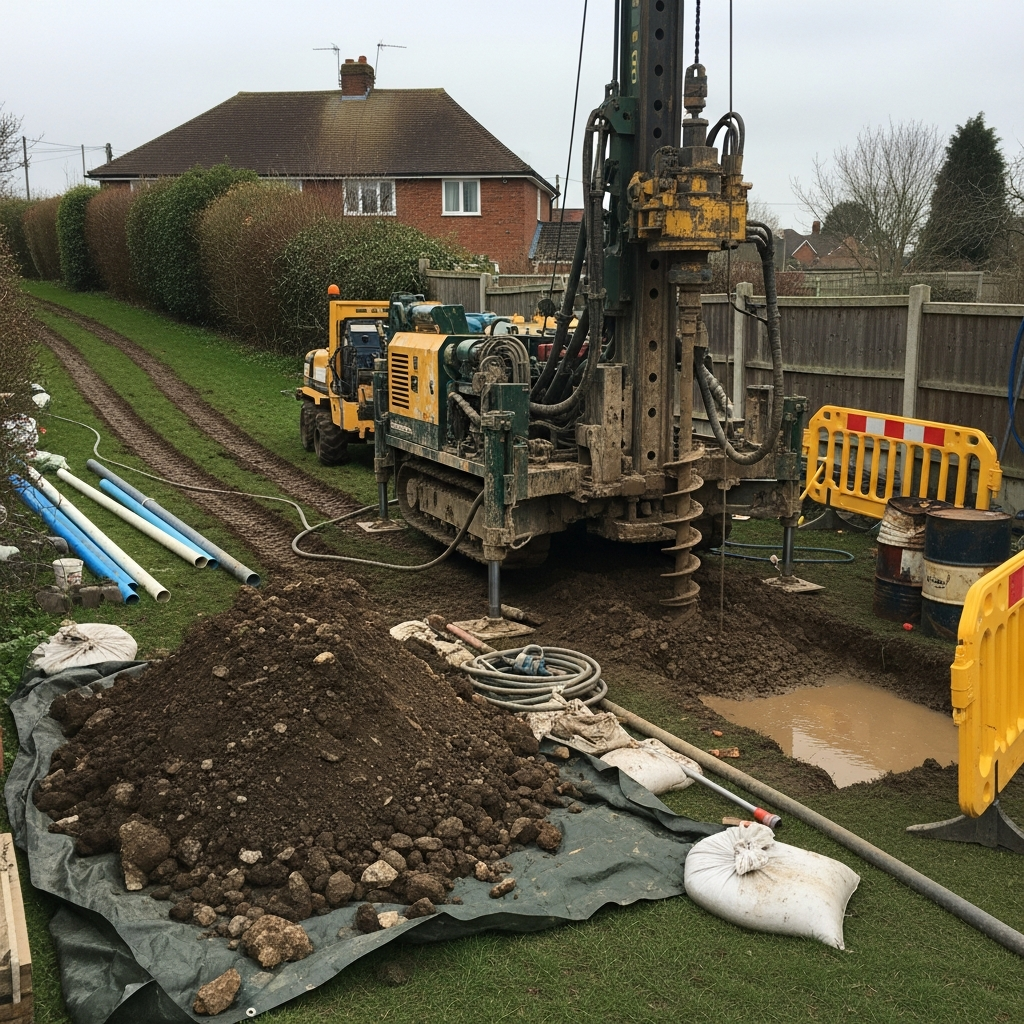
Borehole drilling does not typically require planning permission, but it does need to comply with building regulations. The borehole must be designed and installed by a competent contractor to avoid contamination of groundwater aquifers. Most drilling contractors are members of the Ground Source Heat Pump Association (GSHPA) or the British Drilling Association (BDA) and follow industry standards.
Environment Agency Notification
In England, if your borehole penetrates an aquifer (which most deep boreholes do), you should notify the Environment Agency. This is not a formal permission process in most cases, but the EA may have comments or restrictions — particularly if the borehole is in a Source Protection Zone (SPZ) where groundwater supplies drinking water.
In Source Protection Zone 1 (the closest zone to a public water supply borehole), the EA may object to drilling or impose strict conditions on construction methods and grouting materials to prevent contamination.
Scotland: Different Rules
In Scotland, boreholes over 200 metres deep may require a licence from the Coal Authority or Scottish Government. Boreholes in former mining areas may also need assessment for potential mine workings. The Scottish Environment Protection Agency (SEPA) has notification requirements similar to the EA in England.
Conservation Areas
If your property is in a conservation area, permitted development rights may be restricted. However, ground source heat pumps are less affected than air source because there is no external equipment visible after installation.
Horizontal Ground Loops in Conservation Areas
Generally permitted. The ground loop is buried underground and invisible once installed. The garden surface is reinstated to its original condition. There is no change to the property's external appearance, which is what conservation area designations are designed to protect.
Boreholes in Conservation Areas
Usually permitted, but check with your local planning authority. Some conservation area restrictions apply to any groundworks within the curtilage. The drilling phase is temporary (typically a few days), but the planning authority may want to approve the location and any permanent surface features (inspection covers, for example).
What About the Installation Period?
The temporary disruption of installation — trenching, drilling rigs, spoil heaps — is not normally a planning concern in conservation areas. However, if your property fronts a public street or key view, the planning authority may want to know about temporary disruption. Discuss this with your installer, who should have experience working in conservation areas.
Listed Buildings
Listed building consent is separate from planning permission and applies to any works that affect the character of a listed building. Ground source heat pumps can be installed in listed buildings, but care is needed:
Ground Loops in the Garden
Horizontal ground loops in the garden of a listed building generally do not require listed building consent because they do not affect the building itself. The ground loop is below the surface and does not alter the building's character or appearance.
Internal Works
Installing the heat pump unit inside a listed building may require listed building consent if it involves alterations to the building's fabric — for example, routing pipework through historic walls, cutting into original floors, or installing equipment in spaces that contribute to the building's character.
In practice, many listed building heat pump installations are straightforward because the indoor unit is placed in a non-sensitive location (a modern extension, a utility room, or an outbuilding) and pipework is routed discreetly. However, you should always check with your local conservation officer before proceeding.
The Indoor Unit Advantage
Ground source has a significant advantage over air source for listed buildings. An air source heat pump requires an outdoor unit that is visible and audible — often problematic in the setting of a listed building. A ground source system has no outdoor unit at all. The only visible change is inside the building, in a location you choose.
Planning Rules by UK Nation
England
Ground source heat pumps are permitted development under Part 14 of the GPDO (General Permitted Development Order), Class G. The conditions are minimal: the installation must be within the property's curtilage and for domestic use. There are no noise conditions (unlike air source) because there is no external equipment.
Boreholes are not explicitly covered by permitted development but are generally considered not to require planning permission as they do not constitute "development" in planning terms (they do not create a building or structure above ground). The Environment Agency should be notified for deep boreholes.
Wales
Similar to England. Ground source heat pumps are permitted development under the Town and Country Planning (General Permitted Development) Order 1995 (as amended for Wales). The rules are broadly equivalent. Natural Resources Wales (NRW) plays the same role as the Environment Agency for borehole notification.
Scotland
Ground source heat pumps are permitted development under the Town and Country Planning (General Permitted Development) (Scotland) Order 1992 (as amended). The Scottish Government's guidance is clear that domestic ground source installations within the curtilage generally do not need planning permission.
SEPA should be notified for boreholes, and there may be additional requirements in former mining areas. The Coal Authority should be consulted if the property is in a coal mining reporting area.
Northern Ireland
Ground source heat pumps are permitted development under the Planning (General Permitted Development) Order (Northern Ireland) 2015. The conditions are similar to England. The Northern Ireland Environment Agency (NIEA) is the equivalent body for groundwater and environmental matters.
When You Definitely Need Planning Permission
There are situations where you will need to apply for planning permission or other consent:
Ground loop on land you do not own. If the ground loop needs to extend beyond your property boundary (into a neighbour's land, a public highway, or common land), you need the landowner's permission and potentially planning consent for the works.
Shared ground loop systems. Communal ground loop arrays installed in shared spaces (housing development common areas, public land) may need planning permission depending on the scale and location.
Article 4 Directions. Some local authorities issue Article 4 Directions that remove specific permitted development rights in particular areas. If an Article 4 Direction applies to your property and covers ground source heat pumps or groundworks, you will need planning permission. Check with your local planning authority.
Scheduled monuments and their settings. If your property is within the setting of a scheduled ancient monument, additional consent may be required for groundworks.
Sites of Special Scientific Interest (SSSI). Groundworks within or adjacent to an SSSI may require consent from Natural England (or equivalent body in other UK nations).
Flood zones. Properties in flood zones 2 or 3 may face additional scrutiny for any groundworks, though ground source installation is unlikely to affect flood risk.
Building Regulations
Separate from planning permission, ground source heat pump installations must comply with building regulations. This is normally handled by your installer and is straightforward, but it is worth understanding what is required:
Part L (Energy Efficiency)
The heat pump installation must comply with Part L of the building regulations, which covers the conservation of fuel and power. For a heat pump replacing an existing boiler, this typically means the system must achieve a minimum seasonal COP and be designed and commissioned in accordance with MCS standards.
Part P (Electrical)
The electrical installation must comply with Part P. Most heat pump installations require a dedicated circuit from the consumer unit, which should be installed by a Part P registered electrician (or the work notified to building control).
Part G (Hot Water)
If the heat pump supplies hot water, the installation must comply with Part G, including temperature controls to prevent scalding and (where applicable) legionella management. Heat pump hot water systems typically operate at lower temperatures than boilers, so a periodic legionella cycle (heating the cylinder to 60°C) should be programmed.
MCS Certification
While not a building regulation per se, MCS certification is required for the installer to access the BUS grant. MCS standards cover system design, installation quality, and commissioning — effectively ensuring compliance with building regulations and industry best practice.
Ground Source vs Air Source: Planning Comparison
Air source heat pumps have more planning conditions:
Noise limit: Must not exceed 42 dB(A) at the nearest neighbour's habitable room. Ground source: no noise condition (no outdoor unit).
Visual impact: Air source outdoor units must comply with size and location rules. Ground source: no outdoor equipment.
One per property: Only one air source heat pump per property under permitted development. Ground source: no such restriction.
Conservation areas: Air source may be restricted due to visual and noise impact. Ground source: generally permitted because there is nothing to see or hear.
Listed buildings: Air source outdoor unit on a listed building is almost always refused. Ground source: much more likely to be accepted because the installation is invisible from outside.
For properties where planning is likely to be an issue — conservation areas, listed buildings, dense terraced streets — ground source is often the only viable heat pump option precisely because of its planning advantages. Use our suitability checker to assess your property.
What Your Installer Should Handle
A competent MCS-certified installer should manage the regulatory process as part of the project:
Planning assessment. Confirm that your installation is permitted development or advise if an application is needed.
Building regulations notification. Submit the necessary notifications to building control or self-certify under an approved competent persons scheme.
Environment Agency notification. For boreholes, notify the relevant environmental body and address any feedback.
MCS documentation. Provide the MCS certificate and commissioning paperwork needed for the BUS grant and compliance records.
If your installer is not handling these matters, or is unfamiliar with the regulatory landscape, that is a warning sign. Get quotes from experienced installers who can demonstrate competence in all aspects of the installation process. See our installation guide for more on what to expect.
Frequently Asked Questions
Do I need planning permission for a ground source heat pump?
In most cases, no. Ground source heat pumps are permitted development in England, Wales, Scotland, and Northern Ireland, provided the ground loop is within your property's curtilage. There is no noise condition (unlike air source) because there is no outdoor unit. Exceptions apply in conservation areas, for listed buildings, and under Article 4 Directions — check with your local planning authority if in doubt.
Do boreholes need planning permission?
Generally no, but you should notify the Environment Agency (or equivalent body in Scotland, Wales, or Northern Ireland). In Source Protection Zones or environmentally sensitive areas, the EA may impose conditions. In former mining areas, the Coal Authority should be consulted. Your drilling contractor and installer should manage this process.
Can I install a ground source heat pump in a conservation area?
Usually yes. The ground loop is underground and invisible. There is no external equipment to affect the conservation area's character. Some local authorities may want to be notified, particularly for borehole drilling. Check with your planning authority, but refusal is uncommon because there is no visual or noise impact.
Can I install a ground source heat pump in a listed building?
Yes, but you may need listed building consent for internal works that affect the building's character. The ground loop itself (in the garden) does not normally require listed building consent. The indoor heat pump unit should be located in a non-sensitive area. Ground source is generally much easier to install in a listed building than air source, which requires a visible outdoor unit.
Is there a noise condition for ground source heat pumps?
No. Unlike air source heat pumps (which must not exceed 42 dB at the nearest neighbour's window under permitted development), ground source heat pumps have no noise condition because there is no outdoor unit. This is one of the key planning advantages of ground source over air source systems.
Do I need building regulations approval for a ground source heat pump?
Yes. Building regulations approval is required for the electrical installation, the heating system design, and compliance with energy efficiency standards. This is normally handled by your MCS-certified installer as part of the project. It is separate from planning permission and applies regardless of whether planning consent is needed. Check our cost guide for what is typically included in installation quotes.