Can You Install an Air Source Heat Pump Yourself?
A professional installation with the BUS grant costs £2,300. A DIY installation without the grant costs £8,200. The maths makes the answer clear — but there are smart ways to save money on preparation work.
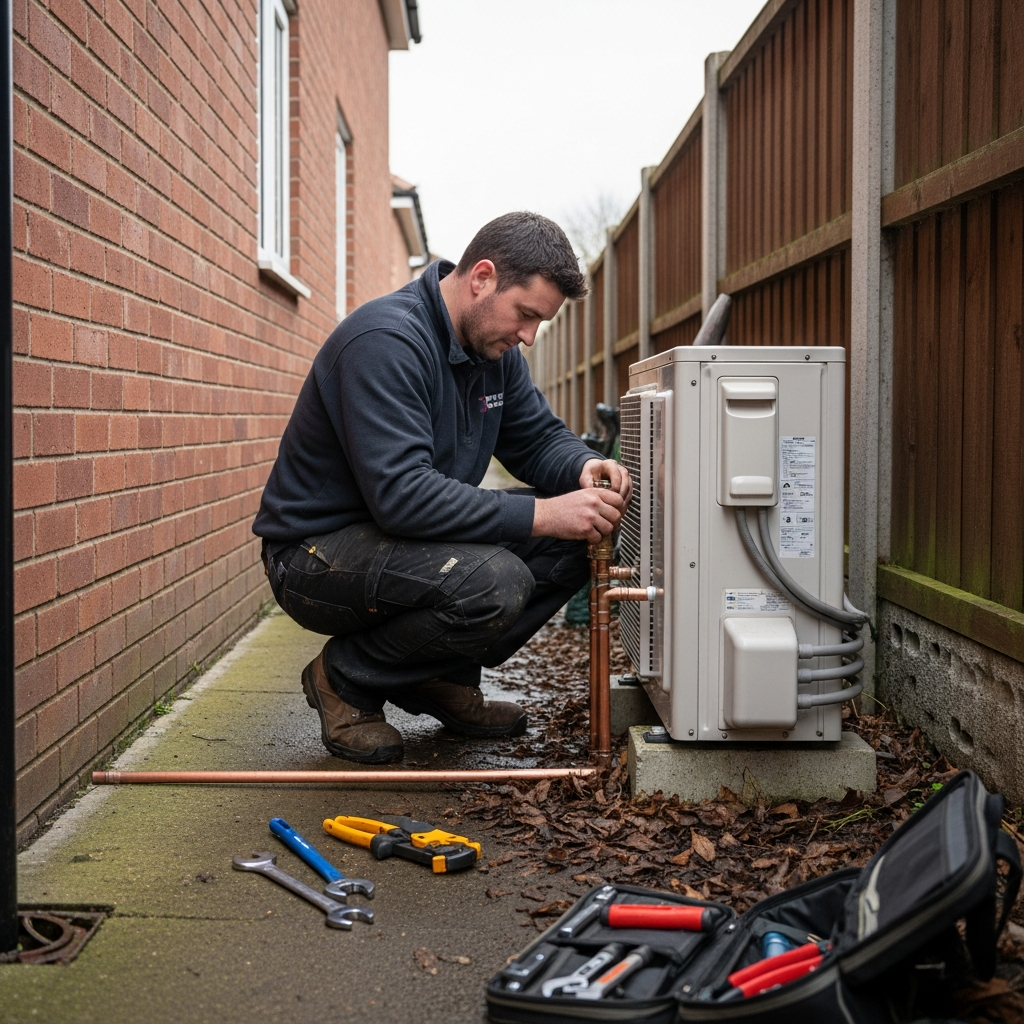
It is a fair question. Heat pumps are expensive, and a significant chunk of that cost is labour. If you are handy with plumbing and electrics, you might be wondering whether you could save thousands by doing some or all of the installation yourself.
The short answer: you can physically install a monoblock heat pump if you have the right skills, but doing so means forfeiting the £7,500 Boiler Upgrade Scheme grant and potentially voiding the manufacturer's warranty. For most people, that makes DIY installation a false economy.
See what a professional installation would actually cost you after the grant
Enter your property details and get a personalised cost estimate in 60 seconds.
Calculate my costs →In this guide:
The BUS Grant Requires MCS Certification
The Boiler Upgrade Scheme (BUS) grant provides £7,500 towards the cost of a heat pump installation. To qualify, the installation must be carried out by an MCS-certified installer using an MCS-certified heat pump product. There are no exceptions.
MCS (Microgeneration Certification Scheme) is the quality assurance framework for renewable energy installations in the UK. An MCS-certified installer has demonstrated competence, undergoes regular audits, and is committed to a consumer code with dispute resolution.
If you install the heat pump yourself — even if you do a perfect job — you cannot claim the BUS grant. That £7,500 saving from DIY labour immediately disappears, and then some.
For full details on grant eligibility, see our heat pump grants guide.
What About Manufacturer Warranties?
Most heat pump manufacturers require installation by a qualified professional — usually an MCS-certified or manufacturer-trained installer — for the warranty to be valid. A typical heat pump warranty is 5-7 years, with some offering up to 10 years if installed by an approved installer.
If you install the unit yourself and it develops a fault six months later, the manufacturer is within their rights to refuse a warranty claim. For a product that costs £4,000-£8,000 for the unit alone, that is a significant risk.
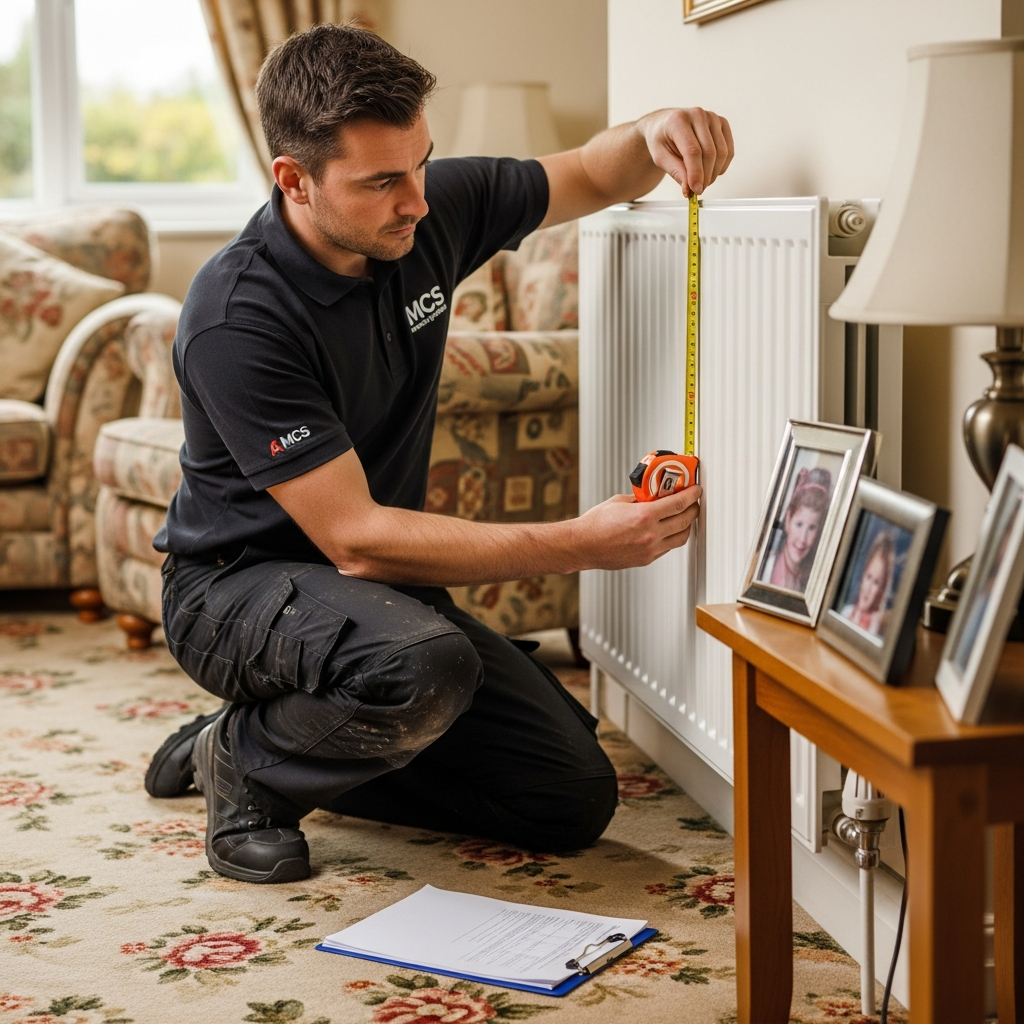
Legal Requirements You Cannot DIY
Even if you accept losing the grant and warranty, there are legal requirements that limit what you can do yourself:
Electrical Work
Connecting a heat pump to the electrical supply is notifiable work under Part P of the Building Regulations. It must be done by a registered electrician or signed off by Building Control.
F-Gas Work (Split Systems Only)
If you are installing a split system heat pump, the refrigerant connection must be made by an F-gas certified engineer. This does not apply to monoblock systems.
Building Regulations
A heat pump installation must comply with Building Regulations, including Part L (conservation of fuel and power) and Part P (electrical safety). A professional installer handles compliance. A DIY installer needs to arrange Building Control sign-off independently.
Unvented Hot Water Cylinders
If your installation includes an unvented hot water cylinder (which most heat pump installations do), fitting it is notifiable work under Building Regulations and must be installed by a competent person.
What You CAN Do Yourself to Save Money
While the actual heat pump installation should be left to professionals, there are several preparatory tasks you can do yourself to reduce the overall cost:
Prepare the Concrete Base
The outdoor unit needs a level concrete pad, typically 1m x 1m x 100mm deep. Some installers charge £200-£400 for this; doing it yourself saves that cost directly.
Clear the Installation Area
Remove plants, fencing, decking, paving, or anything else blocking the area where the outdoor unit will go. Ensure the installer has clear access.
Create Pipe Routes
If pipes need to run through walls, floors, or along external walls, you can prepare the routes in advance. Drilling through masonry walls, lifting floorboards, or chasing channels into plaster are all jobs you can do yourself.
Upgrade Insulation
Better insulation means a smaller, cheaper heat pump and lower running costs. Loft insulation, draught-proofing, and cavity wall insulation are all things you can do yourself before the heat pump installation.
Upgrade Radiators
If your installer advises larger radiators for lower flow temperatures, you can buy and fit them yourself before the heat pump installation. This can save £500-£1,500 in labour.

Get quotes from MCS-certified installers and ask which prep work can reduce your costs
Get 3 free quotes →No obligation. No sales calls. We are not installers.
The Numbers: Is DIY Actually Cheaper?
Cost Comparison: Professional vs DIY
Professional + BUS grant
£2,300
with warranty and MCS cert
DIY (no grant)
£8,200
no warranty, 3-5 days labour
Based on typical 3-bed semi installation. Professional route includes £9,800 total minus £7,500 grant.
Professional Installation with BUS Grant
- Heat pump unit: £5,000
- Hot water cylinder: £800
- Installation labour and materials: £4,000
- Total before grant: £9,800
- BUS grant: -£7,500
- Your cost: £2,300
DIY Installation (No Grant)
- Heat pump unit (retail, not trade price): £6,000
- Hot water cylinder: £800
- Electrician (Part P compliance): £500
- Building Control notification: £300
- Materials (pipes, fittings, insulation): £600
- Your labour: free (but 3-5 days of your time)
- Your cost: £8,200
The DIY route costs nearly four times as much as the professional route with the grant. Even without the grant, a professional installation at full price (£9,800) only costs £1,600 more than DIY — and you get a warranty, professional commissioning, MCS certification, and peace of mind.
Use our heat pump calculator to estimate costs for your specific situation.
The Smart Approach: Partial DIY
This is the approach that actually saves money. Do the preparation work yourself and let a professional handle the actual heat pump installation. You still qualify for the BUS grant, the manufacturer warranty is valid, and you save money on the elements that do not require specialist skills.
| Task | Potential Saving |
|---|---|
| Concrete base | £200–£400 |
| Site clearance | £100–£300 |
| Pipe routes and chasing | £200–£500 |
| Radiator upgrades | £500–£1,500 |
| Insulation improvements | Varies widely |
| Total potential savings | £1,000–£2,700 |
All without jeopardising your £7,500 grant or manufacturer warranty.
Discuss this with your installer during the quoting stage. Most will happily tell you which prep work they are comfortable with you doing and adjust their quote accordingly. Combining solar with your heat pump? Visit Home Solar Guide for solar-specific information.

Get professional quotes and keep the £7,500 grant
MCS-certified installers will design and fit the perfect system for your home — often for less than DIY after the grant.
Get my free quotes →Free. No obligation. No sales calls from us.
Frequently Asked Questions
Can I install a monoblock heat pump myself?
Physically, yes — monoblock systems do not require F-gas handling. However, you will lose the £7,500 BUS grant, likely void the manufacturer warranty, and still need a registered electrician for the electrical connection and Building Control sign-off for regulatory compliance.
Do I need MCS certification to install a heat pump?
You need an MCS-certified installer to claim the BUS grant. Without the grant, there is no legal requirement for MCS certification — but you do still need to comply with Building Regulations, electrical regulations, and (for split systems) F-gas regulations.
How much does professional installation labour cost?
Labour typically accounts for £2,500-£5,000 of a total heat pump installation cost of £8,000-£14,000. The exact figure depends on complexity, location, and whether additional work is needed.
Can I buy a heat pump directly and hire an installer?
You can, but many MCS-certified installers prefer to supply the heat pump themselves because they take responsibility for the warranty and MCS certification. Discuss this with potential installers before purchasing.
What preparation work can I do before the installer arrives?
You can pour a concrete base, clear the installation area, prepare pipe routes through walls and floors, upgrade insulation, and fit new radiators. Discuss specifics with your installer during the quoting stage.
Will the rules change to allow easier DIY installation?
Possibly. As monoblock heat pumps become simpler and more standardised, there is pressure to reduce the skills barrier. However, as long as the BUS grant requires MCS certification, the financial incentive for professional installation will remain overwhelming for most homeowners.
About Heat Pump Installation and UK Regulations
Air source heat pump installation in the UK is governed by MCS certification, Building Regulations, and F-gas legislation. The Boiler Upgrade Scheme provides £7,500 towards professional installations, making the professional route significantly cheaper than DIY for most homeowners. Combining a heat pump with solar panels further reduces ongoing energy costs. This guide is part of our resource hub covering costs, running costs, and the installation process for UK homeowners.