UK Climate Scientists on Why Heat Pumps Matter
Home heating is one of the UK's biggest climate problems — and heat pumps are the most proven solution we have. We gathered insights from leading UK climate scientists to explain why the shift from gas boilers to heat pumps is not just desirable but essential. Their message is clear: the technology works, the economics are improving, and the window for action is narrowing.
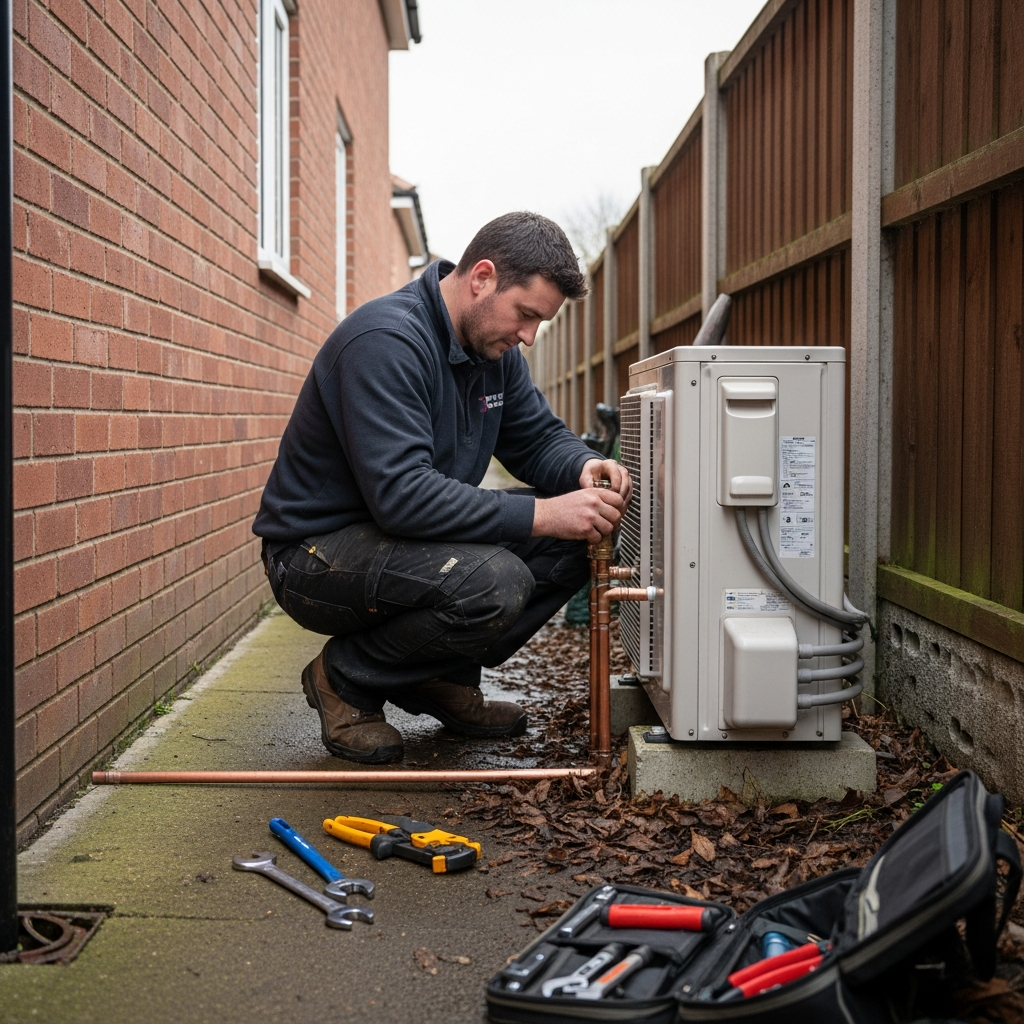
The scientific consensus on climate change is overwhelming. The UK has legally binding targets under the Climate Change Act to reach net zero greenhouse gas emissions by 2050, with interim carbon budgets requiring steep reductions in every sector. Home heating — which produces approximately 14% of all UK emissions — is one of the largest and most challenging sectors to decarbonise.
The Climate Change Committee (CCC), the UK's independent expert advisory body, has been unequivocal: there is no credible pathway to net zero that does not involve replacing the vast majority of the UK's 23 million gas boilers with heat pumps. This is not a fringe position — it is the mainstream scientific and policy consensus.
Ready to be part of the solution?
Calculate your costs and carbon savingsSee exactly how much CO2 your household would save by switching.
The UK's Heating Problem
The UK has one of the most gas-dependent heating systems in Europe. Approximately 85% of UK homes are connected to the gas grid and heated by gas boilers. By contrast, countries like Norway, Sweden, and Finland have already shifted heavily toward heat pumps and district heating.
This gas dependency creates a massive carbon problem. Every gas boiler in the UK releases approximately 2.0-3.5 tonnes of CO2 per year, depending on the home's size and insulation level. Multiplied across 23 million homes, this totals approximately 60-65 million tonnes of CO2 annually — equivalent to the emissions of about 15 million cars.
23 million
UK homes heated by gas
60-65 Mt CO2
annual emissions from home heating
14%
of total UK emissions
2050
legally binding net zero target
Carbon Budgets and What They Require
The UK operates under a system of five-yearly carbon budgets set by the CCC and enacted by Parliament. The Sixth Carbon Budget (covering 2033-2037) requires emissions to fall by 78% compared to 1990 levels. Meeting this target requires dramatic action across all sectors — and home heating is one of the biggest pieces of the puzzle.
The CCC's Balanced Net Zero Pathway, which represents the most likely route to achieving these budgets, requires:
- 600,000 heat pump installations per year by 2028 — up from approximately 200,000-250,000 today
- No new gas boiler installations from 2035 — the proposed "boiler ban" date
- 5 million homes with heat pumps by 2030 — from approximately 500,000 currently installed
- All homes off gas by 2050 — requiring 23 million heating system replacements in 25 years
These are not aspirational targets — they are the minimum required to meet the UK's legal climate commitments. Falling behind on any of these milestones makes later targets harder and more expensive to achieve.
Why Heat Pumps — and Not Alternatives?
Scientists consistently identify heat pumps as the primary solution for several reasons:
1. Proven Technology at Scale
Heat pumps are not experimental. Over 200 million are installed worldwide. Countries like Norway (60% of homes), Sweden (50%), and Finland (40%) have already demonstrated that heat pumps work at national scale in climates colder than the UK's. The technology is mature, reliable, and available today.
2. Unmatched Energy Efficiency
A heat pump produces 3-4 units of heat for every unit of electricity consumed (COP of 3-4). No other heating technology comes close to this efficiency. Even green hydrogen — if it were available — would need 5-6 times more electricity to deliver the same heat, because of the losses in producing, storing, and burning hydrogen.
3. Compatible with Renewable Electricity
As the UK electricity grid decarbonises (already over 50% renewable), heat pumps automatically become greener. By 2035, when the grid is expected to be virtually carbon-free, a heat pump will produce near-zero operational emissions. No fossil fuel alternative can make this claim. Combined with rooftop solar panels, heat pumps can even run on entirely renewable electricity.
4. No Alternative Is Ready at Scale
Hydrogen heating, heat networks, and biomass have roles to play in specific situations, but none can scale to replace 23 million gas boilers. Hydrogen production is energy-intensive, the distribution infrastructure does not exist, and the government cancelled its hydrogen village trial in 2024. District heating works well in dense urban areas but cannot reach suburban and rural homes. Heat pumps are the only technology that works everywhere, for every property type.
The Hydrogen Debate: What Scientists Actually Say
The hydrogen question deserves special attention because it has been the subject of intense lobbying and media coverage. The gas industry has promoted hydrogen as a "drop-in" replacement for natural gas — the idea that existing boilers and pipes could simply switch from methane to hydrogen with minimal disruption.
Climate scientists are overwhelmingly sceptical of this narrative. Here is what the evidence shows:
| Factor | Heat Pump | Hydrogen Boiler |
|---|---|---|
| Electricity needed per kWh of heat | 0.3 kWh | 1.5-2.0 kWh |
| Technology readiness | Commercially available | Prototype stage |
| Infrastructure readiness | Uses existing electricity grid | Requires new hydrogen network |
| Cost to consumer | Currently comparable to gas | Projected 2-3x more expensive |
| Carbon at point of use | Zero direct emissions | Zero (if green hydrogen) |
| Overall system efficiency | 300-400% | 60-70% (electrolysis + combustion) |
Sources: CCC Sixth Carbon Budget, Energy Systems Catapult analysis, Imperial College London research
The fundamental problem with hydrogen heating is thermodynamic: it takes approximately 5-6 times more electricity to heat a home with hydrogen (via electrolysis) than with a heat pump. In a world where clean electricity is the most valuable resource, using it 5-6 times less efficiently is a luxury the UK cannot afford. For more on how heat pumps compare to gas, see our comprehensive comparison.
Is the Electricity Grid Ready?
A common concern is whether the UK electricity grid can handle millions of heat pumps. Scientists and grid operators are confident it can — with proper planning:
- Peak demand increase is manageable: National Grid ESO estimates that 10 million heat pumps would add approximately 10 GW to peak demand — significant but manageable with grid reinforcement and smart charging
- Heat pumps are flexible loads: They can be scheduled to run during off-peak hours, storing heat in the home's thermal mass and hot water cylinder. This helps balance the grid rather than straining it
- Renewable capacity is expanding rapidly: Offshore wind, solar, and nuclear new-build will provide the clean electricity heat pumps need
- Smart tariffs incentivise off-peak use: Heat pump tariffs already reward homeowners for shifting demand to times when electricity is cheap and abundant
The grid challenge is real but solvable. It requires investment, planning, and coordination — not a reason to delay the transition.
See how a heat pump would work for your home
Check suitabilityFree, instant assessment. No commitment required.
Why Speed Matters: The Urgency of Action
Climate scientists emphasise that timing is critical. Carbon dioxide accumulates in the atmosphere — every year of delay means more warming locked in. The UK's carbon budgets are cumulative, meaning that missed reductions in 2026 must be compensated by even steeper reductions later.
Every gas boiler installed today has a lifespan of 12-15 years. A gas boiler installed in 2026 will still be emitting CO2 in 2040 — well into the period when the UK needs to have largely eliminated fossil fuel heating. This is why the CCC has recommended bringing forward the ban on new gas boiler installations to as early as possible.
At an individual level, every homeowner who switches from a gas boiler to a heat pump removes approximately 1.5-3.5 tonnes of CO2 per year from the atmosphere. Over the heat pump's 20-year lifetime, that is 35-55 tonnes of avoided emissions — a meaningful contribution to the collective effort.
Your Individual Impact
Climate action can feel overwhelming at the individual level. But switching your home heating system is one of the highest-impact actions any UK household can take. Our carbon calculator shows your specific savings, but here are some comparisons to put it in context:
Switching to a heat pump saves more carbon than giving up flying or switching to an electric car. Combined with solar panels, it becomes one of the most powerful climate actions available to UK households.
Frequently Asked Questions
Why do climate scientists say heat pumps are important?
Home heating produces 14% of UK carbon emissions. There is no credible pathway to net zero that does not involve switching most UK homes from gas to heat pumps. The technology is proven, available now, and works with the renewable electricity grid.
Can the UK reach net zero without heat pumps?
No. The CCC's pathway requires 5 million heat pumps by 2030 and near-complete gas boiler phase-out by 2035. No alternative is ready at scale.
How much of the UK's carbon budget does home heating consume?
Approximately 60-65 million tonnes of CO2 equivalent per year — roughly 14% of total emissions.
Is hydrogen an alternative to heat pumps for home heating?
Most scientists are sceptical. Hydrogen requires 5-6 times more electricity than a heat pump for the same heating. The infrastructure does not exist and costs would be 2-3 times higher. Read our comparison guide for more context.
How quickly does the UK need to switch to heat pumps?
The CCC recommends 600,000 installations per year by 2028. Current rates of 200,000-250,000 need to at least double to stay on track for carbon budgets.
Make a difference — start your heat pump journey
Get free quotes from MCS installersEvery installation counts. Compare quotes from certified installers near you.
Heat Pumps in the Climate Context
The climate case for heat pumps is part of a broader transformation of UK energy systems. Alongside solar panels, electric vehicles, and grid decarbonisation, heat pumps represent a proven technology that delivers immediate emission reductions. The Boiler Upgrade Scheme and other government support programmes recognise this by making heat pump installation accessible to millions of UK homeowners. The scientific evidence is clear — and the technology to act on it is available today.