How Much Energy Does a Heat Pump Use?
A typical UK home with an air source heat pump uses between 2,500 and 7,000 kWh of electricity per year for heating and hot water. That is roughly one-third of the energy a gas boiler consumes for the same output -- because heat pumps move heat rather than creating it.
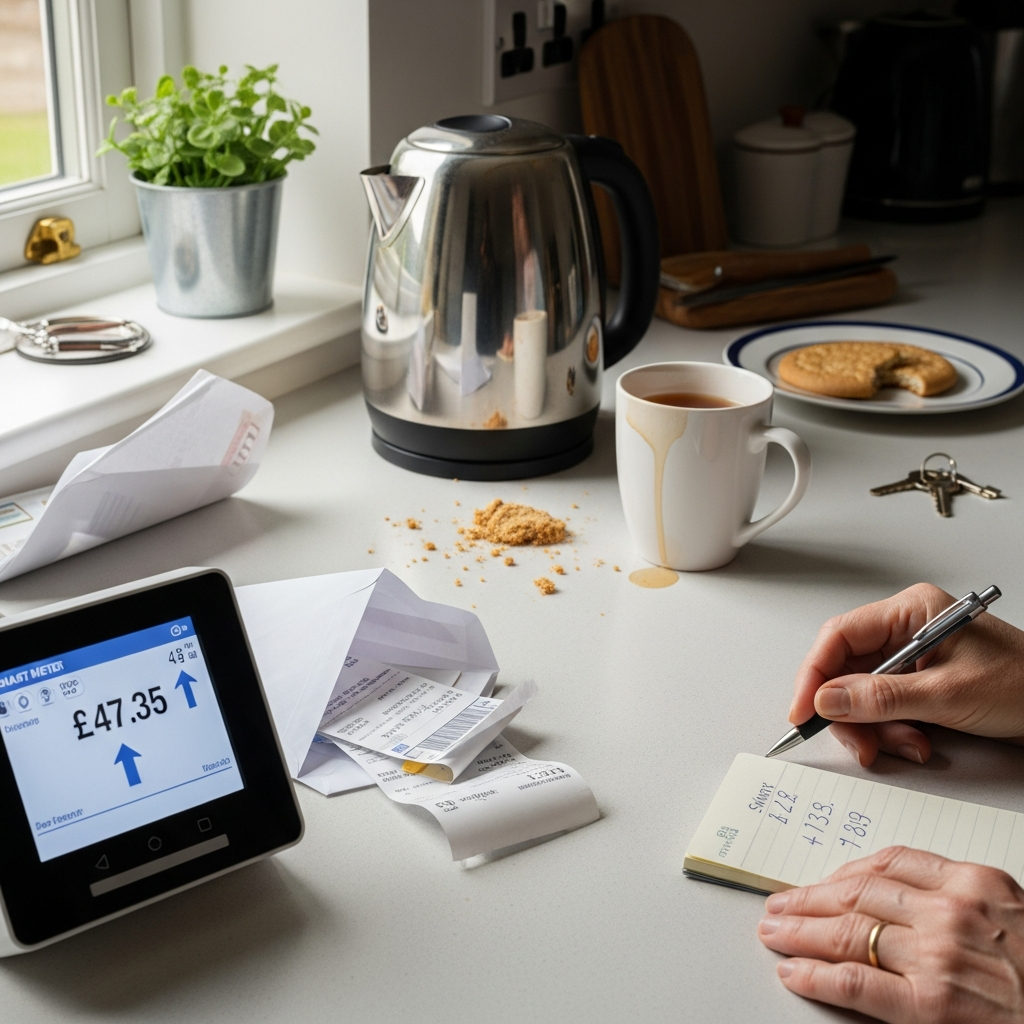
Understanding how much energy a heat pump actually consumes is essential for budgeting, choosing the right electricity tariff, and setting realistic expectations. This guide explains exactly where that number comes from and what influences it. For a full breakdown of what this energy costs you in pounds and pence, see our running costs guide.
Calculate your heat pump's energy use and running costs
Use the free calculatorInstant estimate based on your property size and insulation level.
The Basic Calculation
A heat pump moves heat from the outdoor air into your home, using electricity to power a compressor and fans. The amount of electricity it uses depends on two things: how much heat your home needs (kWh per year) and how efficiently the heat pump delivers that heat (COP).
Electricity used (kWh) = Heat demand (kWh) / Seasonal COP
For example, if your home needs 12,000 kWh of heat per year and your heat pump has a seasonal COP of 3.0, it will use 4,000 kWh of electricity. That COP of 3.0 means the heat pump produces 3 kWh of heat for every 1 kWh of electricity consumed -- the other 2 kWh comes free from the air outside.
Typical Heat Demands for UK Homes
Your property's annual heat demand varies significantly based on size, insulation quality, occupancy patterns, and location within the UK.
| Property Type | Floor Area | Heat Demand (kWh/year) |
|---|---|---|
| Small flat (1-2 bed) | 40-60m2 | 3,500-6,000 |
| Terraced house (2-3 bed) | 65-85m2 | 6,000-10,000 |
| Semi-detached (3 bed) | 85-110m2 | 9,000-14,000 |
| Detached house (4 bed) | 120-170m2 | 13,000-22,000 |
| Large detached (5+ bed) | 200m2+ | 20,000-35,000 |
If you know your current gas consumption, you can estimate your heat demand by multiplying your annual gas kWh by your boiler's efficiency (typically 0.85-0.92). Our heat pump calculator can estimate this for you.
Realistic Seasonal COP Values
The seasonal COP (sometimes called SPF -- Seasonal Performance Factor) is the average efficiency across the entire year. Based on real-world monitoring data from UK installations:
The median SPF across monitored UK installations is approximately 2.8-3.0. For our calculations, we use 3.0 as a reasonable mid-point, while noting that a well-installed system should achieve better.
Energy Consumption by Property Type
Combining heat demands with a seasonal COP of 3.0:
| Property | Heat Demand | Electricity Used | Winter Daily Avg | Summer Daily Avg |
|---|---|---|---|---|
| Small flat (1-2 bed) | 4,500 kWh | 1,500 kWh/yr | 8-12 kWh | 2-3 kWh |
| Terraced (2-3 bed) | 8,000 kWh | 2,667 kWh/yr | 12-18 kWh | 3-4 kWh |
| Semi-detached (3 bed) | 11,500 kWh | 3,833 kWh/yr | 16-24 kWh | 3-5 kWh |
| Detached (4 bed) | 17,000 kWh | 5,667 kWh/yr | 22-35 kWh | 4-6 kWh |
| Large detached (5+) | 27,000 kWh | 9,000 kWh/yr | 35-55 kWh | 5-8 kWh |
Get an accurate estimate for your property
Check your home's suitabilityFree tool. Takes 2 minutes. Includes energy use estimate.
Seasonal Variation: Where the Energy Goes
Heat pump energy consumption is not spread evenly across the year. The seasonal pattern is dramatic:
What That Electricity Actually Costs (August 2026 Rates)
Knowing the kWh is only half the answer. The question almost every homeowner is really asking is what it costs, and whether that is more or less than the boiler being replaced. Here is the full working, with every assumption stated, so the figures can be checked rather than taken on trust.
The assumptions behind every number below
- Electricity: 26.11p per kWh — Ofgem energy price cap, 1 July to 30 September 2026, Direct Debit, Great Britain average, including VAT.
- Gas: 7.33p per kWh — same cap, same basis.
- Heat pump SCOP: 3.2 — a realistic seasonal average for a well-designed air source system on a low flow temperature.
- Gas boiler efficiency: 90% — a modern condensing boiler across a real heating season, not its lab rating.
- Both columns use the same heat demand, so this is a like-for-like comparison of the heat delivered into the home.
- Standing charges are excluded from the table and handled separately below, because both systems carry them.
Northern Ireland is not covered by the GB price cap. Cap rates change quarterly — the next review takes effect 1 October 2026.
| Property | Heat demand | Heat pump electricity | Heat pump cost/year | Gas used | Gas cost/year | Difference |
|---|---|---|---|---|---|---|
| Small flat (1-2 bed) | 4,500 kWh | 1,406 kWh | £367 | 5,000 kWh | £366 | +£1 |
| Terraced (2-3 bed) | 8,000 kWh | 2,500 kWh | £653 | 8,889 kWh | £652 | +£1 |
| Semi-detached (3 bed) | 11,500 kWh | 3,594 kWh | £938 | 12,778 kWh | £937 | +£2 |
| Detached (4 bed) | 17,000 kWh | 5,312 kWh | £1,387 | 18,889 kWh | £1,385 | +£3 |
| Large detached (5+ bed) | 27,000 kWh | 8,438 kWh | £2,203 | 30,000 kWh | £2,199 | +£4 |
Illustrative calculation by Home Heat Pump Guide using the Ofgem capped rates above (modelled figures, not measured field data). Your own figures will differ.
The result most comparisons do not print
At the current cap, a heat pump running at SCOP 3.2 and a 90% gas boiler cost within a few pounds a year of each other — at every property size in the table. Not double. Not half. Roughly the same.
That happens because electricity currently costs about 3.6 times as much as gas per kWh, and a good heat pump is about 3.6 times more efficient at turning it into heat. The two effects very nearly cancel out.
Which gives a single number that decides the outcome:
What your SCOP does to the bill
Same 11,500 kWh semi-detached house, same electricity price, only the seasonal efficiency changes:
| Seasonal efficiency | Electricity used | Cost per year | Against a 90% gas boiler |
|---|---|---|---|
| SCOP 2.4 | 4,792 kWh | £1,251 | Costs more to run than gas |
| SCOP 2.8 | 4,107 kWh | £1,072 | Costs more to run than gas |
| SCOP 3 | 3,833 kWh | £1,001 | Costs more to run than gas |
| SCOP 3.21 (breakeven) | 3,583 kWh | £935 | Roughly line-ball with gas |
| SCOP 3.5 | 3,286 kWh | £858 | Cheaper to run than gas |
| SCOP 4 | 2,875 kWh | £751 | Cheaper to run than gas |
The spread between a poorly commissioned system and a well designed one is roughly £400 a year on the same house. That is the single largest lever a homeowner controls, and it is decided by the design and installation — flow temperature, emitter sizing and commissioning — not by the badge on the outdoor unit.
The standing charge nobody mentions
If the gas supply is removed entirely rather than capped, the gas standing charge goes with it — 29.09p a day, about £106 a year at the current cap. On the figures above that is usually enough to move a heat pump from line-ball to modestly cheaper. Keeping a gas hob keeps the standing charge.
What would change these numbers
- A heat pump tariff. Several suppliers offer a discounted rate for the heat pump's consumption. That changes the electricity price in the calculation, and it is the fastest way to move well below gas.
- The next cap review. Rates change quarterly. The electricity to gas price ratio is what matters, not either price on its own.
- Your actual heat demand. The table uses typical figures. A room by room heat loss calculation from an MCS installer is the only way to know yours, and a good installer will do one before quoting.
- Solar and battery. Self-generated electricity is not billed at the cap rate, which changes the arithmetic materially.
- A cold winter. Seasonal averages hide the fact that a cold snap pushes demand up and SCOP down at the same time.
Anyone quoting a single national "save £X a year" figure is guessing at your heat demand, your SCOP and your tariff. Those three numbers are what decide it.
What Affects How Much Energy Your Heat Pump Uses
Flow Temperature
The temperature the heat pump heats your radiator water to has the single biggest impact on efficiency. Every degree reduction in flow temperature improves COP by approximately 1-2%. This is why correctly sized radiators and weather compensation are so important. For more on this, see our guide on whether you need new radiators.
Insulation Quality
Better insulation reduces heat demand directly. Adding 100mm of loft insulation top-up might reduce heat demand by 10-15%, meaning 10-15% less electricity consumed.
Thermostat Settings
Every 1°C increase in your thermostat setting increases heat demand by roughly 8-10%. Heat pumps work best when you find the lowest comfortable temperature and maintain it consistently.
System Configuration
Weather compensation, buffer tank sizing, defrost cycle efficiency, and hydraulic design all influence overall system performance. A well-commissioned system with properly configured weather compensation typically uses 10-20% less electricity than the same equipment poorly configured. Our installation guide covers what to look for.

How to Monitor Your Heat Pump's Energy Use
Monitoring is essential for ensuring your system is performing as expected. Most modern heat pumps have built-in energy meters that track electricity input and heat output. Track your seasonal COP -- if it drops below 2.5, something may need attention.
If you have solar panels, monitoring both systems together shows how much of your heat pump's consumption is covered by free solar electricity.
Comparing Energy Use: Heat Pump vs Other Systems
For a three-bedroom semi with 11,500 kWh heat demand:
The heat pump uses the least energy of any option because it is not generating heat -- it is moving it. For a fuller comparison, see our heat pump vs gas boiler analysis.
Frequently Asked Questions
How many kWh does a heat pump use per day?
A three-bedroom semi typically uses 16-24 kWh per day in winter, 8-12 kWh in spring/autumn, and 3-5 kWh in summer (hot water only). The annual average works out to approximately 10-11 kWh per day.
Does a heat pump use more electricity than a gas boiler?
Yes, your electricity consumption will increase when you switch from gas to a heat pump -- typically by 3,000-5,000 kWh per year. However, your gas consumption drops to zero, and the total energy cost is usually similar or lower.
How much does the electricity for a heat pump cost?
At the Ofgem capped rate of 26.11p per kWh (1 July to 30 September 2026, Direct Debit, Great Britain average), a typical three-bedroom semi using 11,500 kWh of heat costs about £938 a year to heat at SCOP 3.2. A 90% gas boiler delivering the same heat costs about £937. A dedicated heat pump tariff lowers the heat pump figure; a poorly commissioned system raises it. Our calculator provides a personalised estimate.
Does a heat pump use more energy in cold weather?
Yes. In cold weather, the heat demand is higher and the COP is lower, so the heat pump uses significantly more electricity. This is normal and expected -- the system is designed to handle it.
Can solar panels cover a heat pump's energy use?
Partially. A typical 4kW solar array generates approximately 3,400-3,800 kWh per year in the UK. However, generation peaks in summer when heat pump demand is lowest. Solar might offset 15-25% of annual heat pump electricity consumption directly, with more benefit if you have a battery or can shift heating to daytime hours.
What is the maximum energy a heat pump could use?
On the coldest day of a typical UK winter, a heat pump for a large, poorly insulated property might draw its full electrical capacity (3-5kW) for 18-20 hours. That is 54-100 kWh in a single day. However, such extreme days are rare. Check your property's suitability with our suitability tool.
Get a personalised energy and cost estimate for your home
Use the free calculatorSee your estimated kWh usage, annual cost, and savings versus your current system.
About this guide: This article is part of the Home Heat Pump Guide cost cluster, providing detailed energy consumption data for air source heat pumps across UK property types. Understanding energy use is fundamental to calculating total heat pump costs and evaluating solar panel integration opportunities.