The Hidden Environmental Cost of Keeping Your Gas Boiler
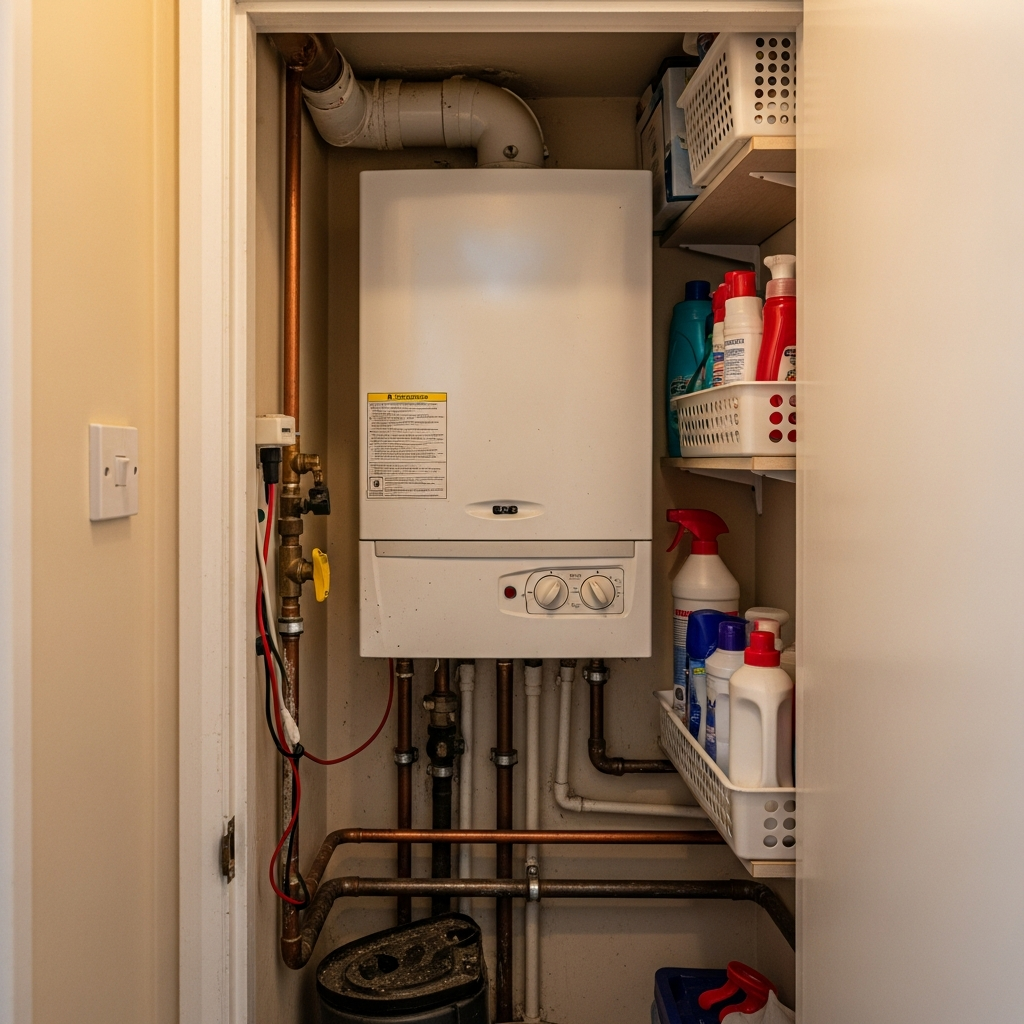
Your gas bill shows you what you pay in pounds and pence. What it does not show is the environmental cost — the carbon dioxide warming the planet, the nitrogen oxides damaging lungs, the methane leaking from pipes, and the long-term health consequences for communities living with fossil fuel combustion. These costs are real, measurable, and significant. They are just paid by everyone, rather than appearing on your monthly statement.
In this article, we quantify every hidden environmental cost of domestic gas heating — the CO2 emissions, the air quality impacts, the methane leakage, the health costs, and the contribution to climate change. We also compare these costs with the environmental footprint of heat pump heating, showing why the switch is one of the most impactful environmental decisions a UK homeowner can make.
Calculate your carbon savings
Get Your Free AssessmentSee how much CO2 you would save by switching. Free, under 2 minutes.
The CO2 Cost: 2-4 Tonnes Every Year
Burning natural gas produces carbon dioxide. For every kWh of gas burned, approximately 0.183 kg of CO2 is released into the atmosphere. A typical UK household uses 12,000-15,000 kWh of gas for heating per year. After accounting for boiler efficiency (92%), that means:
Domestic gas heating accounts for approximately 14% of all UK carbon emissions — more than all the country's cars combined. According to the Climate Change Committee, decarbonising home heating is essential to achieving net zero by 2050. There is no pathway to net zero that includes 23 million gas boilers.
Over a gas boiler's 15-year lifespan, a typical home produces 36-52 tonnes of CO2 from heating alone. Over 25 years (the typical comparison period for heat pump economics), it is 60-85 tonnes. These are not abstract numbers — they represent a measurable contribution to global warming with quantifiable consequences.
The Methane Leakage Problem
The CO2 from burning gas is only part of the story. Natural gas is primarily methane (CH4), and the gas distribution network leaks. According to data from the National Atmospheric Emissions Inventory and Ofgem reports, the UK gas distribution network loses approximately 0.3-0.5% of total throughput through leakage.
Why does this matter so much? Because methane is an exceptionally potent greenhouse gas. Over a 20-year period, methane is approximately 80 times more powerful than CO2 at trapping heat in the atmosphere. Even over the standard 100-year comparison period, it is 28 times more potent. These fugitive emissions significantly increase the true climate impact of gas heating but are rarely included in the figures presented to consumers.
When methane leakage is included in the calculation, the total greenhouse gas footprint of gas heating increases by approximately 15-25% above the combustion-only CO2 figure. This makes the gap between gas boilers and heat pumps even wider than the standard comparison suggests.
Indoor and Outdoor Air Quality
Gas combustion produces nitrogen oxides (NOx), carbon monoxide (CO), and particulate matter. Modern condensing boilers with balanced flues vent these pollutants outside, but they still enter the local air. In densely populated areas, the cumulative effect of millions of gas boiler flues contributes to background air pollution.
The indoor air quality impact is particularly significant when gas cookers are considered alongside gas boilers. Research published by the ONS and health bodies shows that homes with gas cookers regularly exceed World Health Organisation guidelines for indoor NO2 levels. While this is a gas cooker issue rather than a boiler issue specifically, the complete transition away from domestic gas — which heat pump adoption facilitates — addresses both problems.
A heat pump produces zero emissions at the point of use. No combustion, no flue gases, no indoor air quality impact. The electricity it consumes is generated at power stations with increasingly stringent emissions controls, or from renewable sources with zero emissions.
The Health Costs Nobody Talks About
The health costs of fossil fuel combustion are borne by society, not by individual gas consumers. Research from the UK Health Security Agency and the Royal College of Physicians links air pollution from gas combustion to respiratory disease, cardiovascular problems, and premature death.
While quantifying the health cost per household is difficult, estimates from environmental economists suggest the social cost of domestic gas heating — including health impacts, climate damage, and environmental degradation — is approximately £300-£600 per household per year. This cost does not appear on anyone's gas bill — it is paid through the NHS, through climate adaptation spending, and through reduced quality of life.
Make the switch that matters most
Calculate Your Savings and Carbon ReductionSwitching heating is the single biggest carbon cut most homeowners can make.
Heat Pump vs Gas: The Carbon Comparison
| Factor | Gas Boiler | Heat Pump (2026 Grid) | Heat Pump (2030 Grid) |
|---|---|---|---|
| CO2 per kWh of heat | 0.199 kg | 0.068 kg | 0.035 kg |
| Annual CO2 (12,000 kWh heat) | 2,390 kg | 816 kg | 420 kg |
| Methane leakage addition | +20% | N/A | N/A |
| Total annual GHG impact | ~2,870 kg CO2e | ~816 kg CO2e | ~420 kg CO2e |
| Carbon saving vs gas | — | 72% | 85% |
Sources: DESNZ emission factors 2025, CCC grid projections. Gas boiler at 92% efficiency, heat pump at COP 3.0. 2030 grid assumes ~95% low-carbon electricity.
Today, a heat pump produces approximately 72% less greenhouse gas emissions than a gas boiler for the same amount of heat. By 2030, as the electricity grid decarbonises further, this advantage will grow to approximately 85%. By 2035, when the grid is projected to be virtually zero-carbon, a heat pump will produce near-zero heating emissions.
The Decarbonising Grid: Heat Pumps Get Cleaner Every Year
This is the crucial point that gas boiler advocates always miss: a heat pump's environmental performance improves automatically as the electricity grid gets cleaner. You do not need to do anything — no modifications, no upgrades, no replacements. Every new wind turbine and solar farm built makes your existing heat pump greener.
The UK electricity grid has already decarbonised dramatically. In 2012, the grid carbon intensity was approximately 500g CO2/kWh. In 2025, it is approximately 150g CO2/kWh. By 2030, the government targets 95%+ low-carbon electricity, which would reduce the intensity to approximately 50g CO2/kWh.
A gas boiler, by contrast, produces exactly the same emissions in 2035 as it does today. Its environmental performance is fixed. As the grid cleans up, the gap between gas and electricity widens relentlessly in favour of heat pumps. If you are also generating your own clean electricity with solar panels, your heat pump's environmental impact can be near zero even today.
The 25-Year Carbon Footprint
Over a 25-year period — the typical lifespan comparison — the cumulative carbon difference between gas and heat pump heating is dramatic:
Estimates assume declining grid carbon intensity through 2050. Gas includes methane leakage. Heat pump at COP 3.0.
Switching from gas to a heat pump saves approximately 56 tonnes of CO2-equivalent over 25 years. Adding solar panels saves a further 9 tonnes. These are substantial numbers — equivalent to taking 2-3 cars off the road permanently.
What You Can Do
For most UK homeowners, switching from gas to a heat pump is the single largest carbon reduction action available. It saves more CO2 than:
- Giving up one car (1.5-2 tonnes CO2/year)
- Going vegetarian (0.5-1 tonne CO2/year)
- Stopping flying (0.5-2 tonnes CO2/year depending on habits)
- Switching to an electric car (1-2 tonnes CO2/year)
The BUS grant of £7,500 makes the financial case accessible. The environmental case has been overwhelming for years. And with running costs now competitive with gas, there is no longer a trade-off between doing the right thing and doing the affordable thing.
Make the biggest carbon cut available to you
Get Your Free Cost EstimateSee your financial savings and carbon reduction side by side. Under 2 minutes.
Frequently Asked Questions
How much CO2 does a gas boiler produce?
A typical UK gas boiler produces 2.2-3.5 tonnes of CO2 per year. Over 15 years, that is 33-52 tonnes. Domestic gas heating accounts for approximately 14% of all UK carbon emissions.
Does a gas boiler pollute indoor air?
Modern balanced-flue boilers vent combustion gases outside. However, gas cookers — which often accompany gas heating — produce significant indoor NO2 pollution exceeding WHO guidelines in many homes.
How does heat pump carbon compare?
A heat pump produces 72% less greenhouse gas emissions than a gas boiler today. By 2030, with further grid decarbonisation, the advantage will be approximately 85%.
What about methane leaks?
The UK gas network leaks 0.3-0.5% of throughput. Methane is 80 times more potent than CO2 over 20 years, adding approximately 15-25% to the true climate impact of gas heating.
Will gas become worse environmentally over time?
Gas emissions stay constant. Heat pump emissions fall as the grid decarbonises. The environmental gap between them widens relentlessly in favour of heat pumps every year.
Is switching the most impactful thing I can do?
For most UK homeowners, yes. Switching from gas to a heat pump saves 1.5-2.5 tonnes of CO2 per year — more than giving up a car or stopping flying.
The Real Cost of Gas Heating
Your gas bill does not reflect the true cost of burning fossil fuels in your home. Heat pumps produce zero emissions at the point of use, and their electricity footprint shrinks as the grid decarbonises. The BUS grant makes switching affordable, running costs are competitive, and combining with solar panels can make your heating virtually carbon-free today. The environmental case for switching has never been stronger.