The Gas Boiler Lobby vs Heat Pumps: Following the Money
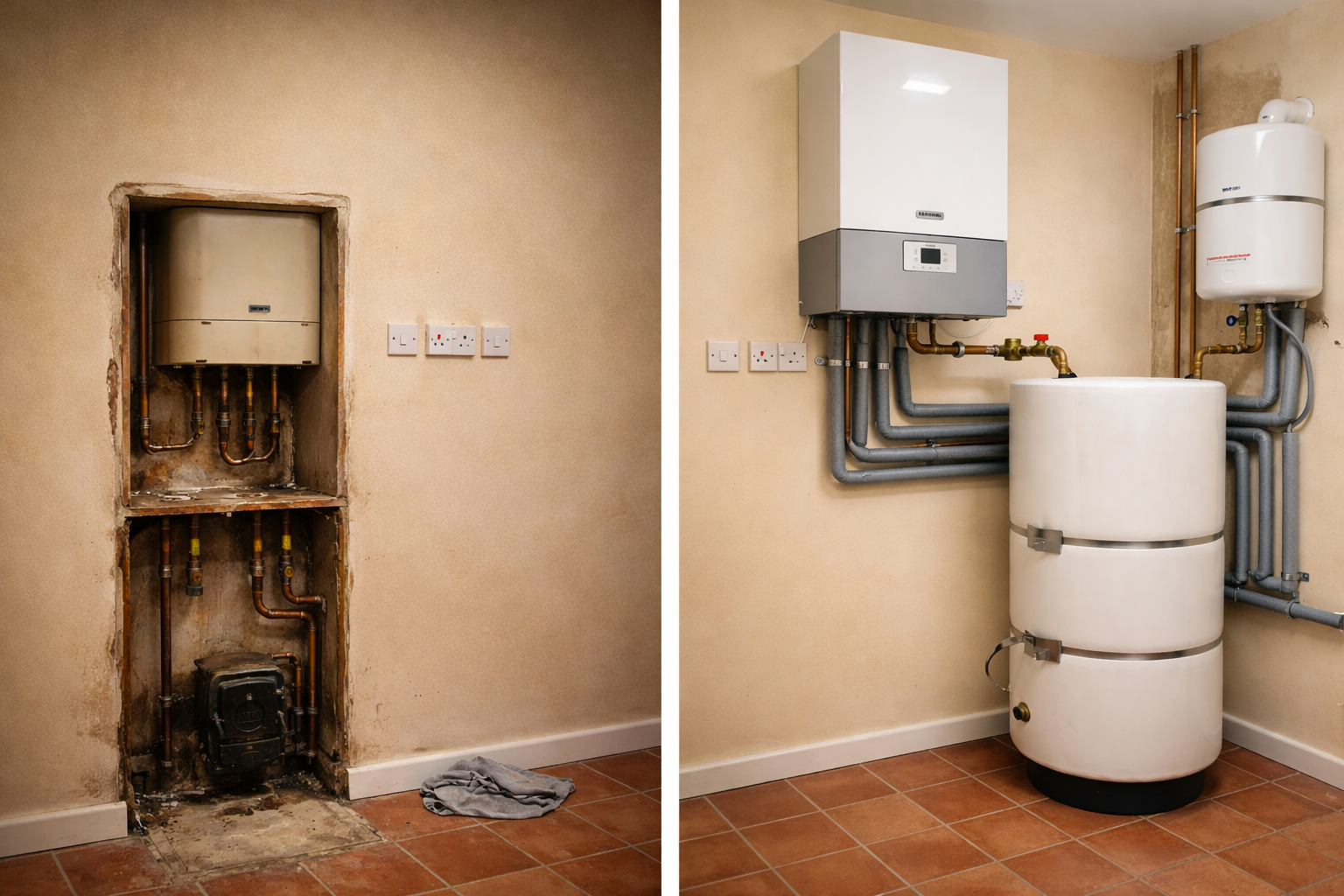
Why does the UK public hear so many negative things about heat pumps? Why do newspaper headlines focus on worst-case costs and cherry-picked problems? Why does the hydrogen boiler narrative persist despite overwhelming expert consensus against it? The answer, as with most things, follows the money.
This is not a conspiracy theory. It is publicly traceable financial interest, documented lobbying activity, and transparent commercial incentive. The UK gas industry — encompassing gas network operators, boiler manufacturers, and their trade bodies — has billions of pounds at stake in the heating transition. Every heat pump installed is a gas customer lost permanently. Understanding these interests does not mean dismissing every concern about heat pumps, but it does mean approaching industry-funded claims with appropriate scepticism.
Cut through the noise — get the real numbers
Calculate Your Actual CostsIndependent cost estimates based on your home. No industry spin — just maths.
What Is at Stake: The Numbers
To understand the lobbying effort, you need to understand the scale of what the gas industry stands to lose.
The UK domestic gas heating market is worth approximately £22 billion per year — covering gas fuel sales, boiler sales, boiler installations, servicing, and gas safety certificates. If the UK transitions to heat pumps as planned, almost all of this market disappears. Gas network operators face the potential stranding of over £50 billion in infrastructure assets. Boiler manufacturers face the obsolescence of their core product.
These are not abstract numbers. They represent the salaries, pensions, share prices, and business models of some of the UK's largest companies. The financial incentive to slow or prevent the heat pump transition is immense.
The Gas Network Operators
The UK gas distribution network is operated by four companies: Cadent (the largest, covering much of England), SGN (Scotland and southern England), Northern Gas Networks (north-east England and northern Cumbria), and Wales & West Utilities (Wales and south-west England). These companies are regulated monopolies that earn revenue based on the value of their infrastructure assets.
If homes switch from gas to heat pumps, the gas network loses customers. If enough customers leave, the network becomes uneconomic to maintain. The remaining customers face higher standing charges, creating a "death spiral" that accelerates departures further. This is an existential threat to the gas distribution companies.
The response has been significant investment in hydrogen advocacy. Gas network operators have collectively spent tens of millions on hydrogen pilot projects, PR campaigns, and political lobbying aimed at positioning hydrogen as the future of home heating. The logic is straightforward: if hydrogen replaces natural gas, the pipes stay relevant, the companies stay relevant, and the asset base retains its value.
Projects like H21, HyDeploy, and the now-cancelled hydrogen village trials were substantially funded by gas network operators through their allowable expenditure from consumer bills. Consumers were, in effect, funding the lobbying effort to keep themselves on gas.
The Boiler Manufacturers
UK gas boiler manufacturers sell approximately 1.6 million units per year. The major players include Worcester Bosch, Baxi, Ideal, and Vaillant's gas division. These companies have built their entire businesses around combustion heating.
The transition to heat pumps requires a fundamental shift in manufacturing, supply chains, and engineering expertise. Some manufacturers — notably Vaillant and Bosch — have invested heavily in heat pump development and now produce market-leading products. Others have been slower to adapt, preferring to extend the gas boiler market as long as possible.
The "hydrogen-ready" boiler concept is widely seen as a delay tactic. By marketing gas boilers as "hydrogen-ready," manufacturers encourage consumers to buy gas boilers instead of heat pumps, on the premise that the boiler will eventually run on clean hydrogen. As we explain in our hydrogen boiler myth analysis, the domestic hydrogen supply these boilers would need almost certainly will not materialise.
The practical effect is that every "hydrogen-ready" boiler sold is a gas boiler sold — maintaining market share for the manufacturers while delaying a homeowner's transition to a heat pump by 12-15 years (the typical boiler lifespan).
The Energy and Utilities Alliance
The Energy and Utilities Alliance (EUA) is a trade body that represents gas boiler manufacturers and gas infrastructure companies. It has been one of the most vocal critics of heat pump policy in the UK, regularly publishing reports and media statements that question the viability, cost, and practicality of heat pumps.
The EUA has argued against the phase-out of gas boilers, promoted hydrogen as an alternative to electrification, and lobbied for policies that would slow the heat pump transition. Its positions consistently align with the commercial interests of its member companies — which is unsurprising, given that representing those interests is its reason for existing.
What is problematic is when media outlets present EUA statements as independent expert analysis rather than industry lobbying. Consumers reading an EUA quote in a newspaper may not realise they are reading a position funded by companies with billions at stake in the outcome of the debate.
The Hydrogen Play: A Masterclass in Delay
The hydrogen heating narrative deserves special attention because it represents one of the most effective delay strategies in UK energy policy.
The argument is simple and elegant: "Don't rush into heat pumps — hydrogen is coming, and it will let you keep your existing heating system with no disruption." This narrative does three things simultaneously:
- Creates uncertainty: If hydrogen might be coming, why commit to a heat pump now? Better to wait and see.
- Preserves the market: Every year of delay is another year of gas boiler sales and gas fuel revenue.
- Protects asset values: As long as hydrogen is "possible," the gas network's asset value is maintained in regulatory calculations.
The strategy has been remarkably successful, despite the fact that the Climate Change Committee, the Royal Society, the International Energy Agency, and virtually every independent energy researcher has concluded that hydrogen heating at domestic scale is not viable. The power of the narrative lies in its simplicity and its appeal to the natural human desire to avoid change.
Don't be delayed — see the real numbers
Calculate Your Actual SavingsIndependent analysis based on your home. Every year you wait costs you money.
The Media Angle
Negative heat pump stories perform well in the media because they tap into fear of change and financial anxiety. Headlines like "Heat pump costs TRIPLE expected" or "Family left freezing after heat pump fails" generate clicks and engagement. Positive stories — "Family saves £800 a year with heat pump" — receive far less attention.
Several factors contribute to the media landscape:
Advertising revenue: Energy companies and gas boiler manufacturers represent significant advertising budgets. Publications that rely on this advertising have a financial disincentive to publish content that undermines these advertisers' products.
Political alignment: Some publications have editorial positions that oppose net zero policies generally. Heat pumps, as a visible manifestation of the energy transition, become a convenient target for broader political messaging.
Complexity vs simplicity: Explaining why heat pumps work well requires nuance — discussing COP, flow temperatures, tariff optimisation, and seasonal variation. Explaining why they "don't work" requires only an anecdote and a scary number. The asymmetry favours negative coverage.
This does not mean journalists are dishonest. But it does mean consumers should consider the source and funding behind heat pump claims, just as they would with any product comparison where billions of pounds are at stake.
Separating Valid Concerns from Lobbying
It is important not to dismiss every concern about heat pumps as industry lobbying. Some criticisms are genuine and constructive:
- Upfront costs: Heat pumps do cost more upfront than gas boilers, even after the BUS grant. This is a genuine barrier, particularly for lower-income households.
- Insulation requirements: Many UK homes need insulation improvements before a heat pump will perform optimally. This adds cost and complexity.
- Electricity-to-gas price ratio: The current ratio makes running costs roughly equal rather than decisively in favour of heat pumps. Policy reform to rebalance this ratio would help.
The difference between legitimate concerns and lobbying is in the proposed solution. Legitimate concerns say: "These problems exist — here is how to fix them so heat pumps work better." Lobbying says: "These problems exist — therefore you should keep buying gas boilers and wait for hydrogen."
One set of messages leads to progress. The other leads to delay — which is exactly what the gas industry's commercial interests require.
Get independent advice based on data, not lobbying
Calculate Your Real Costs and SavingsOur estimates use Ofgem data, MCS statistics, and real performance figures. No industry spin.
Frequently Asked Questions
Who lobbies against heat pumps?
Gas network operators (Cadent, SGN, Northern Gas Networks, Wales & West), traditional gas boiler manufacturers, and trade bodies like the Energy and Utilities Alliance. All have significant financial interests in maintaining gas heating.
How much does the gas industry spend on lobbying?
Gas network operators spend tens of millions annually on hydrogen advocacy, PR campaigns, and political engagement. Some of this comes from consumer bills through regulated expenditure allowances.
Why do newspapers publish negative heat pump stories?
Negative stories generate engagement, some publications receive energy industry advertising, and scare stories are simpler to write than nuanced technical analysis. Political alignment with anti-net-zero positions also plays a role.
Are hydrogen-ready boilers a lobbying tool?
Many analysts believe so. They currently only burn gas and may never run on hydrogen. They serve to maintain gas boiler sales while delaying the transition to heat pumps.
What is the EUA?
The Energy and Utilities Alliance represents gas boiler manufacturers and gas infrastructure companies. It has been highly active in anti-heat pump messaging. Its positions align with its members' commercial interests.
Does this mean all criticism of heat pumps is wrong?
No. Some concerns — about installer quality, upfront costs, and insulation — are valid. The difference is whether the conclusion is "fix these problems" or "therefore keep buying gas boilers." The latter serves industry interests, not consumer interests.
Making an Informed Decision
Understanding who funds anti-heat pump messaging helps you evaluate claims critically. The facts are clear: heat pumps are proven, the BUS grant makes them affordable, running costs are competitive with gas, and solar panel integration makes them even cheaper. Over 250,000 UK homes are already benefiting. The real costs are far lower than lobby-influenced media coverage suggests. Independent sources — the CCC, Energy Saving Trust, and Nesta — all support the transition.