Do Heat Pumps Cause Damp? The Science Behind the Claim
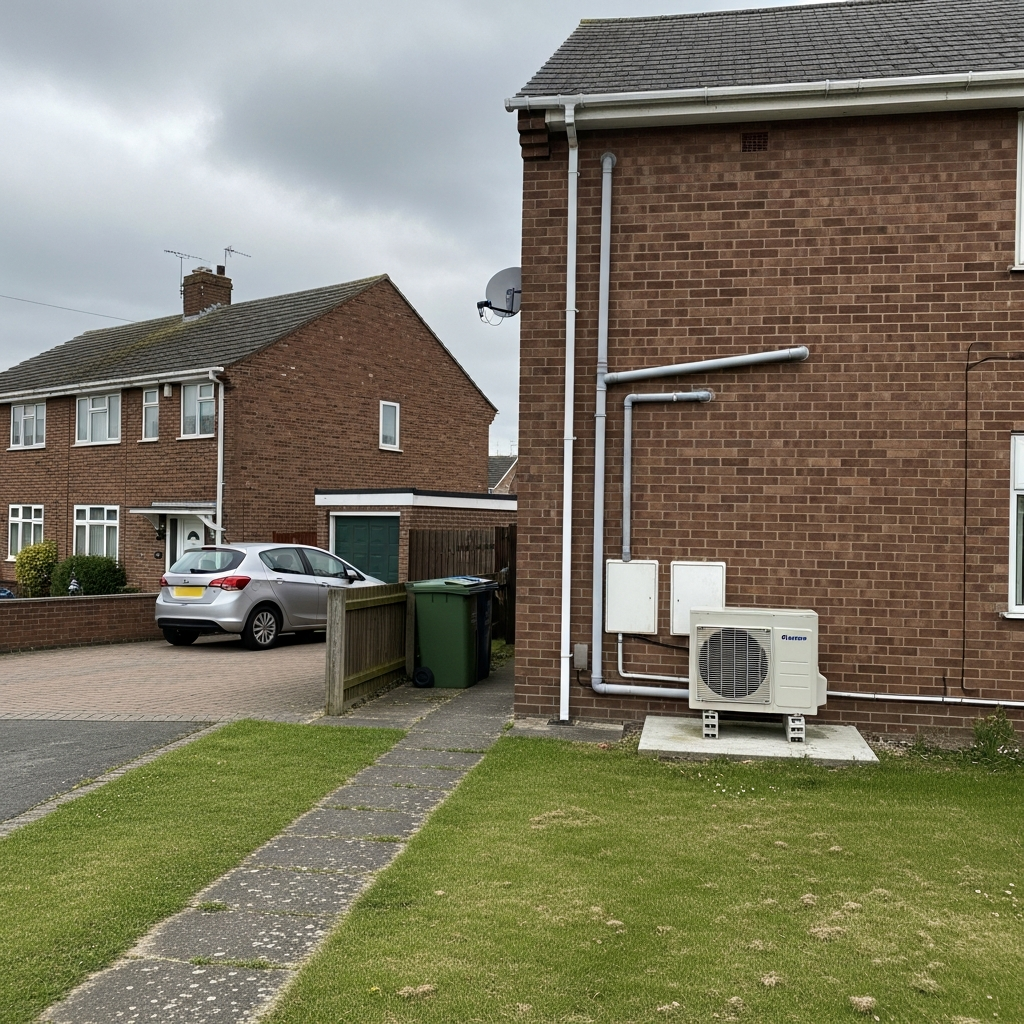
"Heat pumps cause damp." It is a claim that has gained traction on social media and in certain corners of the press. Like many heat pump myths, it contains a tiny grain of truth buried under a mountain of misunderstanding. The short answer: no, heat pumps do not cause damp. But a poorly ventilated home can develop condensation problems regardless of what heating system it uses — and there is a specific mechanism by which switching from gas to a heat pump can unmask existing ventilation problems.
In this article, we go deep into the building physics of damp, condensation, and ventilation. We explain exactly why the claim is misleading, identify the rare circumstances where switching to a heat pump might contribute to moisture issues, and provide practical solutions for every scenario.
Concerned about damp suitability?
Check Your Home's SuitabilityOur checker assesses ventilation and insulation alongside heat pump viability. Free, 2 minutes.
Damp and Condensation: The Building Physics
To understand the damp question, you need to understand what causes condensation in buildings. Condensation occurs when warm, moist air comes into contact with a surface that is at or below its dew point temperature. The moisture in the air condenses into liquid water on the cold surface — exactly like water droplets forming on a cold glass in summer.
Three factors control whether condensation occurs:
- Moisture production: A typical UK household produces 10-15 litres of moisture per day through cooking, bathing, breathing, and drying clothes.
- Ventilation: How effectively that moisture is removed from the home and replaced with drier outside air.
- Surface temperatures: How warm the walls, windows, and other surfaces are. Cold surfaces are more likely to reach dew point.
None of these factors are directly controlled by whether you have a heat pump or a gas boiler. A heat pump heats your home to comfortable temperatures just like any other heating system. The air temperature and wall surface temperatures in a heat pump home are the same as in a gas-heated home set to the same thermostat temperature.
How Gas Boilers Interact with Moisture
Here is something that surprises many people: gas boilers actually produce moisture. Burning natural gas creates water vapour as a combustion byproduct. A modern condensing boiler captures most of this moisture (that is what makes it "condensing"), but some water vapour does enter the home's air through older boilers and from the gas cooker, if you have one.
Gas boilers also create a form of accidental ventilation. The flue draws air from the room (in the case of open-flued boilers) or from outside (in the case of room-sealed balanced flues). In older homes with open-flued boilers, this flue draw removes some moist air from the home continuously while the boiler is running. Removing the gas boiler removes this ventilation pathway.
How Heat Pumps Interact with Moisture
A heat pump does not produce any moisture. It does not combust anything, so there are no combustion byproducts. It simply transfers heat from outside air into your heating system. In this respect, it has a neutral or slightly positive effect on indoor moisture levels compared to gas — it heats without adding moisture.
The heat pump also has no flue, so it does not create accidental ventilation. In a home that was already well-ventilated (with trickle vents, extractor fans, and good air circulation), this makes no practical difference. In a home that was relying on gas boiler flue draw as its primary ventilation mechanism, removing the flue without adding replacement ventilation could reduce air changes and allow moisture to accumulate.
This is the grain of truth behind the damp claim — but the solution is not to keep a gas boiler. The solution is to provide proper ventilation, which the home should have had regardless.
The Flue Ventilation Effect: The Real Issue
The most legitimate concern about heat pumps and damp relates specifically to homes with old open-flued gas boilers. These boilers draw combustion air from the room, creating a constant air change that removes moisture. When the boiler is replaced with a heat pump (which has no flue), this air change stops.
However, several important points put this in perspective:
- Most gas boilers installed in the past 20 years are room-sealed (balanced flue), meaning they draw air from outside, not from the room. Removing these creates no ventilation change.
- Open-flued boilers are being phased out on safety grounds regardless of heat pumps. They would need replacing even without the heat pump transition.
- Relying on a boiler flue for ventilation was never an acceptable ventilation strategy — it was an accidental side effect of outdated design.
Does Lower Flow Temperature Cause Damp?
Another common claim is that heat pumps' lower flow temperatures (35-45°C vs gas boilers' 60-80°C) cause damp because the radiators are "not hot enough." This fundamentally misunderstands how heating works.
A radiator at 40°C heats a room to the same temperature as a radiator at 70°C — it just takes longer. The room temperature is controlled by the thermostat, not the radiator temperature. A room at 21°C has the same condensation risk whether the heat came from a scorching radiator or a warm one.
What matters for condensation is the air temperature and the surface temperature of walls and windows. A properly sized radiator system running at 40°C maintains the same room temperature as one running at 70°C. The wall temperatures, window temperatures, and therefore condensation risk are identical.
Will your radiators work with a heat pump?
Get a Free AssessmentOur calculator assesses radiator adequacy as part of the cost estimate.
The Advantage of Steady Heat
Here is something the damp myth-makers never mention: heat pumps actually reduce condensation risk compared to many gas boiler installations.
Gas boilers, particularly combi boilers, tend to heat homes in bursts — firing hard, raising the temperature quickly, then switching off until the temperature drops. This creates temperature cycling, with periods where the home cools significantly between heating cycles. During the cool periods, wall surface temperatures drop, increasing condensation risk.
Heat pumps, by contrast, are designed to run for longer periods at lower output, maintaining a steady, even temperature throughout the day. This "low and slow" approach keeps wall surface temperatures more consistently above the dew point, actually reducing condensation risk. The Energy Saving Trust and building scientists consistently recommend steady, even heating for damp prevention — which is exactly how heat pumps operate.
Ventilation Solutions for Every Home
Whether you have a heat pump or a gas boiler, good ventilation is essential for a healthy home. Here are the ventilation strategies that prevent damp in any well-heated home:
Basic Measures (Free or Very Low Cost)
- Keep trickle vents open on windows — they are designed to provide background ventilation
- Use extractor fans in kitchens and bathrooms during and after cooking/bathing
- Avoid drying clothes on radiators without opening a window or running an extractor
- Keep internal doors open when possible to allow air circulation
- Ensure airbricks are not blocked
Upgraded Measures (Moderate Cost)
- Install or upgrade extractor fans to continuous-running models with humidity sensors
- Add trickle vents to windows that lack them
- Install a positive input ventilation (PIV) unit in the loft (£200-£500 including installation) — these gently pressurise the home with filtered, tempered air, pushing stale moist air out through natural openings
Premium Solution: MVHR
For well-insulated, airtight homes, mechanical ventilation with heat recovery (MVHR) is the gold standard. We cover this in detail in the next section.
MVHR: The Perfect Heat Pump Companion
Mechanical ventilation with heat recovery (MVHR) is a whole-house ventilation system that continuously extracts stale, moist air from wet rooms (kitchens, bathrooms) and supplies fresh, filtered air to living rooms and bedrooms. A heat exchanger recovers 90-95% of the heat from the outgoing air and transfers it to the incoming air.
MVHR is the ideal companion for a heat pump because it solves the ventilation question definitively while minimising heat loss. It is particularly valuable in well-insulated homes where natural ventilation through draughts has been reduced. The combination of a heat pump for heating and MVHR for ventilation creates a home that is warm, dry, well-ventilated, and extremely energy efficient.
Typical MVHR costs are £3,000-£6,000 installed, depending on the home size and complexity. While this is an additional investment, it addresses indoor air quality and moisture control comprehensively, and the heat recovery means it actually reduces heating bills by retaining heat that would otherwise be lost through ventilation. When combined with solar panels and a heat pump, MVHR creates a truly high-performance home.
Get a complete assessment including ventilation
Get Free Installer QuotesGood installers assess ventilation as part of the survey. MCS-certified, no obligation.
Frequently Asked Questions
Do heat pumps cause damp?
No. Heat pumps heat your home to comfortable temperatures without producing moisture. Condensation is caused by poor ventilation and cold surfaces, not by the heating system type.
Why do some heat pump homes have condensation?
Usually due to inadequate ventilation. If a home has been sealed up (insulated, draught-proofed) without improving ventilation, moisture from daily living accumulates. This would happen with any heating system.
Do heat pumps produce less ventilation than gas boilers?
Only compared to old open-flued boilers that drew room air through the flue. Most modern gas boilers are room-sealed and make no difference. Proper ventilation should never rely on a boiler flue.
Does lower flow temperature cause damp?
No. Lower flow temperatures heat rooms to the same temperature, just more gradually. Room temperature — not radiator temperature — determines condensation risk. A room at 21°C has the same damp risk regardless of radiator temperature.
How do I prevent damp with a heat pump?
Use extractor fans, keep trickle vents open, avoid drying clothes on radiators without ventilation, and consider a PIV unit or MVHR for well-sealed homes. These are good practice for any home.
Is MVHR necessary?
Not always. It is recommended for very airtight homes. In draughtier homes, trickle vents and extractor fans are usually sufficient. MVHR is the premium solution that combines perfect ventilation with heat recovery.
Understanding Moisture in Your Home
Damp is a ventilation problem, not a heating problem. Heat pumps actually reduce condensation risk through steady, even heating. Proper installation includes a ventilation assessment. The BUS grant makes the transition affordable, and combining a heat pump with good ventilation and solar panels creates a warm, dry, efficient home. If you have existing damp issues, address ventilation first — the fix is often simple and inexpensive.