Heat Pump Cost UK 2026: Latest Prices and What to Expect
Equipment prices have dropped 5–10% since 2024, the BUS grant holds at £7,500, and installer wait times are down to 4–8 weeks — making 2026 the best year yet to switch to a heat pump.
If you have been watching the numbers and waiting for the right moment, this guide gives you the definitive 2026 cost picture so you can move forward with confidence.

See what a heat pump would cost for your home in 2026
Enter your property details and get a personalised estimate in under 60 seconds — including the BUS grant deduction.
Calculate my 2026 costs →In this guide:
Current Equipment Prices (2026)
Heat pump unit prices have continued their gradual decline. Increased manufacturing volume — particularly from European and Asian manufacturers — and competition in the UK market have driven prices down roughly 5–10% compared to 2024–2025. For a full breakdown of what each component costs, see our detailed heat pump cost guide.
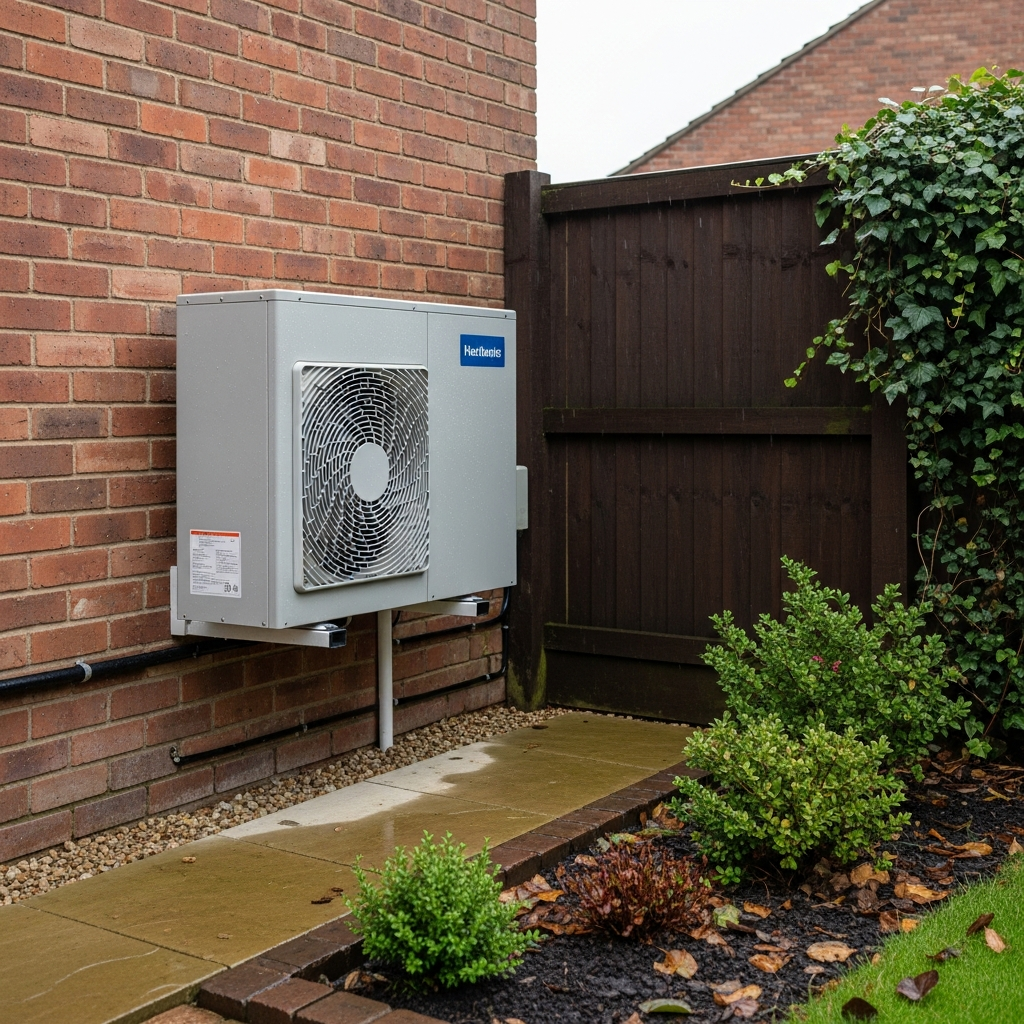
Air Source Heat Pump Units
| Output | Suitable For | Price Range |
|---|---|---|
| 5–8 kW (small) | Well-insulated 2–3 bed | £3,000–£5,500 |
| 8–12 kW (medium) | Average 3–4 bed | £4,500–£7,500 |
| 12–16 kW (large) | Larger or poorly insulated homes | £6,000–£9,500 |
Ground Source Heat Pump Units
- 5–8 kW (small): £4,500–£7,000
- 8–12 kW (medium): £6,000–£9,000
- 12–16 kW (large): £7,500–£11,000
These are equipment-only prices. The total installed cost depends heavily on installation complexity. For ground source specifics, see our ground source heat pump guide.
Current Installation Costs (2026)
Installation costs have remained relatively stable. While the number of MCS-certified installers has grown (reducing wait times), labour costs have kept pace with inflation. The net result is that installation prices are broadly flat compared to 2025.
Total Installed Cost — Air Source
| Installation Type | Before Grant | After £7,500 BUS Grant |
|---|---|---|
| Simple retrofit (system boiler, adequate radiators) | £8,000–£12,000 | £500–£4,500 |
| Standard retrofit (combi replacement, some upgrades) | £10,000–£15,000 | £2,500–£7,500 |
| Complex retrofit (full radiator replacement, extensive pipework) | £14,000–£18,000 | £6,500–£10,500 |
Total Installed Cost — Ground Source
- With horizontal ground loops: £18,000–£28,000 (after grant: £10,500–£20,500)
- With slinky coils: £19,000–£30,000 (after grant: £11,500–£22,500)
- With vertical boreholes: £22,000–£35,000 (after grant: £14,500–£27,500)
Compare quotes from MCS-certified installers in your area
Get 3 free quotes →No obligation. No sales calls. BUS grant applied automatically.
The Boiler Upgrade Scheme in 2026
The Boiler Upgrade Scheme (BUS) continues to provide grants for heat pump installations in England and Wales. The current grant levels are:
- Air source heat pump: £7,500
- Ground source heat pump: £7,500
The grant was increased from £5,000 to £7,500 in October 2023 and has remained at this level through 2026. The scheme has been extended and is currently funded through to March 2028.

What Has Changed in 2026?
- Higher uptake: BUS grant applications have increased significantly. In 2025, over 40,000 grants were issued — roughly double the 2024 figure.
- EPC requirement tightened: Properties must now have an EPC with no outstanding recommendations for loft insulation (up to 270mm) or cavity wall insulation.
- Process streamlined: Approval times have reduced from weeks to typically 5–10 working days.
Current Electricity Prices and Running Costs
Electricity prices directly determine heat pump running costs. Here is where we stand in early 2026:
Ofgem Price Cap (Q1 2026)
Electricity
26.11p/kWh
Gas
7.5p/kWh
Elec:Gas Ratio
3.3:1
Off-Peak Elec
8–15p/kWh
The electricity-to-gas price ratio currently sits at approximately 3.3:1. For a heat pump to be cheaper to run than gas, it needs a COP above 3.3. Air source heat pumps achieve a seasonal average of 2.8–3.5; ground source achieves 3.5–4.5. On an off-peak tariff, heat pumps are significantly cheaper than gas regardless. If you are considering pairing your heat pump with solar panels, you can reduce these electricity costs further.
Annual Running Costs by Property (Standard Tariff, 26.11p/kWh)
| Property | Heat Demand | ASHP (SCOP 3.2) | GSHP (SCOP 4.0) |
|---|---|---|---|
| 2-bed flat/terrace | 8,000 kWh | £613 | £490 |
| 3-bed semi | 12,000 kWh | £919 | £735 |
| 3-bed detached | 15,000 kWh | £1,148 | £919 |
| 4-bed detached | 18,000 kWh | £1,378 | £1,103 |
Based on Ofgem Q1 2026 price cap (26.11p/kWh). Off-peak tariffs reduce these figures by 40–50%.
How 2026 Compares to Previous Years
Running costs are slightly lower than the peak of 2023 (when electricity hit 34p/kWh) but higher than pre-crisis levels. Most analysts expect electricity prices to remain in the 22–26p/kWh range through 2026–2027. For homeowners thinking about solar panel costs alongside a heat pump, falling panel prices make the combination increasingly attractive.
Should You Buy in 2026 or Wait?
Reasons to Install Now
- The BUS grant is available and funded: There is no guarantee it will continue beyond 2028, or at the same level.
- Your existing system needs replacing: A heat pump avoids locking in another 15 years of fossil fuel. Check our heat pump vs gas boiler comparison for the full picture.
- Running cost savings start immediately: Every month of delay is a month of higher fuel bills (if on oil, LPG, or electric).
- Property value benefit: The sooner you install, the sooner you benefit from the EPC improvement.
Reasons to Wait
- Equipment costs are still falling: If you wait 2–3 years, the equipment may be 10–15% cheaper. But you lose 2–3 years of running cost savings.
- Your current system is working fine: If your gas boiler is only 5–7 years old, the financial case for immediate replacement is weak.
- Better tariffs may emerge: As heat pump adoption grows, more competitive electricity tariffs are likely.
Our general advice: if you are on oil, LPG, or electric heating and your system needs replacing, install now. If you are on gas with a working boiler, plan for a heat pump when the boiler reaches end of life but start improving insulation now. Use our suitability checker to assess your property.

Getting Quotes in 2026
The installer market is healthier than it was in 2023–2024. Wait times have reduced from 3–6 months to typically 4–8 weeks. Our installation cost breakdown explains exactly what should be in a quote.
- Get three quotes minimum: Prices still vary significantly — we see 20–40% variation between quotes for the same property.
- Check installer reviews: The rapid growth in MCS-certified installers means quality varies.
- Verify MCS certification: Non-MCS installers cannot apply for the BUS grant on your behalf.
- Ask about tariff recommendations: A good installer should advise on the best electricity tariff for your new system.
Ready to find out what a heat pump costs for your home?
Connect with vetted MCS-certified installers in your area — BUS grant applied automatically.
Get my personalised quotes →Free. No obligation. No sales calls from us.
Frequently Asked Questions
Has the heat pump grant changed in 2026?
The BUS grant remains at £7,500 for both air source and ground source heat pumps. The scheme has been extended to March 2028. The main change is a tightened EPC requirement — outstanding loft and cavity wall insulation recommendations must be addressed before the grant is approved.
Are heat pumps cheaper in 2026 than 2025?
Slightly. Equipment prices have fallen by roughly 5%, but installation costs have remained flat. The net effect is a modest overall reduction of 3–5% in total installed cost. The more significant change is improved availability, meaning shorter wait times.
What electricity rate should I use for cost calculations?
Use 26.11p/kWh for standard tariff calculations (the Q1 2026 Ofgem cap rate). If you plan to use an off-peak or heat pump tariff, use 10–15p/kWh for the off-peak portion and 28–35p/kWh for the peak portion.
Will heat pump costs continue to fall?
Equipment costs are expected to continue declining gradually — roughly 5–10% every 2–3 years. Installation costs may take longer to fall, as they are dependent on the growth of the installer workforce.
Is 2026 a good year to install a heat pump?
Yes — particularly if you are on oil, LPG, or electric heating. The BUS grant is available, equipment costs are at their lowest point to date, installer availability has improved, and several attractive electricity tariffs are now on the market.
How long will the BUS grant continue?
The scheme is currently funded to March 2028. Future extension or replacement is subject to government policy decisions and budget allocations. Given the UK’s commitment to reaching 600,000 annual installations, some form of financial support is likely to continue.
About UK Heat Pump Costs in 2026
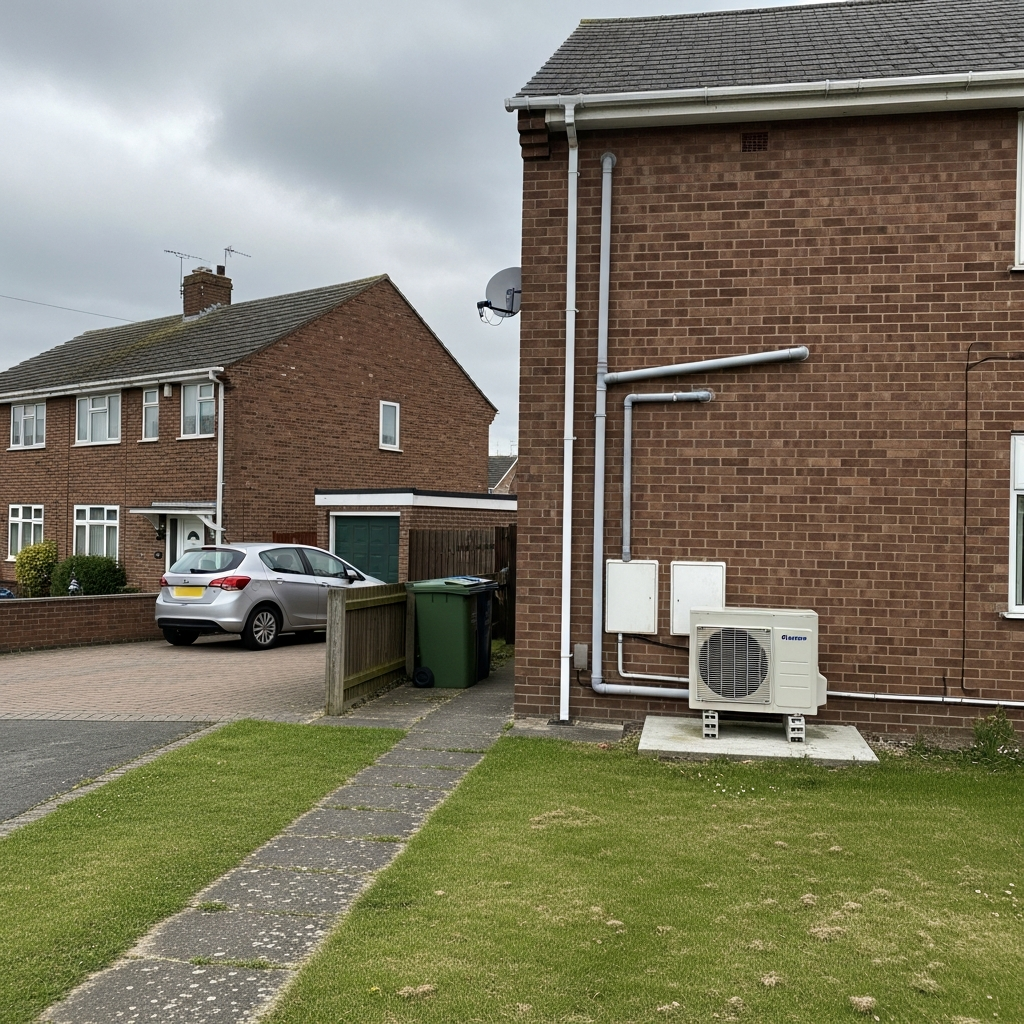
Heat pump costs in 2026 reflect continued market maturation — falling equipment prices, stable installation costs, and the ongoing Boiler Upgrade Scheme grant of £7,500. This guide is part of our comprehensive resource hub covering heat pump costs, air source heat pumps, ground source heat pumps, grants, and running costs. For information on reducing electricity costs by combining a heat pump with solar panels, visit Home Solar Guide.