Why Are Heat Pumps So Expensive?
A new gas boiler costs £2,500-£4,000 installed. A heat pump costs £8,000-£15,000. The price difference is real, and it puts many people off. But the comparison is misleading, the reasons for the cost are understandable, prices are falling, and grants close much of the gap. This guide explains where the money actually goes, why heat pumps cost what they do, and why the headline price is not the number that matters.
Where the Money Goes: Cost Breakdown
A typical heat pump installation for a three-bedroom house costing £10,000 before the grant breaks down roughly as follows:
The Heat Pump Unit: £4,000-£7,000 (40-50%)
The outdoor unit itself is a sophisticated piece of engineering. It contains a compressor, heat exchanger coils, expansion valve, fans, control electronics, and a refrigerant circuit. This is fundamentally more complex than a gas boiler, which is essentially a combustion chamber, a heat exchanger, and a pump.
A heat pump must:
- Extract heat from air at temperatures as low as -20°C
- Compress refrigerant gas to concentrate that heat
- Transfer it to water at 35-55°C
- Reverse defrost cycles when the outdoor coil ices up
- Modulate output to match varying demand (inverter-driven compressor)
- Manage complex control algorithms for weather compensation
The technology is closer to a commercial refrigeration system or air conditioning unit than to a gas boiler. Higher manufacturing complexity means higher unit cost.
Hot Water Cylinder: £800-£1,800 (8-12%)
Gas combi boilers do not need a cylinder — they heat water on demand. Heat pumps cannot heat water as quickly, so they need a well-insulated hot water cylinder (typically 200-300 litres) to store pre-heated water. This is an additional component that a combi-to-heat-pump switch must include.
If you already have a hot water cylinder (from a system boiler), it may be reusable, reducing this cost. However, many cylinders need replacing with heat-pump-compatible models that have the correct coil size and insulation levels.
Installation Labour: £2,500-£5,000 (25-35%)
Heat pump installation takes longer and requires more skilled trades than a gas boiler swap:
- Site survey and design: A detailed heat loss calculation for every room, system design, and component specification. A gas boiler swap might take 30 minutes of planning. A heat pump design takes several hours.
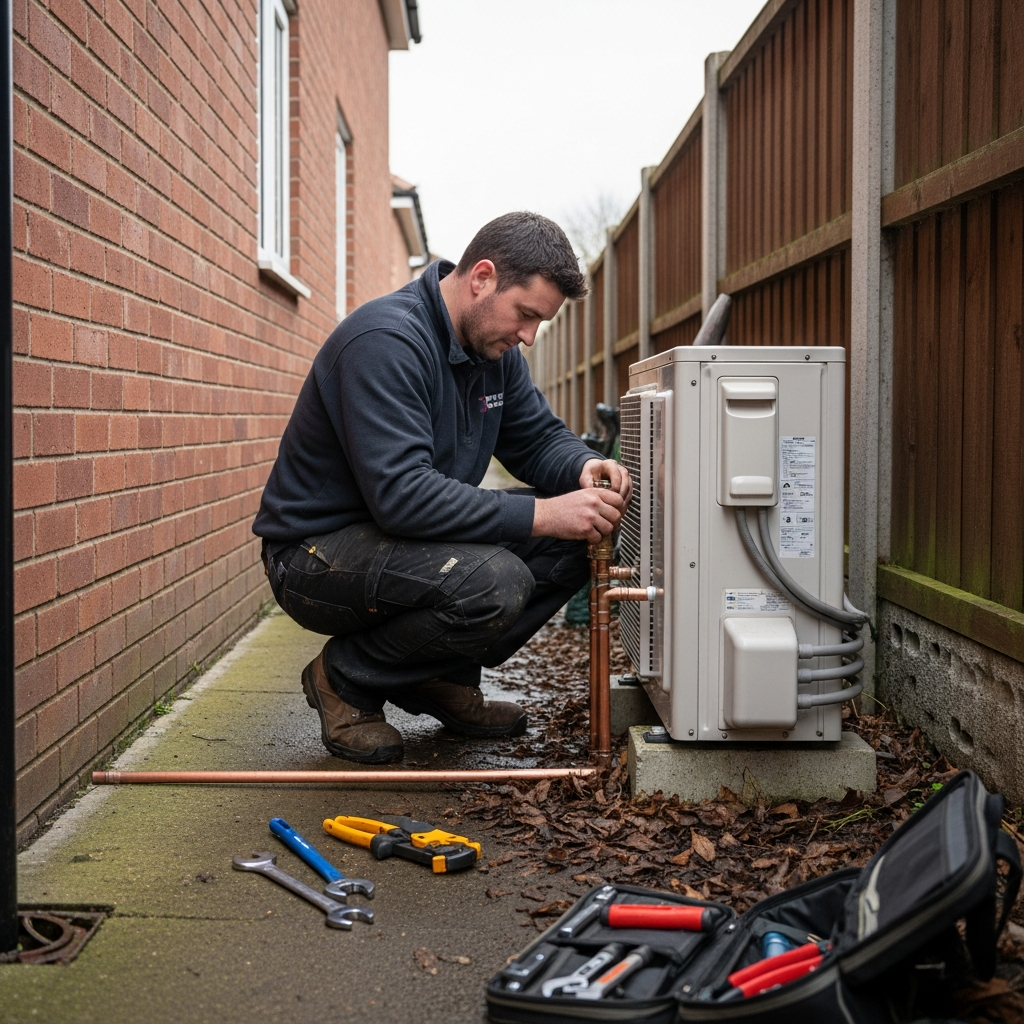
- Outdoor unit installation: Concrete base or wall brackets, anti-vibration mounts, refrigerant pipework routing, drainage
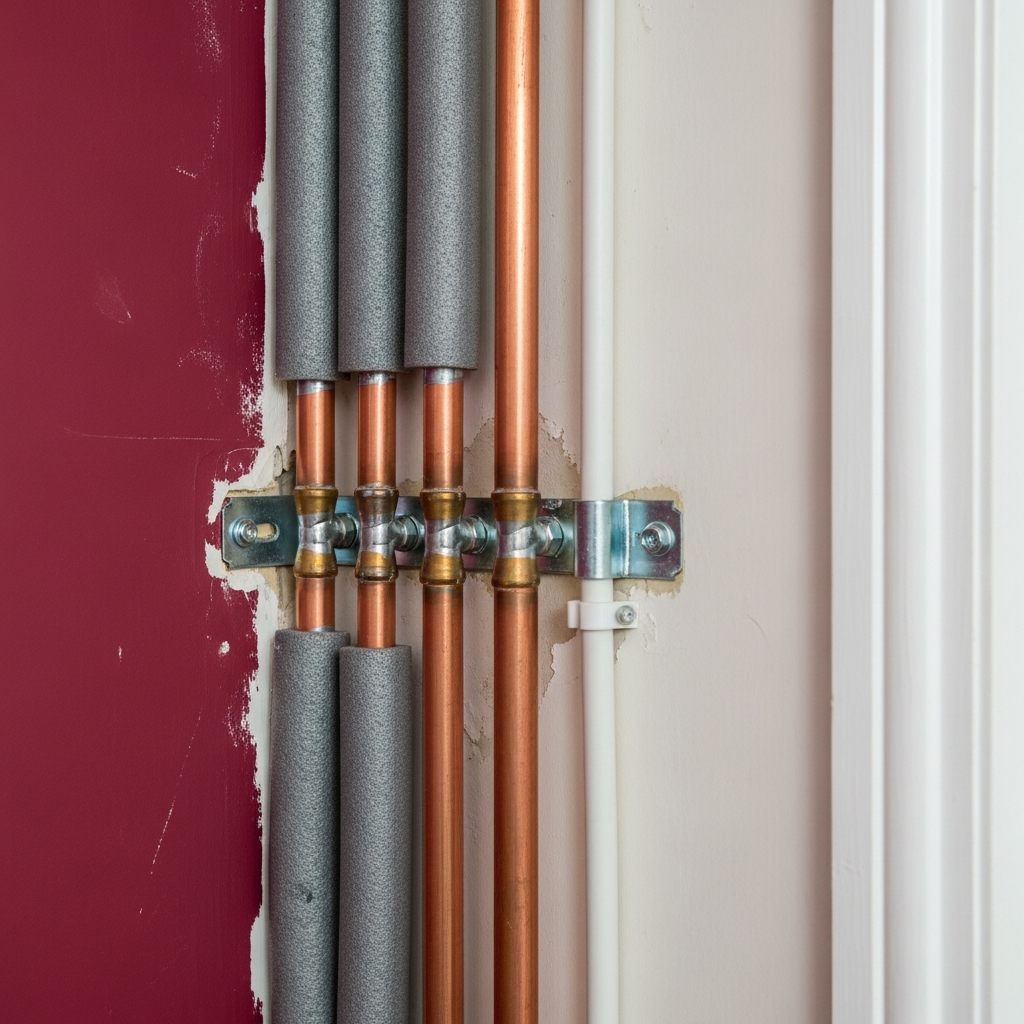
- Internal modifications: Cylinder installation, pipework changes, buffer tank, zone controls
- Electrical work: Dedicated supply, RCD protection, controls wiring
- Commissioning: Flow temperature settings, weather compensation configuration, system balancing
- MCS certification: Documentation, performance estimates, compliance paperwork
A competent boiler swap takes one day. A heat pump installation takes 2-4 days for a straightforward job. More complex installations take longer.
Ancillaries: £800-£2,000 (8-15%)
Various additional components are needed:
- Buffer tank or low-loss header
- Expansion vessel
- System filter
- Zone valves and controls
- Pipework, fittings, and insulation
- Concrete base or mounting hardware
Radiator Upgrades: £0-£5,000 (0-30%)
Not always required, but when existing radiators are too small for the lower flow temperatures a heat pump uses, some or all need replacing with larger models. This is an additional cost that does not apply when replacing a boiler with another boiler. See our guide on whether you need new radiators.
Why the Comparison with Gas Boilers Is Misleading
You Are Not Comparing Like for Like
A gas boiler swap is a replacement — remove old unit, install new unit in the same location, connect to the same pipework. The infrastructure already exists.
A heat pump installation is a system change — new outdoor unit, new cylinder, modified pipework, new controls, potentially new radiators. It is more comparable to installing a central heating system from scratch than to swapping a boiler.
A Boiler Does Not Include a Cylinder
If you are replacing a combi boiler, the heat pump installation includes a hot water cylinder that the combi did not need. Adding £800-£1,800 for the cylinder to the heat pump cost is necessary, but it is not a fair comparison against a combi boiler that does not need one.
The Boiler Price Does Not Include the Gas Infrastructure
The gas boiler is cheap because the gas infrastructure (mains supply, meter, pipework to the boiler) already exists and its cost is not attributed to the boiler. If you had to install a gas supply from scratch (as rural properties must with LPG tanks), the comparison would look very different.
Boiler Lifespan Is Shorter
A gas boiler lasts 12-15 years on average. A heat pump is expected to last 20+ years. Over a 20-year period, you would need two gas boilers (£5,000-£8,000 total) versus one heat pump. The lifetime cost comparison is much closer than the headline installation cost suggests.
Why Are UK Prices Higher Than in Europe?
Heat pumps are significantly cheaper in countries like Sweden, Norway, Finland, and France. A typical installation that costs £10,000-£12,000 in the UK might cost £5,000-£7,000 in Scandinavia. Several factors explain the gap:
Scale and Competition
The UK installs far fewer heat pumps per year than leading European countries. Lower volume means less competition among installers, less bulk purchasing of components, and less investment in training and efficiency. As UK installation volumes increase, prices are expected to fall.
Installer Training and Supply
The UK has a shortage of trained heat pump installers. When demand exceeds supply, prices rise. The UK government and industry are investing heavily in training programmes, but it takes time to build a workforce. More installers will mean more competition and lower prices.
MCS Certification Requirements
The UK's MCS (Microgeneration Certification Scheme) imposes certification requirements on installers, which adds quality assurance but also cost. The detailed heat loss calculations, system design documentation, and compliance paperwork required by MCS take time that is reflected in the quote.
Building Stock
UK homes are some of the least well-insulated in Europe. This means heat pump installations are often more complex — larger systems, more radiator upgrades, more insulation work. Scandinavian homes typically have much better insulation, making heat pump installation simpler and cheaper.
How Grants Reduce the Cost
The Boiler Upgrade Scheme (BUS) provides £7,500 towards the cost of a heat pump installation in England and Wales. This single policy measure transforms the economics:
- £8,000 installation: Reduced to £500 after grant
- £10,000 installation: Reduced to £2,500 after grant
- £12,000 installation: Reduced to £4,500 after grant
- £15,000 installation: Reduced to £7,500 after grant
At the lower end, the net cost is comparable to or less than a new gas boiler. The grant effectively eliminates the price premium for many standard installations.
Scotland has its own grant schemes through Home Energy Scotland, offering up to £7,500-£9,000 in some circumstances, particularly for rural off-gas-grid properties.
Why Prices Are Falling
Several factors are driving heat pump prices downward:
Increasing Manufacturing Scale
Global heat pump production is ramping up rapidly. Major manufacturers are building new factories and expanding existing ones. As production volumes increase, component costs fall. The cost of the heat pump unit itself has dropped approximately 10-15% in real terms over the past three years.
More Installers Entering the Market
The number of MCS-certified heat pump installers has grown significantly and continues to grow. More installers means more competition, which drives prices down. Gas boiler installers are retraining for heat pumps as the market shifts.
Standardisation
The industry is developing more standardised installation practices and pre-fabricated components that reduce installation time and cost. Pre-configured hydraulic kits, plug-and-play control systems, and standardised design tools all contribute to faster, cheaper installations.
Supply Chain Maturation
As the UK heat pump market matures, the supply chain becomes more efficient. Wholesale distribution, bulk purchasing, and just-in-time delivery reduce component costs and installation delays.
Industry analysts project that heat pump installation costs will fall by 20-30% in real terms over the next five to seven years, reaching near-parity with gas boiler installation costs (after grants) by the early 2030s.
How to Get the Best Price
Get Multiple Quotes
Price variation between installers can be £2,000-£4,000 for the same property. Always get at least three quotes from different MCS-certified installers. Our free quote service makes this easy.
Be Flexible on Timing
Installers are busiest in autumn and early winter. Scheduling your installation for spring or early summer may get you a better price and shorter waiting time.
Consider Mid-Range Brands
Premium brands (Vaillant, NIBE) cost more but offer excellent performance and support. Mid-range brands (Samsung, LG, Midea) offer very good performance at lower cost. Discuss brand options with your installer — the most expensive unit is not always the best choice for your property.
Do Not Over-Specify
A properly sized system based on accurate heat loss calculations is always better than an oversized system "just in case." Oversizing increases cost and reduces efficiency. Trust the calculations, not gut feeling.
Address Insulation First
Improving insulation before the heat pump is installed can reduce the system size needed, potentially saving £1,000-£2,000 on the heat pump itself. It also reduces running costs for the life of the system. Our cost guide covers the full financial picture.
Frequently Asked Questions
Why is a heat pump more expensive than a boiler?
The heat pump unit is more complex (refrigeration technology vs combustion), the installation is more involved (new outdoor unit, cylinder, potentially radiator upgrades), and the UK market is still scaling up. However, the BUS grant of £7,500 closes much of the gap, and the heat pump lasts significantly longer (20+ years vs 12-15).
Will heat pump prices come down?
Yes. Prices have already fallen approximately 10-15% in real terms over the past three years, and the trend is expected to continue as manufacturing scales up, more installers enter the market, and installation practices become more standardised. Industry projections suggest a further 20-30% reduction over the next five to seven years.
Is a heat pump worth the cost?
After the BUS grant, the net cost of a heat pump is often comparable to a new gas boiler, with lower or similar running costs and a longer lifespan. For oil, LPG, and electric heating users, the running cost savings make the investment clearly worthwhile. See our detailed analysis.
Are there hidden costs with heat pumps?
A good MCS-certified installer will include all costs in their quote: unit, cylinder, installation, ancillaries, and any necessary radiator upgrades. The main potential additional costs are insulation improvements (if recommended by your EPC), electrical supply upgrades (rare), and planning permission (only in restricted areas). Always ask for a fully itemised quote with no exclusions.
Can I reduce the cost by doing some work myself?
The heat pump installation itself must be done by an MCS-certified installer to qualify for the BUS grant. However, you can reduce costs by doing preparatory work: clearing the outdoor unit location, removing old heating equipment, or arranging loft insulation independently. Discuss with your installer what you can do yourself without voiding the warranty or grant eligibility.
Why do quotes vary so much between installers?
Differences in component choices (brand of heat pump, cylinder quality), labour rates, overheads, design approach, and the level of detail in the heat loss calculation all contribute. Cheaper is not always better — a thorough design and quality installation will deliver higher COP and lower running costs over 20 years. But equally, the most expensive quote is not automatically the best. Compare quotes on specification and detail, not just price. Use our calculator for an independent cost estimate to benchmark against.