Home Heat Pump Guide

Renewable Heat Incentive (RHI) Legacy Payments Explained
If you installed a heat pump before April 2022 and registered for the Renewable Heat Incentive, you are still receiving quarterly payments from Ofgem — and will continue to do so until your seven-year term expires. But with the scheme now closed, many participants have questions about their remaining payments, obligations, and what happens when the payments stop.

This guide covers everything current RHI participants need to know about their legacy payments, as well as explaining the scheme's history for those who missed out and want to understand what it offered.

What Was the Renewable Heat Incentive?

The Renewable Heat Incentive was the UK government's first dedicated financial support scheme for renewable heating systems. The domestic version launched in April 2014 and closed to new applications on 31 March 2022. It was replaced by the Boiler Upgrade Scheme.

Unlike the BUS grant, which provides an upfront discount on your installation, the RHI worked as a quarterly payment based on the estimated renewable heat output of your system. You paid the full installation cost yourself and then received payments over seven years that, in many cases, exceeded the original cost.

Eligible Technologies

The domestic RHI covered:

  • Air source heat pumps — the most common technology claimed under the scheme
  • Ground source heat pumps — higher payment rates due to greater efficiency
  • Biomass boilers — wood pellet and chip systems
  • Solar thermal panels — hot water only systems

How Payments Were Calculated

RHI payments were based on your property's estimated annual heat demand (from your Energy Performance Certificate) and the deemed efficiency of your heating system. The formula was:

Annual payment = Estimated heat demand (kWh) × Tariff rate (p/kWh)

For air source heat pumps, the final tariff rate was 10.85p/kWh. For ground source heat pumps, it was 21.16p/kWh. These rates were inflation-linked, increasing annually in line with the Retail Price Index (RPI).

How Much Did RHI Participants Receive?

The total payment over seven years depended on the property's heat demand and the type of system installed. Here are typical examples:

Air Source Heat Pump in a Three-Bedroom Semi

  • Estimated heat demand: 12,000 kWh/year
  • Tariff rate: 10.85p/kWh
  • Annual payment: approximately £1,302
  • Seven-year total: approximately £9,114 (before inflation adjustments)
  • Typical installation cost at the time: £8,000 to £12,000

For many ASHP installations, the RHI payments covered the full cost and then some.

Ground Source Heat Pump in a Four-Bedroom Detached

  • Estimated heat demand: 18,000 kWh/year
  • Tariff rate: 21.16p/kWh
  • Annual payment: approximately £3,809
  • Seven-year total: approximately £26,663 (before inflation adjustments)
  • Typical installation cost at the time: £15,000 to £25,000

Ground source heat pump owners often received significantly more than they paid for the installation, making the RHI an exceptionally good deal for those who took advantage of it.

Legacy Payments: What Current Participants Need to Know

If you are registered on the domestic RHI, here is what you need to understand about your remaining payments.

Payment Duration

RHI payments last for exactly seven years from your registration date. If you registered in March 2022 (the final month), your last payment will arrive in March 2029. If you registered earlier, your payments will end sooner. Ofgem sends payments quarterly, roughly three months in arrears.

Inflation Adjustments

Your tariff rate increases each year in line with the Retail Price Index (RPI). This means your payments in the final years of your term will be noticeably higher than in the first year. With RPI having been elevated in recent years, many participants are receiving significantly more than initially projected.

Ongoing Obligations

Even though the scheme is closed to new applicants, existing participants still have obligations:

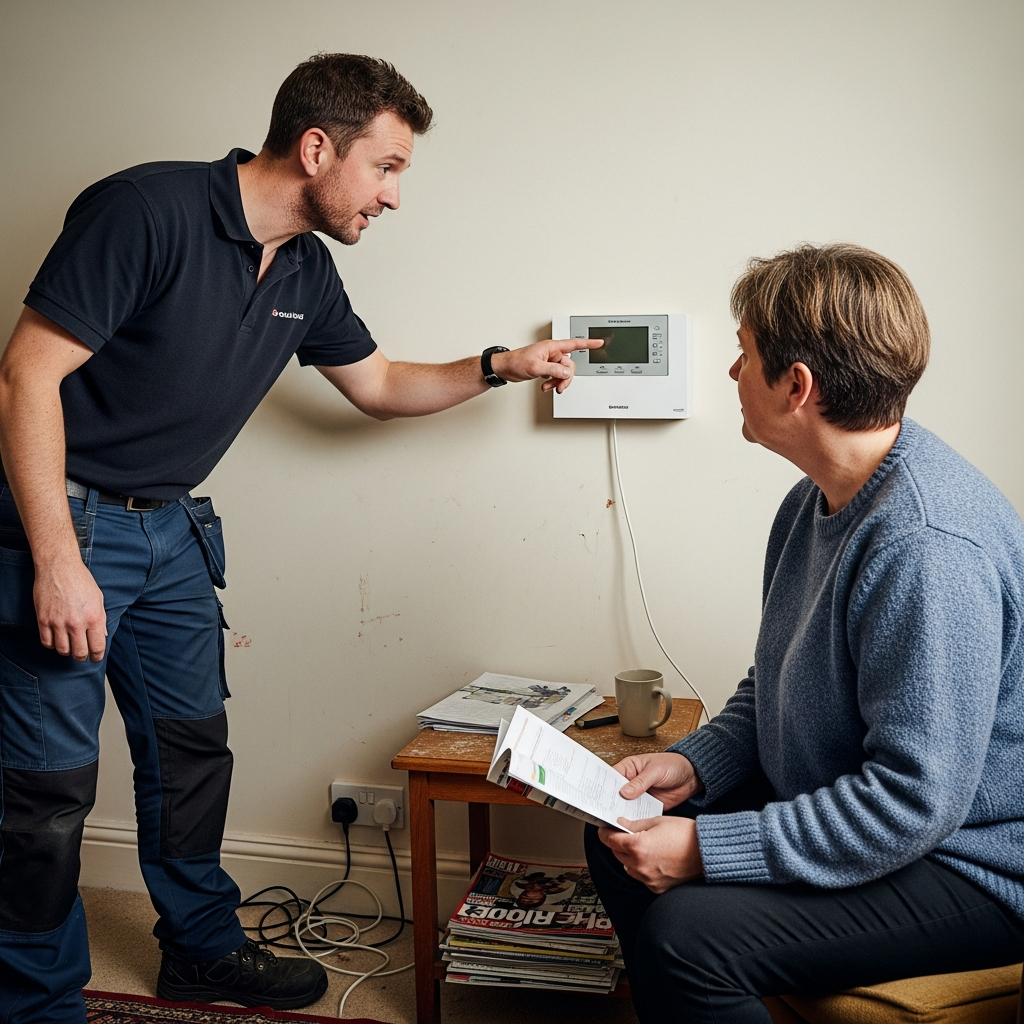
  • Metering and monitoring: If your system has a heat meter, you must continue to submit meter readings when requested by Ofgem. Some participants have deemed readings (estimated) and do not need to take manual readings.
  • System maintenance: You must keep your heat pump in working order. If Ofgem discovers your system is not functioning, payments can be suspended or clawed back.
  • Property changes: If you sell your property, RHI payments can transfer to the new owner, but you must notify Ofgem. If you remove or replace the heat pump, you must also inform them.
  • Compliance visits: Ofgem may conduct site inspections to verify your system is operational. These are relatively rare but participants must allow access if requested.

What Happens If You Replace Your Heat Pump?

If your heat pump breaks down and you need to replace it, notify Ofgem immediately. In most cases, replacing a failed system with an equivalent (or better) heat pump will not affect your payments. However, you must:

  • Inform Ofgem before or immediately after the replacement
  • Ensure the replacement is MCS certified
  • Provide documentation of the new installation

If you switch to a completely different heating system (such as reinstalling a gas boiler), your RHI payments will stop permanently.

Selling Your Property

RHI payments are linked to the property, not the person. When you sell, the new owner can take over your RHI registration and continue receiving payments for the remainder of the seven-year term. This can add value to your property — an ongoing income stream of £1,000 or more per year is a genuine selling point.

To transfer, you need to contact Ofgem and complete the change of ownership process. The new owner must agree to the scheme's terms and conditions.

When Do the Last RHI Payments End?

Since the scheme closed to new applications on 31 March 2022 and payments run for seven years, the very last RHI payment will be made in early 2029. The payment schedule by registration year:

  • Registered in 2014: Final payment received in 2021 (already ended)
  • Registered in 2016: Final payment received in 2023 (already ended)
  • Registered in 2018: Final payment received in 2025 (already ended or ending soon)
  • Registered in 2020: Final payment due in 2027
  • Registered in 2021: Final payment due in 2028
  • Registered in early 2022: Final payment due in early 2029

I Missed the RHI — What Are My Options Now?

If you did not install a heat pump before the RHI closed, you have not missed out entirely. The current Boiler Upgrade Scheme offers £7,500 upfront towards your installation — a simpler and more immediately impactful form of support.

While the RHI could ultimately deliver more money over seven years, the BUS grant has significant advantages:

  • Immediate cost reduction: The £7,500 comes off your bill on day one, not over seven years
  • No ongoing obligations: Once installed, there are no meter readings, compliance visits, or reporting requirements
  • Simpler process: Your installer handles the entire application
  • Lower installation costs: Heat pump prices have fallen since the RHI era, so the net cost after the BUS grant is often lower than it was after accounting for eventual RHI payments

Use the heat pump calculator to estimate what you would pay after the BUS grant, or get quotes from MCS-certified installers in your area.

Tax Implications of RHI Payments

RHI payments for domestic installations are tax-free. They do not count as income and do not need to be declared on your self-assessment tax return. This applies to all participants, including landlords who installed heat pumps in rental properties.

However, if you received RHI payments through the non-domestic scheme (for commercial properties or large-scale systems), different rules apply and you should consult an accountant.

The RHI's Legacy and Lessons Learned

The Renewable Heat Incentive had a mixed legacy. On one hand, it provided genuinely generous support that made thousands of heat pump installations financially viable. On the other, its complexity and the upfront cost barrier limited uptake far below government targets.

The scheme also revealed an important lesson: most homeowners prefer upfront cost reductions over long-term payment schemes. Having to pay £10,000 today and wait seven years to recoup it is a hard sell, even when the maths is favourable. The shift to the BUS grant model — instant, simple, visible on your invoice — has proven far more effective at driving adoption.

Frequently Asked Questions

Can I still apply for the RHI?

No. The domestic Renewable Heat Incentive closed to new applications on 31 March 2022. You cannot register a new installation. The replacement scheme is the Boiler Upgrade Scheme, which offers £7,500 upfront.

How long will my RHI payments continue?

RHI payments last for seven years from your registration date. If you registered in 2020, your payments will end in 2027. The latest possible final payment is early 2029 for those who registered in the final weeks of the scheme.

Do I need to submit meter readings?

If your RHI registration requires metered readings, yes — you must continue submitting them when Ofgem requests them. If you have deemed readings (most participants), readings are estimated automatically and no action is needed.

What happens to my payments if I sell my house?

RHI payments can transfer to the new owner. Contact Ofgem to arrange the transfer. This can be a selling point for your property, as the buyer inherits an ongoing quarterly income.

Are RHI payments taxable?

No. Domestic RHI payments are completely tax-free and do not need to be declared as income.

Can I get the BUS grant if I already received RHI payments?

You cannot claim the BUS grant for a system that already received RHI payments. However, if you are installing a heat pump in a different property, you can apply for the BUS grant for that separate installation.